


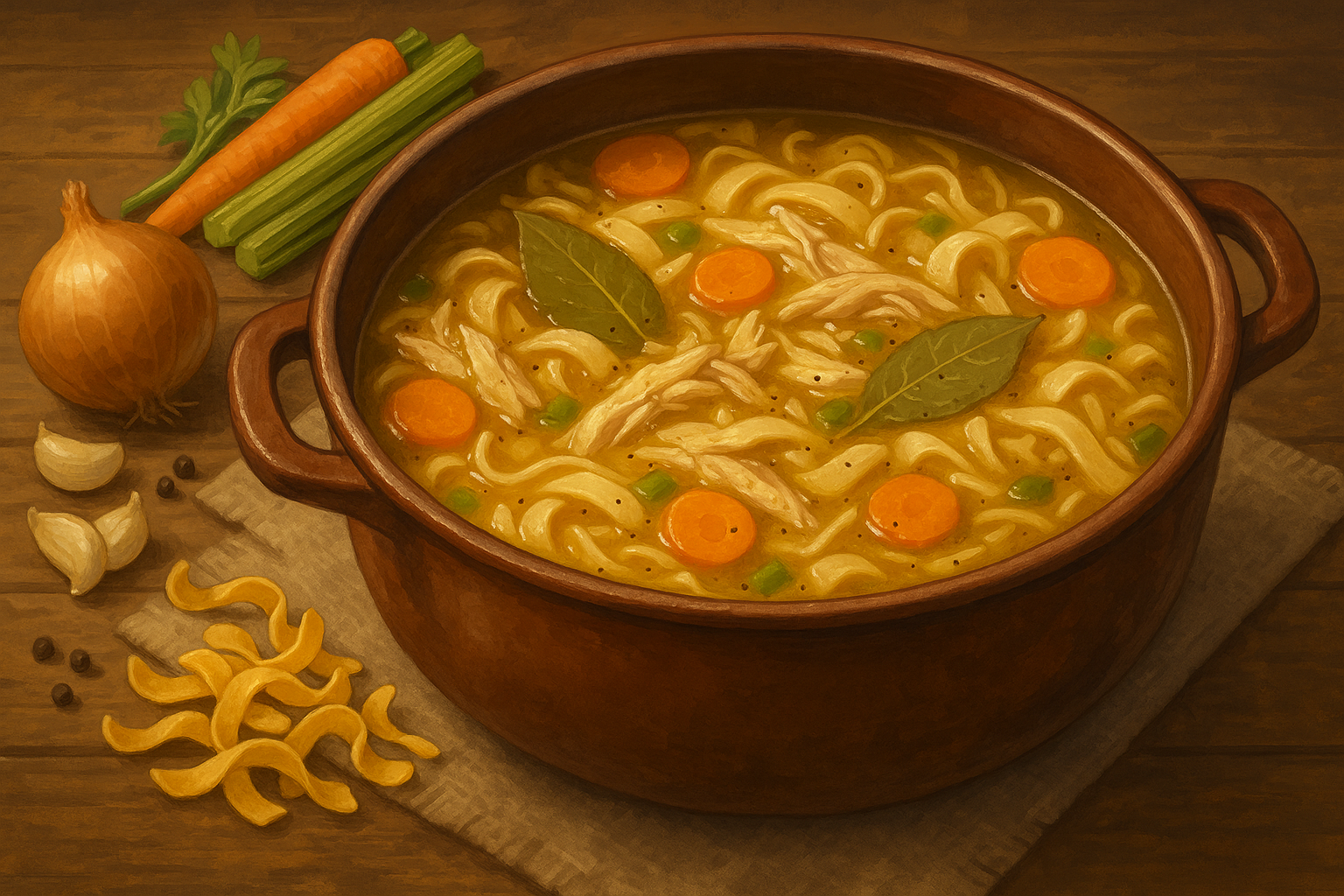
Granny Snow's Chicken Soup
“I have eaten meals fit for barons, but this is the dish that tastes like someone noticed you were tired before you said a word.”
Mara Snow grew up in a world where small comforts mattered more than grand gestures, and nothing embodied that better than her grandmother’s chicken noodle soup. It was the one dish that never changed, no matter how lean the year became or how far the family had to travel. The recipe was plain on the surface, yet it carried weight because it appeared whenever someone needed steadiness. Mara learned early that the smell of simmering broth meant her grandmother had decided the household required something warm and grounding. The soup was not meant to impress guests or signal a celebration. It simply restored people who had been worn thin by weather, work, or worry. Her grandmother taught not by instruction but by repetition. She never measured anything, yet everything came out the same each time. She began by filling the pot with water or stock, then dropping in a small bird or a heap of chicken parts with the same practiced motion. While it came to temperature, she chopped the onion, celery, and carrot with a rhythm that never varied. Garlic was smashed with the side of her knife. Long peppers were cracked with the back of her hand. Every action was deliberate. Nothing felt rushed. Mara watched these movements for years and memorized them long before she could explain why they mattered. The soup was a patient dish. The chicken simmered until it surrendered easily from the bone, and the vegetables softened only after they had given their strength to the broth. Seasoning came later, always with the same unhurried approach. Her grandmother believed the broth should have time to settle before anyone judged its flavor. The noodles were boiled in a separate pot so that the broth remained clear. Once they were added, the soup was lifted from the heat to rest. Her grandmother said the pot needed a moment to think. Mara never questioned the phrase because she had tasted the difference it made. When the soup was served too soon, it lacked its usual calm. When it rested, every part of it came together with quiet certainty. To Mara, the recipe became more than a set of steps. It was an understanding of how care was expressed in a family that did not often say things aloud. When her grandmother cooked the soup for her, it meant she had noticed something that needed tending. When Mara later cooked it for someone else, she carried the same intention. The dish signaled a desire to steady the person sitting at her table. It asked nothing. It offered comfort without ceremony. It carried memory without forcing it on anyone. This was the food that taught Mara what it meant to look after another person. The simplicity of the recipe preserved its strength. Nothing about it was designed to impress. It was built on ingredients that anyone could keep on hand and prepared with a patience that felt older than Mara herself. It endured because it never pretended to be anything beyond what it was. When Mara cooks it now, she does so exactly as her grandmother did before her. She understands that some recipes are not meant to be improved or modernized. They endure because they have already become the truest form of themselves. This is why her grandmother’s soup remains the dish Mara trusts most. It is a steadying force, warm in the way a hearth is warm, calm in the way a familiar voice is calm, and honest in the way only the simplest meals can be.
Instructions:
1. Set a large pot on the stove and put in the chicken with the stock or water and bouillon. Bring it to a steady boil and let it go for about one hour. Do not fuss with it. When the hour is up, lift out the chicken, pull the meat from the bones, and return only the meat to the pot. 2. Add the onion, celery, carrot, garlic, and long peppers. Let everything simmer until the vegetables soften and the broth tastes like it has settled into itself. 3. Boil the egg noodles in a separate pot until they are almost cooked. Drain them and put them into the soup. Season with salt and black pepper until it tastes right. Give it a few minutes off the heat to let the flavors come together. 4. Serve it hot. It is always better the next day, but it never lasts that long.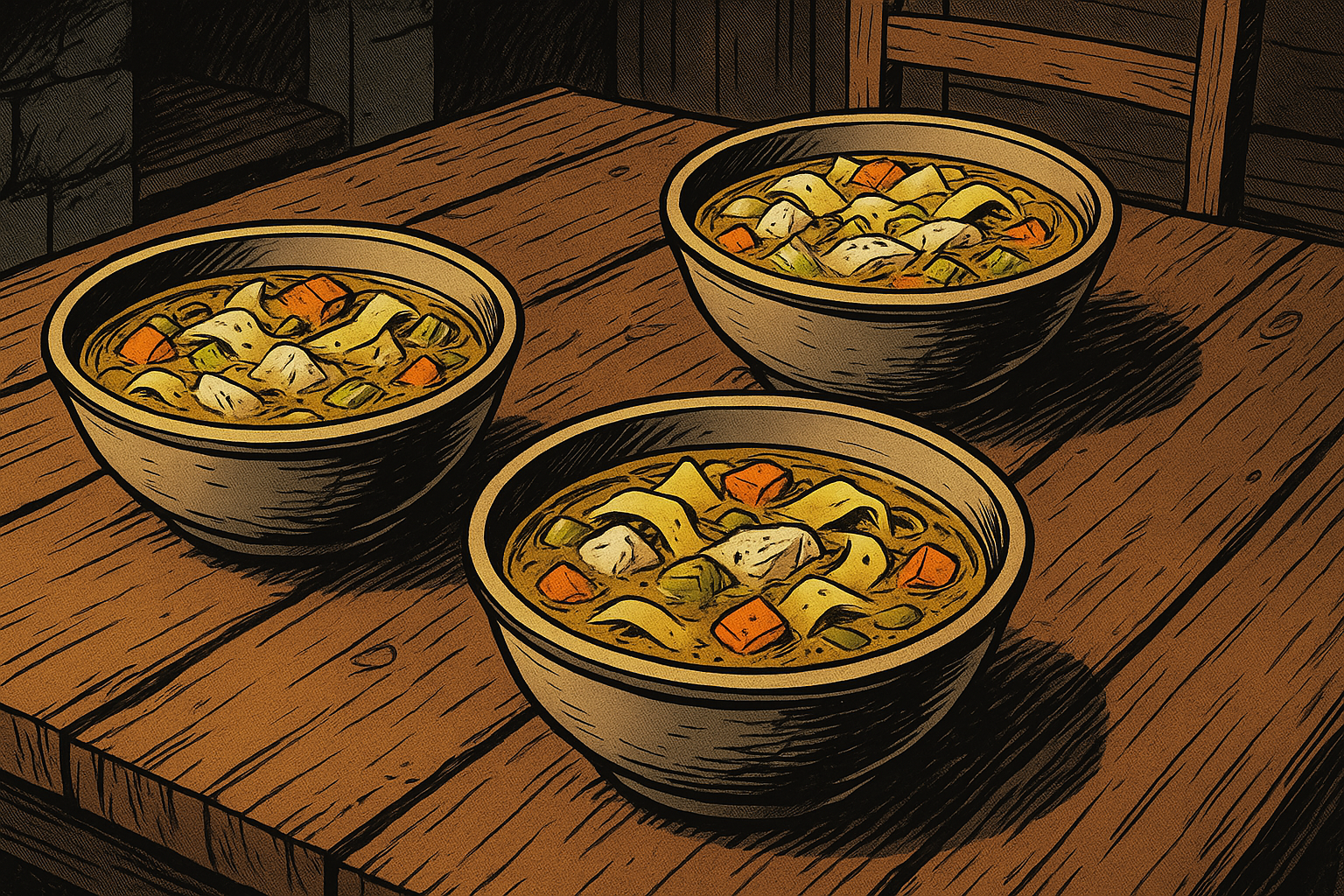
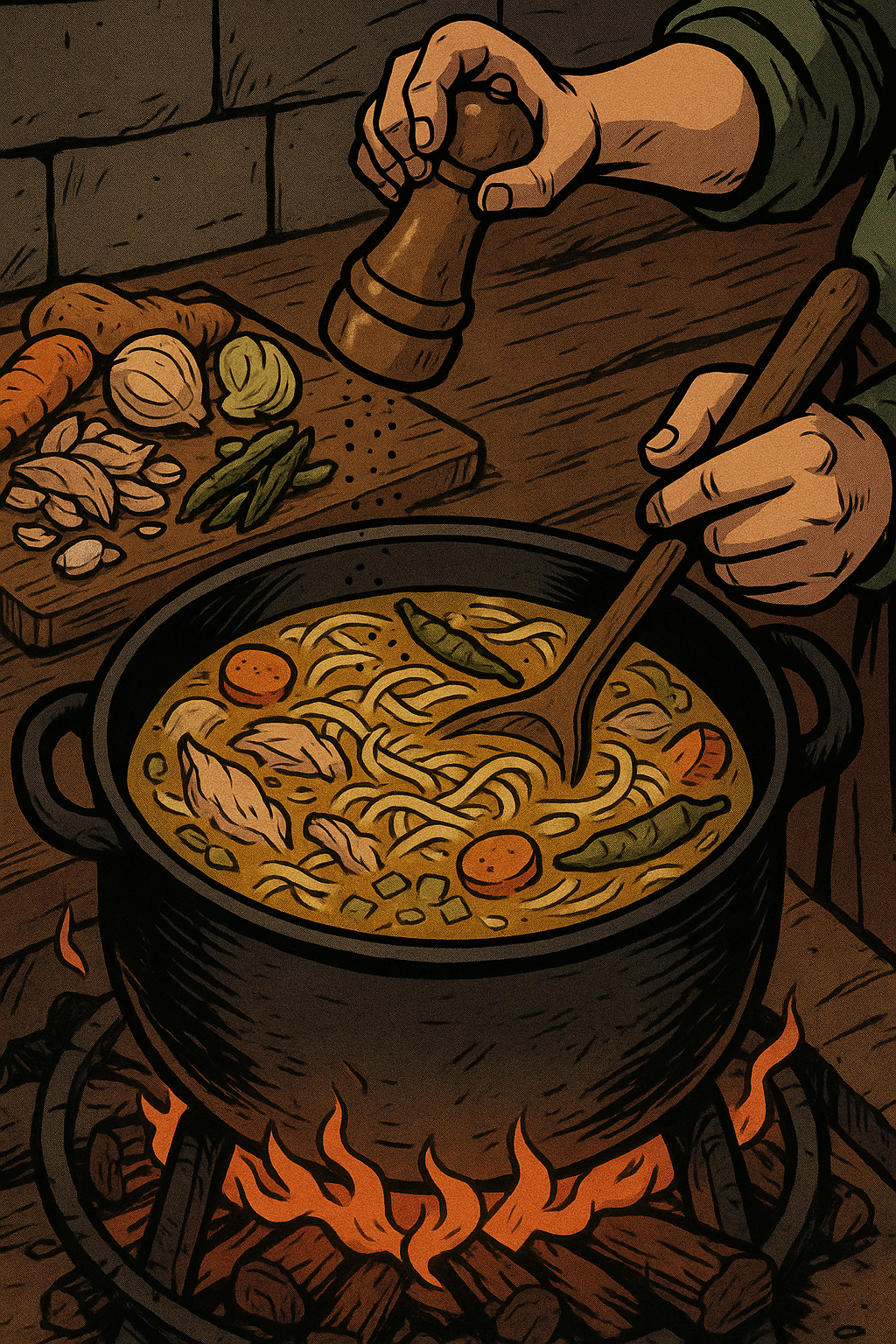
“There are a hundred grand feasts in the mountains, but none of them bring a house to silence the way a pot of this soup does. When it’s on the fire, you know someone’s heart needed steadying.”
Ingredients
Preparation Time: 20 minutes Cooking Time: 60 minutes Total Time: 80 minutes Serving Size: 1 bowl Yield: 1 large pot of soup (about 6–8 servings)





Ahhh, that sounds really delicious. A good chicken and noodle soup is just perfect, especially at this cold time of the year.
It's great. My wife just made a pot. It's her grandmother's recipe.