


Dragon Shrines
“Stand before one long enough and you will feel it. The mountains are not peaceful. They are watchful. Every crack in those carved jaws is a reminder that the Arin did not survive by luck. They survived by never letting the dragons forget they were being hunted too."
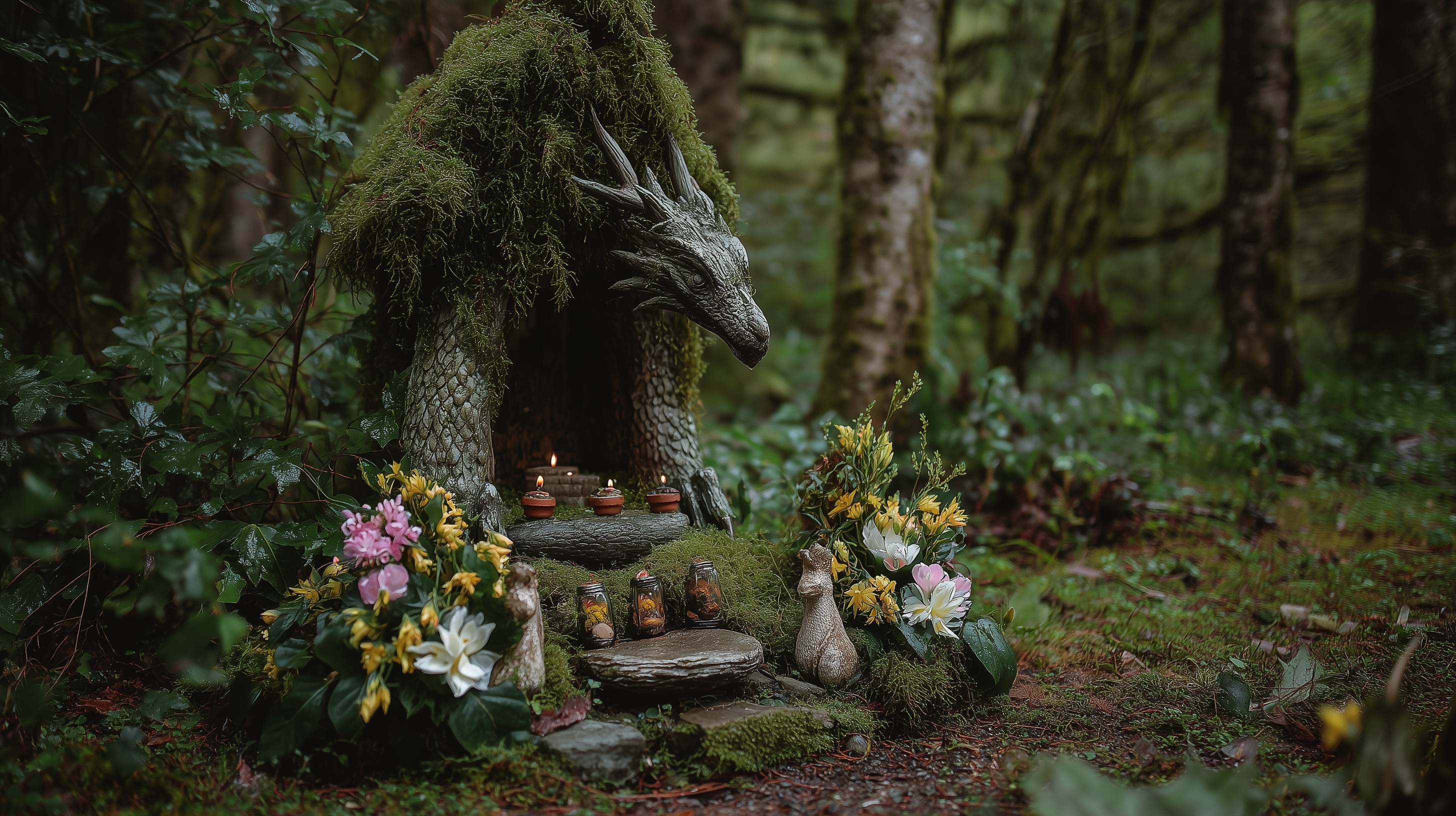
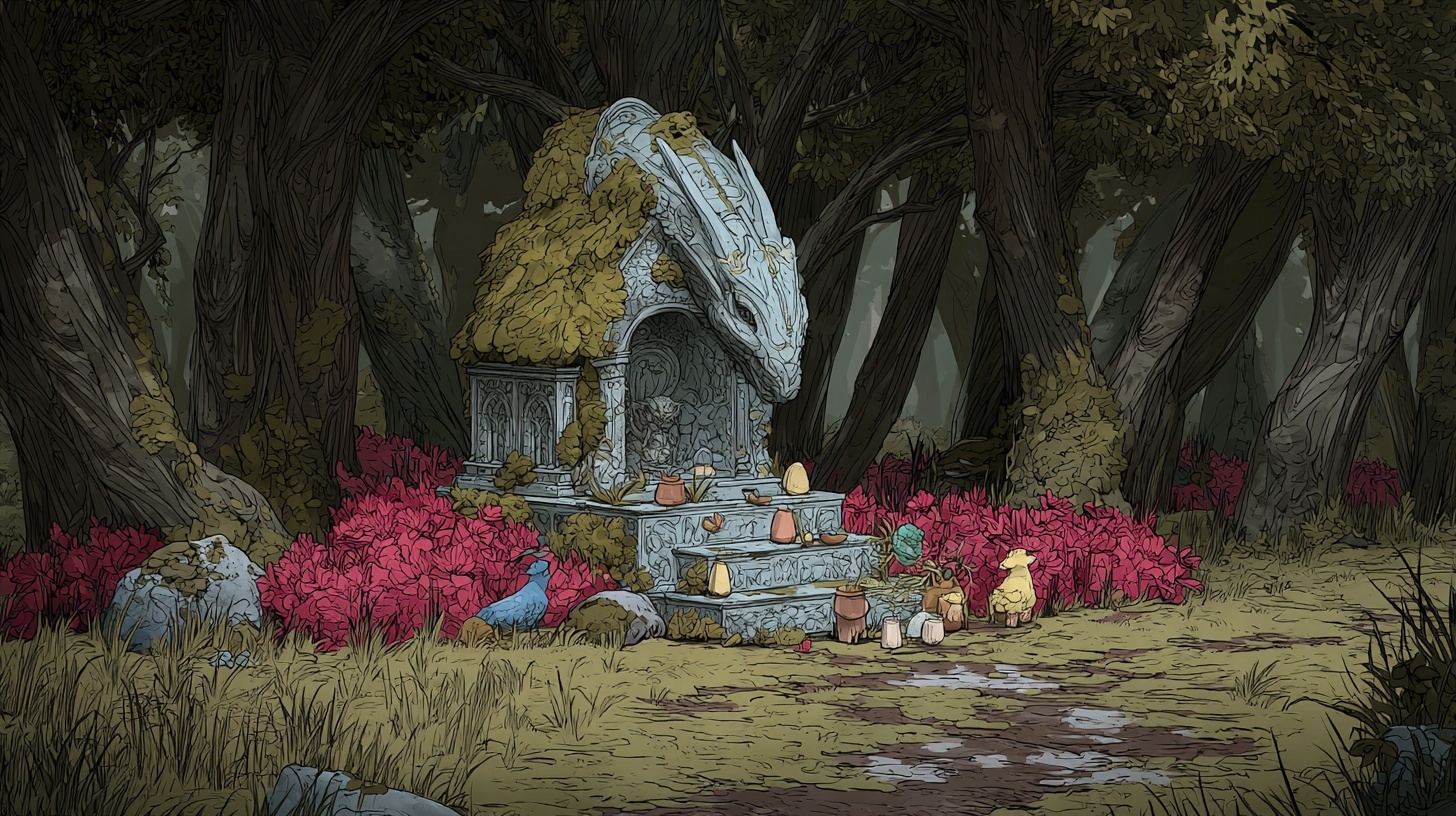
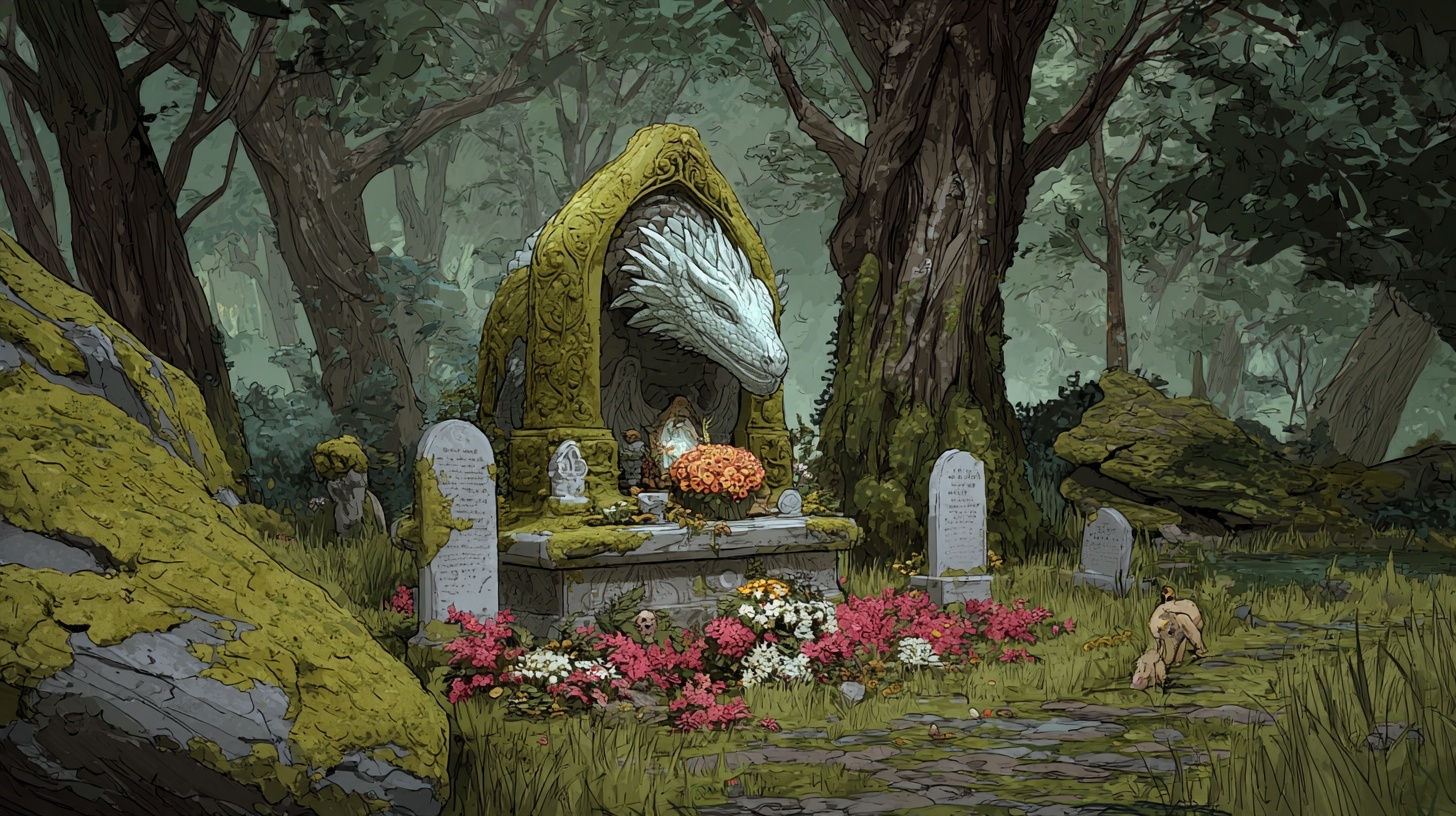
The shrines that mark the roads and pathways through the mountains of Areeott are unmistakable. Even the smallest among them bear the weight of centuries, their weathered forms carved from stone and shaped into draconic visages. These are not places of worship. No prayers are whispered here in reverence. No offerings are left to honor some lost or fallen creature. These shrines are monuments of hatred, symbols of defiance against an enemy that once threatened to undo the world itself. To an outsider the contradiction might be difficult to grasp. A land that despises dragons should not scatter its roads with their images. A people who pride themselves on their vigilance should not immortalize the very thing they seek to destroy. For the Arin these shrines are not tributes. They are warnings. The custom is simple, almost second nature to those who have walked these roads their entire lives. A traveler, upon passing a dragon shrine, is expected to acknowledge it. Some do this in silence, a glance and a nod to the stone sentinel before them. Others follow tradition more openly, reaching for a loose stone and hurling it at the effigy. The statues, though made of sturdy rock, bear the marks of centuries of such treatment. Cracks and chips. Noses worn away. Eyes smoothed to nothing. Even in death, in stillness, a dragon should know it is unwelcome. Not every shrine is met with violence. Some, particularly those near villages and mountain passes, are tended with a different sort of ritual. Here travelers leave small offerings such as sprigs of bitter herbs, bundles of flowers, or carved charms of bone or wood. Not as gifts, not as bribes, but as weapons. These are things believed to weaken dragons, to drive them away, to make the land inhospitable to their kind. Whether or not these offerings hold any real power is irrelevant. The act itself is what matters. To leave nothing at all is seen as foolish, an invitation for ill fortune. The origins of the shrines stretch back beyond written history, their earliest records appearing in the time of the Dragon Insurrection. Some say they were first erected as training tools, targets for soldiers and spellcasters to practice their strikes upon, stone stand ins for the monsters they would one day face. Others claim they were raised by the first Arin settlers to stand as wards against the beasts that lurked beyond Stormwatch Pass. Whatever their purpose at the time, their role has never changed. They exist to remind. Even now, in the age of quiet vigilance, the shrines remain. In the cities they are often built into the very bones of the land, hidden in plain sight. A gargoyle like carving on the arch of a bridge. A dragon face half buried in the stone of a public square, its features worn smooth by centuries of wind and rain. In the countryside they stand alone, nameless and unmoving. Guardians not of the people but of the memory that sustains them. To an outsider it is easy to misunderstand. To mistake them for relics of some forgotten reverence, to see them as harmless traditions with no true weight. To the Arin they are far more than that. They are a statement, a vow. A promise carved in stone. And a warning to all who might forget.
History
“Every chapel bell in the Western Kingdoms rings because Areeott held the line when the rest of us were already burning. Their stones shattered beneath dragonfire so ours did not. Their children learned the sound of wings so ours would never have to. We speak of unity. We speak of faith. Yet we do not speak of this. The truth is simple. We owe them a debt we will never name, because naming it would mean admitting just how close we came to losing the world.”
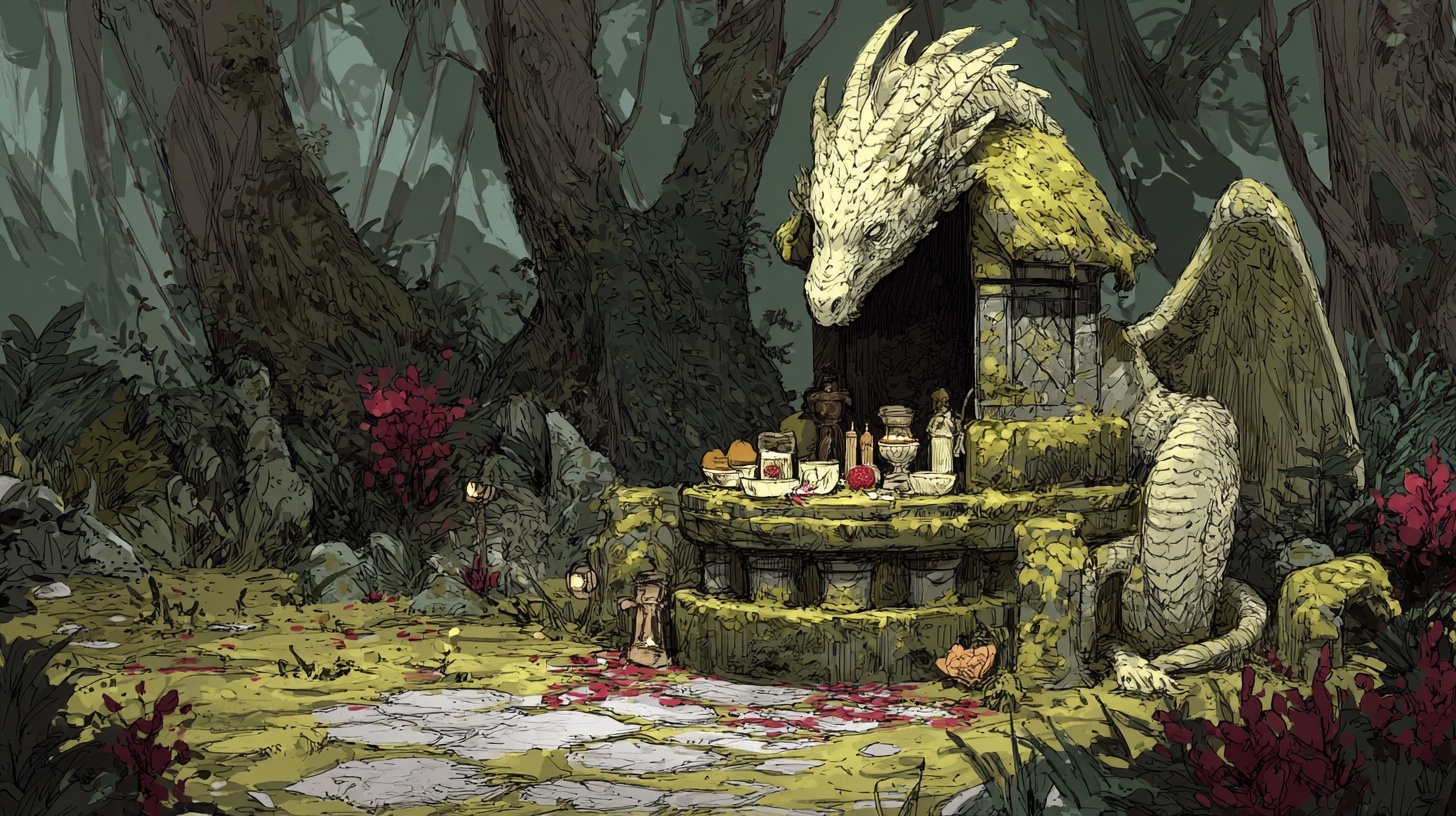
The history of the dragon shrines is older than the cantons, older than the Charter, older even than the first names recorded in the mountain valleys. They began as rough carvings on cliff faces, gouged into stone by hands that had no language for what hunted them. Before the rise of Areeott, before the Saints, before the Civil War reshaped the realm, the early clans carved dragon faces wherever the land narrowed into a pass. These first shrines were warnings, not art. A traveler would look upon the snarling visage and know what waited in the high winds above. In those days survival depended on remembering where terror dwelled, and no one trusted memory alone. As the centuries passed, the clans grew into communities and the crude carvings became shaped statues. Hunters learned to read the mountains, to follow the migrations of the beasts, and to treat their losses with a stern practicality. Those who survived a raid marked the site with a stone effigy so no one would forget the price paid. Entire family lines carried the memory of the fallen through these carvings, setting them into ridges and ravines to turn grief into guidance. There was no ceremony, no priesthood, only the shared understanding that neglecting such a warning was a mistake the land would not forgive. When the Dragon Insurrection swept across the old empire and the sky itself turned against the world, the shrines took on a new purpose. They became rallying points for villages scattered through the Agriss Mountains. People gathered at these stone sentinels to plan defenses, to mourn, and to decide which paths could still be traveled. Some clans shaped new shrines from shattered masonry left behind by fallen keeps. Others built them higher and narrower, believing that focusing fear into a single face made it easier to confront. The lorekeepers of these early decades did not speak of reverence. They spoke of remembering where the fire fell first. As the early settlements solidified into the cantons and the long rebuilding began, the shrines slipped into the background of daily life without losing their weight. Travelers still paused before them, farmers still touched the stone for luck before climbing into the passes, and guards still threw the first stone of every patrol to claim the road in the name of the living. Even as trade routes expanded and the first semblance of law replaced the old clan customs, the shrines remained untouched. No Baron ordered their removal. No decree outlawed their use. They were older than any claim to authority, and the people treated them as such. Over time these shrines became cultural anchors rather than battlefield markers. Their presence along the roads shaped how the Arin understood their land, reminding each generation that peace was won through vigilance rather than victory. Even when dragons became rare and the threat faded into the realm of stories, the shrines stood firm. Children grew up hearing tales of why stones should be thrown, why offerings of bitter herbs were left, and why a cracked shrine was repaired before a broken doorway. The customs continued because the memory behind them still mattered. By the time Areeott became a nation in name rather than scattered valleys, the shrines had already become part of its identity. They endured storms, wars, and the slow erosion of centuries, yet their purpose never shifted. They remained what they had always been. They reminded. They warned. They kept the mountain roads honest. And even now, when the world beyond the Agriss has forgotten much of its ancient fear, the shrines hold their ground. They stand as the oldest promise the Arin ever made to themselves. To remember what once hunted them. To ensure it never rises unchallenged again.
Execution
“Mountain customs look simple from a distance. A stone thrown, a bundle left on a ledge, a flower tucked beneath a carved jaw. Yet simplicity is the language of survival in the Agriss. Every gesture is a memory made physical. Every habit is a lesson that refused to die. The shrines are not relics. They are instructions, written in a script of wind, stone, and fear older than any kingdom.”
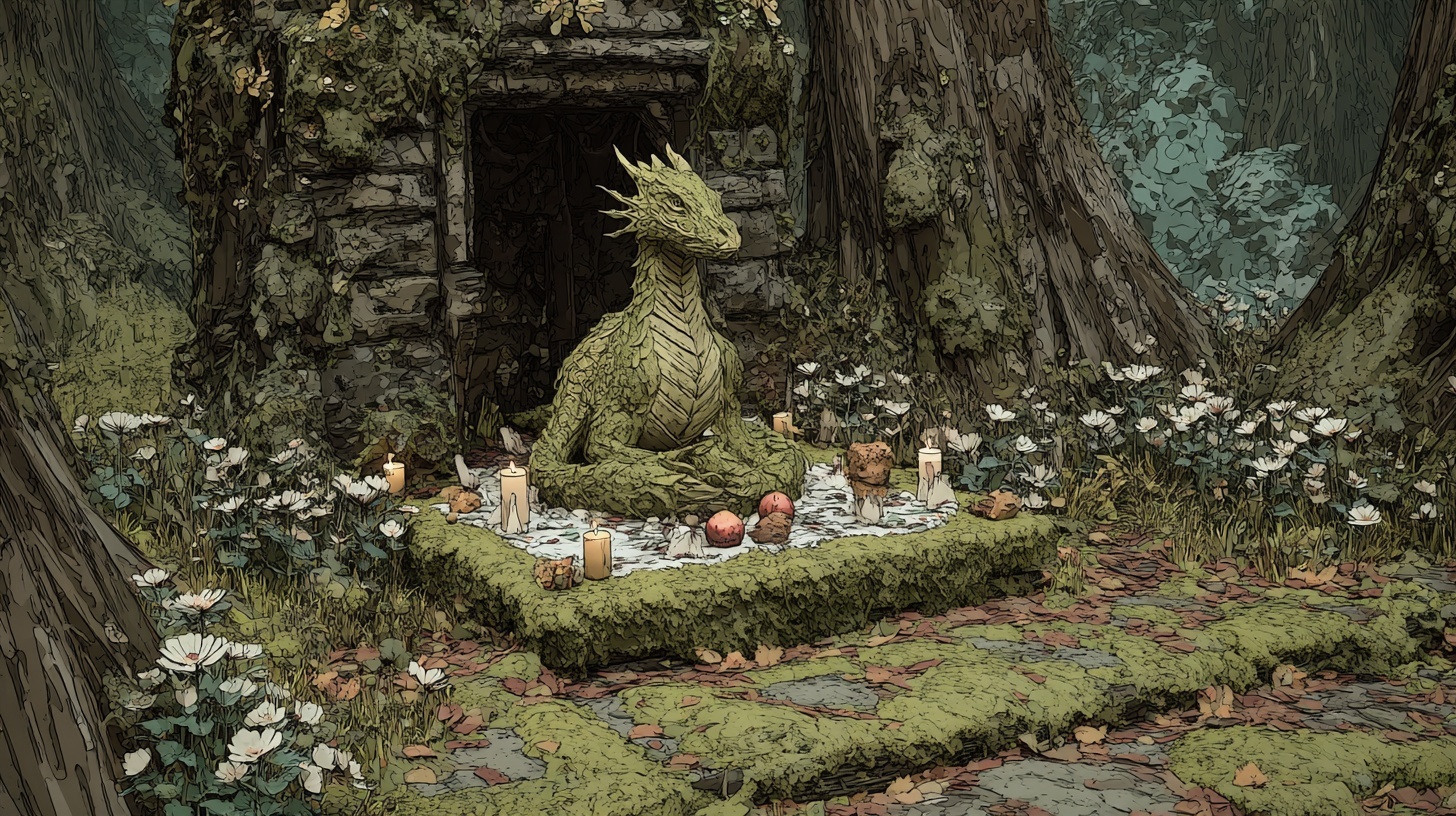
Execution of the observance begins before a traveler is even aware they are participating in it. The moment a shrine appears along the road, there is an unspoken understanding that something must be done. No guide calls attention to it. No elder gives direction. A person simply bends, picks up a stone, and sends it ringing against the carved dragon face. This throw is the core of the ritual, repeated by every generation without variation. It is a small act, quick enough that it blends seamlessly into the pace of the journey, yet heavy with the meaning that centuries layered upon it. Passing without throwing is considered strange, even careless, as if one walked by a warning sign and chose not to look. Alongside the stone throwing, travelers gather or carry little bundles of herbs, flowers, and stems that tradition holds as repellents to dragonkind. Bitterroot, mountain sage, frost leaf, and storm petals all find their way into these small arrangements. Some are freshly cut, others dried and tied neatly with twine. People place them at the base of the shrine or tuck them into crevices along the carved muzzle. The logic behind these offerings is not mystical. It is practical. These plants are widely believed to be things dragons dislike, not through fact, but through long repeated conviction. The offering becomes a quiet reminder that no one is exempt from the duty of vigilance. In busier areas the practice becomes almost rhythmic. Merchants walking to market toss stones without pausing in conversation. Children prepare their own bundles from whatever grows near the roadside and race to see whose throw lands true. Shepherds heading into the high passes leave herbs in the morning and replace them on their return. The shrines become community checkpoints, places where tradition is refreshed by sheer repetition. Even those who claim to hold no belief in old customs find themselves reaching for a stone because not doing so feels unfinished. Certain regions adapt the ritual to the landscape. In narrow passes where loose stones are scarce, travelers place their hands on the brow of the carving instead, a gesture that carries the same intention as a thrown rock. In places where flowers cannot bloom, hardy herbs dried during warmer months are carried for the sole purpose of leaving them at shrines during winter journeys. These adjustments do not alter the meaning. They simply reflect the demands of a land where survival rarely allows for rigid ceremony. Over time the shrines themselves become records of participation. Their faces wear chips from countless impacts. Their bases grow layered with wilted stems and dried petals. A shrine thick with offerings and scars is considered healthy, a sign that the road is well tended by those who travel it. A shrine left bare is cause for unease. It means travelers passed through in haste or fear. It means the ritual was neglected, and neglect in the mountains is rarely accidental. Together these actions create a tradition that binds the people of Areeott to their history and to each other. The execution of the ritual is never grand. It does not require ceremony or doctrine. It lives in the simple choice to mark the road with defiance, to leave a scent or stone that says the mountains are watched and guarded. In a land shaped by dragonfire and the memory of loss, these small repeated gestures keep the old stories alive and remind every traveler, young or old, that the fight to defend the Agriss belongs to all of them.
Components and tools
“They leave petals and bitter herbs at the feet of carved stone monsters and swear these things keep the dragons away. Scholars call it folklore. Merchants call it habit. Yet after walking their roads and seeing the way the mountains listen, I have come to wonder if the Arin know something the rest of us were too proud to learn.”
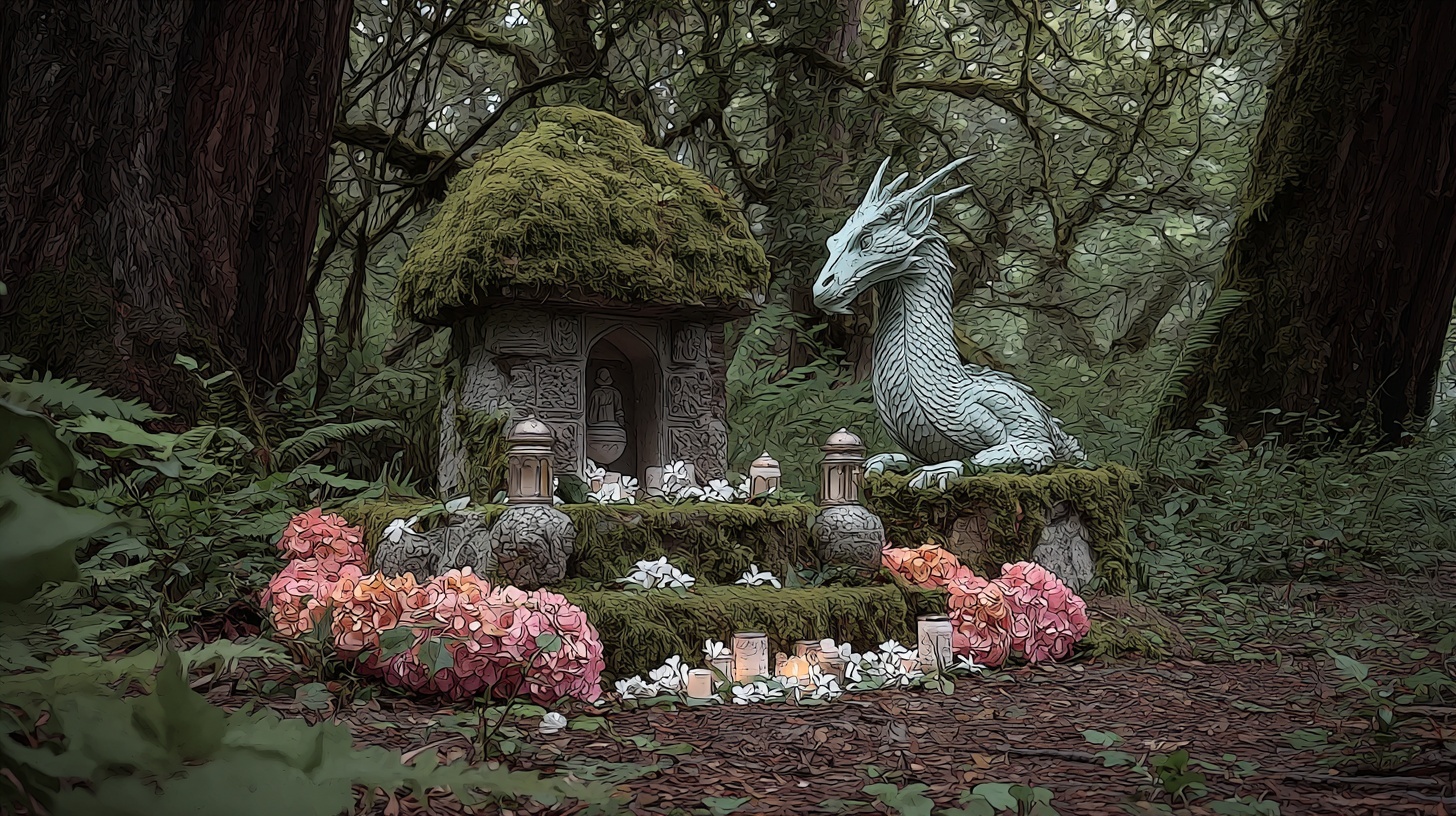
The components used in the shrine tradition are humble things carried in pockets or gathered from the roadside. The most common is the simple stone chosen for its weight in the hand rather than any symbolic meaning. Travelers pick up whatever is near and hurl it toward the carved dragon face with enough force to make contact. The stone is not meant to harm the shrine but to acknowledge it. This small tool of defiance is accessible to every traveler regardless of age or status, which is part of why the practice has endured for so long. Herbs and flowers form the second essential part of the observance. Bitterroot is prized for its sharp scent that lingers even in cold air. Mountain sage is tied in small bundles to release its aroma slowly as it dries. Frost leaf, with its pale edges, is added during the colder months because it survives where other plants cannot. Storm petals are gathered by children in the early spring and used for the brightness they bring to the shrines. None of these plants possess proven properties against dragonkind. Their strength lies in the belief that they do, and in the way such conviction binds the people together in a shared purpose. The tools used to prepare these bundles vary across the cantons but remain simple. Travelers carry twine woven from mountain flax, strips of cloth torn from worn garments, or cords braided at home for this specific use. These small ties secure the herbs together so they can be placed at the base of the shrine or tucked into the cracks worn by centuries of weather. Nothing ornate is required. The function matters more than the form. A bundle tied in haste is considered just as potent as one arranged with care. Some households keep dedicated pouches for gathering shrine materials. These pouches are often plain, made of wool or leather, and passed down through families without ceremony. They serve as a reminder that tending the shrines begins at home. During long journeys a traveler may refill the pouch with fresh cuttings from the valleys or dried herbs collected before the season turned. Maintaining a ready supply of these materials is viewed as responsible travel, an acknowledgment that no road in the Agriss Mountains should be walked unprepared. The shrines themselves act as tools in an indirect sense. Their carved faces catch wind and snow and hold the offerings placed upon them. Their surfaces are shaped to receive stones, which in turn strengthens the tradition by bearing the marks of constant use. A shrine too smooth suggests neglect. One covered in cracks and offerings shows a road well watched. The shrine is not treated as a sacred object but as a functional marker of vigilance, a place where travelers confirm their role in defending the land. Together these components and tools form a system as practical as it is symbolic. None are costly. None require specialized training. That accessibility is the heart of the ritual. Every stone thrown and every bundle placed says the same thing. Even the smallest contribution matters. Even the most ordinary traveler holds a piece of the old fight. And if the mountains truly remember such things, the Arin have ensured that the memory remains sharp.
Observance
“When you stand before a dragon shrine, you are not looking at superstition. You are looking at a promise. Every stone, every wilted herb, every torn petal says the same thing. If anything comes through Stormwatch Pass again, it will find the Arin waiting. Not just soldiers. Not just heroes. Everyone.”
Observance of the shrine tradition is woven so deeply into daily life that most Arin perform it without conscious thought. When a shrine appears along the road, the first response is almost always the same. Someone reaches for a loose stone. Someone else readies a small bundle of herbs or flowers. No signal is needed. No words are exchanged. The act has been passed down through so many generations that it feels as natural as adjusting one’s cloak against the wind. A traveler who moves past a shrine without acknowledging it draws uneasy glances, not out of superstition, but because ignoring a warning that old feels reckless. The stone throw remains the heart of the practice. The weight of the stone does not matter. Accuracy does not matter. Even striking the shrine is not required. What matters is the attempt, the gesture of defiance that reminds both the traveler and the land that dragons will not be given a foothold here. Children learn this before they can walk a trail without stumbling. Visitors pick it up after watching it once. And elders who can no longer travel still speak of the shrines as if they are old friends along the road, each one waiting patiently for its next stone. Alongside the stones, the leaving of herb bundles forms the second half of the custom. Bitterroot, mountain sage, frost leaf, storm petals, and other plants with sharp scents or bright colors are tied together and placed at the base of the shrine or tucked into its carved features. These plants are believed to be disliked by dragons, though no one claims this belief comes from direct knowledge. The power lies in the conviction rather than the botany. Every bundle says the same thing. Remember the old enemy. Do your part, however small, to keep it at bay. As the seasons turn, the flavor of the observance changes but never fades. In spring the shrines bloom with fresh petals. In summer they bristle with fragrant herbs. In autumn the offerings turn dry and brittle, their scents sharper from the cold. Winter strips the shrines bare, only for the first thaw to bring new bundles from the first travelers brave enough to test the passes. In this way the shrines become living markers of the year, their appearance shifting as surely as the mountain weather. What gives the observance its strength is not fear, but participation. Every person, from shepherd to merchant to wandering scholar, contributes to the ritual in some small way. It is not a matter of faith and not a matter of law. It is a quiet pact among those who share the road. The shrines stand so that the living remember what once hunted them, and the people respond with stones and herbs to say they have not forgotten. In the end, the observance is less about keeping dragons away and more about keeping the Arin united in purpose, bound together by an old tradition that still holds the mountains firm.

“Children often ask why the shrines are placed along roads instead of in temples. I tell them the truth. You build a road where you intend to live. You build a shrine where you refuse to die. The dragon’s face belongs on the path because that is where they tried to break us. The shrine stands because we did not break. Every traveler who passes adds another stitch to that old wound, keeping it closed.”
Primary Related Location
Important Locations
Related Organizations
Related Ethnicities



Comments