

Castle Witherbloom

“The castle does not loom. It waits. There is no weight of menace until you notice you are staring at it and cannot look away.”
— From the travel sketches of Keryn Vael, itinerant artist

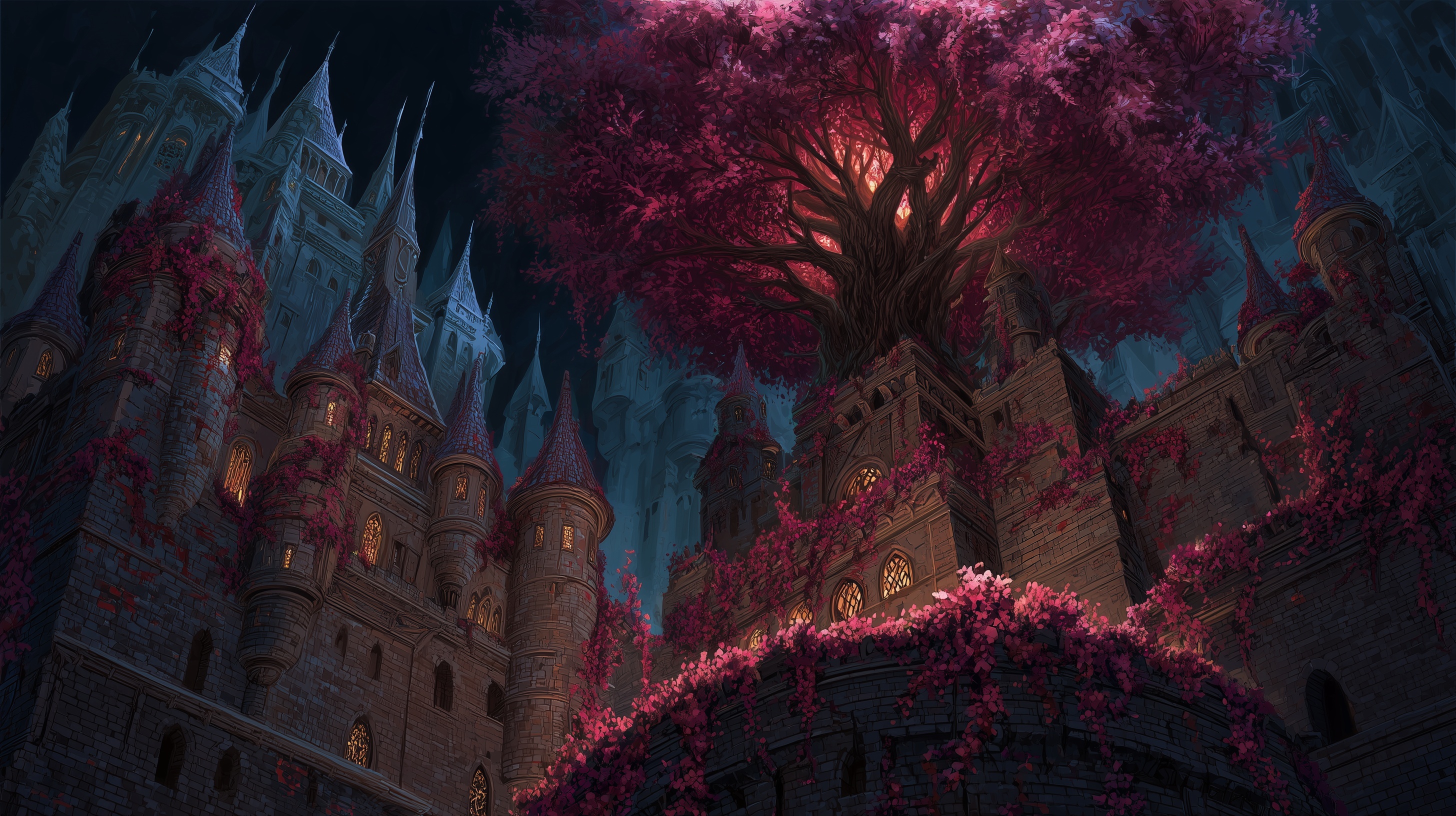
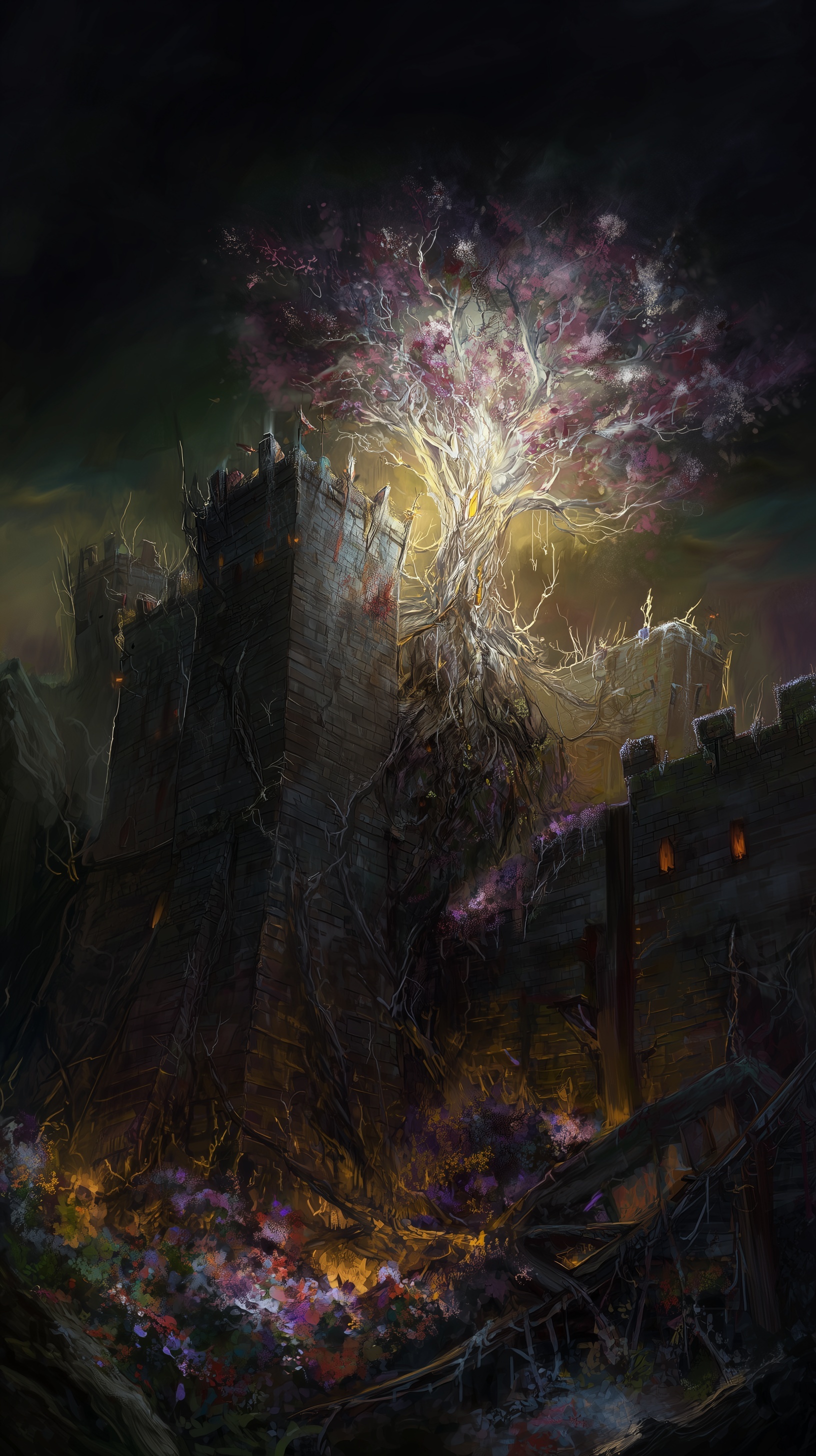
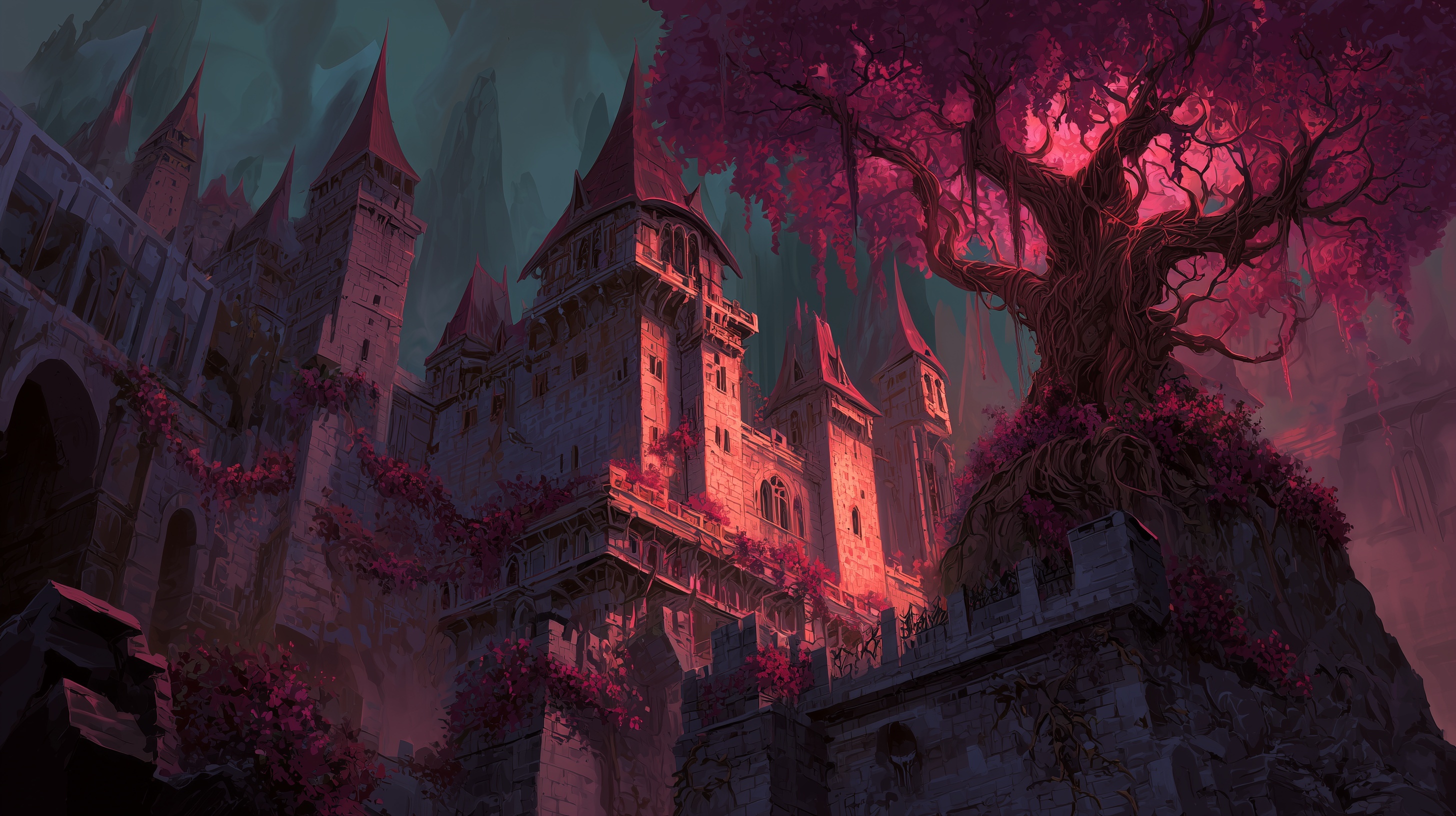
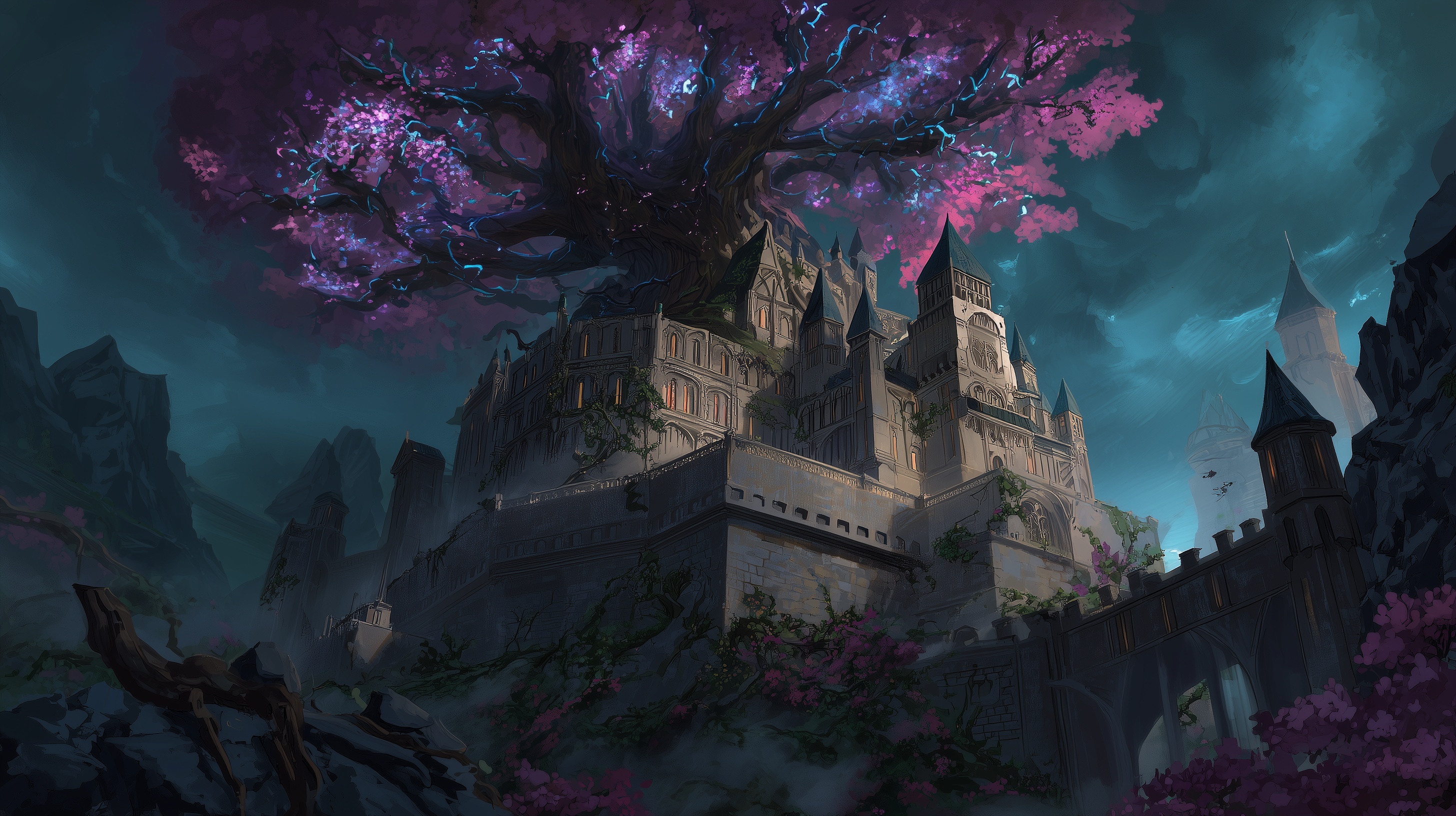
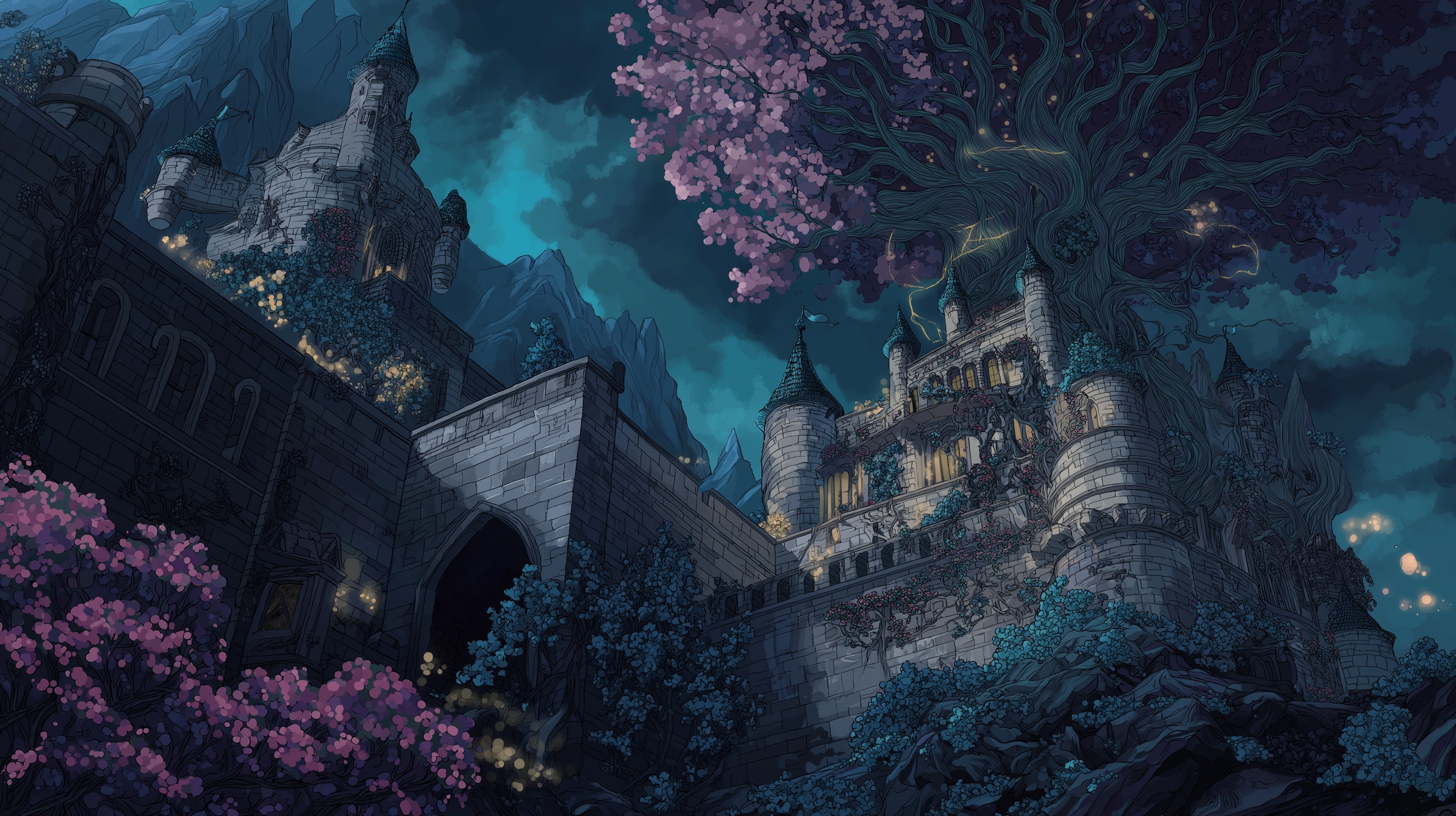
Castle Witherbloom is a place spoken of in hushed tones throughout Kestenvale. It is not a ruin left to crumble under the weight of centuries, but a complete fortress that has stood untouched since the day Avindor abandoned it. Its stone walls and towers remain upright and strong, yet they carry scars that no mason ever intended. The fae cairn stones used in its reconstruction changed the keep in ways that have never been undone. Travelers approaching from a distance see a fortress much like any other from the Avindor campaigns, but as they draw closer, the difference becomes impossible to ignore. Towers twist where they should stand straight, stone is streaked with faint and unnatural glow, and whole sections of the castle appear to breathe with a presence that is not of this world.   The keep commands attention from anyone who sets eyes on it. It does not blend into its surroundings like a forgotten ruin. It sits proud and complete, a fortress that should by all rights be manned and maintained, yet it has been silent for longer than living memory. That silence is what chills people most. The land around it is not cursed or warped. Fields grow as they always have, the air is no different, and the animals graze unbothered. All the strangeness is locked within the castle itself. That confinement makes the place more unsettling than if its reach spilled outward. People know something vast and wrong holds sway inside its walls, yet it never leaks beyond them. To many in Kestenvale, that is worse than open corruption, because it suggests control and purpose.   The name Witherbloom carries its own weight. It was once Green Mountain Keep, and in records that name survives, but no one uses it now. The name Witherbloom came from its appearance after the fae stones were added and the planar bleed began to manifest. Flowers bloom out of season on its walls, only to blacken and wither in the same breath. Vines creep across battlements only to shrivel back into dust when the moon shifts. The building itself seems to live in cycles of life and death, growth and decay, bloom and wither. The people who named it did not try to be poetic. They were simply describing what they saw.   What makes the castle unique is not only its appearance but its persistence. Other fortresses of the era were toppled or dismantled, their stones scattered into later works or swallowed by the land. Witherbloom has endured in its entirety. Its walls still hold. Its towers still rise. Even the scars of battle are absent. That endurance only adds to its infamy. For a fortress to remain intact and untouched for so long invites speculation, and for centuries people have whispered their own explanations. Some say it is a fae trick. Others claim it is a curse. A few insist it is a lure, designed to draw mortals in and never let them leave.   To the people of Kestenvale, the keep is a warning written into the landscape. They do not need signs or patrols to ward them away. Generations of stories have done that work. Those who live near the Crossroads know the fortress is not theirs to touch. They pass it by when necessity forces them near, but none linger without reason. In the taverns and hearths of the countryside, stories are told of fools and wanderers who went too close and did not return. Every family in Kestenvale knows someone who claims to have seen lights in its windows or heard voices when the moon was high. It is not the sort of place anyone stumbles into without knowing its reputation.   Yet despite all the warnings and all the stories, Castle Witherbloom has never lacked visitors. It draws adventurers, scholars, and treasure seekers like moths to a flame. They come because the castle is unique. They come because the relics inside remain untouched by The Shattering, and because the planar bleed makes each expedition different from the last. Some return with wealth, some with scars, and many not at all. The castle does not care who comes or who dies within it. It endures, and its reputation only grows as each generation adds new tales to its legend.

Purpose / Function

“They raised it to win a war. All they did was lose another.”
— Historian Brannik Olor, Avindor’s Folly in the East

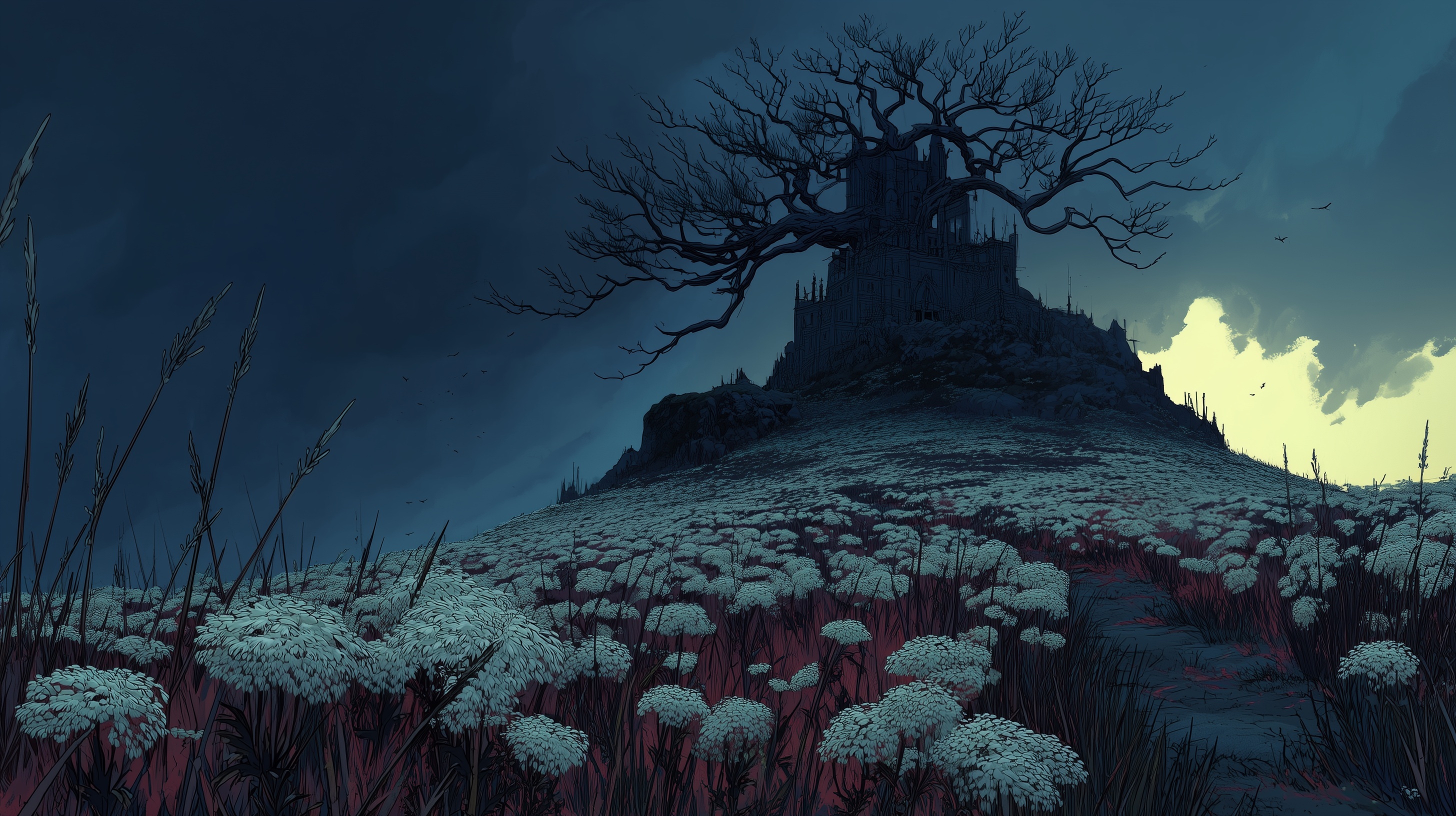
  When Green Mountain Keep was first constructed, its purpose was entirely practical. Avindor built it as a foothold in eastern Itora during one of its great colonial pushes. The surrounding duchies were fighting hard to hold their ground, and Avindor needed a base from which to launch deeper campaigns. This was no noble estate and no palace. It was not meant to host tournaments or feasts or ceremonies. It was a war installation, placed where Avindor could house troops, store supplies, and secure the roads that wound toward the mountains. Everything about it was built with the expectation that it would hold firm against attack, and for a time, it did.   The keep was designed to project power more than to inspire awe. Its blocky towers and fortified walls sent a simple message to the surrounding lands. Avindor was not only present but intending to stay. In the early years of its occupation, the garrison there served as a reminder that Avindor could reach deep into enemy territory and hold it. The keep’s purpose was to be unyielding. Soldiers were quartered within, officers conducted war councils in its halls, and its stores were meant to sustain an army for long campaigns. The keep’s value was measured in strategic terms, not in beauty or legacy.   The sabotage that crippled the keep forced Avindor to alter its purpose in ways no commander had foreseen. Once the fae cairn stones were taken and worked into the walls, the nature of the keep shifted forever. It remained a military fortress in design, but it no longer served its intended role. The corruption within its walls made it unreliable as a stronghold. Troops stationed there reported vanishing, strange visions, and hostile phenomena that undermined discipline. What had been built as a bastion of order and control became a place where neither could be guaranteed. Avindor’s officers wanted a keep that would hold territory. Instead they found themselves with a liability.   As years passed and Avindor’s campaign faltered, the keep’s purpose as a military foothold evaporated. They abandoned it not because they could not hold the land around it, but because the castle itself could not be trusted to fulfill its role. The occupation withdrew and left Green Mountain Keep behind. From that moment forward, its original purpose ceased to matter. The building had been made into something else, and its future would be shaped not by the designs of generals but by the forces unleashed when the cairns were dismantled.   In the centuries that followed, the purpose of the keep transformed into something Avindor never intended. To Kestenvale’s people, it became a landmark of fear and superstition, a reminder of how foreign arrogance could scar the land. To adventurers, it became an irresistible challenge, a place to test courage and skill against forces few dared face. To scholars, it became a mystery, a fortress that contained a unique overlap of planes and a living example of magic gone wrong. The keep’s purpose was no longer to guard roads or supply armies, but to tempt the brave and the foolish into its halls.   Today its purpose remains fluid. To most of Kestenvale it is useless, a relic that serves no function but to frighten children and lure outsiders. To those who seek power, it is a forge of opportunity where great treasures might be found if one survives the attempt. And to the fae and the shadow, it is a contested ground, a battleground where both realms vie for control. The keep has outlived its original reason for being and taken on new ones layered by centuries of abandonment and legend. What Avindor meant as a fortress has become something altogether stranger, and its purpose is now defined by those who dare step inside rather than those who once built it.

Alterations

“The cairns were graves, not quarries. Avindor gave the world many ruins. Witherbloom is the ruin that word gave back to itself.”
— Edran Folweir, lecturer on planar architecture, The Temple Observatory

 
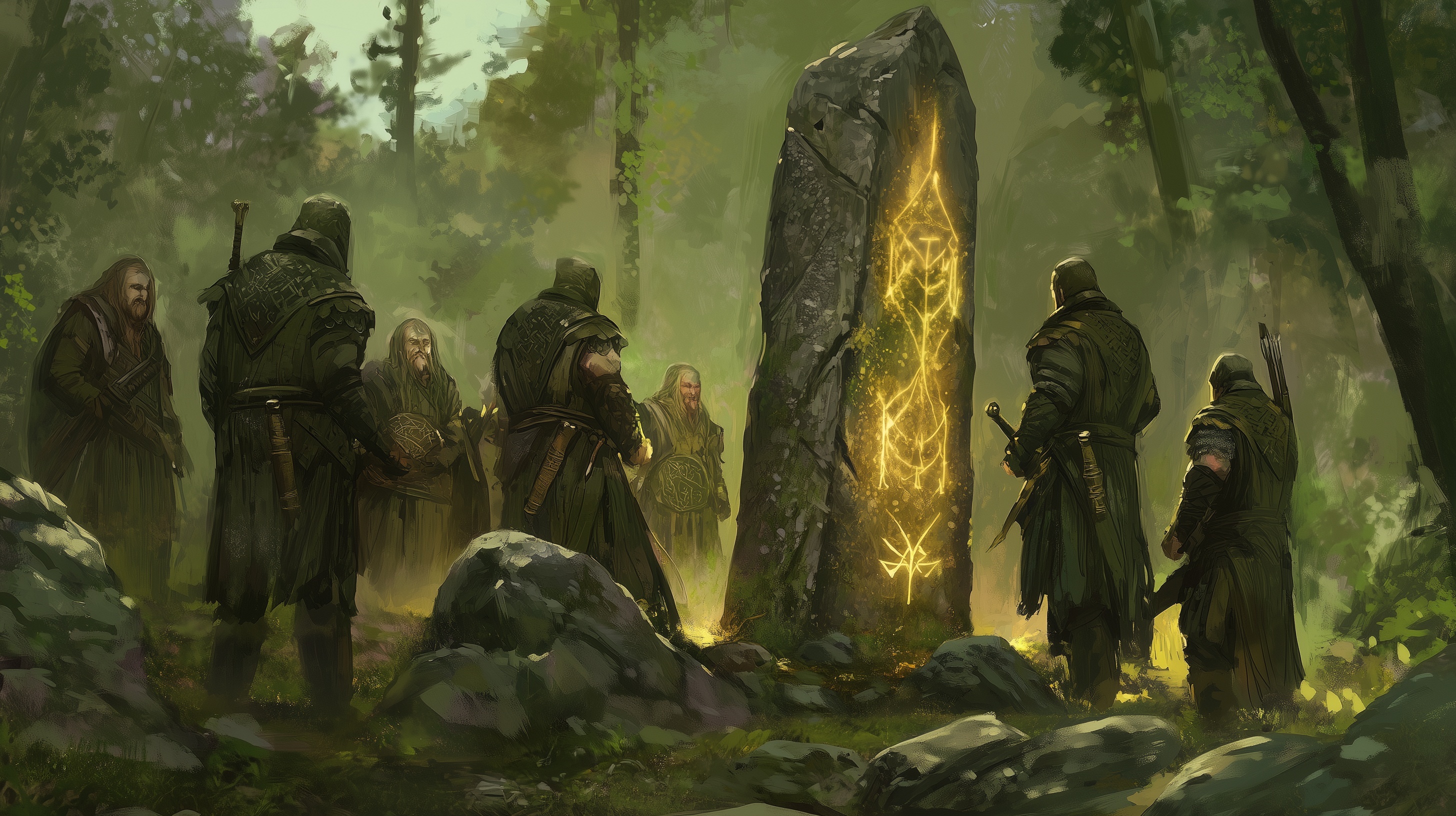
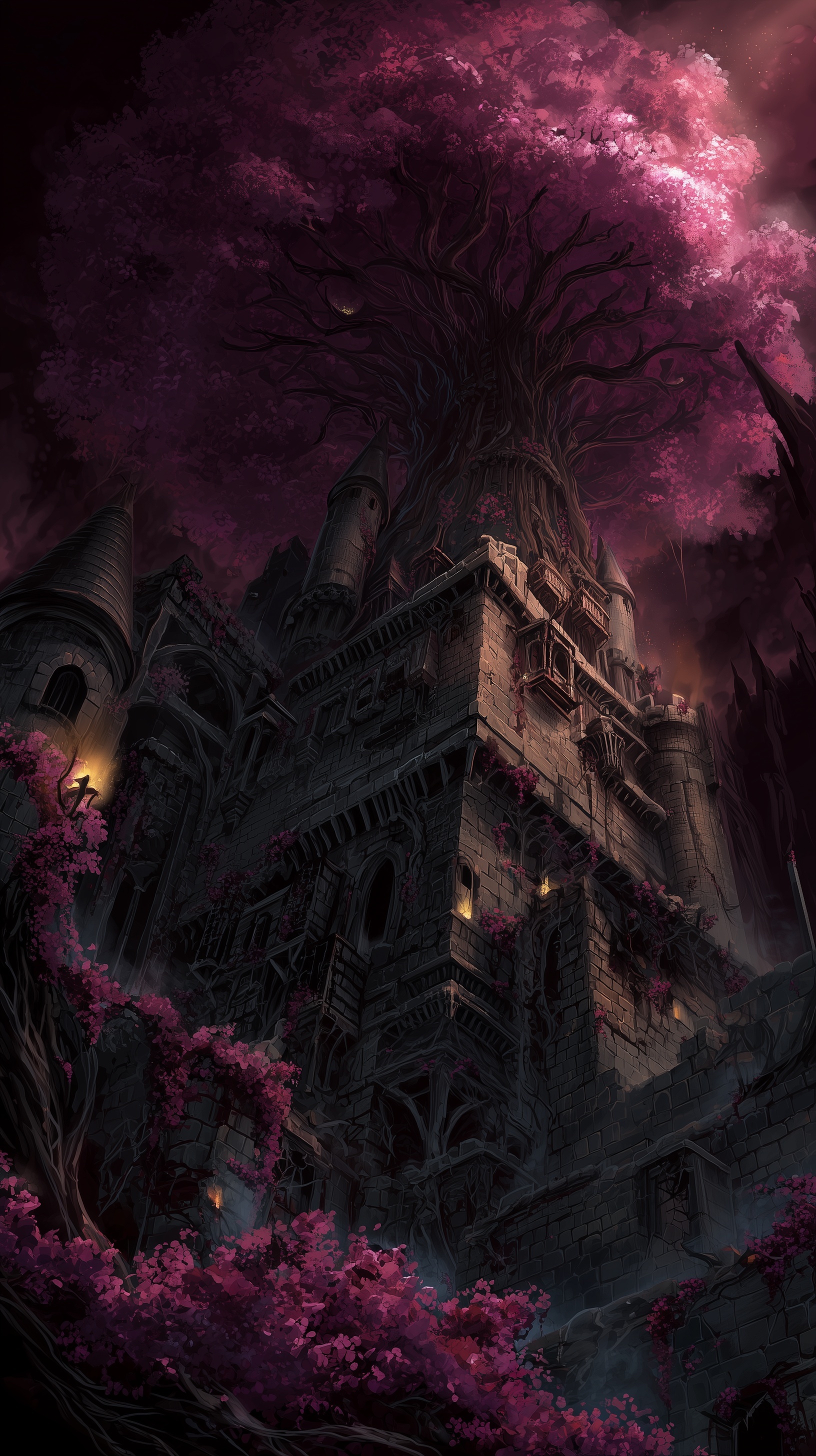
The greatest alteration to Green Mountain Keep came not from design but from desperation. After the act of sabotage left the fortress crippled, Avindor turned to the easiest source of stone at hand. They tore apart the ancient cairns of the fae and hauled the pieces back to rebuild their damaged walls and towers. At the time, it was seen as nothing more than a pragmatic solution. Soldiers needed shelter, walls needed patching, and supplies were limited. No one in command paused to wonder why those cairns had stood so long or what might happen if their stones were disturbed. That decision ensured that the keep would never again be ordinary.   The cairn stones carried magic older than Avindor, older even than the wars being fought in those valleys. Once set into the walls, their presence bled into the keep itself. At first the changes seemed cosmetic. Runes appeared where no chisels had cut. Stones glowed faintly in moonlight. Towers settled at odd angles. Soon the alterations became impossible to ignore. Whole sections of the keep seemed to grow and twist, absorbing vines and roots into their structure until stone and living wood became inseparable. What had begun as hasty repair became permanent transformation.   As years passed, the alterations spread through the castle like a sickness. Some rooms remained steadfast in their Avindor design, unchanged from the day they were laid. Others shifted subtly depending on the moon. A hall that once held long tables might sprout flowers along its walls when the Feywild’s influence was strong, only to blacken into husks under the pull of the Shadowfell. Stairs led to different landings than they had before, windows opened onto views that were not the surrounding hills, and entire wings took on new character overnight. The alterations were not stable, and they never stopped.  
The greatest of these alterations is that the keep became more than a fortress. It became a contested ground between planes. The fae magic in the cairns opened paths to the Feywild, while the shadow drawn to the corruption forced its way in from the opposite side. The keep became a prize fought over not by armies but by powers greater than the mortal realm. This was no longer a structure shaped by masons and architects. It was reshaped by forces that did not care for Human intention. Every alteration reflected that struggle, and every stone carried the weight of it.   Over time the alterations became part of the castle’s identity. Two thirds of the keep still resembles the fortress that Avindor built, but the remainder looks like something else entirely. A tree rising into a tower, walls veined with unnatural glow, gates that open where they should not, all mark the keep as a place set apart. The further one goes inside, the deeper the alterations become. At the heart of the castle there is little left untouched, and every chamber bears the mark of either fae or shadow, depending on the moon’s pull. These changes make mapping it nearly impossible and ensure that no two expeditions ever report the same journey.   The alterations continue into the present day. They have never ceased, and they have never been brought under control. What Avindor built was meant to last as stone, fixed and certain, but what they created instead is a fortress that cannot remain still. The keep shifts under the weight of powers beyond it, and the alterations have become its truest feature. Green Mountain Keep was meant to be a symbol of permanence. Castle Witherbloom endures instead as a symbol of instability, forever changing, forever claimed by forces outside mortal design.

Architecture

“Seen from the hill at dawn, it is half a soldier’s keep and half a dream’s ruin.”
— Mara Snow, wandering archivist


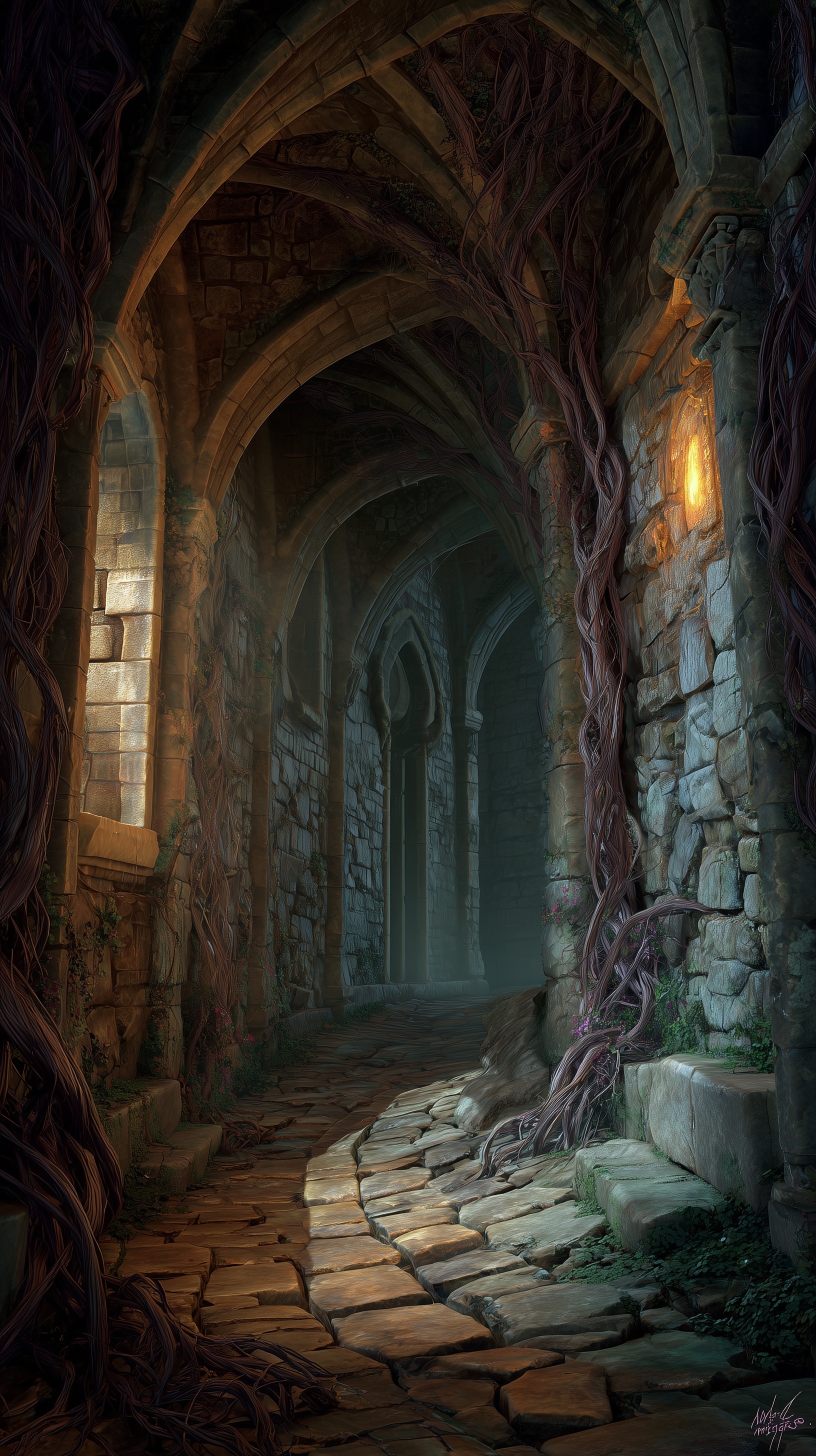
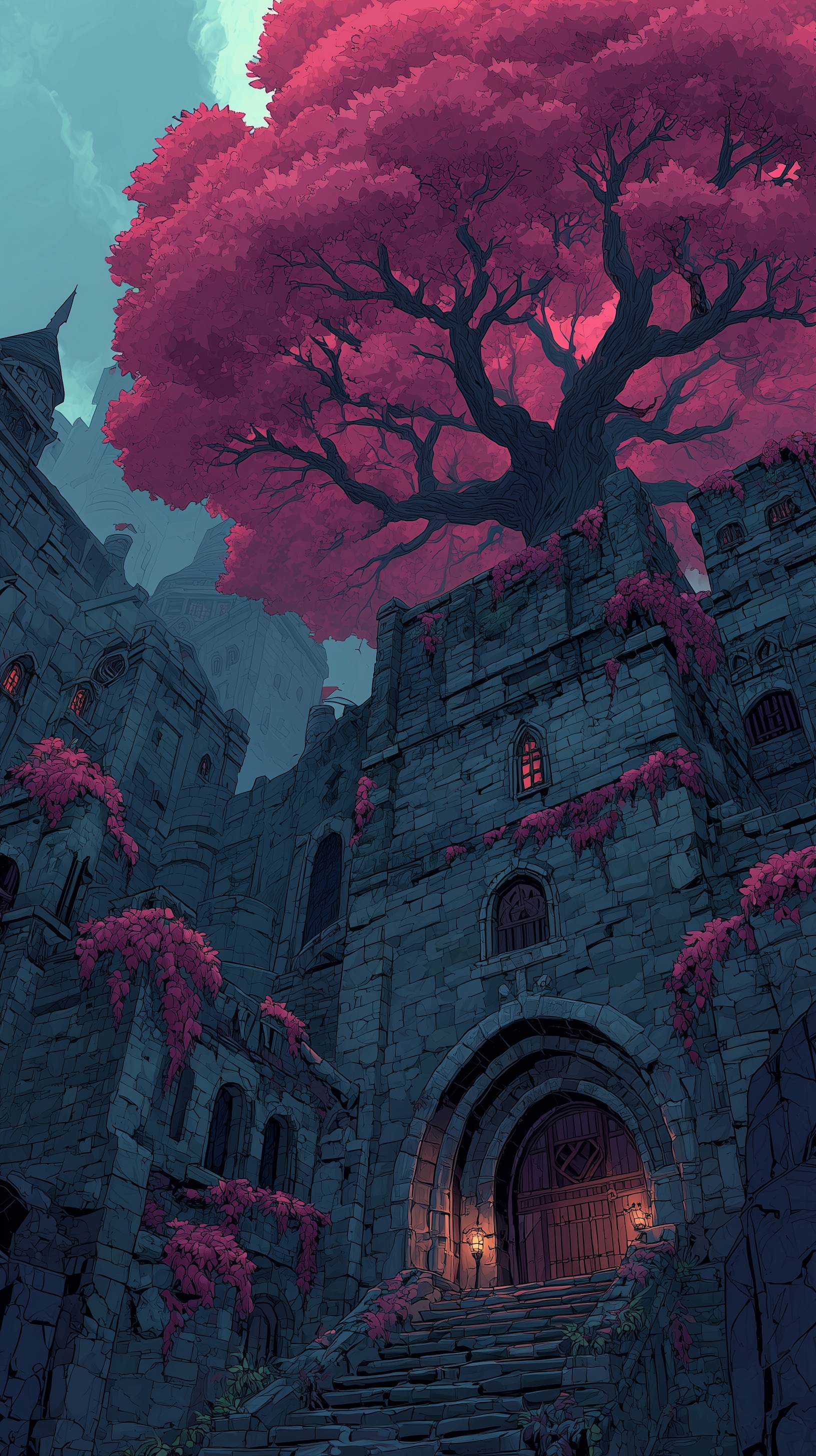
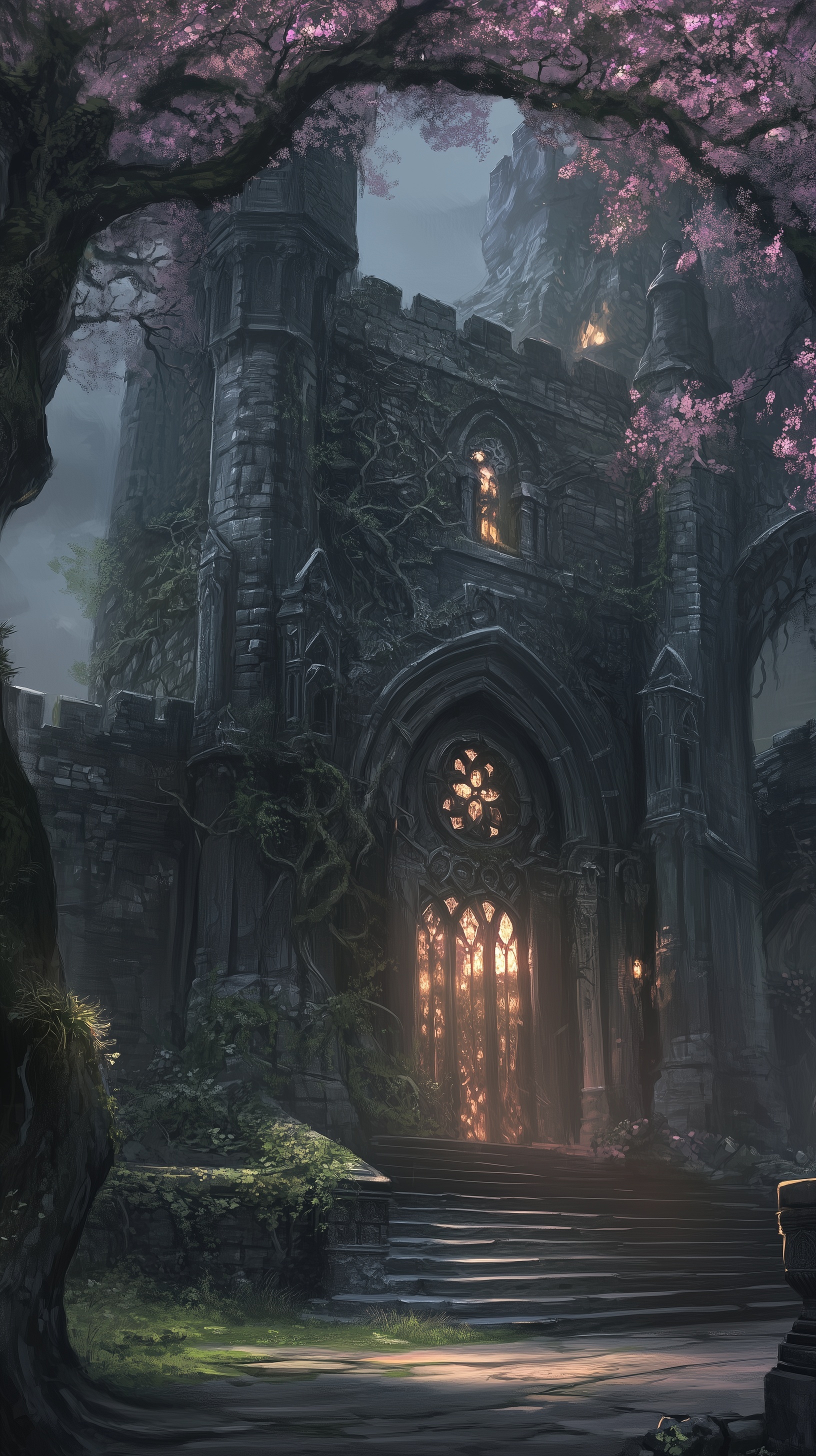
From a distance, Castle Witherbloom appears much like any other Avindor keep. Its silhouette is square and squat, with heavy curtain walls, towers at each corner, and a central block rising above them. It is the classic Avindor style of fortification, made for defense rather than ornament. The walls are thick and plain, pierced by narrow arrow slits, with battlements lined in parapets for archers. At first glance, it resembles the countless other strongholds Avindor built during its campaigns, practical and severe, a fortress that brooks no embellishment. Yet even at a distance, the illusion does not hold. One tower curves as if it grew rather than was built, and sections of wall shimmer faintly under moonlight.   As one approaches, the differences become more obvious. The stones of the original construction are uniform blocks of gray quarried rock, but the cairn stones stand out, cut unevenly and etched with faint markings that no chisel left. They are set at strange angles, sometimes too smooth, sometimes veined with light that pulses faintly like the beat of a heart. Entire sections of wall seem to sag and stretch, as if the stone itself is weary of standing. Vines have sunk deep into mortar and in places have become inseparable from the walls, so that roots protrude like ribs from beneath the surface. The architecture of mortal hands remains, but it is overlaid with something other, something alien.   The interior tells the story more clearly. Avindor halls are built straight and narrow, designed to move soldiers quickly and to allow defenders to hold choke points. Stone vaults rise over the great hall, plain and strong, meant to impress through scale rather than beauty. Yet in some wings the lines bend. Ceilings arch too high, or swoop into curves that no mason designed. Pillars sprout growths like bark or bloom faint flowers that close as the moon shifts. The chapel, once a simple square room with bare walls, now carries an altar that seems to grow and recede, its shape never the same from one night to the next. Avindor built these spaces with order in mind, but the architecture refuses to remain ordered.   Even within the parts that remain unchanged, the difference is felt. The barracks still line one wing, the stables stand near the gatehouse, and the guardhouse looms over the yard, all arranged as they once were. Yet their walls are veined with faint glow, their angles subtly askew, their windows opening onto views that sometimes look out into the surrounding hills and sometimes onto impossible landscapes. The old Avindor efficiency remains visible, but it has been compromised. The architecture is still recognizably theirs, yet no longer belongs to them.   The altered sections feel as though they were described to someone who had never seen a fortress and then built by hand from memory. A tower that looks more like a tree trunk than stone, rooms that bend at impossible angles, doorways that lead upward into ceilings or downward into roots, all suggest a logic that is not mortal. These parts of the castle do not feel like ruins. They feel like experiments. The style of Avindor is still present beneath it all, but it is buried under the weight of fae imagination and shadow corruption. No two visitors agree on what they saw inside these altered spaces, and no drawing or map can capture them.   Together, the original Avindor stonework and the fae-altered repairs have created a hybrid structure that cannot be fully described. It is part fortress, part living thing, and part shifting puzzle. The architecture is a mirror of the castle’s nature itself, always in conflict, always pulled between permanence and transformation. For some, that makes it fascinating. For others, it makes it unbearable. The keep was built to be clear, strong, and simple, yet it now stands as a place of confusion and contradiction. Its architecture has become its legend, and its legend cannot be untangled from its walls.


Defenses

“The walls are strong, yes, but the true defense is the castle’s rules. Fail to kneel where it demands, fail to be silent when silence is owed, and it kills you for breaking laws you never knew existed.”
— Larien Duskwatch, one of three survivors of the Third Expedition of Velka Company

 
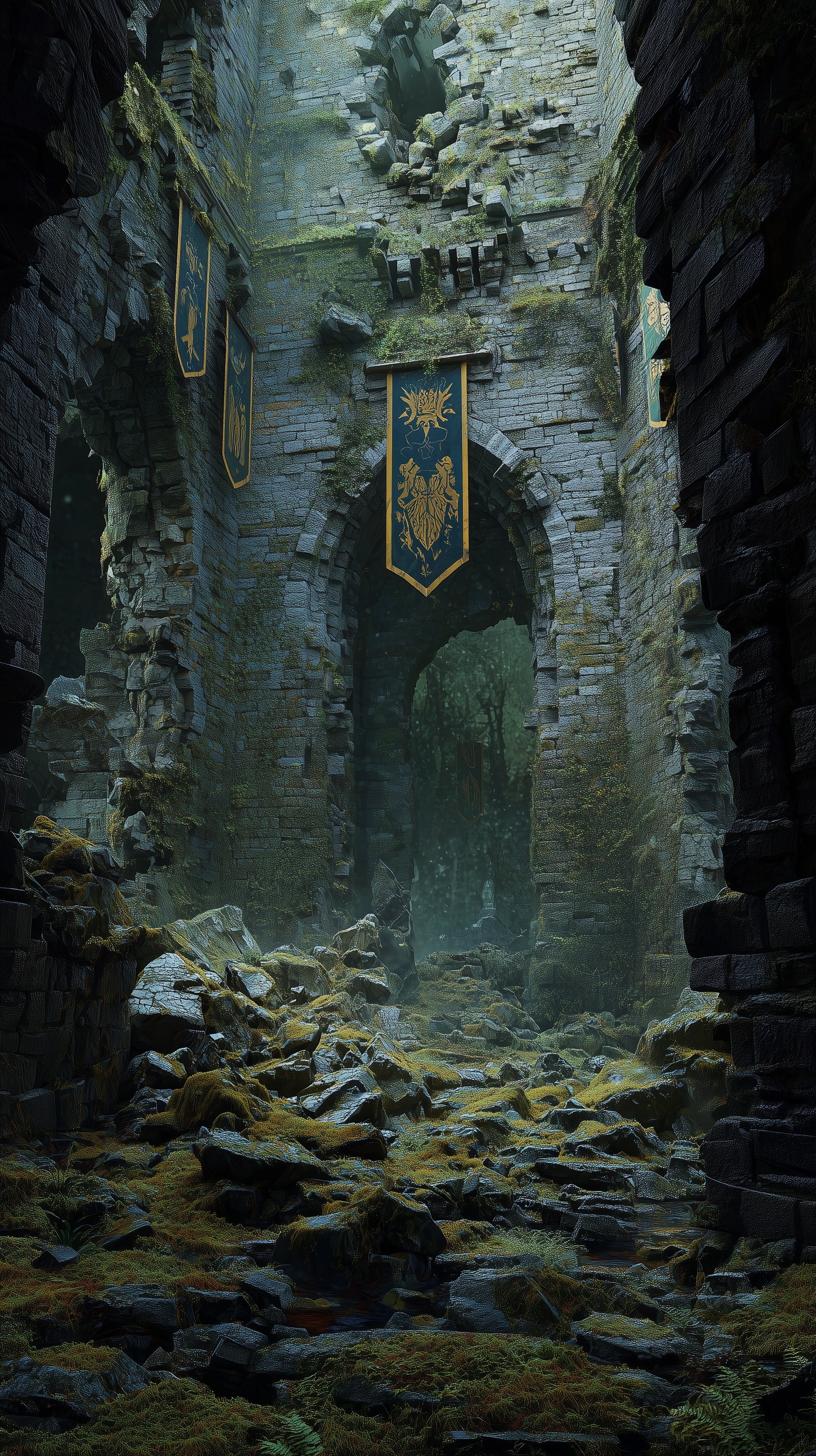
Castle Witherbloom was built to hold ground, and its defenses reflect the cold pragmatism of Avindor’s design. The curtain walls are tall and unbroken by ornament, built thick enough to resist siege engines and lined with parapets where soldiers once stood watch. Towers at each corner provided overlapping fields of fire, ensuring that any approach could be covered by arrows or bolts. The gatehouse was narrow and heavily fortified, forcing attackers to funnel into a killing ground where defenders had the advantage. From the outside, even now, the keep looks formidable. Its lines may be old fashioned by modern standards, but in its time it was considered nearly unassailable.   Inside, the defensive layout continues. Halls are built to restrict movement, with choke points that can be held by a handful of soldiers against many times their number. Staircases are narrow and steep, designed to slow advances and to leave attackers exposed. Barracks are placed near defensive positions to allow for quick mobilization, and the yard is overlooked by the towers, giving archers command of the open space within. These were the defenses that Avindor relied upon when they built Green Mountain Keep. Every part of the fortress was designed with war in mind, and for a time, it served that role well.   The alterations that came later changed the nature of those defenses in ways no engineer could have planned. Arrow slits in some places now glow faintly with light instead of opening onto the outside world. Gates do not always lead where they should, sometimes opening onto chambers deep inside the castle, or onto vistas of the Feywild or the Shadowfell. Traps that were once simple kill zones have become unpredictable, warped by planar bleed. In some phases of the moon, a courtyard may be open and empty, while in others it may be filled with thorns, mist, or shadows that conceal threats unseen. What was once a fortress of predictable stone became a maze of unreliable defenses.   These changes make the castle more dangerous to enter than to assault from without. The walls and towers remain strong, but the true threat lies inside. Adventurers speak of wards that trigger not by the pull of a lever or the pressure of a step, but by failure to perform some long forgotten ritual. A man may lose his life for not kneeling in the right spot, or for speaking when silence was required. The defenses of Witherbloom have become tests of behavior rather than strength. They punish not only trespass but ignorance, and no one can be certain what rule will apply on a given night.  
Despite this, the old defenses still matter. The walls have not fallen, and the towers still stand. The fortress remains as physically imposing as the day it was abandoned. What has changed is the way it fights those who dare enter. Once, a garrison of soldiers would have stood behind those walls. Now, the keep itself is the garrison, its defenses shifting between fae tricks and shadow curses. A place that was once fortified by stone and steel is now fortified by magic and malice. In many ways, it is stronger than it ever was, because there is no army to defeat, no gate to batter down, and no commander to outlast.   The defenses of Castle Witherbloom have become part of its identity. It is not simply a ruin to be explored. It is a fortress that still fights to protect itself, though no mortal army remains inside. Those who walk its halls find themselves beset not by defenders of flesh and blood, but by a structure that enforces its own rules. What was built to keep Avindor’s enemies out now keeps intruders trapped within. That transformation is the final layer of defense, and it is the one that has made the keep notorious long after its builders and their wars were forgotten.

History

“They say the cairns cried when they were torn apart. I think they were laughing.”
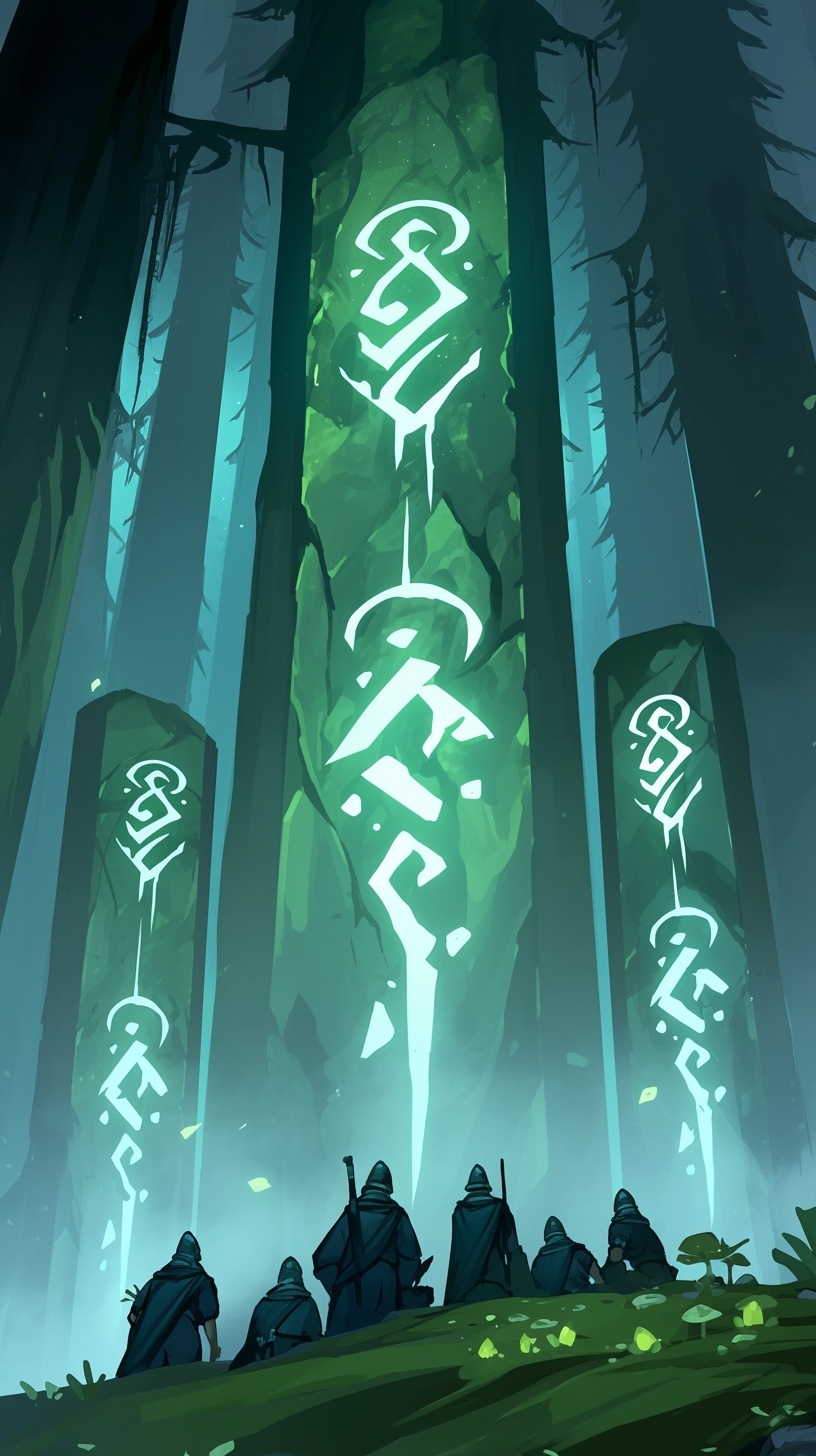
— Old soldier’s tale told by Fenrik Dull, veteran of the Summer Court Campaign

 
The story of Castle Witherbloom begins with Avindor’s ambition. In its age of expansion the empire sought to secure a foothold deep in eastern Itora where the local duchies resisted but were slowly pressed back. Green Mountain Keep was laid stone by stone as a symbol of Avindor’s intent to stay. It was built quickly with practical design and with one purpose in mind. To anchor Avindor’s presence and to project its power further into the east. The keep rose in a land that had already seen fighting and its foundations were laid not in peace but in the expectation of war.   For a time it served that role well. Troops filled its barracks, officers held their councils in its chambers, and its towers looked out over a contested countryside. To those who lived nearby the keep was a sign of Avindor’s reach, and to Avindor itself it was a testament to their determination. The campaigns pressed further supported by the supply lines that ran through the keep. Yet Green Mountain Keep never stood secure. It was always a fortress in hostile ground, surrounded by enemies who waited for an opportunity.   That opportunity came from within. The act of sabotage that crippled the keep was never solved, but its effects were devastating. Walls were shattered, towers weakened, and the fortress was left vulnerable. In their haste to restore it Avindor made the fateful choice to dismantle nearby fae cairns. Those ancient stones had stood since before Avindor’s coming, and the decision to break them was not one of ignorance but of arrogance. The cairns were reduced to rubble and carried back to patch the keep, and from that moment on the fortress was changed forever.   The alterations began slowly. Runes appeared where no hand had carved them. Stones glimmered with faint light. Towers twisted as though grown rather than built. Soldiers whispered of strange sounds, of shadows that moved on their own, of rooms that felt different from one day to the next. The officers tried to suppress these rumors but the changes only grew worse. What was once a symbol of Avindor’s permanence had become a place of instability. The cairn stones had not been tamed. They had carried their own power into the keep, and that power clashed with the very fabric of the fortress.   The Battle of Summer Court sealed its fate. Fought in the fields outside the keep, the clash was brutal and left its mark on the land. Many fell there and their presence lingered. The ground became heavy with the memory of violence and the ghosts of the slain were seen for years after. The keep itself absorbed much of that energy, drawn into its walls by the planar bleed that already marked it. From then on the fortress was not only a place of fae and shadow but of haunting. The three forces intertwined and no commander could trust what the keep had become.   Avindor’s campaigns faltered in the east and the keep became more a burden than a boon. The fortress that had been meant to secure the region was now feared by those ordered to garrison it. Soldiers deserted, officers despaired, and supplies moved elsewhere. When the larger war turned against Avindor and the push into Areeott failed Green Mountain Keep was left behind. Avindor withdrew and in their retreat they did not bother to destroy it. They simply abandoned it. The year of its desertion marked the end of its service to empire and the beginning of its life as legend.   In the centuries since the keep has been known only as Castle Witherbloom. The old name survives in records but among the living it is forgotten. Stories grew around it. Tales of the haunted battlefield, of the walls that changed with the moon, of adventurers who entered and never returned. During the Shattering its importance surged once more. While magic failed across the world, relics taken from Witherbloom continued to function. That made the castle a beacon for adventurers, scholars, and opportunists. Many went in, some came back, and the keep’s reputation only grew darker.   Today its history is etched not only in stone but in memory. The people of Kestenvale do not need books to tell them what the castle is. They know it as a place of arrogance and failure where Avindor’s reach was broken and where powers beyond mortal control took root. To scholars it remains a subject of fascination. To adventurers it remains a trial. To the people who live near it, it remains a warning. Its history is not finished, for every new expedition adds another chapter, and every new disappearance confirms what has always been true. Castle Witherbloom endures and the story of its curse endures with it.


Tourism

“Write your will before you walk through the gate. The castle keeps better records than we do.”
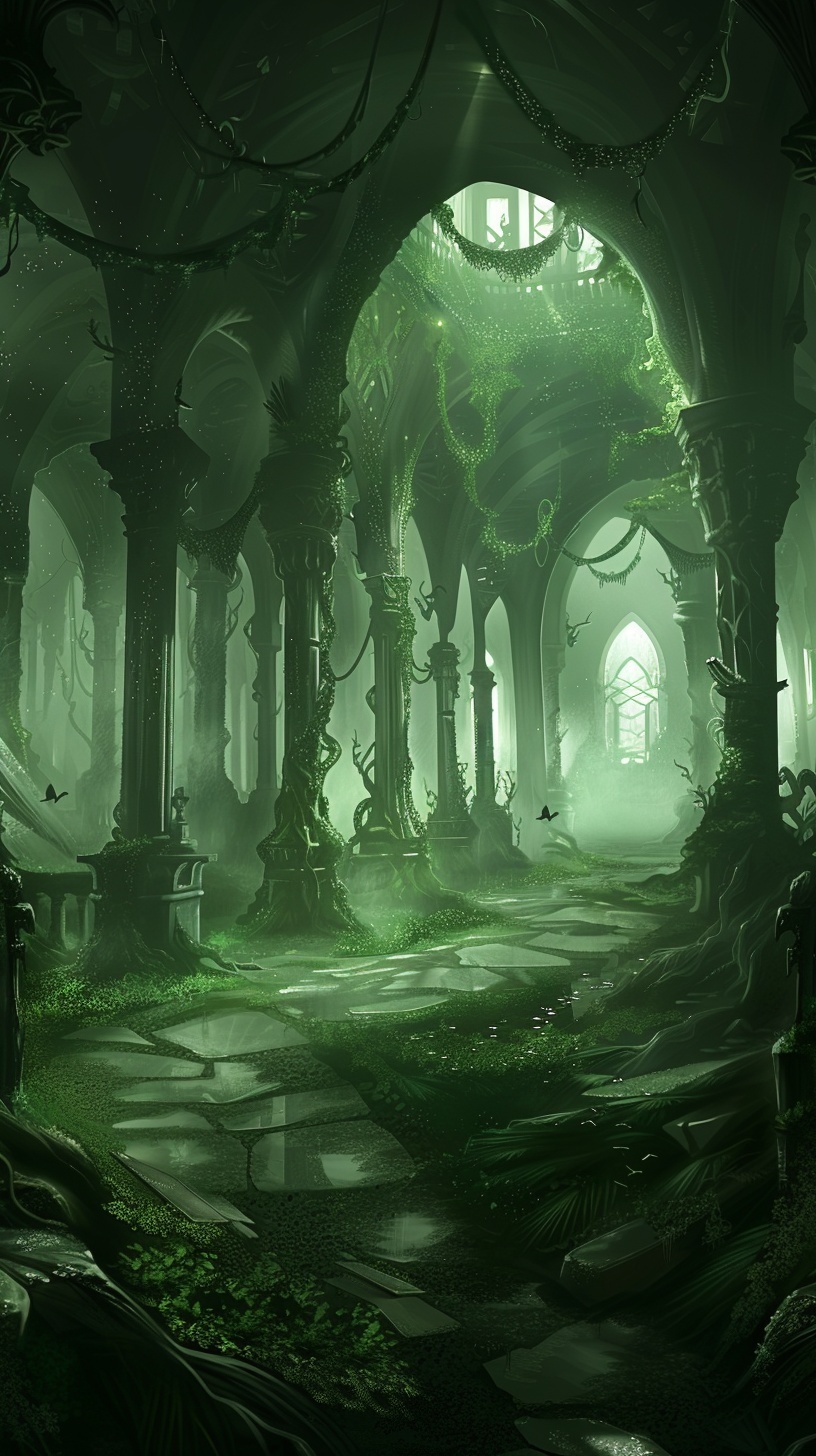
— Aderik Stoneshield, caravan guard in Kestenvale, warning a group of young adventurers

 
Castle Witherbloom has never been a site for leisure or casual travel. There are no inns set up outside its walls, no merchants waiting to sell trinkets to curious onlookers, and no guides offering tours of its haunted corridors. The only ones who come are those with purpose, and most of those purposes are dangerous. Adventurers come to test themselves, scholars come to study its shifting nature, and opportunists come to see what treasure might be dragged from its halls. For all of them the castle is less a destination and more a gamble, one where the stakes are life, death, and sometimes worse.   The greatest draw has always been its unpredictability. Every expedition is different, and no two stories match. One band of adventurers might report a hall filled with light and music, while another finds the same chamber cold and silent, haunted by shadow. A scholar might step into the library and claim to have read tomes untouched since Avindor’s day, while another insists the same shelves were filled with blank books that turned to ash when touched. This variability keeps the castle alive in rumor, for every tale is new, and no one can say with certainty what lies inside on any given night.   During the Shattering the attraction of the castle grew stronger. While relics across the world fell silent, Witherbloom’s treasures continued to work. Weapons, armor, and trinkets carried out from its depths held their power, and for a time fortunes were made by those bold enough to brave its walls. The rush did not last. Too many died in the attempt, and those who returned were often changed in ways that could not be hidden. Some came back scarred in body, others in mind, and still others came back with a presence clinging to them that unsettled everyone they met. The wealth to be had was real, but so was the cost, and the rush dwindled into legend.   In later years the draw shifted from treasure to knowledge. Scholars from Kestenvale, the Temple Observatory, and other centers of learning sought to understand the castle rather than to plunder it. They came with instruments and wards, with maps and journals, and many returned with nothing but broken tools and half coherent notes. The castle resisted their study as surely as it resisted conquest. Yet even failure did not end the attempts. The possibility of insight into the nature of the Feywild, the Shadowfell, and their contested ground was too tempting. Each generation produced a new set of scholars willing to risk their lives for knowledge, and each generation lost some of them to the castle’s shifting nature.   For the people of Kestenvale the castle is not an attraction but a test. Those who go inside are not seen as tourists but as fools, heroes, or both. The roads that lead there are unmarked, and no official stands watch to turn travelers back. The unspoken rule is simple. Enter if you wish, but whatever happens within is your own doing. That lack of oversight has made Witherbloom a proving ground for adventurers, a place where those who seek renown can try their strength against something that has humbled armies and defied scholars. Success means stories, wealth, and respect. Failure means silence.   What sets Witherbloom apart is that it never grows dull. Even after centuries its reputation has not dimmed. The keep still draws those who want to gamble their lives for treasure or knowledge, and it still produces tales that feed the imagination of those who stay behind. It has become a cycle that repeats endlessly. New adventurers hear the old stories, curiosity burns brighter than caution, and they set out for the castle. Some return to add their own tale to the legend, and many do not return at all. In this way the castle remains alive, not through armies or garrisons, but through the endless stream of mortals who cannot resist its pull.

“From the road you swear it is just another old fortress. Only when you see the glow in the walls do you understand why no one calls it Green Mountain anymore.”
— Calden Varros, Kestenvale wool trader, in his travel ledger
Founding Date
557
Alternative Names
Witherbloom
Type
Castle
Owning Organization
Contested By
“No blade cut me, no arrow struck me. I lost three men to silence and one to laughter, and I swear I do not know which death was worse.”
— Jorrek Malen, captain of the Second Expedition of the Silver Pike


The Song of Castle Witherbloom
Plot | Dec 13, 2025

The Yew Has Taken Root

Kestenvale
Organization | Nov 27, 2025

Darkness There And Nothing More

Stone Castle Glacier
Geographic Location | Oct 6, 2025

A Realm of Ice & Stone

The Agriss Mountains
Geographic Location | Oct 7, 2025

The Unyielding Spine of Itora

Stone Choir
Physical / Metaphysical Law | Aug 19, 2025

A Song For Those Brave Enough To Listen

Whispering Frost
Physical / Metaphysical Law | Sep 8, 2025

Nature's Splendor Enthralls The Mind

Molten Veils
Physical / Metaphysical Law | Jun 12, 2025

The Breath of the Mountains

Dancing Shadows
Physical / Metaphysical Law | Jun 11, 2025

Theater Hidden In Stone


Comments

Please Login in order to comment!
Sep 5, 2025 07:11

That was a loooooooooooong read. But a good one. Just wasn't prepared for such a long read :D

Enjoy Worldember 2025!
I'm a Comment Caroler! Click to learn more
Sep 5, 2025 10:05

Wow, and this is one of my shorter articles! Thanks for sticking through it. I'm so glad you enjoyed it :)

Powered by World Anvil