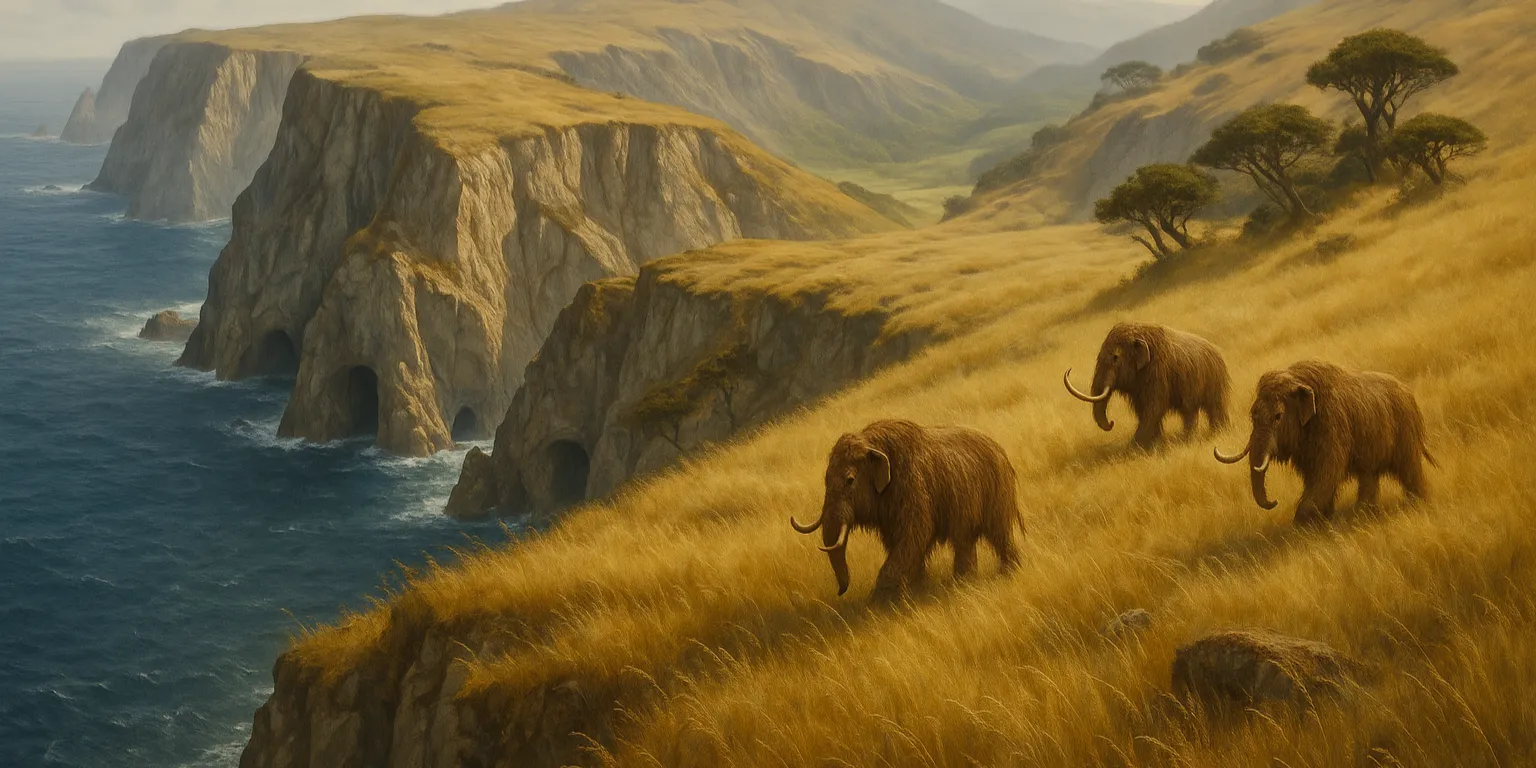
Zoyot
Anyone who has visited the Manmosu Islands has seen the Zoyots that roam the archipelago, especially on the large island of Chowinga. They are a species of mammoth, like those found in the northern wilderness of Kitlineq, but much smaller than their northern cousins. Since time immemorial, they have been the prized companions of the Kizhva people, who domesticated them and relied on them for all forms of labor, much as other cultures rely on the horse. This relationship was deeply disrupted by the Wamatoan conquest of the islands, which drove the Kizhva from Chowinga to the smaller islands and slaughtered many of the Zoyots to deny them to their traditional handlers. Those that escaped now move in feral herds across the nearly empty island, though some in the Wamatoan military argue that they should be captured and used as work animals.
Basic Information
Anatomy
The common Zoyot stands about six feet tall at the shoulder and weighs roughly two thousand pounds. They are sexually dimorphic, with males notably larger than females. Their bodies are covered in long, coarse hair that ranges from mahogany to golden, with some individuals so pale as to appear cream or off-white. Both sexes bear tusks that curve upward from the mouth and can be used for digging or for self-defense.
Ecology and Habitats
The Zoyot are native to the grassy hills of Chowinga and also frequent the island's groves of cypress and pine. They eat grass, leaves, and twigs, and spend most of their time grazing. They have no predators on Chowinga other than humans. Their population has never been large, and it suffered a sharp decline during the Empire's conquest of the archipelago. Today, it is estimated that no more than a few hundred Zoyot remain.
Behaviour
The Zoyot are extremely intelligent and social animals. They form small herds, and Kizhva stories recount how individuals form lifelong bonds with each other and with the humans they lived among. They are easily trained to a variety of tasks and are motivated by food and praise. A well-trained Zoyot can understand up to a hundred different commands, although they will often obey only someone with whom they have formed a long-standing bond. They can recognize individual humans even after long periods of absence, and they are intolerant of mistreatment. The only known instances of a Zoyot becoming violent toward humans occurred when the animal was attacked or abused, and even then they use only the force needed to escape the situation. If escape is impossible, an adult Zoyot is capable of killing a human, though this happens only in the most extreme circumstances.
Additional Information
Geographic Origin and Distribution

Sacred Hair
Among the Kizhva, the Zoyot are regarded as a blessing granted by their ancestors and as beings connected to the spiritual essence of the world. Because of this, the Kizhva use Zoyot hair to weave garments reserved for religious ceremonies, when they commune with the ancestral spirits of their people. Since the Yanjin forced the Kizhva away from the Zoyot, these garments have become increasingly rare, and the Kizhva have been unable to perform certain rituals they consider essential to their survival as a community. This has driven several young Kizhva to risk Imperial retribution by sneaking onto Chowinga to gather the needed hair, and more than one of these groups has been executed after being caught defying Imperial authority.
This article was originally written for Spooktober 2024. You can find all of my Spooktober Articles at Spooktober Central.
This article was originally written for Spooktober 2023. You can find all of my Spooktober Articles at Spooktober Central.

Noooo, babies :( :( I am so sad that their population and Kizhva traditions have been ruined by the empire.
Explore Etrea | WorldEmber 2025
It may be that empires are all evil at their hearts in the million islands....