
How the Inn Arrives
“The Inn does not travel. It settles. The world rearranges itself to make that sound reasonable, and everyone nods along.”
— Seraphis Nightvale
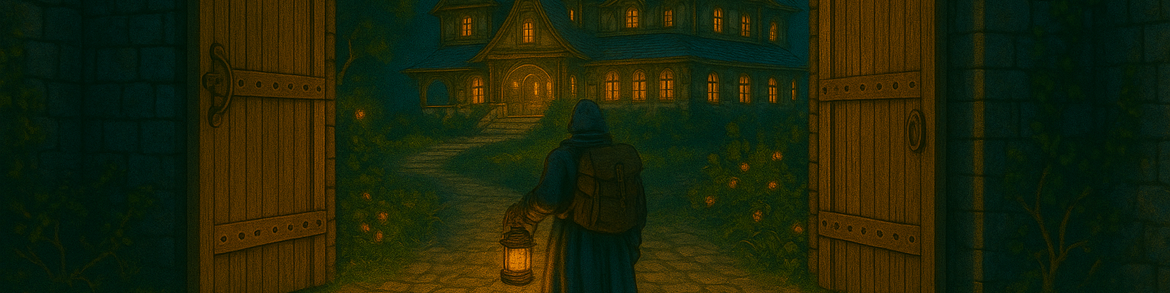
Every so often the Last Home drifts too close to a world. When it does, the gardens root themselves as though they had always been there. Roads bend. A gatehouse appears where no gatehouse was. Villagers recall an inn at the crossroads, only lately reopened. Travellers remember stopping there years ago, though the place is new to them.
The Inn settles, the Pattern obliges, and for a while everyone believes it belongs.
The Settling of the Gardens
The Inn does not crash into the landscape; it folds itself in. The grounds adapt to the season, but always in the Inn’s favour. Winter leaves only a dusting of snow on the hedges, with paths kept clear. Summer brings blooms without drought. Rain dampens the flagstones but never floods the walkways.
It looks comfortable, inevitable, and entirely ordinary. Which is precisely the danger.
The Glamour of Normality
To outsiders, the Inn wears a glamour. Oni are mistaken for big men in masks. Vampires are regarded as pale aristocrats. Tentacled horrors become festival costumes. Impossible corridors are excused as eccentric carpentry.
Patrons are not deceived, but they are not surprised either. To them, strangeness is the baseline of normal. Doors opening where they should not, gardens rearranging themselves, villages reshaping overnight: all of it is expected. They go with the flow, because here going with the flow is survival.
Why the Inn Arrives
The Inn has no timetable and it certainly does not answer to commands. It arrives when it feels like it, and feeling is the only word that fits. Sometimes it comes because someone needs to be collected. At other times, resonance pulls it sideways, drawn to grief, celebration, or the weight of a story that refuses to resolve. The Inn may also shift when it decides its patrons require a change of scenery.
There are subtler causes. A casual remark, a dream, or a stray thought from Lars, a maid, or any strong Threadwalker can tilt the Inn one way or another. Most troubling of all is the One in the Backroom, whose emotions and idle wishes steer the Inn in ways no one can predict.
Festivals Borrowed, Festivals Made
The Inn has no customs of its own. When it settles in a world, it borrows whatever celebrations it finds. Masks, bonfires, lanterns, ribbons: it does not matter. The Pattern obliges, and soon everyone swears the Inn has always kept such traditions.
Sometimes the Inn invents them outright. Patrons complain of boredom, or mutter a wish for merriment, and the next morning the gardens are filled with games and light. The Inn obliges not out of kindness, but out of amusement.
Festivals at the Last Home are never planned. They happen, and then they are remembered as though they always had.
On Wishes (And Other Bad Ideas)
The Inn listens. Not always, not to everyone, but to those it notices or favours it sometimes gives an answer. That answer is rarely merciful.
A wish for peace may open onto a battlefield. A complaint of boredom may conjure a festival. Idle thoughts ripple into reality, answered too literally and too sharply. The Inn has a sense of humour, and it is not a kind one.
Be careful what you wish for is not a proverb here. It is survival advice.
What People Remember
Most who stumble across the Inn recall it only vaguely, as though from a dream. They remember a glow in the garden, a drink in a taproom, or a song without a source. By morning they dismiss it as imagination. The Pattern prefers it this way.
Only Threadwalkers, or those the Inn chooses to keep, remember it clearly. Everyone else rationalises it into a tavern tale or forgets entirely. And when the Inn leaves, memories unravel altogether. Ask a villager about the old inn and they will frown, shake their head, and insist it never existed.
If You Are Inside When It Leaves
The Inn decides who it keeps. Some wake back in their own beds as if nothing happened. Others are set down in a world they do not recognise. A few remain inside, whether they wished it or not, becoming patrons by default.
There is no pattern. The Inn takes who it wants.
Final Thoughts
The Last Home never arrives politely. It settles into the world, convinces everyone it was always there, and departs without apology. Roads bend, villages adapt, memories oblige, and by the time anyone realises otherwise, the Inn has already gone.
And if you are fortunate, or unfortunate, it may decide to take you with it.
At A Glance
A brief guide for the bewildered, the unprepared, and anyone now realising they should have read the Primer before wandering in.
What Just Happened
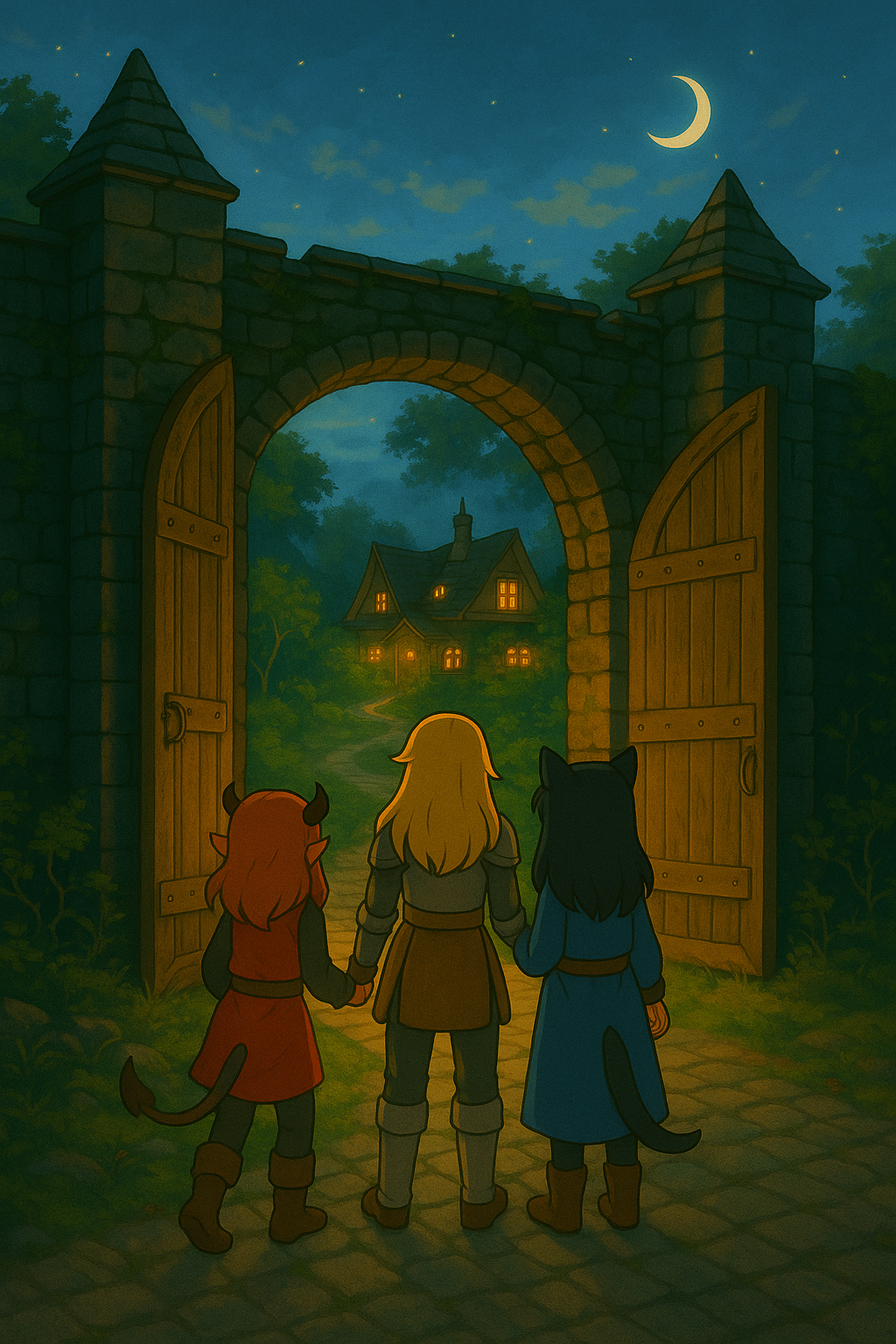
The Inn has arrived. It did not travel here, it simply settled into the landscape and convinced everyone it belonged.
Why It Happened
Because someone needed collecting. Because the air was thick with resonance. Because the patrons were restless. Or because the Inn felt like it.
What You See
A perfectly ordinary inn. A bit large, a bit eccentric, but nothing remarkable. At least, that is what you think.
What Everyone Else Remembers
The locals are sure it was always here. Perhaps it closed for a while, perhaps it has only just reopened. Either way, no one doubts it.
What You Should Do
Accept it. Going with the flow is not laziness; it is survival. The Inn does not take kindly to resistance.
What’s Not Mentioned
How long it will stay.
What it intends to keep.
Why you were invited at all.
Final Note
The Inn does not ask permission. It arrives, and you adapt. Those who refuse are seldom remembered.
“Your continued reading is more valuable than coin. However, the author assures me that Ko-Fi support assists in ‘keeping the kettle on.’ I am told this is a metaphor. I remain unconvinced.” — Seraphis Nightvale Ko-Fi: #madmooncrow


Comments