
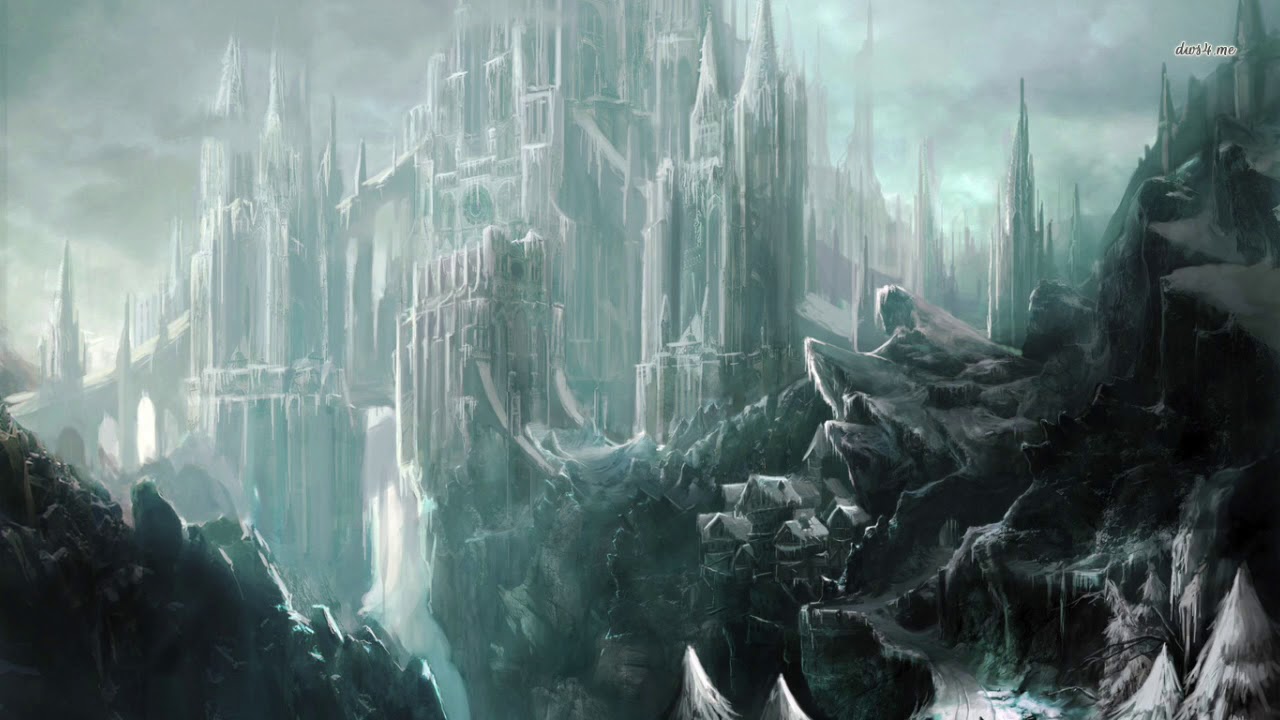
The Forgetting Pits
The Forgetting Pits
In the first years after the Fall, when the death toll climbed into the millions and the living were too few and too desperate to honor their dead, communities made a grim calculation: bury them fast, bury them deep, and try to forget. They dug massive pits in the frozen earth—wherever the ground could still be broken—and filled them with corpses. Hundreds at a time. Thousands in the larger settlements. They covered them with stones and ice and whatever blessings the shell-shocked priests could mumble, and then they walked away.
These became the Forgetting Pits—so named because their creation was an act of deliberate amnesia, a collective choice to not think about what they'd done, to not remember the faces thrown into the ice, to forget that those were people with names and stories and lives, now reduced to anonymous meat piled in holes.
Thirty years later, the Pits have not forgiven us for forgetting. They have become wounds in the landscape—literal and spiritual scars where the boundary between life and death has grown dangerously thin. The dead don't rest in the Forgetting Pits. They can't. There were too many, buried too quickly, with too little ceremony and too much despair. The psychic weight of that much death, that much grief, that much abandonment has curdled into something active, something hungry.
Now the Pits are places of horror: sources of undead that crawl from the ice on dark nights, corruption zones where magic behaves strangely and reality feels wrong, and—most shamefully—sites of desperate scavenging where the living rob the dead of whatever they were buried with. We tried to forget. But the Pits remember. And they're making sure we can't look away.
Creation and Early History
The First Winter (Year 0)
When the Frost came and the Childless Plague struck simultaneously, the death rate was catastrophic. Conservative estimates suggest 30-40% of the world's population died in the first year—from cold, starvation, violence, despair, or simple shock.
The survivors faced an impossible situation: millions of bodies in sub-freezing temperatures, social infrastructure collapsed, and no capacity for individual burials or proper rites. The early Pits were acts of desperate pragmatism:
Site Selection
Communities dug wherever they could—places with slightly softer ground (geothermal areas, southern slopes, old mine shafts), or simply piled bodies in natural depressions and covered them with stones.
The Process
Bodies were collected by volunteers or pressed labor—often criminals or those deemed "expendable." They were dragged or carted to the Pits and thrown in with minimal ceremony. Sometimes families could afford to have their dead placed rather than thrown. Most could not.
The Covering
Once full (or once the living couldn't bear to continue), the Pits were covered. Stones, ice blocks, soil, rubble—whatever was available. A marker stone was placed, sometimes with names, more often with just a count. "Here lie 247 souls, Year 0, third month. Father Death keep them."
The Walking Away
Then everyone left. They had to. There was too much else to do, too many other problems. Dwelling on the Pits meant dwelling on loss, and loss was a luxury no one could afford. So they forgot. Deliberately. Collectively. The Pits became places no one visited, locations actively avoided, holes in the mental map of the world.
The Uneasy Years (Years 1-10)
For the first decade, the Pits were relatively quiet. They were places of sorrow but not active threat. Occasional reports surfaced—strange sounds near Pit sites, travelers feeling watched, claims of glimpsing figures that vanished when approached. But these were dismissed as grief-hauntings, psychological echoes. Nothing requiring action.
Some Pits were "claimed" by families who'd buried loved ones there. They would visit on remembrance days, leave offerings, maintain the stone markers. These family-tended Pits remained quiet longest, as if the continued attention kept whatever was brewing beneath at bay.
Other Pits were abandoned completely. No one visited. No one remembered exactly who was buried there. The markers weathered and fell. These Pits were the first to "wake."
The Awakening (Years 10-15)
Something changed. Whether it was time, the accumulation of death's energy, or some external force, the Pits became active:
The First Risings
Undead began emerging. Not the occasional revenant or lone zombie, but multiple corpses at once, coordinated, driven. They crawled from gaps in the covering stones, dug through the ice, and lurched into the wastes.
The Corruption
Mages and priests reported that Pits radiated magical corruption. Being near them felt wrong—like standing in a place reality didn't quite want to be. Spells cast near Pits behaved unpredictably. Priests' blessings soured.
The Scavenging
As resources grew scarcer, desperate survivors began "mining" the Pits—robbing the dead of anything valuable they'd been buried with. This desecration seemed to agitate the Pits further, accelerating the corruption and increasing undead activity.
By Year 15, the Forgetting Pits had transitioned from forgotten graves to active threats that communities had to manage, guard against, and—increasingly—exploit.
Physical Characteristics
Size and Layout
Pit sizes vary dramatically:
Small Pits (20-50 bodies)
Often family or small community graves. Relatively contained. Might be a natural depression 15 feet across, filled and covered with stones.
Medium Pits (50-150 bodies)
Standard settlement graves. Usually excavated deliberately—a hole 30-40 feet across and 10-15 feet deep. These required significant labor to create.
Large Pits (150+ bodies)
Created by major settlements or during mass die-offs. Some are old mine shafts packed with corpses. Others are natural sinkholes. The largest documented Pit contains an estimated 800 bodies.
The Covering
Most Pits are covered with a combination of:
- Stone cairns (ranging from carefully placed to haphazardly piled)
- Ice blocks cut from nearby sources
- Frozen earth and snow
- Sometimes wreckage from collapsed buildings
After thirty years, the coverings have settled, shifted, and partially collapsed. Many Pits now have gaps where the covering has failed—dark openings from which cold air seems to flow even in still weather.
The Markers
When placed, marker stones ranged from crude to elaborate:
- Simple: "Here lie the dead. Year 0."
- Detailed: Names, dates, relationships
- Religious: Invocations to Father Death, the World Mother, or the Old Gods
- Desperate: "Please let them rest. Please."
Time and weather have eroded many markers. Some Pits are now unmarked, their locations known only through local memory or the telltale depression in the landscape.
The Atmosphere
All Pits share certain qualities:
The Cold
Even by wasteland standards, Pits are abnormally cold. The temperature drops noticeably within 50 feet of a Pit, and at the edge, frost forms on exposed skin in seconds.
The Silence
Sound dampens near Pits. Not completely—not like the Echoing Silence phenomenon—but enough to be unsettling. Voices lose resonance. Footsteps muffle.
The Smell
Most Pits emit no smell—the cold preserved everything. But occasionally, especially when disturbed, a Pit will release a burst of preserved decay, a concentrated dose of rot that's been frozen for decades suddenly thawing.
The Watching
Nearly everyone who approaches a Pit reports feeling observed. Not by anything visible, but by the Pit itself. The sensation of eyes on your back, of attention from something that shouldn't be capable of attention.
The Undead
Types and Behavior
The undead that emerge from Pits are not uniform:
The Wanderers (Most Common)
Mindless revenants with no particular goal except motion. They crawl from Pits and simply walk, shambling in random directions until they encounter something living or collapse from accumulated damage. These are dangerous in numbers but individually weak.
The Seekers (Uncommon)
Undead that seem driven by fragmented purpose—returning to where they lived, searching for something they lost. More intelligent and thus more dangerous. Will avoid obviously superior force and attempt ambush.
The Resentful (Rare)
Undead that specifically target the living with focused malice. These were people who died angry—those who felt abandoned, those who believed they deserved better. They coordinate, use tactics, and preferentially target anyone who shows signs of prosperity or happiness.
The Confused (Tragic)
Undead that don't realize they're dead. They try to speak (producing only rasping sounds), attempt normal activities (opening doors that aren't there, sitting at phantom tables), and react with increasing panic when the living flee from them. Dangerous more through desperation than malice.
Rising Patterns
Undead emergence follows predictable patterns:
Lunar Cycles: Risings peak during new moons, when the darkness is deepest.
Weather Events: Severe cold snaps and blizzards trigger activity—as if the extreme cold resonates with whatever animates the corpses.
Disturbance: Physical disturbance of a Pit—whether from scavengers, natural collapse, or deliberate excavation—causes immediate risings. Sometimes dozens at once.
Anniversaries: Pits show increased activity around the anniversary of the Fall. As if the dead remember, even if the living tried to forget.
The Coordination Problem
The most disturbing aspect of Pit undead is their occasional coordination. Individually, they're mindless or near-mindless. But in groups, especially groups from the same Pit, they demonstrate emergent behavior—rudimentary tactics, flanking movements, ambush positions.
Scholars debate whether this is true group intelligence or simply the result of many corpses following similar behavioral patterns. Either way, a mass rising from a large Pit can temporarily create what amounts to a zombie warband, dangerous enough to threaten small settlements.
The Corruption
Magical Effects
The Pits don't just produce undead—they warp magic and reality:
Spell Distortion
Magic cast within 100 feet of a Pit behaves unpredictably:
- Healing spells may cause damage instead
- Fire conjurations burn cold and pale
- Divination reveals disturbing, fragmented visions of death
- Enchantments fail or reverse their intent
Corruption Aura
Extended exposure to Pits increases magical corruption in living creatures. An hour near a Pit is equivalent to casting a corrupt spell. A full day's exposure causes permanent corruption without any magical action.
Necromantic Amplification
Paradoxically, death magic works better near Pits. Necromancers seeking to raise or control undead find their power enhanced. This has led some dark practitioners to establish bases near Pit sites, embracing the corruption for the power it provides.
Psychological Effects
Living humans near Pits experience predictable psychological symptoms:
The Guilt
An overwhelming sense of shame and regret, often focused on one's own past failures and abandoned responsibilities. Even those with no connection to the buried feel somehow culpable.
The Despair
Hope becomes difficult to maintain. Plans for the future seem pointless. The present feels like waiting for inevitable doom.
The Disconnection
Relationships feel distant. Other people seem less real. Empathy erodes. Some describe it as "becoming a ghost while still alive."
The Compulsion
Some individuals develop obsessive thoughts about the Pits—an urge to visit, to look, to count the stones, to memorize names. This compulsion can escalate to dangerous levels.
Environmental Decay
The corruption extends beyond living creatures:
- Plants (even hardy lichens and mosses) don't grow within 50 feet of Pits
- Metal near Pits corrodes faster, developing strange crystalline rust
- Wood becomes brittle and prone to shattering
- Water takes on a bitter, metallic taste
- The ground itself feels different—softer, somehow, as if not entirely solid
The Scavengers
The Practice
As resources have grown scarcer, more survivors have turned to Pit-scavenging—the practice of robbing the dead:
What They Take
The buried were interred with whatever they had on them—clothing, weapons, tools, jewelry, sometimes food or fuel. Thirty years later, these items remain preserved by the cold and are valuable to the desperate.
How It Works
Scavengers work quickly, usually at night. They remove covering stones, pull up corpses or reach into gaps, strip what they can, and flee. The entire operation takes 20-30 minutes to minimize exposure to the Pit's effects.
The Cost
Beyond the moral weight and social stigma, Pit-scavenging is physically dangerous. The undead resist disturbance violently. The corruption affects scavengers first and worst. Many develop lasting psychological damage.
The Scavenger Community
Those who regularly work the Pits form a grim subculture:
The Desperate
Most scavengers are people with no other options—the destitute, the exiled, those whose families are starving. They do this work because the alternative is death.
The Hardened
Long-term scavengers develop a disturbing callousness. They speak of corpses as "inventory," discuss the best Pits for "harvest," and show little emotional reaction to the work. This psychological armor is necessary but dehumanizing.
The Haunted
All Pit-scavengers are changed by the work. They report nightmares, waking visions of the dead, an inability to form close relationships. Many take to substance abuse. Suicide rates among scavengers are extremely high.
The Marks
Scavengers are often identifiable by physical signs—premature aging, a grayish pallor, hands that shake constantly, and eyes that won't quite focus on the living.
Social Response
Different communities handle Pit-scavenging differently:
Prohibition: The Order of the Last Light formally condemns the practice, viewing it as desecration that dishonors the dead and endangers the living. Some settlements execute caught scavengers.
Tolerance: Many communities look the other way, understanding that desperation drives people to terrible acts. The practice is illegal but rarely prosecuted.
Exploitation: Some factions quietly employ scavengers, paying for specific items from specific Pits. The Silver Company is rumored to maintain a network of contracted scavengers.
Acceptance: A few settlements have normalized the practice, treating Pit-scavenging as legitimate salvage work. These communities tend to be the most resource-starved and morally compromised.
Notable Pits
The Cairn of Sorrows (Near Frosthold)
The largest known Pit, containing an estimated 800 bodies from Frosthold's first winter. Located two miles north of the city, marked by a massive cairn that took weeks to build.
The Cairn is extraordinarily active—undead emerge almost nightly. The Iron Hand maintains a permanent guard post nearby, both to destroy the risen and to prevent scavenging. The Pit's corruption is so intense that even the Regiment's disciplined soldiers rotate out frequently to avoid psychological breakdown.
There are rumors that something worse than common undead lurks beneath the Cairn—something created by the concentration of so many deaths in one place. The Regiment doesn't confirm or deny, but their standing orders include: "If anything emerges that doesn't shamble, fall back and send for mage support immediately."
Mercy's Folly (Abandoned Waystation)
A medium Pit created by travelers who died en route to safety. The survivors buried their companions, marked the Pit with a prayer for mercy, and continued their journey. None reached their destination.
The Pit is unique because it shows no corruption and produces no undead. Instead, visitors report intensely vivid visions of the buried—their lives, their final moments, their unfulfilled hopes. These visions are not threatening but are emotionally devastating. Some visitors emerge weeping uncontrollably. Others become catatonic.
Scholars debate whether this represents a different form of haunting or is simply the Pit's corruption expressing itself psychologically rather than physically. Either way, most avoid Mercy's Folly not from fear but from inability to bear the grief it induces.
The Market Pit (Outside Farrow's Rest)
A small Pit that has become, shamefully, a known scavenging site. The community of Farrow's Rest quietly tolerates scavenging here—it's understood that the desperate can work this Pit without prosecution.
The Market Pit produces only weak undead that are easy to destroy and shows minimal corruption. It's almost been picked clean after years of scavenging, but desperate souls still visit, hoping to find something missed. The Pit has become a bitter symbol—a place where survival requires dishonoring the dead, and everyone knows it but pretends not to.
The Priests' Rest (Location Unknown)
A legendary Pit rumored to contain the bodies of hundreds of priests and religious leaders who died together in the first years—either from suicide, martyrdom, or coordinated murder during the religious crisis that followed the Fall.
No one admits to knowing its location, but stories persist. Some claim the Priests' Rest produces undead with divine powers—blessing-as-curse, healing that sickens, prayers that damn. Others say it's the source of the Weeping Idols phenomenon, that the desperate faith of dying priests has curdled into something that infects their carved images.
The Order of the Last Light officially denies the Pit's existence while simultaneously maintaining standing orders that any priest who locates it must report immediately and under no circumstances approach alone.
Advice for Travelers
If you must pass near a Pit:
- Know Where They Are: Learn Pit locations from local guides. They're not always marked on maps, but locals know. Avoiding them is better than confronting them.
- Travel During Day: Pit activity is higher at night. If you must camp near one (don't), do so during full daylight and post double watches.
- Don't Disturb: If you see a Pit, leave it alone. Don't move stones, don't look for gaps, don't try to see inside. Disturbance triggers risings.
- Carry Salt and Iron: Traditional undead deterrents work on Pit revenants. Salt lines they won't cross. Iron weapons they fear. Neither is perfect protection, but both help.
- Don't Linger: If you must approach (to destroy undead, for example), complete your business quickly. The corruption accumulates with exposure time.
- Resist the Compulsion: If you feel drawn to a Pit, recognize it as the corruption affecting your mind. Turn away immediately. The fascination only deepens with proximity.
- Honor the Dead If You Can: If safe, leave a small offering—a stone placed respectfully, a brief prayer. Some believe this reduces Pit activity. Others think it's useless superstition. But it costs nothing and might help you live with yourself.
And if you're considering Pit-scavenging: understand what you're choosing. The items you take are worth something. But what you lose—your peace, your humanity, your ability to sleep without seeing their faces—that's worth more. Most scavengers would tell you to find another way. Any other way.
The Pits tried to forget. We tried to let them. But memory, like the cold, is patient and persistent. And what we buried in shame has risen in horror.
Related Articles
- The Day the World Broke
- The Undead of the Wastes
- Magical Corruption and Dissonance
- Rites of the Dead
- Scavenging and Salvage
- The Order of the Last Light
- Frost Madness
- Walking Out / Winter Walks
- Year 0: The First Winter
- Mass Casualties and Social Collapse
"We dug them fast and we dug them deep and we told ourselves it was the best we could do. Maybe it was. But best isn't always enough. Now they're crawling out and I wonder: are they angry because we buried them wrong, or because we're still alive when they're not?"
"I've worked seven Pits over four years. I've pulled clothes off corpses that looked like they died yesterday. I've heard them whisper when I know they can't whisper. I've felt them grab me when I know they can't move. Every night I see their faces. Every morning I wake up surprised I'm still human. But my daughter eats because of what I take from the dead. So I'll go back. I'll go back until the Pits take me too. And maybe I belong there anyway."
"The Pits are proof of two things: that we survived the Fall, and that survival cost us our souls. We threw our dead in holes like refuse and walked away like it didn't matter. Maybe the undead aren't rising to threaten us. Maybe they're rising to remind us of who we were, what we did, what we've become. Maybe we deserve to be haunted."
Type: Mass Graves / Cursed Locations
Era: Created Years 0-5; active threat Years 10-present
Number Known: 47 confirmed, estimated 100+ total
Typical Size: 20-200 bodies per pit
Threat Level: High (undead), Extreme (corruption)
Common Names: "The Pits," "Bone Gardens," "Cold Graves"

Comments