
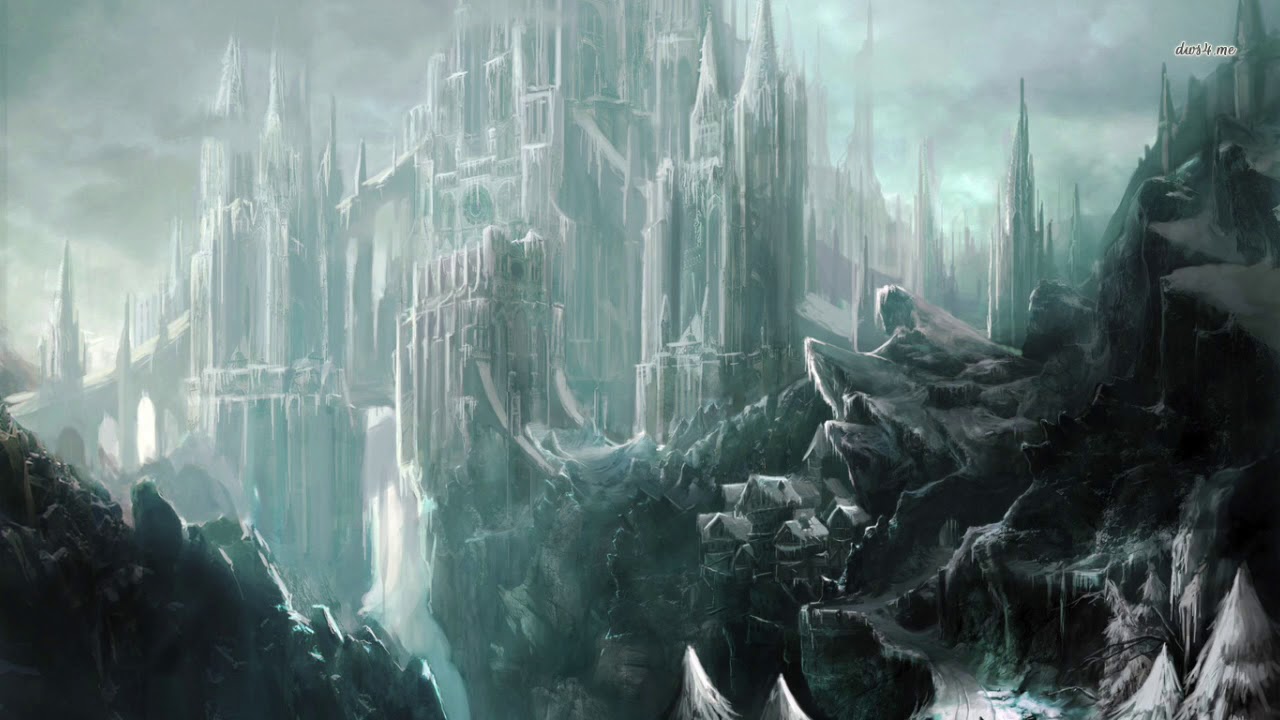
The Day the World Broke
The Day the World Broke
The Day the World Broke marks the single most catastrophic event in recorded history—the day when two apocalyptic curses struck simultaneously, ending the Age of Seasons and beginning the slow extinction of all mortal life. In the span of hours, every pregnancy across the world ended, all fertility ceased, the sun dimmed to a dying ember, and temperatures plummeted into an endless winter. Thirty years later, no child has been born, spring has never returned, and civilization clings to survival in scattered enclaves across a frozen wasteland.
Those who lived through that day carry its trauma like a brand. It is the great dividing line of existence: "before the Breaking" and "after." The world before was one of warmth, children's laughter, and hope for tomorrow. The world after is one of cold, silence, and the slow march toward extinction.
The Morning Before
Survivors who remember that morning speak of it with an ache that never fades. It began as an ordinary day—perhaps that's what makes the memory so cruel.
"It was a normal morning," recalls Mara of Farrow's Rest, now in her fifties. "I was hanging laundry. My daughter was playing. The air was cool but pleasant. There was nothing—nothing at all—to suggest that in a few hours, the entire world would end."
Across the known world, people woke, tended their duties, and lived their lives. In Frosthold, the imperial capital, merchants opened their market stalls. Farmers checked their fields. Pregnant women felt their children stir within them. Children played in village greens and city streets. The sun rose as it always had, promising warmth and light.
No one knew that within hours, the sun would never truly rise again.
The Breaking: Hour by Hour
Hour Zero: Midday
At midday—though the exact time is debated and may have varied by region—it began.
The first sign came to the pregnant women of the world. In the same heartbeat, across every land and people, they felt their children die within them. Midwives and healers were overwhelmed as women from every walk of life simultaneously experienced miscarriages. From the humblest cottage to the grandest palace, the same horror unfolded: life extinguished in an instant.
Those who witnessed it speak of women crying out in unified anguish, as if the world itself had screamed.
Hours 0-3: The Temperature Falls
Within the first hour, a second catastrophe manifested. The temperature began to drop—not gradually, as when a cold front approaches, but precipitously, impossibly fast.
- Hour 1: Temperatures plummeted 20-30 degrees
- Hour 2: Another 20-30 degrees
- Hour 3: The cold continued its descent
Simultaneously, the sun dimmed. Witnesses describe it as though "a veil had been drawn across the sky." The sun became a pale, wan ember—providing light enough to see, but no warmth whatsoever. The quality of light itself changed, becoming flat and lifeless.
Then the snow began.
Not in the north alone, or in mountain regions—but everywhere. In southern coastal cities that had never known frost, snow fell from darkened skies. In desert regions, ice formed on sand. The impossible had become real.
Hours 3-12: Realization and Panic
As the afternoon wore on, the truth became inescapable: this was no ordinary storm.
People lit fires, but the flames seemed unable to push back the creeping cold. Families bundled in every warm garment they owned. In cities, authorities assumed a severe but temporary weather event and mobilized emergency responses—the Solar Legion distributed blankets and fuel, opened emergency shelters in temples and public buildings.
But the cold kept coming.
By hour six, temperatures had dropped 40-50 degrees from the morning. Snow fell in thick blankets. The wind carried a wrongness with it—survivors speak of a sense of presence, of malevolence, as if the cold itself were alive and hunting.
Panic buying stripped markets bare within hours. Riots erupted over fuel, food, and warm clothing. In some places, neighbors turned on each other. In others, communities huddled together against the incomprehensible.
Hours 12-24: The First Night
The sun set on a world transformed.
The night that followed was a night of horror. Those without adequate shelter began dying of exposure—the elderly, the infirm, those caught traveling between settlements, the poor in their thin-walled homes. By the thousands, they froze.
Fire provided some warmth, but not enough. Families burned furniture, books, heirlooms—anything combustible—desperately trying to survive until dawn. In rural areas, entire villages huddled in single buildings around inadequate hearths.
Animals fled or died. Plants withered black under sudden frost. The world's ecology began collapsing in real-time.
And through it all, people could feel something in the cold—whispers on the wind, a watching presence, voices that induced despair. Many who survived that first night speak of wanting to simply walk out into the snow and lie down. Some did.
Day Two and Beyond
Dawn came, but it brought no warmth. The dim sun rose on a world of snow and ice. And slowly, the horrifying realization spread:
This was not going to end.
The Twin Calamities
The Childless Plague (The Sterility Plague)
The first curse struck with surgical precision. In a single moment:
- Every ongoing pregnancy across the world ended in miscarriage or stillbirth
- The wombs of all fertile beings were rendered permanently barren
- No new conception has occurred in the thirty years since
This was not disease. Healers found no physical ailment, no infection, no curse they could identify or treat. The ability to reproduce had simply... stopped. Reality itself had been rewritten.
Within days, as healers compared notes across regions, the pattern became clear: no children would ever be born again. Every mortal race faced the same doom—humans, dwarves, all were afflicted. Only the Emberforged (who do not reproduce) and perhaps the long-lived Glasgrim remained unaffected.
The psychological impact cannot be overstated. Humanity and its allies were now finite. Every death would be permanent. There would be no next generation, no future, no hope of continuity. The world had become a slowly dying ember, counting down to extinction.
The Endless Winter
The second curse manifested as an apocalyptic climate catastrophe:
- Temperatures dropped 60-80 degrees in a single day
- The sun dimmed to a pale ember, providing twilight but no warmth
- Snow began falling everywhere and has never stopped
- All seasons ceased—there would be no spring, no summer, no autumn ever again
This was not natural winter. The cold carried a malevolence, a sense of purpose. Survivors speak of:
- Unnatural cold: Fire seems less effective than it should be
- Targeted freezing: Certain houses encased in ice while neighbors were spared
- Whispers on the wind: Voices that induce hopelessness and despair
- A watching presence: The sense that something vast and hostile observes the living
The old folk-wisdom about surviving winter became useless. Winter was meant to end—it was part of the cycle. But this winter would never end. The very laws of nature had been broken.
Immediate Aftermath
The First Day
The death toll from the first 24 hours is impossible to calculate precisely, but scholars estimate tens of thousands perished:
- Those caught outdoors froze within hours
- The elderly and infirm succumbed to exposure
- The poor in inadequate shelter died in their homes
- Travelers between settlements vanished into snowdrifts
- Those who gave in to despair walked into the cold
The First Week
By the end of the first week, perhaps 5-10% of the world's population had died. The survivors faced:
- Refugee Crisis: Hundreds of thousands fled rural areas toward cities and known geothermal sites
- Resource Scarcity: Food stores meant for normal winters were catastrophically insufficient
- Infrastructure Collapse: Roads became impassable; communication networks failed
- Social Breakdown: Riots, looting, and desperate violence erupted across the world
The Solar Legion struggled to maintain order. In some cities, they succeeded in establishing emergency rationing and shelters. In others, chaos reigned.
The First Year
By the end of Year Zero, the shape of the new world was clear:
- 30-40% of the pre-catastrophe population had died
- The Old Empire had fractured into isolated territories
- Civilization as it existed was effectively over
- Survivor settlements coalesced around geothermal heat sources and stored supplies
Causes and Theories
Even thirty years later, the cause of the twin calamities remains unknown and hotly debated. Most common folk know only that the world ended; they argue over why:
Divine Punishment
Believers: Priests of both the Old Faith and the New God, devout common folk
Theory: The gods—particularly Old Man Winter—struck down a sinful, prideful world. The simultaneous nature of both curses suggests divine coordination and wrath.
"We abandoned the old ways. We grew proud and decadent. The Queen of Summer turned her face from us, and Old Man Winter descended in judgment." —Common prayer among survivors
Evidence: The timing (both curses at once), the totality (affecting all peoples and lands), prophecies from the Seer's oracles warning of "a silence of the cradle and night without end."
Weakness: Why have the gods not relented despite thirty years of repentance and suffering?
The Witch-Queen's Curse
Believers: Common folk, especially in rural areas
Theory: A vengeful sorceress—the mythical "Witch-Queen"—cursed the entire world's fertility and summoned eternal winter in her spite.
"They say she was spurned by a king, or her child was killed, or she sought immortality. Whatever the cause, her curse was absolute." —Tavern tale
Evidence: Folk tales and legends, the supernatural nature of the calamities
Weakness: No historical evidence of such a figure, no explanation for how one mage could accomplish what the greatest arcane circles could not
Natural Catastrophe
Believers: Pragmatic scholars, former imperial administrators
Theory: This was an unprecedented but natural event—perhaps a magical climate shift, volcanic winter, or cosmic phenomenon.
"Sometimes the world simply breaks. No gods, no curses—just catastrophic bad luck." —Scholar at Winter's Retreat
Evidence: Historical records of smaller climate disasters, ice core samples showing ancient frozen periods
Weakness: The simultaneous timing and global scope strain natural explanation
The Demon Lord's Escape
Believers: Cultists, conspiracy theorists, demon-worshipers
Theory: A great demon broke free from ancient bonds, and its very presence poisons reality with sterility and cold.
"The Demon Lord promised us: serve, and we shall restore what was lost. Fight, and you die in the cold." —Captured cultist's confession
Evidence: Ancient texts about bound demons, increase in demonic manifestations since the Breaking
Weakness: Why would a demon create sterility? Most demonic cults promise power, not extinction
The Northern Mystery
Believers: A few scholars, travelers, conspiracy theorists
Theory: Something happened in the far north—in or around the floating fortresses. The wealthy elite's exodus and sudden silence before the Breaking are too coincidental.
"They knew. They ran. And when they sealed themselves away in their sky-cities, the world below froze." —Survivor's theory
Evidence: The fortresses going silent in the years before; reports of increased strange phenomena in the north; the fact that no one has heard from them since
Weakness: What could the elite have done to cause this? And why would they doom themselves along with everyone else?
Cultural Impact
The Great Divide
The Day the World Broke created a stark division in survivor society:
Those Over 40 remember the before times with aching clarity. They carry the weight of loss—memories of warmth, children's laughter, and hope for tomorrow. Many suffer profound depression. Suicide is common among this cohort.
Those 35-40 were children when it happened. They remember fragments—a few sunny days, a birthday party, their family before—but grew up in the aftermath. They are the backbone of survivor communities: hardened, practical, balancing memory with survival.
Those Around 30 have no memory of warmth. To them, the dim sun and endless winter are simply reality. They are adapted but often nihilistic—how can you hope for something you've never known?
The Death of Meaning
Beyond the physical death toll, the Breaking killed meaning itself:
- Festivals celebrating abundance became meaningless without abundance
- Art and music expressing joy vanished when there was no joy
- Education preparing children for futures became pointless without futures
- Religion promising renewal rang hollow when nothing renewed
The world before was full of hope, meaning, and continuity. The world after is full of despair, nihilism, and endings.
Sacred Remembrance
Despite—or because of—the trauma, survivors treat the Day the World Broke with a kind of sacred remembrance:
- Some settlements hold silent vigils on its anniversary
- Elders tell stories of "the morning before" to preserve memory
- A few communities maintain the custom of lighting a candle "for the children who never were"
- The phrase "before the Breaking" has become shorthand for paradise lost
Legacy
Thirty years later, the Day the World Broke remains the defining event of the age. Every law, every custom, every decision about resources and survival is made in its shadow.
The question that haunts every settlement, every faction, every individual is simple and terrible:
Can we survive until we understand what happened? Can we reverse it? Or are we simply counting down the years until the last of us freezes in the dark?
Until recently, the answer seemed inevitable. But now, for the first time in thirty years, a child has been born—the Last Ember. And with that impossible birth comes a question the world had stopped daring to ask:
Can spring return?
Related Articles
- The Childless Plague
- The Endless Winter
- The Old Empire
- The Solar Legion
- The Sundered Oath
- Year Zero
- The Age of Seasons
- The Collapse
"We woke to a normal morning and went to bed in hell. That's all there is to it. The world broke, and we're still waiting to see if it can be fixed."
Type: Historical Catastrophe
Date: Year Zero (30 years ago)
Location: Worldwide
Also Known As: The Breaking, The Fall, The Day of Silence, The Last Dawn, The Day the Sun Died

Comments