
Elves
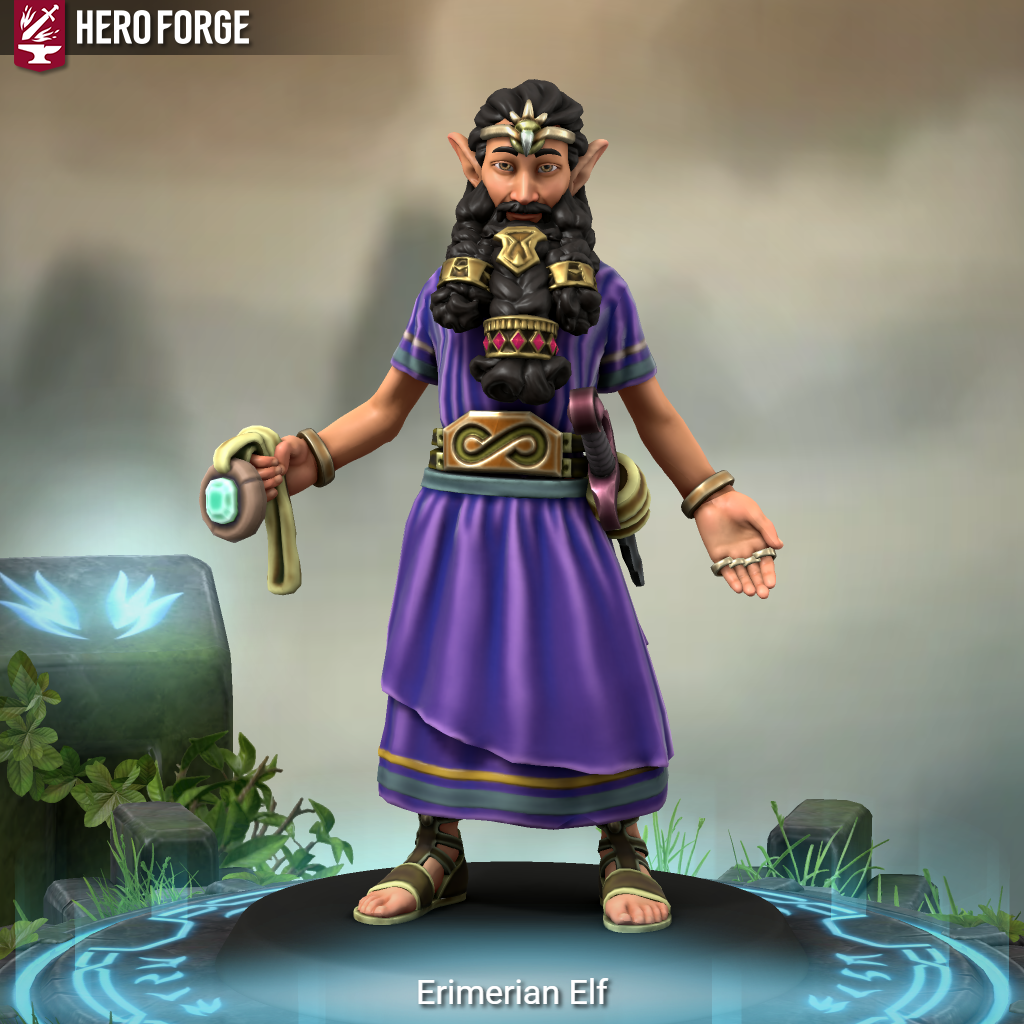
The Elven race, the last of the elder species, is one steeped in ancient history and arcane knowledge. Said to touched by the divine light of the Anki, the Elves of Anki have reigned over the mightiest of civilizations reaching the greatest heights of culture. However, their ancient past is marked by periods of great darkness and chaos. Once the unquestioned rules of the Land of Ki, the Elves now have to contend with the younger races as they compete for influence and survival. Though their control over Ki has waned over the centuries, the Elves are still counted amongst the most dominate species in Ki, with their powerful magic, cultural impact and insightful wisdom continues to influence the Land of Ki. In current times the Elves are divided into three groupings, The Erimerian, the Phari and the Sikrappan.
Additional Information
Facial characteristics
with their long-pointed ears and sharp, angular faces the Elves are easily distinguishable from that of Humans.
Geographic Origin and Distribution
Elves can be found in the regions of Kemit, Musmer and Hiprappa.
Civilization and Culture
Naming Traditions
Since the days of the Ubaid, the nobility of the Elves has had a naming system that involves three names. A first name, a second name and a family name (patrilineal). This is used by both the Phari and Erimerian. An example: Natar-Shari-Kalshi
While in days past the common Elves usually only had a first name or a first name and surname to denote parents or location however due to numerous reasons the majority of Erimerian and Phari Elves, regardless of social class use the three-name system.
The Sikrappan Elves that have been contacted have been noticed to only have singular personal name and then the name of their mother.
Major Organizations
Major organizations of the Elves in Ki include the Council of Eridu, the Kingship of Urk and Triumvirate of Legush, the cergy of the Old Gods of Anki, and the New Phari Kingdom of Kemit.
Gender Ideals
Although the societies of the Erimerian and Phari are patriarchal in nature, they do tend to include more rights for women comparatively to many human groups. For example, since the inception of the Council of Eridu, Elven women were always allowed to join although they have always been a minority amongst councilors. There are no laws that prevent Erimerian and Phari Elven women from owning property, inheriting titles, practicing magic and or holding positions of power but patriarchal attitudes still dominate. The social attitudes are more indifferent to dispelling gender role stereotypes then legally preventing women from attaining these positions.
Sikrappan society on the other hand may have been matriarchal or at least matrilineal but this is still undetermined.
Relationship Ideals
Widely varies amongst the different Elves based on their ethnic or social classes. Monogamy is the most common practice amongst all Elf types and especially Elves of lower social class.
The high nobility of the Phari Elves have been known to take multiple spouses and concubines (both male and female) to the dismay of the Erimerian Elves who due to stricter interpretations of their religion view polygamy as lustful or gluttonous which was only deemed necessary during the times of the Gelda (although it is still practiced to some degree and the sin is seen as a lesser sin).
Major Language Groups and Dialects
The Elves of Ki speak a variety of languages. The Erimerians speak modern Eriq, a language descended from the combining of the various Elven languages since the Kingdom of Ubaid. The Phari speak Kemitish a language that descended from Eriq but is also heavily influenced by the Koptic language of their human subjects. The Sikrappans speak an archaic language said to be descended from the first language of the Elves.
Additionally, High Tepen the language of Gol-Beki-Tepe is seen as a divine language used for spells and religious worship. Akkardian the dominate language of Musmer is also widely understood.
Culture and Cultural Heritage
While the three groups of the Elves do have some similarities, over the thousands of years of diverse experiences have led to diverse cultural practices unique to their own groups.
Erimerian Elves: The Erimerian primarily inhabit the region of Musmer in the cities of Eridu, Urk, and Legush. Their culture is deeply rooted in the ancient traditions and magical practices that date back to the times Gol-Beki and the times of Gil-Ga-Mesh. The Erimerian Elves are known for their advanced magical abilities, scholarly pursuits, and spiritual connections to their ancestors and the Old Gods of Anki. Eridu, as the cultural and religious heart of their civilization, is also home to the influential Council of Eridu, which comprises powerful wizards and sorcerers. The Erimerian Elves tend to consider themselves as first amongst equals compared to the other Elves and superior to that of the other races.
Phari Elves: The Phari Elves are the ruling elite in the region of Kemit, centered around the river Aur. They are renowned for their leadership, martial prowess, and architectural achievements. The Phari Elves who are the descendants of the Elves who migrated west after the Great Flood are not only great warriors but also master architects, known for creating massive pyramids and sculptures that stand as testaments to their engineering and artistic skills. Their culture blends Elven traditions with Human influences, creating a unique and sophisticated society. While the Old Gods of Anki are a part of their pantheon their religion has diverged significantly from the orthodoxy and include a number of old Pharaohs and unique gods.
Sikrappan Elves: The Sikrappan Elves, originating from the region of Hiprappa. Due to the many periods of chaos and darkness in Ki, many Elves were said to have migrated east and are theorized to be the ancestors of the Sikrappan Elves. They are extreme pacifists, practicing a powerful form of life magic that focused on healing and preservation. Their religion differed significantly from that of the Erimerian Elves, emphasizing harmony with nature and non-violence. The Sikrappan Elves were isolationists, choosing to remain separate from other races and civilizations. Despite their peaceful nature, their civilization was mysteriously destroyed 200 years ago due to unknown reasons as they now have migrated back to Ki or receded deeper into the eastern jungles.
Common Taboos
Taboos of the Elves include the use of dark magic or necromancy, the destruction of sacred sites, and the rejection of their spiritual heritage.
History
The Elves of Ki trace their origins to the goddess Dardossa, who during the Elder days created the first Elven kind known as the Wild Elves. When Enaki was furious with their brutish nature, Dardossa in desperation sacrificed herself and from this act came the immortal Gelda, the divine Elves. 101 Gelda rose from the River Huphrates with the last being Queen Gol-Beki the reincarnation of Dardossa.
Under the leadership of the Goddess Queen Gol-Beki, the Gelda and the aligned Wild Elves now known as the Fedha embarked on the Great Cleansing. A crusade to purge the land of chaos and foul races. Gol-Beki-Tepe became a center of Elven culture, magic, and spirituality, where the Gelda's divine favor ushered in a long-lasting gold age.
The golden age of Gol-Beki Tepe ended with the rise of Guli-Beki, a sorcerer who was driven to the dark arts for this quest for immortality unleashed chaos upon Ki. His tyrannical rule led to destructive wars and a dark period for the Elves. The Elven civilization was plunged into turmoil, and many Elves were forced to flee their homes. This culminated in the great destruction that destroyed much of life in Ki.
Following the fall of Gol-Beki-Tepe, the Elves reverted back to stone age tribals for 1000 years. When agriculture and copper smelting was reintroduced the formation of City States along the Huphrates and Ligis Rivers occurred. These city states were led by tyrannical Sorcerer Priests. However, the revolt against the Sorcerer Priests led to the rise of the Legaz Dynasty and the Kingdom of Ubaid, which outlawed magic and promoted legalistic rule. The Kingdom of Ubaid ended due their hubris which caused the Great Flood to submerge Ki for over a century.
As the land dried, the Elves created a new era of civilization. Gil-Ga-Mesh, the prophet and savior of Elven kind, founded the city of Eridu. Eridu became the cultural and religious capital of the Erimerian Elves, with advanced magical abilities, scholarly pursuits, and spiritual connections to the Old Gods of Anki. Meanwhile a group of Elves followed the Elf known as Kem and settled along the Aur River in the west becoming the Phari Elves. Dwarves were also discovered during this period as was the Brother War between Eridu and Legush.
The Great Migrations brought diverse human groups into Ki, leading to a new era for the Elves of Ki. The Phari Elves of Kemit incorporated the humans as their subjects however the rise of human retinues laid to the fall of the Old Phari Kingdom of Kemit as a warlord period was ushered in. While the Phari still ruled over Kemit, humans became the backbone of their kingdoms. The Akkardian Humans radicallly shifted the geopolitics of the Erimerian Elven dominated Musmer. The 1st Akkardian Empire, saw the first time that Humans conquered Elves and with the failure of the short lived Elven Neo-Erimerian Empire, the 2nd Akkardian Empire quickly conquered all Elven cities of Musmer but 3 (Eridu, Legush and Urk). Despite facing invasions and conflicts, the Elves continued to adapt and thrive. Pharaoh Nefiti-Afar-Majay reunited Kemit under the New Phari Kingdom of Kemit and the Erimerian city states remained centers of power in spite of the Akkardian kingdoms. The lost Sikrappan Elves of far eastern Hiprappa were also contacted during this time.
Starting in 3856 AE marked a time of relative peace and prosperity not just for the Elves but for the Land of Ki itself. The city of Eridu maintained its cultural and spiritual significance while the Meeting of Ki, orchestrated by Pharaoh Nefiti-Afar-Majay, promoted trade and cultural exchange across the land. However, in the early 4000s AE an unknown disaster destoryed the Sikrappan Elven civilization causing some to migrate to Ki while others retreated back into the jungles of Hiprappa.
Around 4150 AE, the Elves faced new challenges as environmental changes, disasters, and invasions by the "sea peoples" occurred in Ki. The period is one instability and unpredictability however the Elves remain vigilant to what may come.
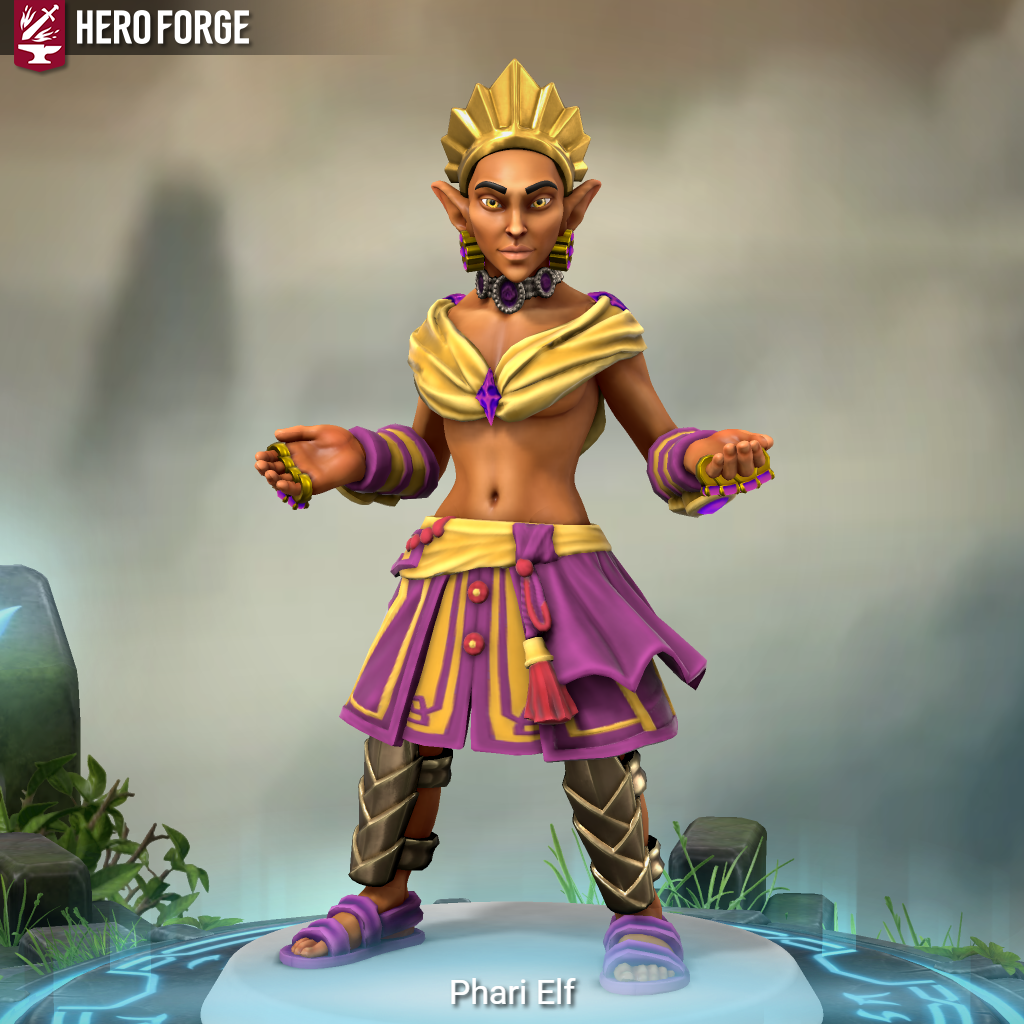
The Elves are a naturally slim species with long limbs. They tend to outgrow their human counterparts by multiple inches however their slender frames make them weigh around the same, if not less. If not for their elegant demeanors, they may appear gaunt.
Their Skin color can range from light olive, typical of the Erimerians to a darker brown or ebony like that of the Phari or Sikrappan.

Comments