
Bloomfrog
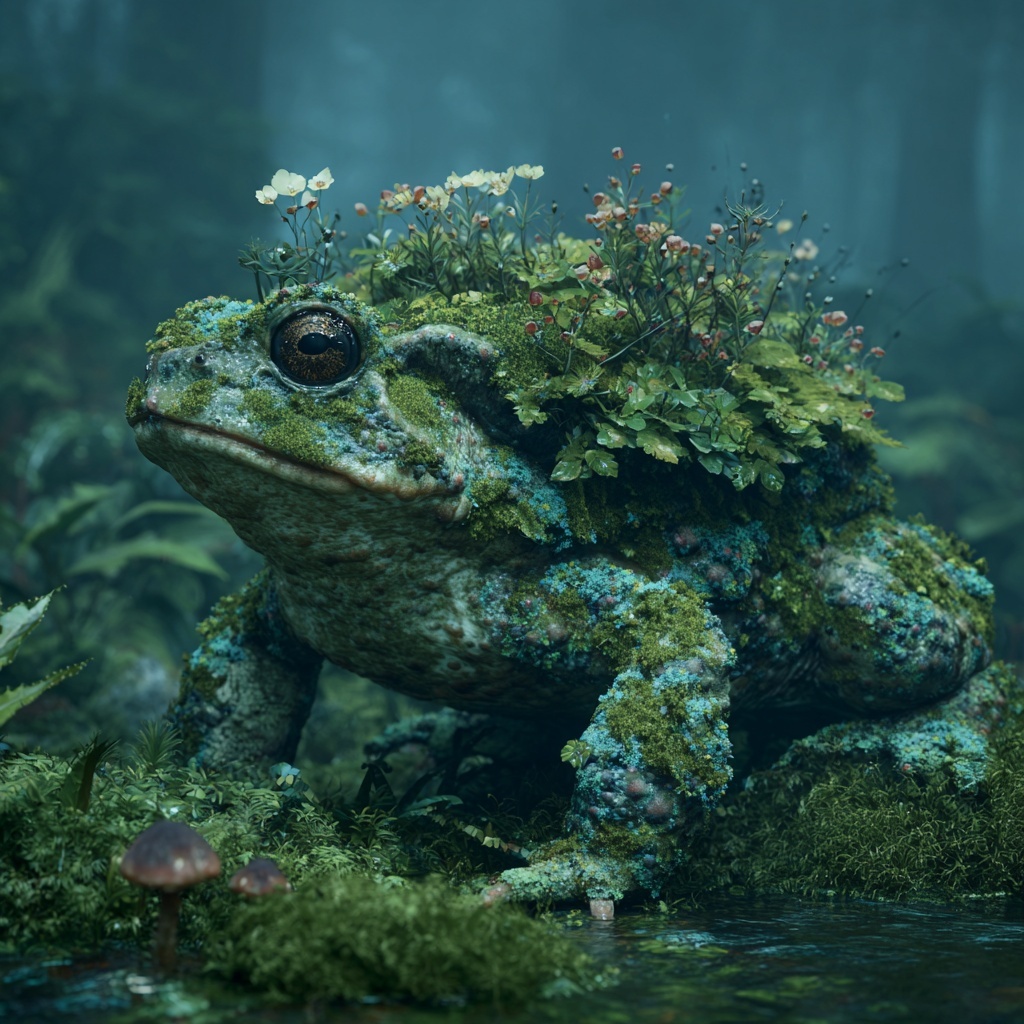
The Bloomfrog, Lithobates floralis, is the wetland equivalent of the mighty bullfrog, but transformed into something more wondrous—a living, breathing ecosystem. Like its ancient amphibian ancestors, it has a distinctive, robust build and commanding presence that makes them the undisputed kings of their aquatic domains. But where precursor bullfrogs relied on size and aggression, the Bloomfrog has evolved into a living testament to the power of symbiosis.
Its deep, resonant call echoes across the wetlands like the territorial boom of traditional bullfrogs, but the vibrations help to distribute pollen from its garden crown, while communicating with potential mates about the health and diversity of their botanical partnerships. A Bloomfrog with particularly lush and varied botanicals commands respect and attracts the most desirable partners.
The "bloom" in Bloomfrog refers not to just the flowers adorning its gardened back and limbs, but the phenomenon of seasonal flowering that transforms the creature throughout the year. Spring brings tiny violets and marsh marigolds, summer hosts the explosion of white flowers, and autumn brings seed heads and berries that sustain both the frog and local wildlife through the winter months.
The creature's skin has developed specialized pores and nutrient channels that feed its plant passengers while receiving oxygen and filtered toxins in return. The diverse microhabitat the Bloomfrog supports hosts flowering plants, mosses, ferns, and even tiny mushrooms that have established permanent colonies across its body, creating a miniature landscape that changes with the seasons. The white flowers during summer months attract insects that feed both the plants and the frog, while their nectar provides supplemental nutrition during lean periods.
Its large, patient eyes reflect an ancient wisdom and its slow, deliberate movements protect the fragile eosystem it nurtures. It has become a mobile seed bank that distributes plant genetics across wetland territories as it migrates between seasonal breeding grounds.
The plants growing on the Bloomfrog have evolved specialized root systems that work directly with its circulatory system to create a shared metabolism, allowing both symbiotic partners to thrive in challenging conditions. During winter months of hibernation and low-activity, the plants enter a dormancy period as well, with their roots providing anti-freeze compounds to protect their host from freezing in icy waters.
The diversity and vigour of the Bloomfrog's plant garden serve as a barometer of environmental health. It indicates water quality, soil nutrition, and the absence of harmful toxins. Experienced foragers have learned to read the Bloomfrog's garden like a book, identifying edible plants, medicinal herbs, and warning signs of Verdant contamination. Its presence often indicates clean water sources, as it requires unpolluted wetlands to maintain the delicate symbiosis of its living ecosystem. Where most water sources carry some level of Verdant contamination, finding a Bloomfrog can mean the difference between survival and a slow poisoning.
In the folklore of Reedweavers, the Bloomfrog has become a symbol of patience, wisdom, and the rewards that come to those who nurture, rather than exploit. Children are taught that disturbing a Bloomfrog brings misfortune, and protecting one will ensure good harvests and clean water.

Comments