
Amber Bell
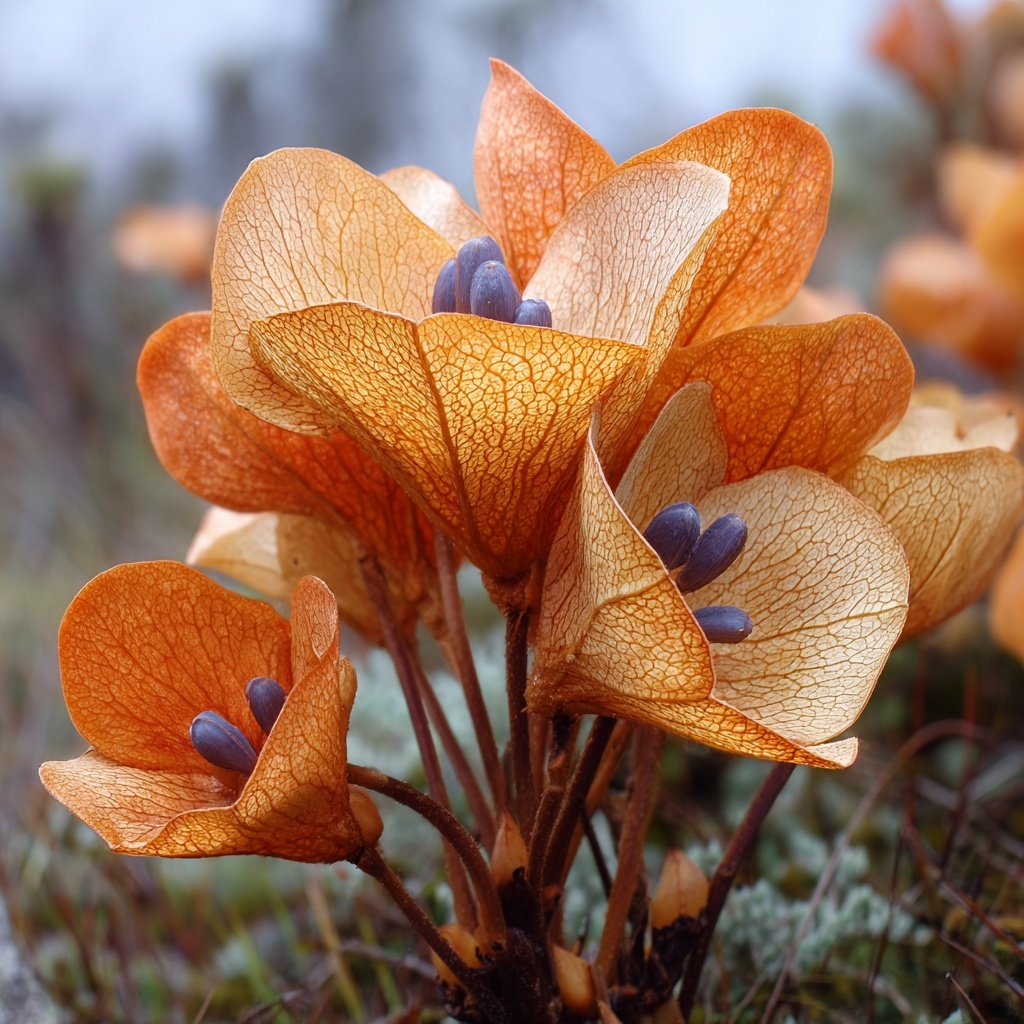
The Amber Bell, Campanula lucida, is an elegant adaptation to desert survival, having evolved translucent, amber-coloured petals that function as living greenhouses. Each petal captures and concentrates sunlight while filtering harmful radiation, creating perfect micro-climates for the plant's reproductive organs. The delicate network of veins that are visible through its translucent flesh provide both structural support and nutrient distribution that glows like captured sunlight.
The deep violet clusters nestled within each bloom are the plant's natural treasures. These are not traditional seeds, but specialized nutlets that only develop after successful cross-pollination by the desert's rarest pollinators—specialized beetles that have adapted to the Post-Verdant world. Each nutlet contains concentrated proteins and oils with a flavour described by fortunate foragers and reminiscent of pine nuts coated in honey and vanilla.
The Amber Bell's scarcity makes it a legendary plant among many cultures. A single plant blooms only once every few years, triggered by a precise combination of rainfall, temperature, and soil conditions. When discovered, entire families will guard the plant through its blooming period, setting up temporary camps to protect it from desert animals and human scavengers.
Its translucent petals are nature's preservation system to protect the developing nutlets from temperature extremes, while allowing just enough moisture to accumulate without encouraging rot. As the season progresses, the petals gradually turn from their golden amber to a crystalline clarity, becoming so transparent they are nearly invisible, except for their delicate veining.
Finding an Amber Bell is considered a sign of profound fortune. The nuts are never consumed immediately, but saved for the most sacred occasions, ceremonies, childbirth, or to sustain individuals through illness or dangerous journeys.

Comments