
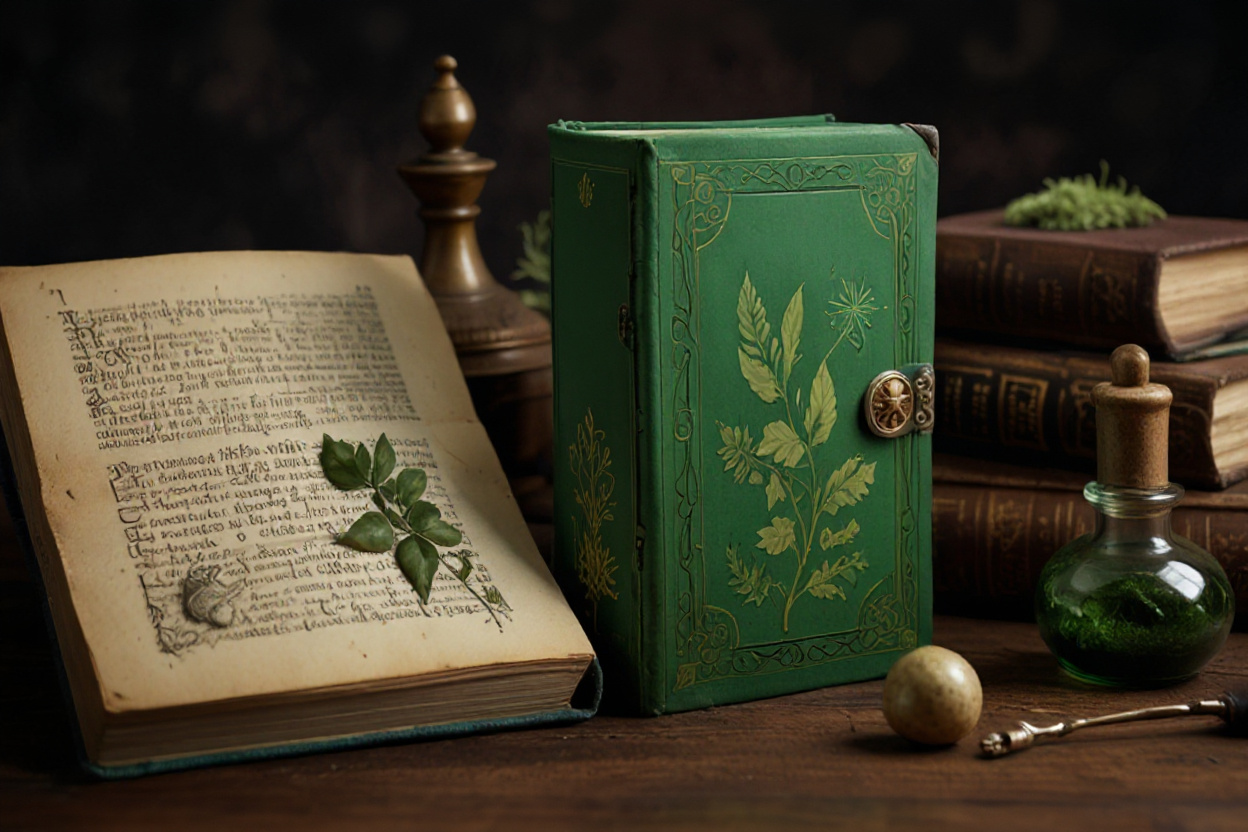
Grace, Spirit & Healing
Grace, Spirit & Healing was a set of five volumes of collected medical wisdom, published during the Second Popular Ascendancy.
It was edited and authored by Jain Carmello, a mage from Ralsimoor, and reflected a lifetime of work.
It was edited and authored by Jain Carmello, a mage from Ralsimoor, and reflected a lifetime of work.
Document Structure
Clauses
The introductory volume is an acknowledgement of the failures of previous generations to produce a systematic and comprehensive encyclopaedia of medical knowledge. It is, in effect, a manifesto and Carmello promises to draw together source material from many areas, augmented with his own research. Here we find the first reference to the Time of Terrors as a name for the age through which the world had not long passed. The author explains the title of his work. It is carefully chosen to acknowledge the importance of Common Grace as understood by the Defenders of the Common Grace. Yet at the same time, the word "Spirit" is a euphemistic reference to arcane knowledge since Carmello is also asserting the need to use magical techniques where such exist. Only by balancing these ideas can true healing be delivered.
The second book considers human anatomy. Illustrated with lavish and carefully drawn diagrams, there is an explanation of the functions of the major organs, the design of the skeleton and the pattern of the circulatory system. Finally there is a long section describing basic surgical techniques to rectify "abnormalities and injuries".
The third book opens with a discussion of the immune system, although it only offers a somewhat rudimentary understanding of its true nature. This leads into a catalogue of diseases, making a distinction between those caused by outside malignancies and those due to internal and chronic causes. The prognosis and possible treatments are listed.
The fourth book is a detailed look at medicinal herbs and their sources, with recipes for their purification and combination in traditional remedies. This is an aspect of Common Grace which Carmello respects and covers at length.
The fifth and final volume is all about the mind. Somewhat mystical in nature on occasion, the author describes various kinds of mental affliction and offers some suggestions for how to treat them.
The second book considers human anatomy. Illustrated with lavish and carefully drawn diagrams, there is an explanation of the functions of the major organs, the design of the skeleton and the pattern of the circulatory system. Finally there is a long section describing basic surgical techniques to rectify "abnormalities and injuries".
The third book opens with a discussion of the immune system, although it only offers a somewhat rudimentary understanding of its true nature. This leads into a catalogue of diseases, making a distinction between those caused by outside malignancies and those due to internal and chronic causes. The prognosis and possible treatments are listed.
The fourth book is a detailed look at medicinal herbs and their sources, with recipes for their purification and combination in traditional remedies. This is an aspect of Common Grace which Carmello respects and covers at length.
The fifth and final volume is all about the mind. Somewhat mystical in nature on occasion, the author describes various kinds of mental affliction and offers some suggestions for how to treat them.
Publication Status
Historical Details
Background
In the 37th and 38th centuries the open practice of magic was considered disreputable in a way that it had never been before. After the excesses brought about by free use of Synaptic Unbinding Potion mages had become a deeply distrusted group, even to the point of being despised and feared by many ordinary citizens. This was the climate in which the Defenders of the Common Grace arose. The traditional schools of magic at Quarowl and Greystow kept a low profile and a humble attitude of contrition was expected from the few adepts who kept their skills after the emergence of the Nexorin Pathogen.
Those mages who sought a useful public role in the society of the aggressively anti-magical Second Popular Ascendancy had few options. When Jain Carmello wrote his famous treatise, he provided one - a sanctioned redemptive path for those that wanted to take it, via the practice of medicine, which provided an much needed service to all.
Those mages who sought a useful public role in the society of the aggressively anti-magical Second Popular Ascendancy had few options. When Jain Carmello wrote his famous treatise, he provided one - a sanctioned redemptive path for those that wanted to take it, via the practice of medicine, which provided an much needed service to all.
History
Grace, Spirit & Healing was very well received amongst medical practitioners and became a standard work of reference within a few years, demonstrating that there had been an unmet need for a comprehensive and wide ranging text, covering all manner of ills.
It continued to be republished with updated and extended sections in many editions until the end of the age of the Third Popular Ascendancy, over a thousand years later, after which it was gradually superseded by a number of more specialist works.
It continued to be republished with updated and extended sections in many editions until the end of the age of the Third Popular Ascendancy, over a thousand years later, after which it was gradually superseded by a number of more specialist works.
Legacy
Grace, Spirit & Healing became a foundational text for the Healing Concord, a charity which was a practical expression of the author's desire to spread medical knowledge and which began to operate in 3731 APC.
Comments