
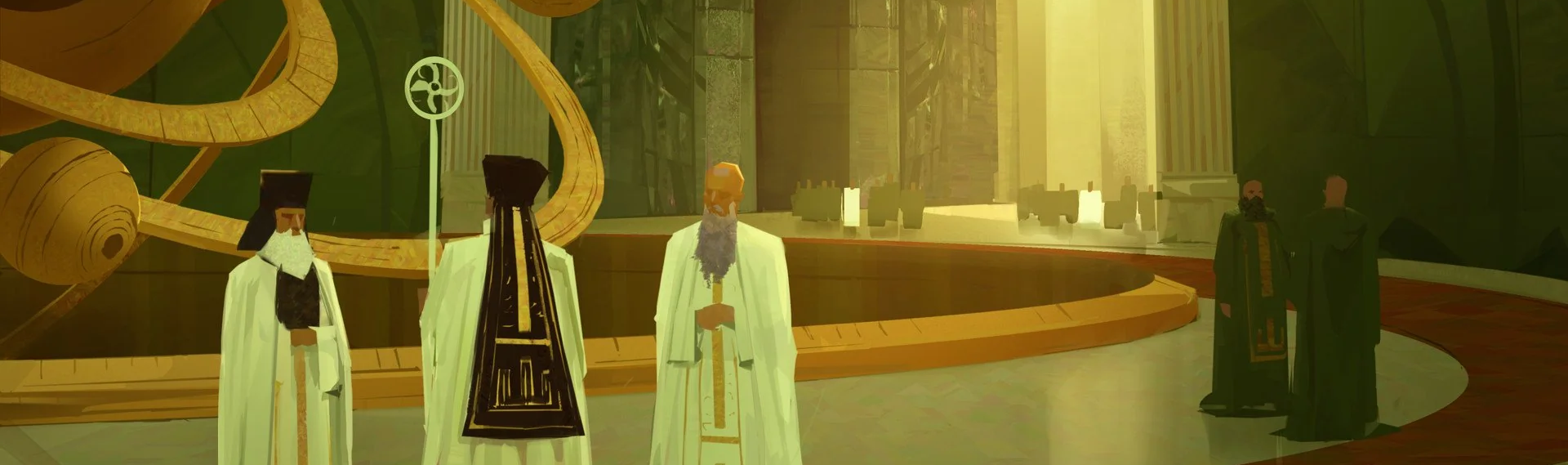
Theological Contentions in Rradzipaxy
A Spectrum of Belief
Within the unified faith of Holy Rradzipaxy, a rich tapestry of theological debate and differing interpretations existed, creating a dynamic and evolving belief system. Much like the Rurko-Xer (Suggested Knowledge) classification allowed for diverse practices, several core tenets of the faith were subject to fervent discussion among its followers, particularly between the major rites.
These theological debates were generally seen as a reflection of the vitality of the faith and its federative nature. They ensured the faith remained a living, breathing entity, constantly adapting to the complexities of a new cosmos while staying anchored to the sacred revelations of Admiral R̂ađip.
The Vow of Wop: Spiritual vs. Material Progress
The Vow of Wop (Deteriorate), a commitment to actively fight against decay and entropy, was a central point of contention between the Rite of the R̂ikip (the Ascetics) and the Rite of the Eişip (the Workers). The R̂ikip viewed this vow as an internal, spiritual struggle. For them, true decay was not found in the physical world but within the soul. They believed that by shedding the ego—a process they called R̂aşumʻeg—they were fulfilling the vow on the most fundamental level, purifying themselves of the spiritual rot that had corrupted the Old Gods. They might have accused the Eişip of being distracted by worldly pursuits and failing to address the true source of decay. In contrast, the Eişip interpreted Wop as a literal and pragmatic mandate. They saw the construction of new temples, the development of advanced technology, and the active stewardship of the environment as the truest form of worship. For them, every act of creation and maintenance was a direct act of defiance against the universe's natural tendency toward chaos. They saw the asceticism of the R̂ikip as a form of retreat, a failure to engage with the world Judh had tasked humanity to govern.The Nature of Woz: A Moral Maelstrom
The debate over Woz (Unpermissable Murder) was perhaps the most profound and difficult theological issue in Rradzipaxy. While the Zithwuth Şelʻe clearly forbade the taking of life, the "vague cases" of exception had led to a moral maelstrom of interpretation. The R̂ikip generally adopted a highly pacifist stance. They argued that the exceptions were not a license for violence but a profound spiritual test. They might have suggested that true defense was an act of spiritual transcendence, and that a truly perfect soul would never need to resort to taking a life. To them, any act of killing, even in self-defense, was a failure to fully embrace the path of R̂aşumʻeg. The Eişip, grounded in their pragmatic worldview, argued for a more utilitarian interpretation. They believed that Judh's divine law was meant to protect life, and in some tragic circumstances, the only way to save a greater number of lives was to sacrifice a few. This view had led to the formation of theological councils dedicated to defining the precise conditions under which violence could be justified, an ongoing process that was never free of controversy. The Eithiz Erurkormu, a group on the fringe of orthodoxy, added another layer of complexity. They argued that the Old Gods' methods, though ultimately flawed, sometimes contained useful knowledge for combating decay. They might have used this as a pretext to explore ancient, destructive arts, rationalizing their actions as necessary for the greater Şum ʻi (defense) of humanity, a position that orthodox followers decried as a dangerous violation of the divine law.The Role of Music and the Zaxu
While the Holy Rite of Zax-Nuşeg was a cornerstone of the faith, the role of music beyond the central rite was a matter of theological opinion. The Zaxu was the only instrument mentioned as a sanctioned part of the sacred ceremony, and its unique sound, zaxiz, was seen as a direct link to the divine revelation. For most R̂ikip, this exclusivity suggested that other forms of instrumental music were either secular or, in more extreme interpretations, a distraction from true worship. They believed that the human voice, used in chant (mehtit), was the only pure instrument of praise, as it was a direct expression of the soul's spiritual weaving. The Eişip however, believed that music was a form of Şeđi (Artifact). They argued that Judh's nature was found in the unpredictable and unconventional, and that creating new musical forms or playing instruments was a way of seeking the divine in unexpected places. For them, a beautiful melody, whether played on a zither or a drum, was a testament to the divine gift of creativity, a means of honoring Judh's presence in all of creation.These theological debates were generally seen as a reflection of the vitality of the faith and its federative nature. They ensured the faith remained a living, breathing entity, constantly adapting to the complexities of a new cosmos while staying anchored to the sacred revelations of Admiral R̂ađip.

Comments