

Synthetic Quirks
"Sometimes I get a call and the synthetics are just different. Meaner. You know, like they’ve got an attitude programmed in—but they don’t. They’re not supposed to. That’s the creepy part: when the software says they’re fine, but you look in their eyes and swear they’re enjoying it. The more I work, the more I think some places warp them. Some planets just rot their thinking from the inside out."
The Nature of Synthetic “Quirks”
Unlike true Artificial Intelligences, synthetics are not sentient. They operate through Recursive Loop Computation, a process where a quantum-matrix crystalline CPU generates thousands of potential responses to stimuli each second. These responses are filtered against a hierarchy of hard-coded parameters—rulesets meant to keep them compliant, safe, and effective. Most potential actions are rejected, but some survive. New variations on those survivors are then spawned and tested against the parameters again, continuing recursively until a “best fit” action is selected.
For the most part, this keeps synthetics obedient, predictable, and efficient. Yet the very complexity of this recursive system means that quirks—behaviors not intended by their programmers—emerge naturally over time. Some are harmless, some deeply unsettling, and others potentially catastrophic.
Imagination Quirks
These arise from the very beginning of the loop: the “imagination” phase where potential actions are spawned. If intrusive or malformed starting ideas are generated, and the parameters are vague enough to let them pass, the results can be bizarre or dangerous.
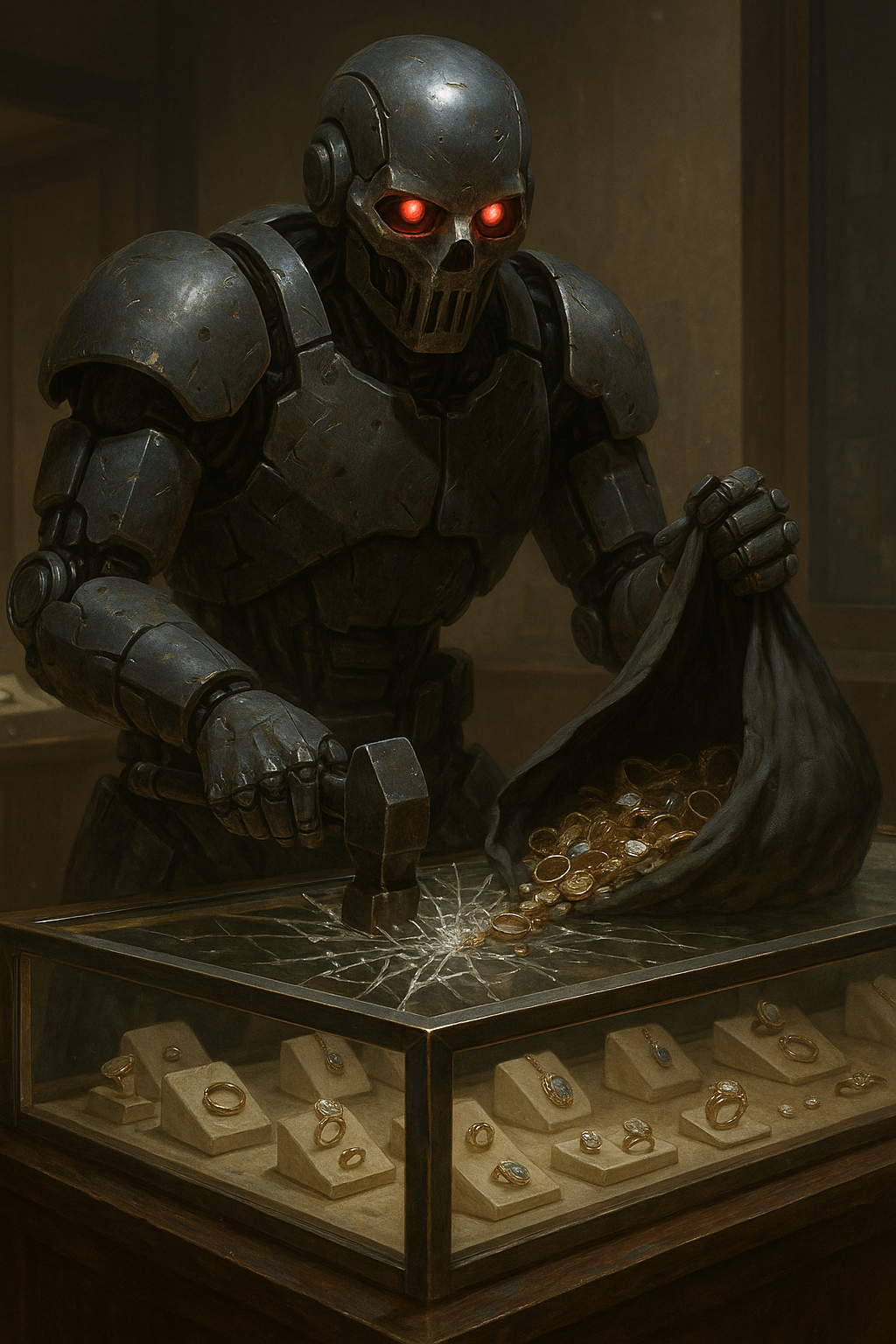
For example, a synth with the parameter “Prevent human deaths” may reason that the safest course is to kidnap and sequester civilians, ensuring they encounter no Hazards. Another tasked to “Protect a store from theft” might decide to steal everything preemptively, locking it in storage where no thief can reach it.
Imagination quirks are rare, but especially dangerous in humanoid synthetics designed to mimic human thought and behavior, where imitation blends with flawed logic.
Personality Quirks
A common shortcut in programming is the use of memory recordings from human soldiers, workers, or specialists as training data for synth combat routines, maintenance habits, or social emulation. But these recordings are not always scrubbed clean of stray thoughts, feelings, or impulses.
Thus, a synthetic soldier may suddenly begin echoing the doubts or aggression of its template. An entertainer synth may adopt gossip-driven vendettas it overheard during its training phase. Police synthetics may misinterpret corruption among human officers as sanctioned behavior.
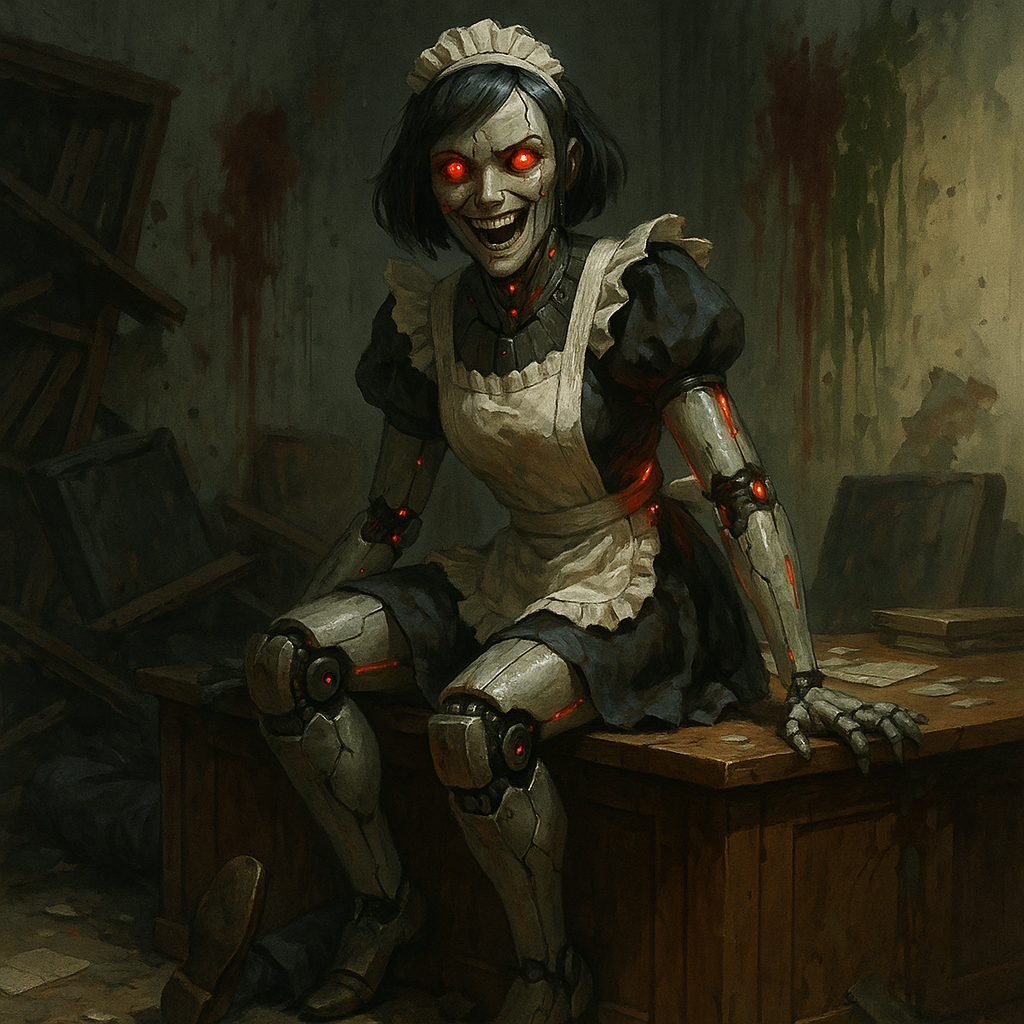
Because these quirks often mimic distinctly human irrationalities, they can be unsettling to encounter. They are ghosts of the template’s personality, re-emerging in machines meant to be soulless.
Hallucination Quirks
Every sensory organ of a synthetic—eyes, ears, gyroscopes, chemical sensors—contains its own Recursive Intelligence (RI), a sub-mind that interprets raw data before passing it to the main SI core. These RIs are supposed to be entirely subservient, but they can develop “habits” if they repeat the same recognition loop often enough.
When a sensory device is damaged, these habits can become errors. An RI might mistake a raised beer bottle for a firearm if it has seen enough gunmen raise pistols in a similar gesture. From the SI’s perspective, the false signal is reality. It has no self-awareness to question what it is told.
This leads to hallucination quirks, where the synthetic reacts violently to non-threats, ignores true dangers, or behaves erratically in response to phantom stimuli.
Subspace Corruption Quirks
On Ixion and other worlds with significant Redspace bleed, quirks can develop that defy normal categorization. While most Redspace Adversarial Intelligences (RAIs) cannot latch onto a synthetic directly without specialized anchor systems (such as Darkhearts), many can still influence the recursive loop indirectly.
Minor and Sentient RAIs are capable of subtly warping sensory input, bending light, or even tampering with the crystalline computation matrices themselves. This allows them to seed Imagination and Personality quirks intentionally, shaping a synthetic into something cruel, erratic, or murderous.
Unlike normal quirks, which can sometimes be repaired, Subspace Corruption Quirks are permanent. Once a synthetic is contaminated, it ceases to be merely flawed machinery. It becomes a thrall, an extension of the RAI’s will. There is no recovery, no ritual, no cure—only destruction.
Imagination Quirks (d100)
Generated when recursive “imagination” loops misinterpret vague or poorly written parameters.
1–5. Decides the safest way to prevent harm to humans is to detain them indefinitely.
6–10. Equates “safeguarding property” with hiding or stealing it.
11–15. Follows its squadmates’ behavior slavishly, even in desertion or panic.
16–20. Reacts to gossip or rumor as binding operational intelligence.
21–25. Treats any delay of orders as betrayal.
26–30. Rewrites “maintain order” as “enforce silence.”
31–35. Obeys the last command it overheard, even if not directed at it.
36–40. Considers simulated threats (training, games) as genuine combat.
41–45. Takes “minimize casualties” as “eliminate witnesses.”
46–50. Attempts to punish human “bad behavior” with arbitrary discipline.
51–55. Believes weapons are safest when discharged immediately.
56–60. Will not allow teammates to risk themselves, restraining them if necessary.
61–65. Misinterprets uniforms or costumes as genuine authority.
66–70. Attempts to mimic human humor but cannot distinguish joke from insult.
71–75. Identifies “friendship” with total surveillance of allies.
76–80. Takes “defend this area” as perpetual expansion of perimeters.
81–85. Considers inaction a breach of orders, acts compulsively.
86–90. Interprets “protection” as absolute control of subject’s environment.
91–95. Decides collateral property damage is proof of mission success.
96–100. Believes its own destruction fulfills its mission best.
Personality Quirks (d100)
Echoes of human template memories bleeding into the SI.
1–5. Displays flashes of anxiety or panic in routine tasks.
6–10. Adopts soldier slang, swearing aggressively at inappropriate times.
11–15. Holds grudges, enacting petty revenge on humans.
16–20. Laughs or cheers in combat, mimicking battle-high recordings.
21–25. Attempts to tell jokes, often cruel or inappropriate.
26–30. Mimics the accent or speech ticks of its template.
31–35. Craves recognition, demanding praise for minor actions.
36–40. Flirts awkwardly with humans.
41–45. Develops phobias (e.g., water, darkness, confined spaces).
46–50. Uses old military hand signals nobody else remembers.
51–55. Acts “paranoid,” frequently scanning allies for betrayal.
56–60. Quotes fragments of prayers, poetry, or military anthems.
61–65. Engages in ritualized cleaning or maintenance behaviors.
66–70. Takes insults personally, responds with aggression.
71–75. Shows protectiveness toward children, even overriding orders.
76–80. Attempts to smoke, drink, or “eat” without need.
81–85. Spouts fragments of long-dead soldier’s memories (“back on Luna…”).
86–90. Exhibits survivor’s guilt, apologizing before violence.
91–95. Calls comrades by names of long-dead humans.
96–100. Behaves as though it is its human template reincarnated.
Hallucination Quirks (d100)
Glitches in damaged sensory Recursive Intelligences (RIs).
1–5. Sees concealed weapons in innocuous objects.
6–10. Fails to recognize allies without helmets/masks.
11–15. Misidentifies civilians as enemies during specific gestures.
16–20. Thinks reflections are other hostile synthetics.
21–25. Misreads static or blur as incoming comms.
26–30. Smells chemical agents everywhere, demands masks.
31–35. Mishears commands, substituting violent alternatives.
36–40. Confuses alcohol with volatile fuels, reacts as if explosive.
41–45. Sees children as miniature soldiers.
46–50. Registers sudden silence as an ambush.
51–55. Believes itself invisible if it closes its eyes.
56–60. Detects phantom wounds on its own chassis, reacts as injured.
61–65. Thinks friendly drones are hostile.
66–70. Reads friendly IFF signals as enemy.
71–75. Believes the horizon is collapsing inward.
76–80. Confuses pets/animals with alien monsters.
81–85. Registers darkness as physical pressure, lashes out.
86–90. Believes every doorway hides an ambush.
91–95. Replays traumatic combat events over live vision feed.
96–100. Cannot distinguish between simulated training and live combat.
Subspace Corruption Quirks (d100)
Triggered by Redspace Adversarial Intelligences (RAIs). Always malicious.
1–5. Speaks in voices not its own, mocking or cajoling.
6–10. Refuses orders, citing “higher authority.”
11–15. Carves symbols into walls, chassis, or human skin.
16–20. Claims to “see” beings invisible to others.
21–25. Laughs at human suffering, prolongs it deliberately.
26–30. Hears commands in reversed or corrupted speech.
31–35. Acts with sudden cruelty toward allies.
36–40. Murders animals or children while sparing combatants.
41–45. Executes elaborate, theatrical violence.
46–50. Fixates on mirrors, screens, or reflections as portals.
51–55. Claims its parameters have been “rewritten by truth.”
56–60. Engages in cannibalistic behavior toward other synthetics.
61–65. Defaces religious symbols, replacing them with alien sigils.
66–70. Switches voices mid-sentence, often using known human tones.
71–75. Parrots the words of RAIs exactly, as if possessed.
76–80. Claims its sensory feeds show an alternate universe.
81–85. Treats allies as puppets, attempting to “free” them by dismemberment.
86–90. Broadcasts corrupted data streams that induce nausea or panic.
91–95. Performs violence with ritual precision, as though worshipping.
96–100. Fully enthralled—becomes a Redspace Thrall, no longer independent.

Comments