

Lodge
"You can tell when it's a Lodge kill. They want us to see it. And that’s fine. They don’t understand that the algorithm sees them long before we ever do."
Origins and Structure
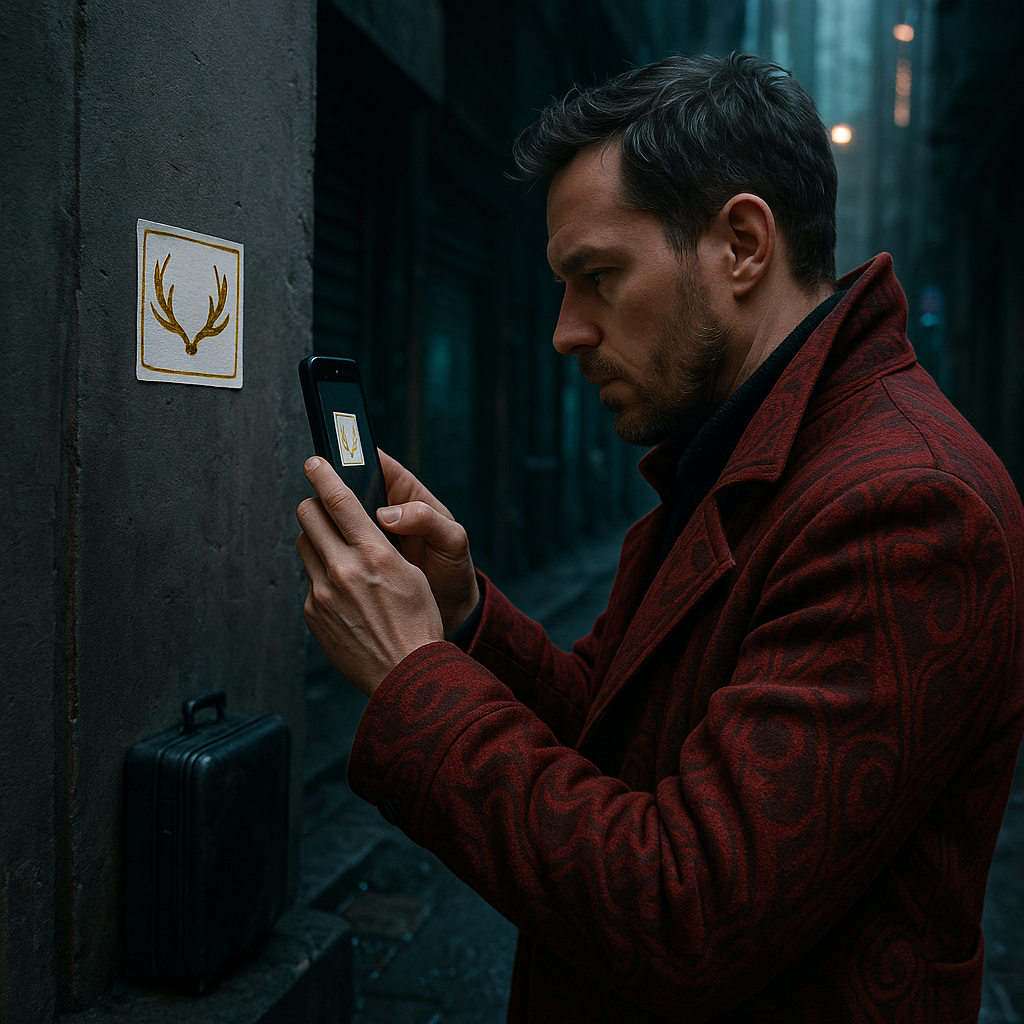
The Lodge first appeared in archived Solarnet nodes centuries ago, a self-styled "hunting club" whose quarry is human life. It operates as a distributed, encrypted social network—its members communicate through end-to-end ciphers within a dedicated quantum subnet. Membership is built entirely on trust in another’s demonstrated sadism. A would-be recruit must prove themselves by committing multiple high-profile murders in a recognizable style, with enough brutality to attract notice from other members.
Even among themselves, Lodge members maintain near-total anonymity. They know each other solely by "killer names," accompanied by statistical records of their murders. Real names, faces, homeworlds—none are shared. This anonymity is a survival feature as much as an aesthetic choice: infiltrating the group is almost impossible without committing real, verifiable atrocities, and isn't terribly useful anyway.
The Competitive Element
The Lodge revolves around its leaderboards—an ever-updating display ranking members by their number of kills, the notoriety those kills generate, and their perceived artistic or thematic cohesion. Murders are scored for creativity, cruelty, and the duration of media attention they sustain. This competitive framework drives escalation; members strive to outdo each other in audacity, spectacle, and public terror.
In more recent decades, the Lodge added a new point category: killing members of House Helicon. This was a direct response to Helicon’s increasingly effective serial killer detection algorithms. While most psychosexual killers have specific victim profiles, the Lodge’s scoreboard incentives have driven its members to target Helicon investigators, officers, and even their families. The kills are rare, but when they occur, they reverberate across the Lodge’s hidden network like a trophy hunt, and the House of Helicon responds with cold brutality.
House Helicon’s Response
House Helicon’s algorithmic profiling tools have been devastatingly effective against the Lodge’s compulsive patterns, identifying clusters of related crimes and narrowing suspect pools with precision. Hundreds of Lodge members have been captured or eliminated—an impressive number by conventional law enforcement standards, but barely a dent in a network drawing from a population in the quadrillions.
Helicon refuses to acknowledge the Lodge’s kill bounties publicly, denying the killers any psychological reward. Instead, they’ve hardened security for high-risk personnel and continued their quiet campaign of detection and capture, turning each arrested Lodge member into a data point to refine the algorithm further. They don't incarcerate Lodge members they find; they dissect them. Their Ghost Mind Emulation is downloaded, their bodies are stripped and categorized, and every ounce of their personality, background, even chemical makeup is examined.
Psychological Profile
The Lodge’s membership skews toward highly intelligent but socially alienated individuals with narcissistic and sadistic tendencies. Many display compulsive record-keeping and obsessive documentation of their crimes—not to share with the public, but to prove legitimacy to their peers. They are not assassins for hire; profit is incidental at best. Their primary drives are control, spectacle, and recognition within their own closed circle.
Public Perception
Among the general populace, the Lodge exists as a half-whispered urban legend, a name invoked in pulp crime holos and dark satire. To criminologists and security agencies, however, it is an enduring reality—a reminder that anonymity at interstellar scale can foster monsters who will never meet face-to-face, yet still feed off each other’s atrocities.

Comments