

Free Market Tomahawk
"They’re not fighting the system—they’re selling it back to you, one martyr at a time."
Overview
Free Market Tomahawk (FMT) is an anarcho-capitalist militant organization dedicated to dismantling the corporate-managed marketplace in favor of what they term a "true, unregulated free market." Founded in 391 YAC by a group of small-scale entrepreneurs, the group’s origins were far from violent. Initially functioning as a lobbyist bloc pressing for deregulation, they quickly drew the ire of megacorporations, which viewed their rhetoric as dangerously destabilizing. Corporate security forces moved to neutralize them through targeted assassinations, asset seizures, and manufactured Criminal charges.
What survived of FMT hardened into a decentralized, guerrilla-style network of cells spread across corporate territories. Though their stated ideology champions open competition and personal enterprise, their methods are far from peaceful—blending propaganda warfare with outright piracy and sabotage.
Tactics and Operations
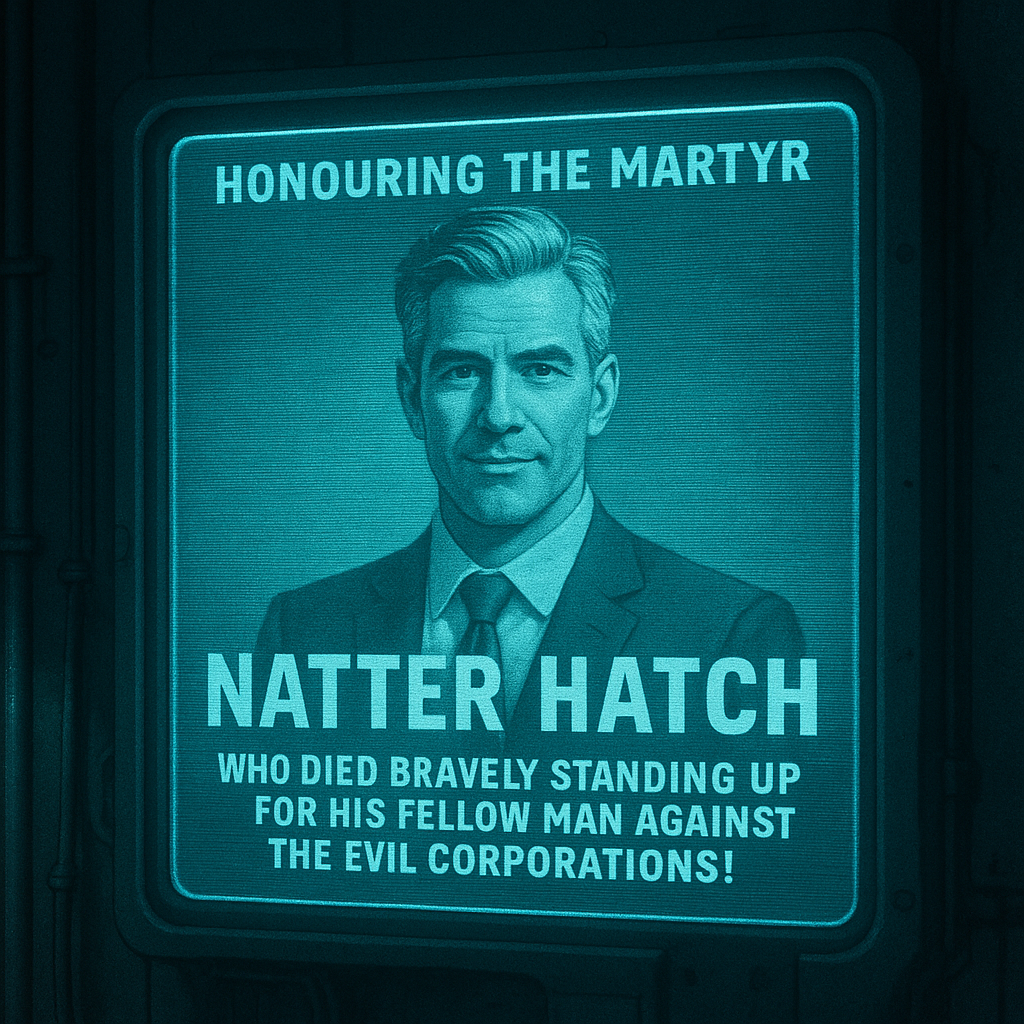
FMT is as much a public-relations machine as a militant organization. Their leadership understands marketing intimately, turning every successful action into a recruitment drive and every loss into a rallying cry. When one of their high-profile members is killed or captured, they immediately flood Solarnet with counter-narratives:
- Gray Propaganda Campaigns – Suggesting the charges were fabricated, that evidence was planted, or that the accused was framed by a rival.
- Martyr Branding – Spinning leaders into icons for entrepreneurial resistance, complete with distributed imagery, slogans, and merchandise.
On the operational side, FMT favors economically disruptive raids over ideological grandstanding:
- Payroll Courier Ambushes – Seizing corporate payrolls in transit, then letting the companies cover their losses quietly rather than admit the failure.
- Piracy and Cargo Theft – Targeting high-value shipments to disrupt supply chains.
- Sabotage and Arson – Damaging or destroying assets to hit corporate productivity without necessarily killing employees.
Their opportunism is legendary, and they are often suspected of accepting private contracts to harass one corporation on behalf of another.
Relationship with the Pan-Solar Concordium
Officially, the PSC government treats FMT as a corporate problem. Under the Harmony and Detente accords, as long as FMT refrains from excessive civilian casualties or large-scale infrastructure damage, they are considered part of the “natural market ecosystem” of competition. PSC enforcement steps in only when their actions spill over into government-controlled territories or threaten strategic resources.
This hands-off stance frustrates corporate security divisions, though many megacorporations are complicit in FMT’s continued survival. It’s an open secret that several corps have contracted FMT for “plausible deniability” strikes on their rivals. The only known exception is Vanguard Dynamics, which maintains a public stance of zero cooperation. Privately, however, Vanguard uses FMT as a live-training opponent for rookie corporate raiding teams—seeing them as both a manageable nuisance and a tool for honing their own.
Organization and Culture
FMT’s structure is loose, with leadership more concerned about branding cohesion than centralized control. Individual cells operate semi-independently, tied together by encrypted marketing networks and a shared pool of propaganda assets.
Their culture blends capitalist swagger with rebel romanticism:
- Leaders style themselves as visionaries or disruptors.
- Fighters often wear personalized gear adorned with advertising slogans, private logos, and satirical mockeries of corporate brands.
- Operations are given catchy, marketable names meant to trend on Solarnet feeds.
Despite their anti-corporate veneer, money is the glue that holds them together. Loyalty is bought and sold, and ideological purity is negotiable—provided the transaction is profitable.
Komissar’s Assessment
"The algorithm suggests the obvious: they’re not the disease—they’re a symptom. FMT survives not because they’re unbeatable, but because too many of the great and powerful find them useful. It is entirely possible—likely, even—that one of the very megacorps they claim to hate the most is quietly their biggest shareholder."
— Komissar Darrick Surn

Comments