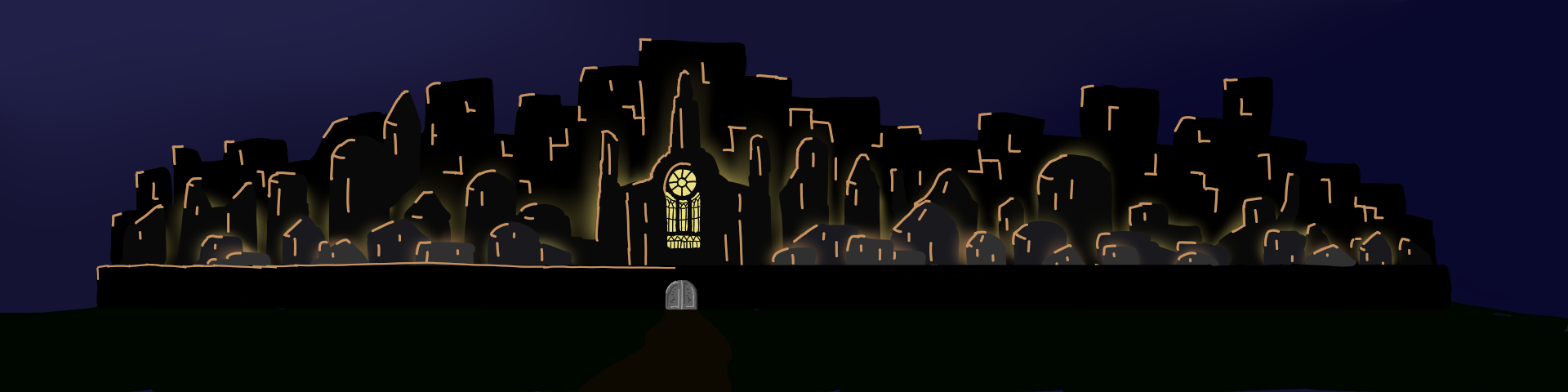
Daurda
The city-state of Daurda opens its silver gates to everyone—after all, the more esteemed guests that enter the city, the more opportunities for honorable acquisition there will be. This sprawling settlement is as diverse as it can be, but all Daurdans have something very important in common: the Code of the Collector. From the wealthiest infernis to the lowliest katari, honor is paramount between these walls. And if the rest of the world doesn't agree with their definition of honor... well, that's their loss.
While Daurda is a dangerous place and self-interest tends to guide its inhabitants and the city at large, everyone is beholden to a code of honor known as the Code of the Collector. The punishment for breaking it is losing a finger; once all ten fingers are gone, the punishment is death. These punishments are not enacted by the city government but by the Guild, an organization made up by representatives of the collecting business.
1. You shall never betray one of your own.
2. You shall resolve all disputes through honorable duel.
8. No blood shall be spilled when collecting.
9. Impersonated individuals shall be compensated with a small proportion of the acquisition.
13. You shall not steal silver, as silver is a sacred gift from the Wandering Gods.
25. You shall defend your own with everything except your life.
Originally, Daurda was part of Arondor, despite their stuck-up nobility doing their best to pretend otherwise. However, their tune changed quickly when Liyume's expansion campaign began, and suddenly Daurda became "of utmost strategic importance to the nation". Eventually, Arondor surrendered and Daurda officially became part of Liyume.
However, when Liyume realized the unique culture of the city would make managing it so difficult, they decided to give it back to Arondor "as a token of peace". Arondor, in turn, responded that they could not accept such a generous gift when the war had already been settled. And so, Daurda found itself in the odd position of technically being part of both and neither country at the same time.
The seafaring Azra people are more than happy to use Daurda's port as a safe haven during their travels, as well as to engage in commerce. The nomadic Lendarian also often stop by the city, as both Arondor and Liyume prefer the Lendarian stay away from their major cities. As both the Azra and the Lendarian trade all throughout the continent, Daurda has become a major nexus of commerce.
A city of silver and shadow
Daurda is famous for its crime syndicates and crime entrepreneurs; a place you should avoid at all costs. Hidden knifes await visitors at every alley, and the softest clinking of coins will make half the city turn their heads. Which is why foreigners tend to be so surprised when they realize the massive city gates are made of solid silver. After all, common wisdom would dictate that in a city run and guarded by thieves, such a valuable material wouldn't be left standing for long.While Daurda is a dangerous place and self-interest tends to guide its inhabitants and the city at large, everyone is beholden to a code of honor known as the Code of the Collector. The punishment for breaking it is losing a finger; once all ten fingers are gone, the punishment is death. These punishments are not enacted by the city government but by the Guild, an organization made up by representatives of the collecting business.
Honor among collectors
The most common criminal activity in Daurda is collecting—or, in other words, stealing. All other crimes, if not used as a means to collect something, are frowned upon by the Guild. It's worth noting that collecting is illegal, regardless of the collector's adherence to the Code. But if caught, having followed the Code can usually produce a lighter sentence.
The origins of the code are unclear. Tradition attributes it to the word of the Wandering Gods, although most people in Telumar scoff at the idea of the Gods creating such an unsavory document. Regardless, the Code is said to have remained unchanged since Time Immemorial, which technically makes it one of the oldest codes of law in the world.
The original manuscript of the Code is kept in the city hall, and its most important tenets are engraved in the city walls. Some city governors have dared try to crackdown against the collectors and their Codes, which has inevitably ended with them going away on holiday.
The origins of the code are unclear. Tradition attributes it to the word of the Wandering Gods, although most people in Telumar scoff at the idea of the Gods creating such an unsavory document. Regardless, the Code is said to have remained unchanged since Time Immemorial, which technically makes it one of the oldest codes of law in the world.
The original manuscript of the Code is kept in the city hall, and its most important tenets are engraved in the city walls. Some city governors have dared try to crackdown against the collectors and their Codes, which has inevitably ended with them going away on holiday.
Code of the Collector
(extract from the Code's contents)
1. You shall never betray one of your own.
2. You shall resolve all disputes through honorable duel.
...
8. No blood shall be spilled when collecting.
9. Impersonated individuals shall be compensated with a small proportion of the acquisition.
...
13. You shall not steal silver, as silver is a sacred gift from the Wandering Gods.
...
25. You shall defend your own with everything except your life.
Whispers in the dark
Daurdans, and especially collectors, have developed a unique slang to help them better communicate their intentions without other people understanding; what some people may call "thieves' cant". Here's a small taste of this jargon:- Collector: A person who's main occupation is acquiring goods without permission while following the Code of the Collector.
- Esteemed guest: Foreigners who visit the city. Prime target for some high-quality collecting!
- Going away on holiday: Forcefully disappearing; generally frowned upon unless absolutely necessary to follow the Code.
- Honorable acquisition: The act of collecting something while following the Code of the Collector (or something someone has acquired in such a way).
- To taste silver: To break the Code of the Collector.
The state of Daurda
The legal status of Daurda is not clear—and not just because of the lack thereof. While Daurda generally refers to the city itself, the city also controls a significant portion of its surrounding territory, which includes smaller settlements. However, the country never officially became independent from its parent country: either Arondor or Liyume, depending on who you ask.Originally, Daurda was part of Arondor, despite their stuck-up nobility doing their best to pretend otherwise. However, their tune changed quickly when Liyume's expansion campaign began, and suddenly Daurda became "of utmost strategic importance to the nation". Eventually, Arondor surrendered and Daurda officially became part of Liyume.
However, when Liyume realized the unique culture of the city would make managing it so difficult, they decided to give it back to Arondor "as a token of peace". Arondor, in turn, responded that they could not accept such a generous gift when the war had already been settled. And so, Daurda found itself in the odd position of technically being part of both and neither country at the same time.
Uneasy diplomacy
Daurda's relationship with its neighbors is complicated. There is no hostility—there's not even tension. But since both of them claim Daurda belongs to the other, they never initiate diplomacy with Daurda directly. Instead, they go to their supposed "parent government", only to be immediately rejected. Fortunately for Daurda, however, they are not completely isolated from the world.The seafaring Azra people are more than happy to use Daurda's port as a safe haven during their travels, as well as to engage in commerce. The nomadic Lendarian also often stop by the city, as both Arondor and Liyume prefer the Lendarian stay away from their major cities. As both the Azra and the Lendarian trade all throughout the continent, Daurda has become a major nexus of commerce.
Communities
Daurda is inspired by the Slyborne community, but a character from Daurda could easily be from a variety of different communities too.Wanderborne and Seaborne characters could hail from Daurda but travel with the Lendarian or the Azra respective. And since Daurda is a major city, there's plenty of opportunities for Highborne, Orderborne, and Loreborne characters to exist too.



What a fun start to Worldember, and a fun setting for shenanigans. I have a question, if you die defending your own, will the Guild come and take a finger?
Solaris -— a sapphic space opera
Creator of World of Worlds | Camp Chill | Comment Carolers
That would be really funny! But since death is the final punishment (when you break the Code an 11th time), I guess they'd see this as punishment enough.