
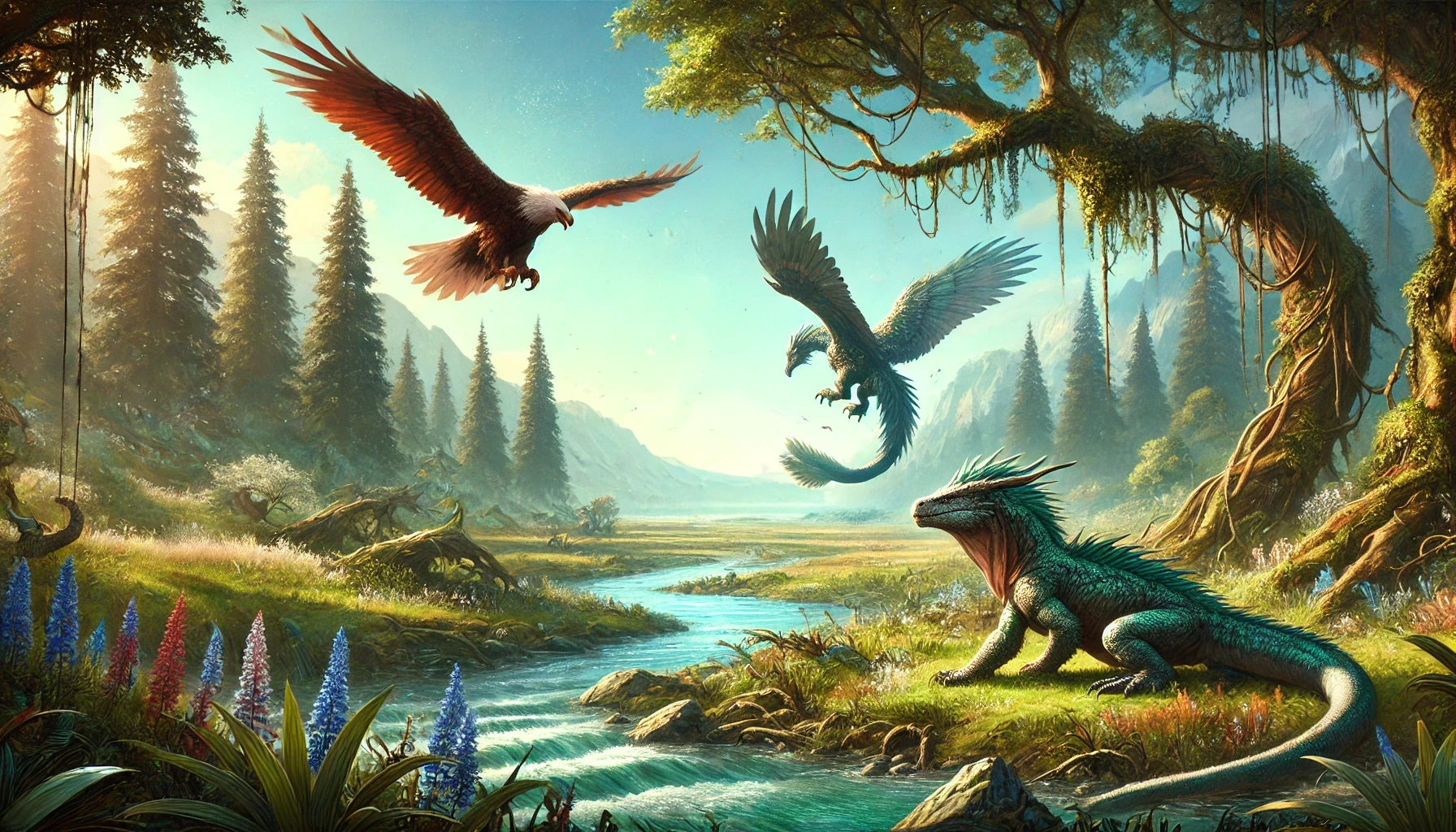
Thalor’s Law - The Chain of Beasts
The Chain of Beasts, often called Thalor’s Law, is one of the oldest and most universally acknowledged natural laws in Tanaria. It predates kingdoms, predates written history, and predates even the mortal races who would later attempt to explain it. The law is not a metaphor. It is a functioning mechanism of the world, woven into the very marrow of life by Thalor, the Lord of Beasts and Father of the Wilds.
Where other gods deal in abstractions , fate, knowledge, magic, Thalor’s gift to the world is unmistakably tangible:
Life survives because the chain holds. Life collapses when it breaks.
The law governs every living system, from small forest clearings to massive continental migrations, and even influences the instincts of sentient beings. Whether one worships Thalor or curses his name, the law applies without exception.
Manifestation
The Chain of Beasts does not reveal itself through glowing threads, divine omens, or mystical visions. It is understood through observable patterns in the living world, the kind of evidence anyone who has spent enough time in the wild eventually recognizes. Hunters, herders, druids, and even farmers speak of the chain simply because they see it working, year after year.
The law manifests in ways that are subtle, practical, and entirely biological:
Trails are clear, watering holes active, forests neither barren nor overrun. Plants flourish without choking each other out. Prey is wary but not panicked. Predators hunt efficiently, not desperately. Anyone familiar with the land can recognize when things are as they should be.
Hunters notice it when game behavior changes.
Farmers see it reflected in crop damage or livestock anxiety.
City-dwellers feel it only indirectly, usually when food shortages or increased predator sightings reach their door. Druids understand the law more fully, but even they describe it as ecological truth, not magic.
Behavioral Balance
When the chain is healthy, animals behave predictably. Predator ranges stay steady, prey herds migrate as expected, and territories rarely overlap in destructive ways. Packs keep to their historical grounds. Scavengers appear when and where they should. Even monstrous creatures fall into a rhythm that seasoned locals can track.Ecosystem Rhythm
Balanced regions “feel right.”Trails are clear, watering holes active, forests neither barren nor overrun. Plants flourish without choking each other out. Prey is wary but not panicked. Predators hunt efficiently, not desperately. Anyone familiar with the land can recognize when things are as they should be.
Instinctual Tension
When the chain weakens, animals know before people do. Birds go silent. Grazers avoid old feeding grounds. Wolves pace their borders more often. Even domesticated livestock become restless. Something in the air shifts.Ecological Stress Signals
Breaks in the chain show up as:- prey populations spiking beyond what the land can support,
- predators roaming farther and acting bolder than they should,
- carcasses appearing where they shouldn’t,
- migrations stalling or shifting out of season.
Human Perception
Most people don’t think of this as a “law” at all — just the way nature works.Hunters notice it when game behavior changes.
Farmers see it reflected in crop damage or livestock anxiety.
City-dwellers feel it only indirectly, usually when food shortages or increased predator sightings reach their door. Druids understand the law more fully, but even they describe it as ecological truth, not magic.

Type
Natural


This is a great article. I would never have thought of writing an article about the food chain, but this really enriches your world. :)
Explore Etrea | WorldEmber 2025
Thank you! I wanted something a little more mundane for this one while still rooting it in the lore and the gods.
"Every story is a thread, and together we weave worlds."
The Origin of Tanaria