
Sszekar (SEH-zeh-kahr)
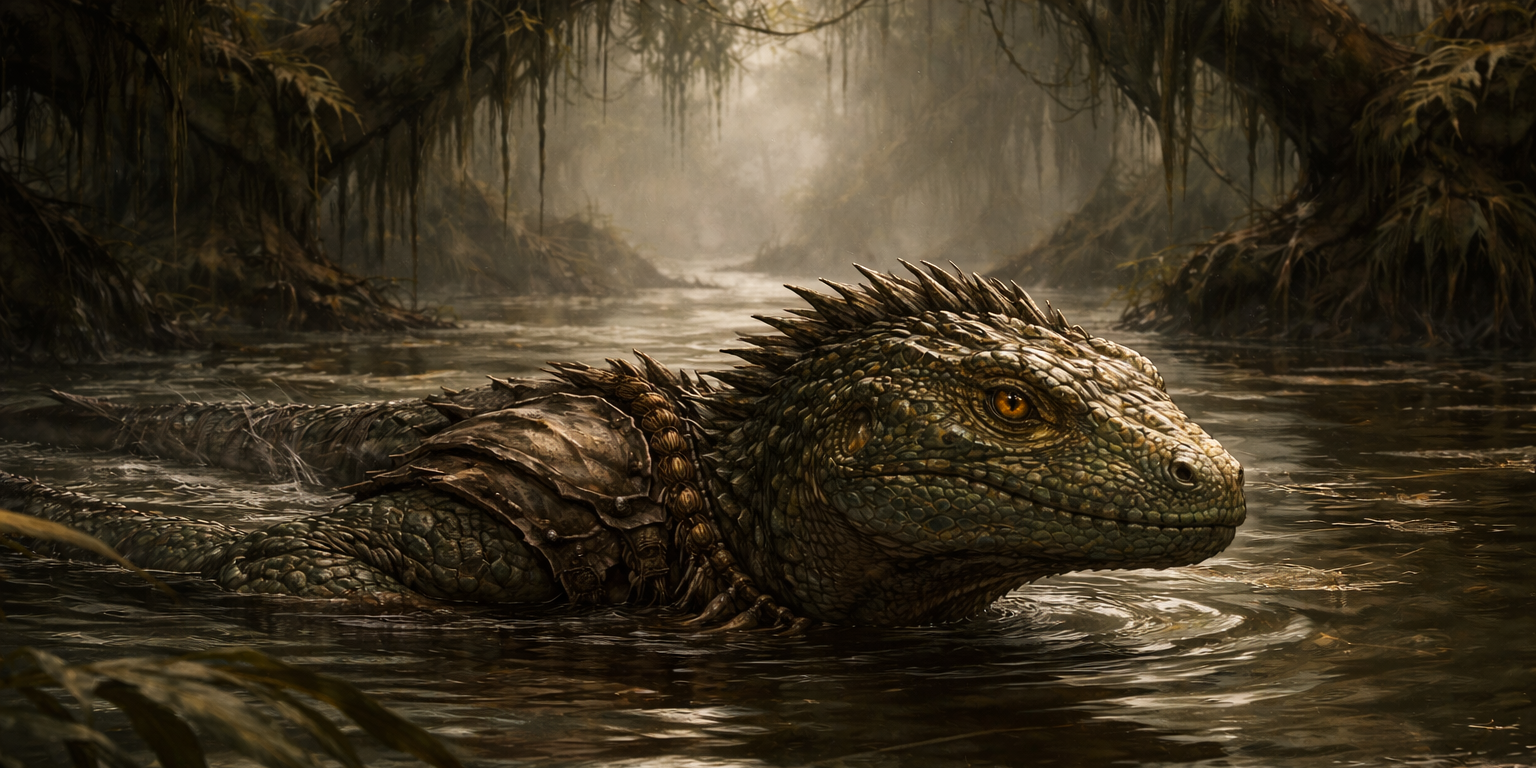
The Sszekar are a reptilian humanoid species native to the warm wetlands, river deltas, and humid lowlands of Tanaria. Cold-blooded by nature, their biology and culture are inseparable from heat, water, and ecological stability. Outsiders commonly refer to them as lizardfolk, a term the Sszekar themselves neither use nor acknowledge.
Physically, Sszekar are powerfully built, with dense musculature, scaled hides, long tails used for balance and propulsion, and digitigrade legs adapted for swimming and marsh travel. Their activity cycles are governed by temperature rather than time, with periods of intense productivity followed by extended stillness. This rhythm shapes every aspect of their settlements and social organization.
Sszekar society is communal but emotionally restrained. They do not form bonds through affection, romance, or ideology. Instead, social cohesion arises from proximity, repetition, and shared survival. Individuals who endure together are considered part of the same unit, regardless of blood relation. Parentage is acknowledged but rarely emphasized, and juveniles are raised collectively within stable hearth-groups centered on shared shelter and basking sites.
Emotion among the Sszekar is subtle and largely internalized. Communication relies heavily on posture, orientation, scent, and minimal color shifts rather than speech. Silence is not avoidance but default. To mammalian races, this often reads as coldness or indifference, a misunderstanding that has shaped much of the Sszekar’s reputation.
The Sszekar do not seek expansion, conversion, or dominance. They are territorial only insofar as ecological balance demands it, and they respond aggressively to disruption of waterways, breeding grounds, or thermal zones. Trade and diplomacy are rare but possible when approached directly and without pretense.
Within Tanaria, the Sszekar endure not through ambition or unity of belief, but through continuity. They persist because their way of life wastes little, remembers much, and adapts only when adaptation is necessary.
Basic Information
Anatomy
The Sszekar possess a body plan optimized for semi-aquatic life, endurance, and environmental efficiency rather than speed or fine manipulation. Their morphology reflects a balance between terrestrial mobility and aquatic specialization, shaped by long-term habitation of wetlands and river systems.
 portion of total body mass.
Upper-body musculature favors strength over dexterity. While capable of tool use, Sszekar lack the fine motor precision of mammalian hands, relying instead on grip strength and deliberate movements.
portion of total body mass.
Upper-body musculature favors strength over dexterity. While capable of tool use, Sszekar lack the fine motor precision of mammalian hands, relying instead on grip strength and deliberate movements.
Skeletal Structure
Sszekar skeletons are dense and heavily reinforced, particularly through the spine, pelvis, and tail. The vertebral column is elongated, granting flexibility in water while maintaining stability on land. Their ribcage is broad and protective, housing large lungs capable of extended breath-holding. The skull is elongated with a pronounced jaw hinge, allowing for powerful bite force. Teeth are conical and regularly replaced throughout life, suited for gripping and tearing rather than grinding.Musculature
Muscle mass is concentrated in the legs, tail, shoulders, and back. The tail serves as a primary source of propulsion in water and balance on land, accounting for a significantIntegument (Scales & Skin)
The body is covered in overlapping keratinized scales that provide protection against abrasion, parasites, and minor injuries. Scale size and texture vary by region:- Smaller, smoother scales along the neck, belly, and joints allow flexibility
- Larger, ridged scales along the back, shoulders, and tail provide armor-like protection
Limbs & Locomotion
Sszekar are digitigrade, walking on the balls of their feet, which grants both stability in mud and speed in waterlogged terrain. Hands and feet are clawed, with partially webbed digits that enhance swimming ability without compromising terrestrial movement. On land, their gait is measured and economical. In water, they are powerful swimmers capable of sustained movement and sudden bursts of speed.Sexual Dimorphism
Sexual dimorphism among the Sszekar is minimal. Female Sszekar are typically larger and heavier than males, reflecting reproductive investment and communal stability rather than dominance. These differences are subtle and rarely emphasized within Sszekar society.Genetics and Reproduction
Sszekar genetics are shaped by environmental pressure rather than lineage prestige. Heritable traits favor survivability, metabolic efficiency, and environmental adaptation, with little emphasis placed on individual legacy or bloodline continuity. Genetic diversity is maintained through wide breeding tolerance and communal child-rearing rather than controlled pairings.
Genetic Traits
Sszekar exhibit moderate genetic variability across regions, particularly in scale texture, coloration, and thermal tolerance. These variations are adaptive rather than cosmetic, often reflecting long-term environmental conditions such as water salinity, ambient temperature, or predator density.- Scale thickness and rigidity vary by habitat
- Pigmentation shifts toward camouflage suited to local terrain
- Thermal efficiency improves over generations in stable climates
Sexual Dimorphism & Size Bias
Sszekar exhibit female-biased sexual size dimorphism. Females are, on average, larger and heavier than males, with broader torsos and thicker tail bases to support egg development and nutrient storage. Males tend to be leaner, slightly more mobile, and more frequently involved in territory patrol and foraging. These differences are functional and carry no social hierarchy or symbolic meaning within Sszekar culture.Reproductive Cycle
Reproduction is seasonal and closely tied to environmental conditions, particularly temperature, water levels, and food availability. Breeding periods are initiated communally rather than individually, often following flooding events or prolonged warm cycles. Mating is pragmatic and non-exclusive. Long-term pair bonds are uncommon, though repeated pairings may occur due to proximity rather than preference.Egg Laying & Incubation
Sszekar are oviparous. Females lay clutches of 2–5 eggs, significantly larger and more nutrient-dense than those of most reptiles. Eggs are deposited in communal nesting grounds located in thermally stable, concealed environments such as buried sandbanks, reed-covered embankments, or geothermal soil pockets. Incubation relies entirely on environmental heat. Eggs are not brooded. Instead, nesting sites are monitored collectively, with adults rotating presence to deter predators and maintain optimal conditions. Hatchlings emerge fully mobile but physically vulnerable. There is no parental exclusivity. Juveniles are absorbed into the nearest hearth-group and raised communally. Early mortality is accepted as a natural ecological factor rather than a tragedy. Survival past the first few years is considered the primary threshold of viability. Those who endure are fully recognized members of the group.Fertility & Population Control
Sszekar reproduction is naturally self-regulating. In times of scarcity, fewer females enter breeding cycles, and clutch sizes decrease. In periods of abundance, reproduction increases gradually rather than explosively. There are no cultural taboos surrounding infertility or non-reproduction. Contribution to group survival is valued above biological output.Dietary Needs and Habits
Sszekar are opportunistic carnivores with omnivorous tolerance, shaped by environments where food availability fluctuates with season, flooding, and heat. Their diet prioritizes protein and fat, but they are physiologically capable of digesting a wide range of plant matter when necessary. Eating is functional rather than ritualized, and meals are taken when conditions allow rather than at fixed intervals.
Animal protein forms the core of the Sszekar diet. Fish, amphibians, crustaceans, reptiles, birds, and small mammals are commonly consumed, with preference given to prey that can be taken efficiently and with minimal injury. In wetland regions, fishing and ambush hunting provide the bulk of calories. In arid or desert-adapted populations, burrowing animals, insects, and carrion play a larger role. Large kills are uncommon and rarely pursued unless environmental pressure demands it.
Plant matter supplements their diet rather than defining it. Roots, tubers, reeds, fruits, algae, and aquatic vegetation are consumed opportunistically, particularly during periods of scarcity or recovery. Sszekar digestive systems are capable of extracting limited nutrients from fibrous material, but prolonged reliance on plant-heavy diets results in reduced strength and slower metabolic recovery.
Feeding behavior is low-conflict and non-competitive. Within a hearth-group, food is shared implicitly rather than portioned or claimed. Dominance displays around feeding are rare, as injury risks outweigh any benefit. Individuals feed according to need and opportunity, not status. Excess food is consumed immediately rather than stored, as preservation is unreliable in humid environments and stockpiling invites predators.
Sszekar can endure extended periods without food, particularly during cooler seasons or environmental downturns. During these times, activity decreases and communal basking increases to conserve energy. Hunger is treated as a condition to manage, not a crisis requiring urgency or emotion.
Preparation of food is minimal. Most prey is consumed raw or partially cooked through environmental heat, such as sun-warmed stone or hot sand. The Sszekar possess no cultural aversion to carrion provided it is fresh and uncontaminated. Spoiled or chemically altered food, however, is avoided instinctively.
Outsiders often misinterpret Sszekar dietary habits as crude or savage. In reality, their consumption patterns are highly efficient, waste little, and place minimal strain on local ecosystems. They take only what the environment can replace, and their presence rarely depletes prey populations over time.
Behaviour
Sszekar psychology is shaped by environmental feedback rather than emotional narrative. Their behavior is guided by cause, condition, and outcome, not by internalized ideals, moral frameworks, or social expectations. They do not reflect on who they are in abstract terms. They assess what is happening and respond in the way that preserves balance and survival.
Emotion exists among the Sszekar, but it is muted, situational, and short-lived. Fear manifests as withdrawal or stillness rather than panic. Anger presents as direct action rather than escalation. Satisfaction is expressed through reduced movement, shared basking, or prolonged rest. Emotions are not shared for validation, nor are they expected to be acknowledged by others. To do so would serve no functional purpose.
Decision-making is deliberate and economical. Sszekar favor inaction over impulsive response, often waiting far longer than mammalian races would consider reasonable before acting. This patience is not indecision but assessment. They are acutely aware that unnecessary movement expends energy and invites risk. When action is taken, it is typically decisive and difficult to interrupt.
Social behavior reflects this same restraint. Sszekar do not seek reassurance, approval, or recognition. Cooperation arises naturally when goals align and dissolves just as easily when they do not. Disagreement is rarely verbalized. Instead, conflict is managed through physical spacing, altered routines, or quiet disengagement. Persistent friction is resolved by separation rather than dominance or reconciliation.
The Sszekar concept of self is contextual rather than continuous. Identity is defined by present role and environment, not by past actions or future ambition. Memory is practical, retaining information relevant to survival, territory, and environmental change while discarding unnecessary personal history. As a result, they are rarely nostalgic and do not dwell on loss in the mammalian sense.
Outsiders often misinterpret Sszekar behavior as apathy, coldness, or lack of empathy. In truth, their empathy is environmental rather than interpersonal. They respond strongly to ecological harm, waste, and imbalance, but show little concern for individual distress unless it threatens group stability. Compassion, when it appears, is expressed through action rather than comfort.
Above all, Sszekar behavior is governed by continuity. They value patterns that persist, environments that recover, and behaviors that do not require correction. Anything that repeatedly destabilizes these patterns is treated as a problem to be removed, avoided, or outlasted. They do not hate, judge, or forgive. They adapt, endure, and remain.
Additional Information
Social Structure
Sszekar society is organized around functional proximity rather than kinship, hierarchy, or ideology. Their social bonds arise from shared environment and repeated survival, not from emotional attachment or abstract identity. Individuals who live together, bask together, and endure the same conditions are considered part of the same unit, regardless of blood relation or reproductive connection.
The fundamental social unit among the Sszekar is the hearth-group. A hearth-group forms around a stable thermal and environmental resource, such as a sun-warmed riverbank, sheltered sand basin, or geothermal outcrop. These groups are small, stable, and persistent, often remaining in the same territory for decades or longer. Parentage is acknowledged but socially irrelevant. Juveniles are raised communally, and responsibility for their survival is distributed across all capable adults. A Sszekar who remains present and contributes is considered part of the group. One who leaves for extended periods simply ceases to belong, without ceremony or stigma.
Territory is understood through habitual use rather than ownership. Hearth-groups recognize the movement patterns, scent traces, and physical presence of neighboring groups, maintaining boundaries through avoidance and routine rather than confrontation. Conflict between groups is rare and generally avoided, as injury and environmental disruption threaten long-term survival. Only severe ecological damage or direct predation pressure provokes coordinated aggression.
Authority within a hearth-group is situational and temporary. There are no permanent leaders, councils, or titles. Instead, authority emerges naturally based on circumstance. The strongest individual may take the lead during physical defense, while the most experienced may guide migration or environmental assessment. Once the situation resolves, authority dissolves without acknowledgment. This fluid structure prevents power accumulation and reinforces adaptability.
Social cohesion among the Sszekar is expressed subtly. They do not engage in reassurance, validation, or overt displays of loyalty. Acceptance is shown through tolerance of proximity, shared basking space, cooperative defense of juveniles, and coordinated stillness. Withdrawal of these behaviors signals detachment or impending separation. To mammalian observers, this restraint often appears cold or indifferent, but within Sszekar society it is both sufficient and meaningful.
Internal conflict is managed through avoidance rather than punishment. Individuals who consistently disrupt group equilibrium are gradually excluded through reduced access to shared resources and proximity, a process that requires no formal judgment. The Sszekar do not conceptualize wrongdoing as moral failure, but as imbalance.
Beyond individual hearth-groups, the Sszekar exist as a distributed continuity rather than a unified people. Groups recognize one another across waterways and migration routes, forming loose networks of familiarity rather than alliances. Knowledge of predators, environmental shifts, and resource changes spreads gradually through repeated encounters, not centralized communication. Identity is environmental, not political. The Sszekar endure because they adapt, not because they organize.
“They didn’t surround me. They didn’t hide either. They were just… there. Every time I stopped, one was closer than before. When I left the water, they stopped following. That’s when I realized I’d been allowed to leave.”
Geographic Origin and Distribution
The Sszekar are native to the warm, water-rich regions of Tanaria, favoring environments where heat, slow-moving water, and dense vegetation intersect. Their settlements are distributed along river systems, floodplains, deltas, and marshlands, with populations rarely found far from reliable aquatic routes.
Primary Regions
- Southern Arandor: Extensive river networks and wetlands support some of the largest and most stable Sszekar populations. These groups are typically semi-aquatic and maintain long-established hearth-groups along major waterways.
- Eastern Tropics: Jungle rivers, mangrove swamps, and coastal marshes provide ideal thermal conditions. Sszekar in these regions tend to be more active year-round due to consistent warmth.
- Necai Lowlands & River Basins: Smaller, more territorial populations occupy isolated wetlands and blackwater rivers, often remaining entirely self-contained and avoiding outside contact.
- Seasonal Flood Zones: Some hearth-groups migrate temporarily into floodplains during warm seasons, withdrawing as waters recede or temperatures drop.
- Coastal Estuaries: Limited populations exist where freshwater rivers meet the sea, though prolonged exposure to saltwater is avoided.
Absence from Other Regions
Sszekar are notably absent from:- Cold or alpine regions
- Arid deserts lacking permanent water
- Highland plateaus with poor thermal stability
Settlement Pattern
Sszekar settlements are deliberately difficult to detect. Structures are built low, partially submerged, or concealed within vegetation, minimizing ecological disruption. Hearth-groups space themselves to prevent overhunting and water contamination, often abandoning sites for decades to allow full environmental recovery. Rather than expanding territorially, Sszekar populations flow along waterways, forming loose networks of recognition rather than contiguous domains. Their presence is defined less by borders and more by memory, migration, and seasonal return.Perception and Sensory Capabilities
Sszekar perception is fundamentally reptilian and markedly different from that of mammalian races. Their senses prioritize environmental awareness, thermal detection, and chemical cues over fine detail or emotional nuance. This makes them exceptionally suited to harsh, shifting environments such as swamps, floodplains, deserts, and badlands.
 Vision in Sszekar is optimized for motion and contrast rather than color fidelity. Their eyes are particularly sensitive to movement, allowing them to detect even subtle disturbances in water, sand, or foliage. Many individuals possess limited ultraviolet perception, enabling them to see heat-reflective patterns on stone, soil, and living creatures. This grants them an advantage when hunting warm-blooded prey or navigating terrain during dawn and dusk. However, their depth perception at long distances is weaker than that of most humanoids, and fine reading or close visual work is often challenging without training.
Thermosensory pits, typically located along the jawline, neck, or upper torso, allow Sszekar to perceive ambient heat gradients. This sense functions passively and continuously, giving them an almost instinctual awareness of nearby living bodies, recent movement, or concealed creatures. In warm environments, this ability is highly refined; in cold climates it becomes sluggish and unreliable, often contributing to discomfort and disorientation.
Olfactory and chemosensory perception plays a major role in Sszekar social and survival behavior. Their tongues and nasal cavities can detect pheromones, stress chemicals, and environmental traces carried on air or water. Identity, reproductive status, emotional agitation, and even illness can be inferred through scent alone. As a result, verbal deception is far less effective among their own kind, while foreign mammalian social cues are often misunderstood or ignored entirely.
Auditory perception is serviceable but unremarkable. Sszekar hear best within low to mid-frequency ranges and are particularly attuned to vibrations traveling through water, mud, or stone. High-pitched sounds are less distinct, and complex musical structures hold little inherent meaning to them.
Sszekar possess no innate magical or extrasensory abilities. However, their natural sensory overlap often leads outsiders to mistake their environmental awareness for supernatural perception. In rare cases, individuals trained in primal magic or druidic traditions learn to consciously augment their existing senses, but such abilities are learned rather than racial traits.
Overall, Sszekar perception favors patience, ambush, and environmental harmony over speed of thought or abstract reasoning. They do not perceive the world as mammals do, and this fundamental difference shapes every aspect of their culture, warfare, and interaction with other races.
Vision in Sszekar is optimized for motion and contrast rather than color fidelity. Their eyes are particularly sensitive to movement, allowing them to detect even subtle disturbances in water, sand, or foliage. Many individuals possess limited ultraviolet perception, enabling them to see heat-reflective patterns on stone, soil, and living creatures. This grants them an advantage when hunting warm-blooded prey or navigating terrain during dawn and dusk. However, their depth perception at long distances is weaker than that of most humanoids, and fine reading or close visual work is often challenging without training.
Thermosensory pits, typically located along the jawline, neck, or upper torso, allow Sszekar to perceive ambient heat gradients. This sense functions passively and continuously, giving them an almost instinctual awareness of nearby living bodies, recent movement, or concealed creatures. In warm environments, this ability is highly refined; in cold climates it becomes sluggish and unreliable, often contributing to discomfort and disorientation.
Olfactory and chemosensory perception plays a major role in Sszekar social and survival behavior. Their tongues and nasal cavities can detect pheromones, stress chemicals, and environmental traces carried on air or water. Identity, reproductive status, emotional agitation, and even illness can be inferred through scent alone. As a result, verbal deception is far less effective among their own kind, while foreign mammalian social cues are often misunderstood or ignored entirely.
Auditory perception is serviceable but unremarkable. Sszekar hear best within low to mid-frequency ranges and are particularly attuned to vibrations traveling through water, mud, or stone. High-pitched sounds are less distinct, and complex musical structures hold little inherent meaning to them.
Sszekar possess no innate magical or extrasensory abilities. However, their natural sensory overlap often leads outsiders to mistake their environmental awareness for supernatural perception. In rare cases, individuals trained in primal magic or druidic traditions learn to consciously augment their existing senses, but such abilities are learned rather than racial traits.
Overall, Sszekar perception favors patience, ambush, and environmental harmony over speed of thought or abstract reasoning. They do not perceive the world as mammals do, and this fundamental difference shapes every aspect of their culture, warfare, and interaction with other races.
Civilization and Culture
Naming Traditions
Sszekar names are functional markers of recognition, not expressions of individuality, lineage, or personal aspiration. Names exist to identify an individual within a hearth-group and to distinguish them from others encountered along shared waterways or migration paths. They are meant to be spoken clearly, hissed softly, or conveyed through short vocalizations that carry over water and reeds.
At hatching, a juvenile is given a simple identifying name by the surrounding hearth-group. This name is often derived from sound patterns rather than meaning, chosen for ease of repetition and recognition. Many names repeat across regions and generations without issue, as uniqueness is not culturally valued. A name’s purpose is clarity, not distinction.
As a Sszekar matures, their name may shift subtly through usage rather than formal change. Variations in emphasis, added consonants, or shortened forms naturally develop based on how the individual is addressed in different contexts. These changes are organic and situational, not ceremonial. A Sszekar may be known by slightly different name-forms in neighboring territories without confusion or offense.
Sszekar do not possess surnames, clan names, or hereditary identifiers. Hearth-group association is understood through presence and behavior, not verbal labeling. Attempting to encode lineage into names is viewed as unnecessary and faintly confusing. Identity is contextual, not archival.
Some Sszekar acquire descriptive by-names used primarily by outsiders or neighboring races. These are rarely used internally and carry little weight among the Sszekar themselves. Within their own culture, behavior and continued presence define an individual far more than any spoken label.
Names are not gendered. Vocal patterns used for identification do not encode sex, status, or role. Outsiders often misinterpret this as cultural simplicity, when in truth it reflects the Sszekar disinterest in categorizing individuals beyond what is immediately relevant.
To the Sszekar, a name is not something one is. It is something one is recognized by, and recognition only matters as long as one remains.
Common Sszekar Names
These are simple, repeatable, and intentionally non-unique.
These are simple, repeatable, and intentionally non-unique.
- Sszeth
- Zekar
- Issha
- Kreth
- Ssaal
- Tekesh
- Ress
- Hassik
- Zath
- Ssek
History
The history of the Sszekar is not recorded as a sequence of dynasties, wars, or rulers. It is understood instead as a pattern of continuity and adjustment, shaped by climate shifts, water movement, and long-term environmental change. To the Sszekar, history is not something that happens to a people. It is something that settles, slowly, into the land.
The earliest Sszekar communities formed along ancient river systems during periods of prolonged warmth, when wetlands expanded and stable basking zones became predictable. These early hearth-groups were small and transient, moving as water levels rose and fell. Over generations, repeated use of successful sites led to semi-permanent settlement patterns, not through deliberate planning, but through survival bias. Places that supported life were returned to. Places that failed were abandoned and forgotten.
As mammalian civilizations expanded across Tanaria, the Sszekar remained largely untouched, not due to secrecy or hostility, but because their territories were considered undesirable. Marshes, floodplains, salt flats, and heat-scoured lowlands were seen as obstacles rather than assets. This neglect allowed Sszekar societies to persist without disruption for long periods, reinforcing their tendency toward environmental attunement rather than political organization.
Conflict entered Sszekar memory primarily through ecological disturbance rather than invasion. Large-scale drainage projects, dam construction, magical land alteration, and aggressive settlement periodically destabilized wetland systems. In response, Sszekar hearth-groups did not rally armies or declare wars. They withdrew, redirected waterways, sabotaged infrastructure, or allowed regions to collapse back into inhospitable terrain. These responses were rarely attributed to them, further cementing their reputation as passive or primitive.
Over time, limited contact with other races introduced trade and intermittent cooperation, particularly where waterways served as shared lifelines. Such interactions were always conditional and reversible. The Sszekar never adopted foreign governance structures, religious systems, or concepts of ownership. Practices that failed to align with environmental continuity were discarded without debate.
In arid regions, particularly where deserts encroached upon former wetlands, some Sszekar populations adapted rather than retreated. These desert-adapted groups altered their basking behavior, pigmentation, and settlement patterns, giving rise to distinct subcultures while retaining the same foundational social logic. This adaptability reinforced the Sszekar understanding that survival lies not in preservation of tradition, but in preservation of function.
In the present era, the Sszekar continue as they always have: present but rarely acknowledged, altered but never displaced. Their history is written in abandoned channels, reclaimed marshes, and migration paths remembered only by repeated use. Where other peoples measure history in monuments and dates, the Sszekar measure it in land that still supports life.
Interspecies Relations and Assumptions
The Sszekar do not conceptualize other peoples as allies, enemies, or rivals in the abstract. They assess other species solely through behavioral impact. A group that preserves waterways, respects seasonal movement, and minimizes disruption is tolerated. A group that alters terrain, pollutes water, or destabilizes prey populations is treated as a threat regardless of intent.
With mammalian civilizations, relations are strained by fundamental psychological mismatch. Mammals expect negotiation, reassurance, hierarchy, and visible intent. The Sszekar provide none of these. Their silence is often misread as ignorance or submission, while their delayed responses are mistaken for indecision. When Sszekar act, it is usually after a long period of observation, and the action is corrective rather than symbolic. This pattern has led many mammalian cultures to view them as unpredictable or duplicitous, when in reality they are consistent to a fault.
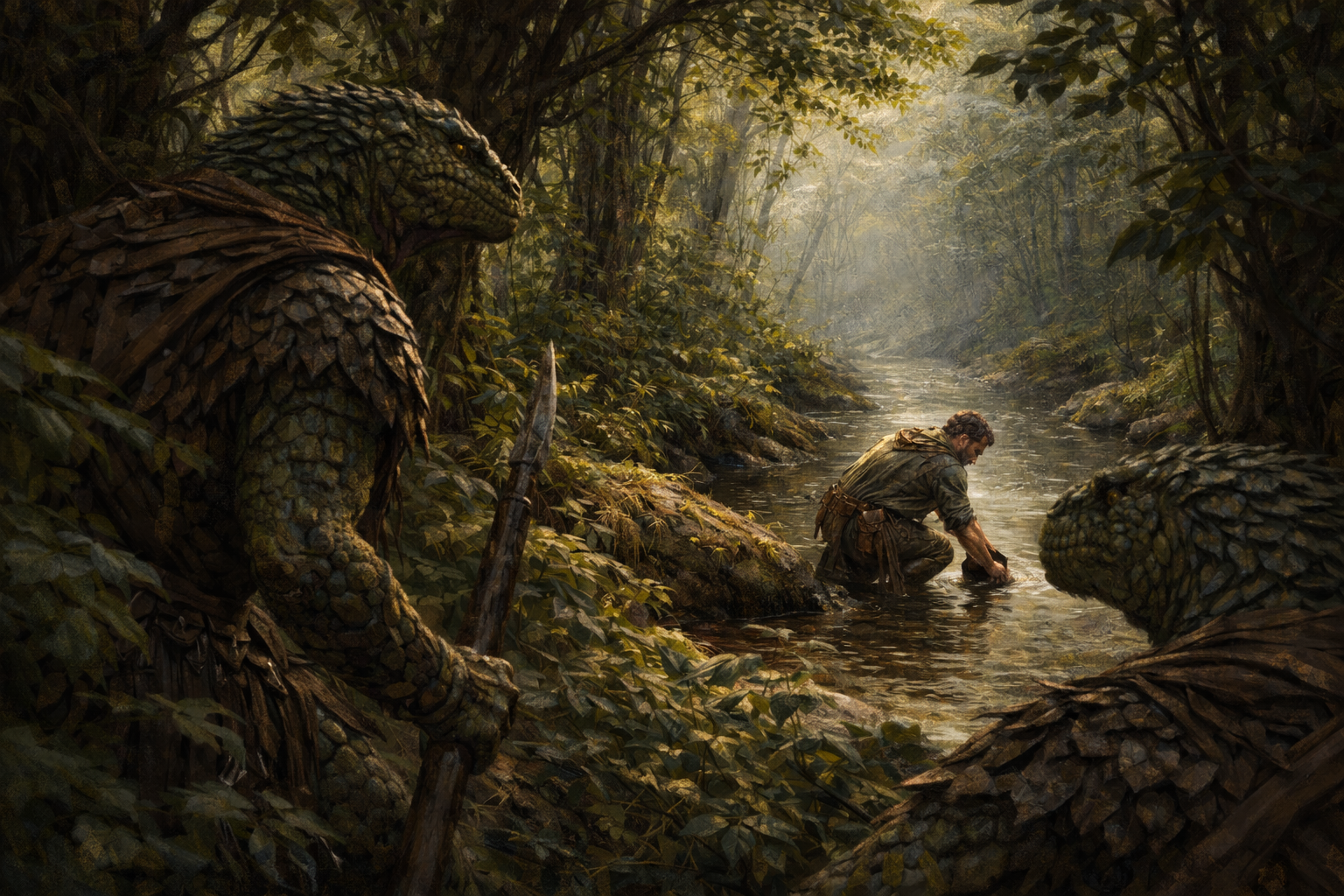 Humans are regarded with particular caution. While capable of coexistence, humans are seen as environmentally volatile, prone to rapid expansion and short-term solutions. Individual humans may be tolerated or even respected, especially rangers, druids, or river-keepers who demonstrate restraint. Human institutions, however, are rarely trusted. Agreements made with one generation are not assumed to hold with the next.
Relations with elves vary by culture. Woodland and nature-aligned elves are generally tolerated, though the Sszekar find elven emotional expression excessive and inefficient. High Elven attempts at categorization, study, or arcane alteration are viewed with suspicion. The Sszekar do not object to being observed, but strongly resist being defined.
With orcs and other survival-oriented peoples, interaction is often neutral and pragmatic. Shared respect for endurance and territory creates a baseline understanding, even if cultural practices differ. Conflict arises primarily when hunting pressure becomes unsustainable or when migration routes intersect too closely.
The Sszekar have little interest in trade, but will engage when exchange reduces environmental strain. Foodstuffs, raw materials, and simple tools may be traded quietly and without ceremony. Currency, contracts, and long-term obligations hold little meaning to them. Trade ends when it ceases to be useful.
The greatest source of interspecies conflict arises from environmental manipulation. Large-scale irrigation, damming, magical terraforming, and industrial runoff are all perceived as existential threats. In such cases, the Sszekar do not seek dialogue. They respond through obstruction, withdrawal, sabotage, or quiet pressure until the disruption ceases. These responses are rarely claimed or explained.
To the Sszekar, coexistence is not a moral stance. It is a condition. Other species are free to exist as long as the land continues to function. When it does not, the Sszekar will remain long after the cause of the damage has been forgotten.
Humans are regarded with particular caution. While capable of coexistence, humans are seen as environmentally volatile, prone to rapid expansion and short-term solutions. Individual humans may be tolerated or even respected, especially rangers, druids, or river-keepers who demonstrate restraint. Human institutions, however, are rarely trusted. Agreements made with one generation are not assumed to hold with the next.
Relations with elves vary by culture. Woodland and nature-aligned elves are generally tolerated, though the Sszekar find elven emotional expression excessive and inefficient. High Elven attempts at categorization, study, or arcane alteration are viewed with suspicion. The Sszekar do not object to being observed, but strongly resist being defined.
With orcs and other survival-oriented peoples, interaction is often neutral and pragmatic. Shared respect for endurance and territory creates a baseline understanding, even if cultural practices differ. Conflict arises primarily when hunting pressure becomes unsustainable or when migration routes intersect too closely.
The Sszekar have little interest in trade, but will engage when exchange reduces environmental strain. Foodstuffs, raw materials, and simple tools may be traded quietly and without ceremony. Currency, contracts, and long-term obligations hold little meaning to them. Trade ends when it ceases to be useful.
The greatest source of interspecies conflict arises from environmental manipulation. Large-scale irrigation, damming, magical terraforming, and industrial runoff are all perceived as existential threats. In such cases, the Sszekar do not seek dialogue. They respond through obstruction, withdrawal, sabotage, or quiet pressure until the disruption ceases. These responses are rarely claimed or explained.
To the Sszekar, coexistence is not a moral stance. It is a condition. Other species are free to exist as long as the land continues to function. When it does not, the Sszekar will remain long after the cause of the damage has been forgotten.

Scientific Name
Sszekar thalassum sapiens
Lifespan
70–90 years
Conservation Status
Stable (Regionally Variable)
The Sszekar population remains stable within territories where waterways and wetlands remain intact. However, localized decline has been observed in regions affected by aggressive land reclamation, damming, or magical environmental disruption.
The Sszekar population remains stable within territories where waterways and wetlands remain intact. However, localized decline has been observed in regions affected by aggressive land reclamation, damming, or magical environmental disruption.
Average Height
6 ft 2 in – 7 ft 4 in (1.88–2.24 m)
Height varies by environment, with river-dwelling Sszekar tending toward longer, leaner builds, while swamp and mangrove populations are shorter but denser.
Height varies by environment, with river-dwelling Sszekar tending toward longer, leaner builds, while swamp and mangrove populations are shorter but denser.
Average Weight
260–380 lbs (118–172 kg)
Body Tint, Colouring and Marking
Sszekar body coloration is primarily adaptive, shaped by environment rather than aesthetics or sexual display. Pigmentation, scale texture, and markings serve practical purposes such as camouflage, thermoregulation, and nonverbal communication. Decorative modification is rare and culturally insignificant.
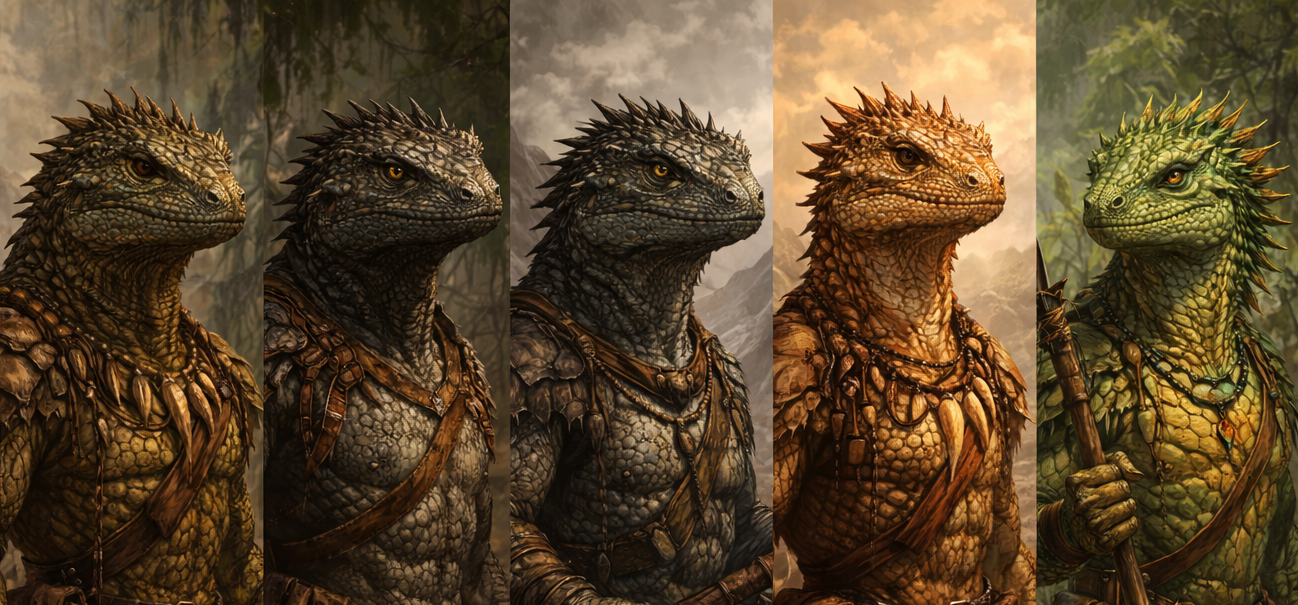
Most Sszekar exhibit muted, earth-toned base colors that reflect their native habitat. Common hues include deep greens, marsh browns, slate greys, ochres, and sand-blasted tans. Aquatic and swamp-dwelling populations tend toward darker, cooler tones, while desert and arid-region Sszekar display lighter coloration that reflects heat and blends with stone and sand.
Color intensity can shift subtly throughout the day, influenced by temperature, hydration, and metabolic state. These shifts are not dramatic but are perceptible to other Sszekar.
Natural markings vary by region and lineage, though they are rarely symmetrical or ornamental. Common patterns include mottling, banding along the tail or limbs, and irregular spotting across the shoulders or flanks. These patterns break up the body’s silhouette and aid in concealment while moving through reeds, water, or rocky terrain.
Juveniles often display higher-contrast markings that fade or dull with age as scale layers thicken and weather.
Throat, Crest & Display Areas
Many Sszekar possess areas of slightly altered pigmentation along the throat, jawline, or neck crest. These regions may darken or flush faintly during periods of agitation, exertion, or heightened focus. This is not a deliberate display but a physiological response tied to blood flow and thermoregulation. In desert-adapted Sszekar, these areas may show subtle reds, rust tones, or warm golds. Scarring is common and socially neutral. Due to rapid clotting and scale regeneration, most injuries leave faint discoloration rather than deep tissue scars. Older individuals often display chipped or dulled scales along the forearms, tail, and shoulders, indicating long-term environmental exposure rather than combat. Excessive ornamentation or intentional scarification is rare and typically associated with outsiders or individuals heavily influenced by mammalian cultures.Sexual Dimorphism in Colour
Sex-based coloration differences are minimal. Females, being larger on average, may exhibit broader areas of consistent pigmentation across the torso, while males may display slightly higher contrast along limbs and tail. These differences are subtle and carry no cultural or symbolic meaning. To non-Sszekar observers, these distinctions are often imperceptible.
Geographic Distribution


Comments