Crowcoil
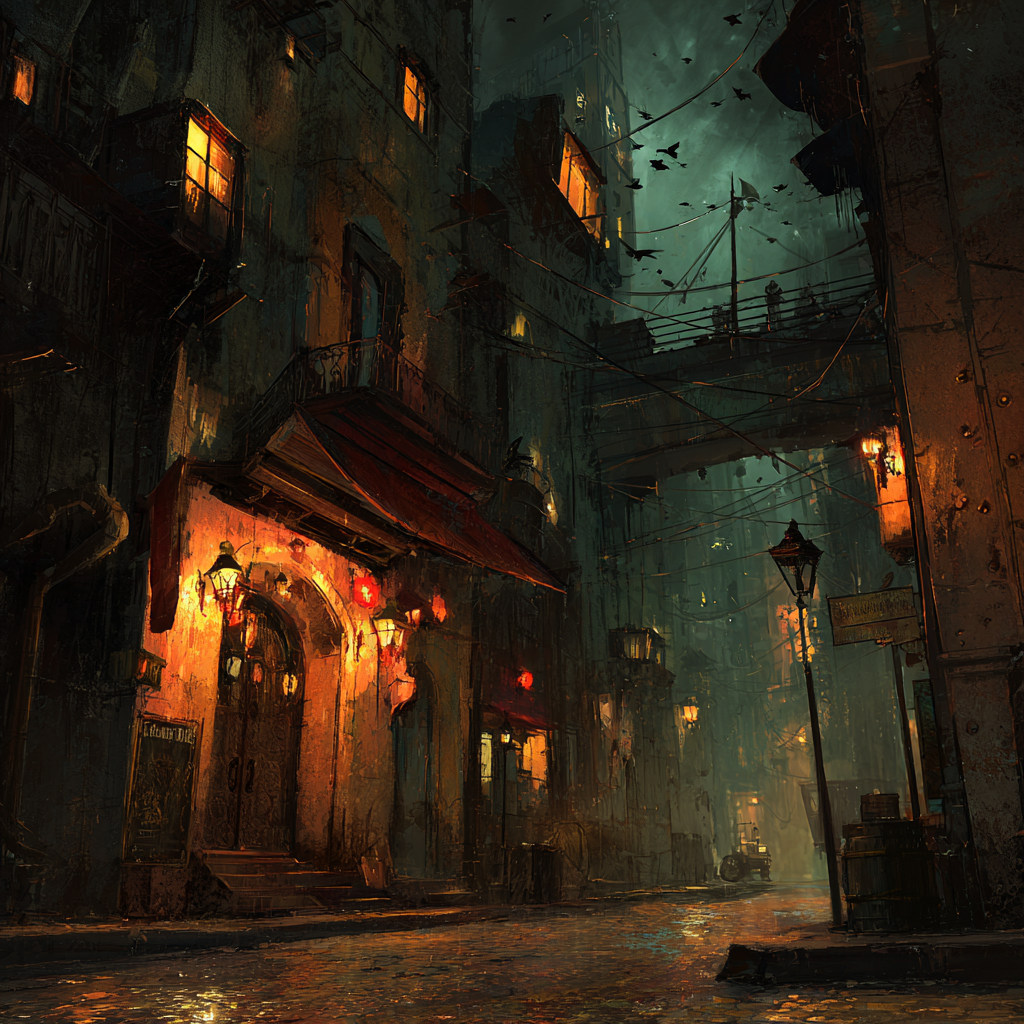
Good luck, try not to get stabbedPlaces, like people, can often shed one identity to embrace another. So it is with Ghal Pelor's 2nd largest district - Crowcoil. During the city's founding and under the rule of the original Ghal Ankharan lords, this place was known as Yhekymrahn. Supossedly, named after one of the founding lord's favored hunting boar, and built as a grain processing sector. These ignoble beginnings would persist for most of Crowcoil's dwarven chapter of its history. However, as the city became more of a multicultural epicenter than a dwarven stronghold, Yhekkymrahn was among the first places to change. The land here was cheap and undesirable, so naturally it attracted some of the first non-dwarven immigrants to the city. These early citizens struggled with the harsh dwarven name, referring to it by replacements such as Grain Town, Mill Town, Bread Basket, Wheat's End, and similar. Yet, one name above all others would take hold. The district was plagued by screeching crows swooping in to steal grain for an easy meal or trinkets from the machinery as baubles for their nests. The district was clogged with bossy flocks of crows that refused to give way to passersby. Non-dwarves would come to call this area of the city the Crows' Coil. Dwarven identity slipped from the grasp of the original city founders like grains of sand through a clenched fist, but nowhere faster than here. City-wide efforts were conducted to stamp out outsider cultures and prevent them from taking root, but such efforts only delayed the inevitable. It wasn't a bloody revolution or conquest that ripped the city from the dwarves; it was a slow bleed. Ghal Ankhar detested the erosion of tradition, but they craved the gold and resources that flowed into the city because of outsiders. In no sector of the city was this shift more rapid and prominent than Crowcoil. By the time dwarven rule of Ghal Pelor had faded, Crowcoil was the epicenter of multicultural trade in the city. It was a bustling market where goods from all across the continent could be found, and up until that point, it was done secretly to avoid the steep dwarven tariffs on non-dwarven goods. Once the last of Ghal Ankharan control was relinquished, so too was Crowcoil's status as a black market. The trading that once took place in the shadows moved to places like Lakewatch Vale, Union East, Echo March, Lakeside Market, and Monument Square. Crowcoil's newest persona was that of a family center and a melting pot for culture. As the rest of the city shifted identity, Crowcoil had already established itself as a place for everyone. Gone were the seedy backalley dealings and smugglers, replaced by tall apartment complexes and thriving markets for mundane goods. Schools for children soon followed, along with restaurants, healing centers, and even small temples to whatever gods people brought with them. Crowcoil was never a fancy place, though; it was the neighborhood of the working class. Wealthy elites laid claim to Echo March, artists planted their flag in Ravensperch, and Templeside is where the Kreastos (structure for worship of the entire divine pantheon) was built. Lakewatch Vale was carved out when housing opportunities in Crowcoil were exhausted. The district evolved, it carried the image of being the most weathered and weary neighborhood. Full of charm, character, and long history, but it earned its moniker of an "old corner of the city". It remained so, a dusty yet expansive section that led the way for what Ghal Pelor would become, while itself earning a deep patina. This was how Crowcoil was known until the night of the Black Wind. This storm is infamous across the city - a grim tornado that descended in the harbor and ripped its way across Lakewatch Vale, reaping a terrible toll in both life and property. In its aftermath, the population of this district was left homeless and adrift, and most found their way into Crowcoil. Overcrowding, a lack of funds, and the overwhelming nature of this disaster finally broke the fragile state of this neighborhood. And so, Crowcoil would assume its final mask, that of a wretched den for inequity, crime, and suffering. Funds to restore Lakewatch Vale never solidified and charity for the displaced dried up quickly. The city's most powerful gangs were born out of the chaos of the Black Wind, and many of them laid claim to sections of Crowcoil. Those with means left quickly, and what remained were those too trapped to escape. The Crowcoil of today is a withered place, home to those too poor to leave and the villains who prey upon them.
by Midjourney
Demographics
Mixed. Crowcoil is home to people of all species and cultures. Humans will occupy the majority, as with any sector of the city. Dwarves and Tengu are the smallest portion of the population. Many of the city's dwarves occupy areas such as Kretche, Ackley, and Artisan Row. For Tengu, it's estimated that 95% of their number can be found in Brisben, a sector of the city leased by the avian peoples' government in Tengu Town.
Government
Like all sectors of the city, Crowcoil is represented by two aldermen. For the last several decades Tayte Wilkas has held one of these seats. Wilkas' career began as an advocate for street-level change and inventivizing businesses to return. In his later years leadership faultered, positions softened, and corruption took root. Many speculate Wilkas began suffering from dementia - popularity and nostolgia carrying his candidacy and elections.
The other seat is currently held by a Donovan Plantagonet, a human who's family has lived in Ghal Pelor since the Queen's War. Plantagonet has held office since the previous election cycle five years ago, having secured his seat on an inoffensive platform of moderate business regulation, social support programs, and support for the Rydir Administration that currently governs the city. Plantagonet is seen as a dull, soft, and easily swayed politician who's firmly in the pocket of whomever is willing to pad his pockets.
Defences
Being the southeasternmost district, it is nestled between two corners of the city's walls. This means little, given that the majority of the danger a Crowcoil resident faces comes from internal threats. The district's constabulary outpost is located near its center and is staffed by a team of 12 constables and support staff. This is woefully inadequate. For contrast, Mercy Hill (smaller than Crowcoil but still a populous district) has a roster of 60 constables and ample support staff. Echo March employs nearly 90 officers, who work tirelessly to police the nobility's favored district.
Infrastructure
Like the rest of the city, Crowcoil is supported by the Plumbing system that lies beneath the city. It also has street lamps, a constabulary office, and refuse collection. However, much like the district itself, these services are faltering and failing. The lamp lighters rarely fix damaged lights, leaving the dangerous streets even darker. The small constabulary office is overworked and understaffed, and its few officers are afraid to patrol alone. The plumbing system, while functional, is in desperate need of maintenance. Even small storms bring enough rainfall to cripple the system and cause flooding.
Districts
Bodolkin and Lakrimol intersection - known for eateries like The Copper Cup, Zelinda's Bakery, Potolie General Goods, and Magnificent Mug coffee house. This intersection is a popular spot for citizens and has drawn considerable crowds in the past. Now, come nightfall, there is a significant risk of visiting these businesses.
Janus Row and Wagon Street - This is the central-most point of Crowcoil, its "town square". This community area is the most well-kept area of the district and the most heavily patrolled. Turtle-Pond Fountain, a sculpture that looks like an idyllic pond with stone turtles and lily pads, is here. It's a popular place for events, fairs, and political speeches. Two blocks away on Janus is the Wilkas family estate as well. The carriage house of the Wilkas estate has recently been converted into a soup kitchen that serves free meals to the poor. The district's lone constabulary office can be found a block east of the intersection, on Janus.
Tabardesh Avenue - This is the border between Crowcoil and Artisan Row, and its appearance reflects that. It's a mixture of Crowcoils decay and the massive warehouse/factory structures of Artisan Row. Few citizens travel here regularly outside of working hours; there are no homes, few restaurants, and almost no shopping. Come sundown, this area is entirely depopulated except for gangs. Dwarven interests in Kretche are buying up a small but growing number of buildings here. A sizable portion Crowcoil's laborers work in this area, for employers such as - Haberech Furniture, Crystal Glassworks, and Timeless Textiles.
Gussimine Street - This is the most commercially stable corridor of Crowcoil. It's very near Anvil Park, likely contributing to the stability of this stretch. Great care goes into securing this area, upkeep, and driving traffic here. Many view this area as the "cheaper" part of Anvil Park, rather than a piece of Crowcoil. Popular businesses include several smitheries, potters, general stores, and stalls selling fresh foods brought in from the eastern farms. This is also the location of Silver Saucer, a tea house that captures some of the charm and elegance of wealthier neighborhoods. The Silver Saucer takes advantage of the cheap property prices of Crowcoil while drawing in crowds from nearby Anvil Park. While far from the grandeur one may find in the cafes of Echo March or Monument Square, it is the fanciest place in Crowcoil.
Piker Street - When outsiders envision their stereotypical image of Crowcoil, the rough and seemingly lawless neighborhood, they're likely picturing Piker Street. Located just north of Janus and Wagon, this area has a reputation for being rugged and harsh, but it's more of a facade. In truth, while this stretch is dangerous and rarely patrolled in force, the gangs know better than to turn it into a free-for-all feeding ground. The many taverns promise a variety of entertainments, everything from alcohol, drugs, sex, and gambling can be found here. The few coins the locals can afford to spare are welcome, but it's the money brought in by outsiders that is truly coveted. That means all the gangs need to behave themselves here, maintain the aura of danger, while not discouraging outsiders from visiting. Bar fights, nefarious deals, and shady entertainment are common, but targeted violence is less so. The most well-known business in the area is a large tavern called The Proper Nail. During the day, locals flock here to spend their meager earnings on drinks and questionable, but cheap, food. Come nightfall, outsiders looking for thrills flow into the Proper Nail, to be juiced of their wealth and spat back out into the evening with stories to tell.
Guilds and Factions
The most influential and well-known factions in this district are Ghal Pelor's gangs. While each district in the city suffers from the predation of these organizations, none suffer in broad daylight as severely as Crowcoil. Yet, despite their dangers, these organizations also offer the most lucrative opportunities and the greatest guarantees of safety. Even the most noble-hearted of Crowcoil residents will have some affiliation with these gangs, either directly or thanks to the people they keep close in their lives. This fact makes the constabulary justification for leaning hard on locals an easy one.
Tourism
Though no one would recommend this district to visiting foreigners, its dark reputation is undoubtedly a draw for many in the city seeking edgy, dangerous experiences. Many outsiders like to boast about how "crowcoil isn't that bad" or how it has so many "hidden gem" spots for those with enough common sense to visit. The truth is, these know-it-all tourists are likely spending their time around Janus and Wagon, Gussimine, or Piker Street. They're not walking Lakrimol after dark or exploring the nooks and crannies of Tarberdesh come sundown.
Architecture
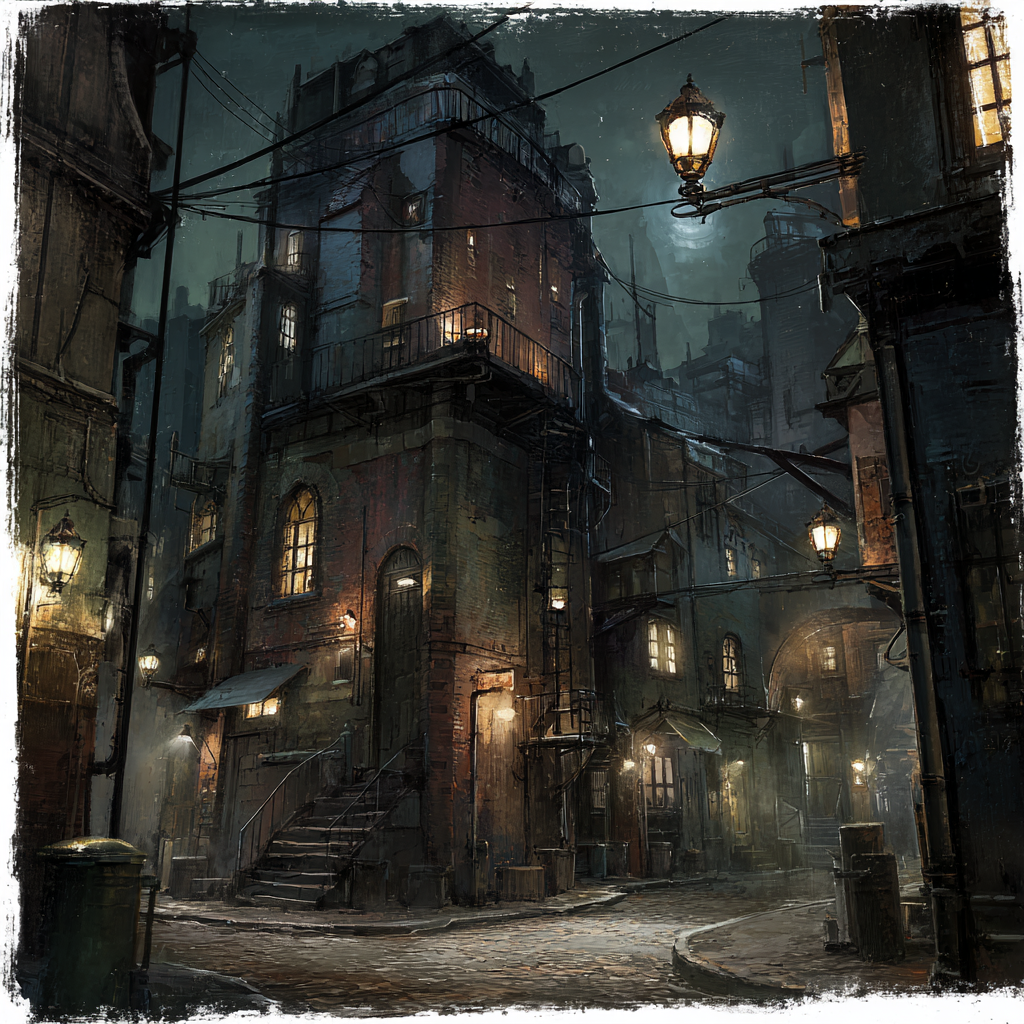
Crowcoil was one of the first places to start blending cultures and building new structures for non-dwarven settlers. There will be some dwarven influence left, but Crowcoil is a mishmash of structures that have been modified over time. Everything is a hybrid of elements now, something very common throughout Ghal Pelor but universal here.
Population
36,000 (approximate)
Location under
Related Reports (Primary)
Related Reports (Secondary)

Comments