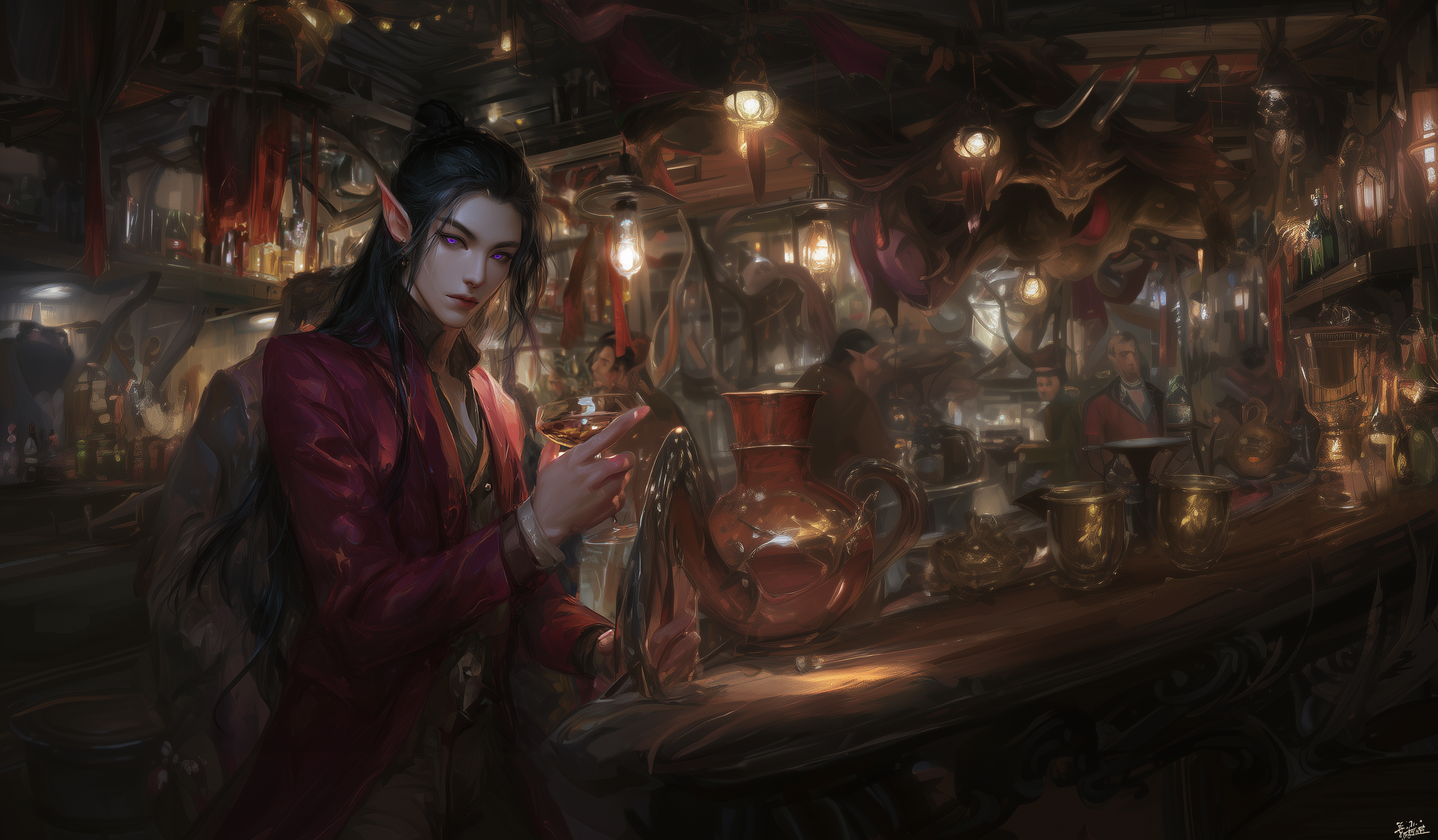
Lord Prince Shin Han
Born on the 29rd of Mene, 1840 AF, Lord Prince Shin Han is the second son of the Holy Emperor Liu Rong Han and the imperial consort Jia Lan, herself one of the most influential women ever to hold that title. From the moment of his birth, Shin Han existed slightly out of alignment with the rigid geometry of Yun imperial expectation. Where his elder brother embodied continuity and containment, Shin Han came to represent movement, curiosity, and discomforting adaptability—traits the Empire publicly praised, yet privately distrusted.
Education and Formative Years
Shin Han was raised under the tutelage of Master Mao Bo, the palace eunuch entrusted not only with his education but with his moral formation. Mao Bo, having once served as caretaker and educator to the Emperor himself, believed that a ruler who did not understand the world beyond the palace could never truly command it. As a result, Shin Han’s education extended beyond scripture, strategy, and ceremonial law. He was encouraged to observe people, habits, and contradictions.
From an early age, Shin showed a sharp memory and a talent for synthesis rather than rote learning. He was less interested in recitation than in discussion, often questioning why traditions existed rather than simply memorizing that they did. This habit earned him both praise and quiet reprimands. He learned calligraphy, but preferred writing letters and personal essays to formal proclamations. He studied history, yet gravitated toward accounts of failed dynasties, foreign revolutions, and cultural collapses—lessons in fragility rather than triumph.
Temperament and Personality
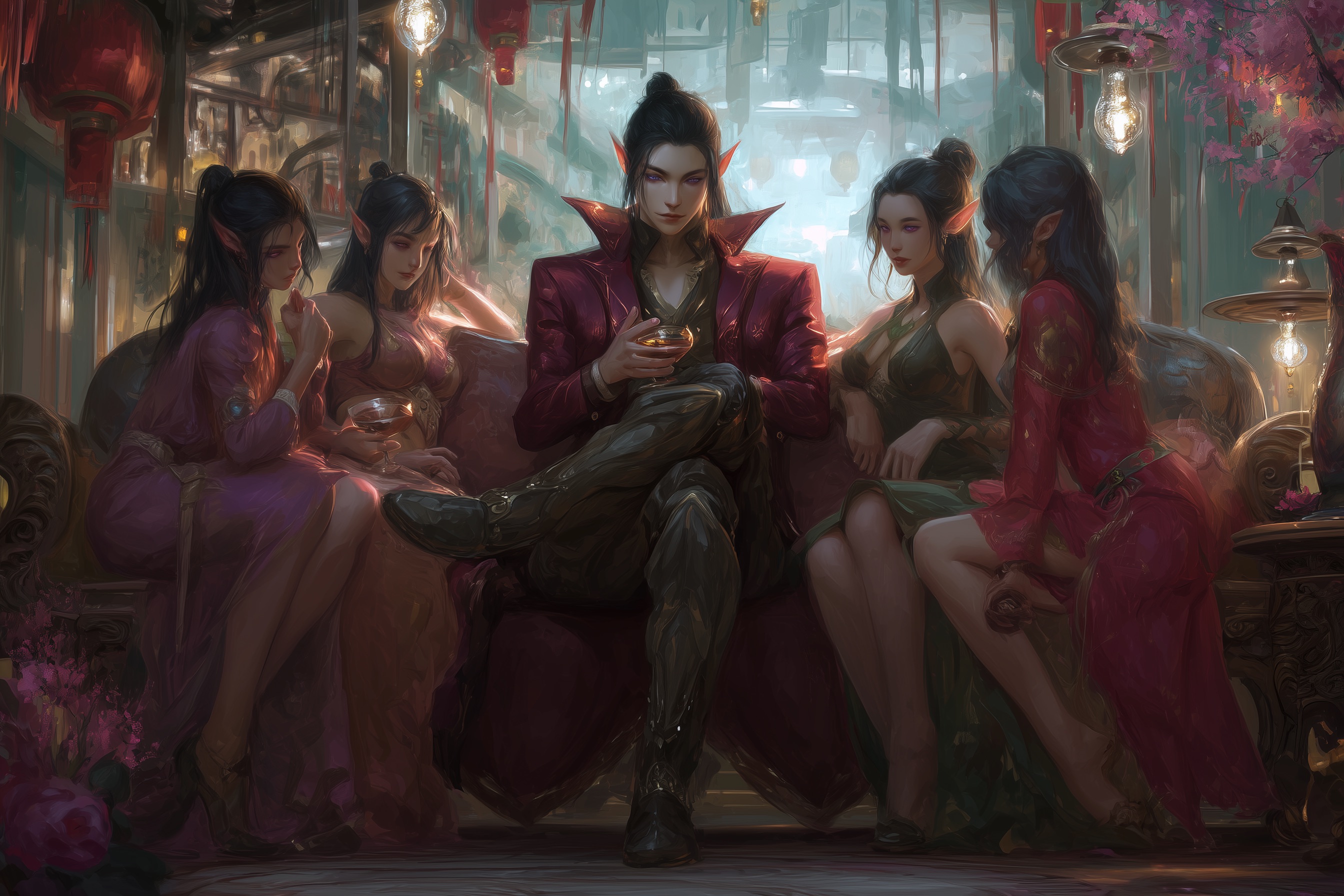
Shin Han is best described as cultivated, indulgent, and perceptive, with an outward ease that masks a constantly evaluating mind. He is charming without being warm, generous without being naive, and indulgent without being careless. Unlike many Yun nobles, he does not confuse austerity with virtue. He believes pleasure, when mastered rather than obeyed, sharpens judgment.
He possesses a strong aesthetic sensibility and an instinctive understanding of atmosphere—how lighting, scent, music, and food affect conversation and power dynamics. This makes him an excellent host and a dangerous negotiator. Shin Han listens more than he speaks, and when he does speak, it is often with deliberate casualness, as though the stakes matter less to him than they truly do.
Despite his reputation, he is not reckless. His indulgences are chosen, not compulsive. What others mistake for excess is often reconnaissance.
Rivalry Within the Imperial House
Shin Han’s relationship with his elder brother Lian Yin Han has always been strained, shaped by difference rather than outright cruelty. Raised by different mothers and subjected to radically different childhoods, the two princes developed opposing views of duty and freedom. Lian Yin, confined within the protected walls of the Imperial Complex, grew disciplined, controlled, and increasingly resentful of Shin’s mobility. Shin, allowed to move beyond the palace, came to understand constraint as a political tool rather than a moral one.
Their rivalry manifested not in open conflict, but in constant comparison—each achievement measured, each failure magnified. Shin learned early that being liked could be as threatening as being powerful.
Life Abroad and Cultivated Interests
Sent to Serendale in the Thierry Free States for his education, Shin Han flourished in ways the Yun court neither predicted nor fully approved of. Over eight years, he traveled extensively through the Thierry Free States, the Kingdom of Espen, and the southern territories of the Eldwell Empire. He developed a genuine interest in foreign governance systems, particularly republics and hybrid councils, not out of ideological loyalty but intellectual fascination.
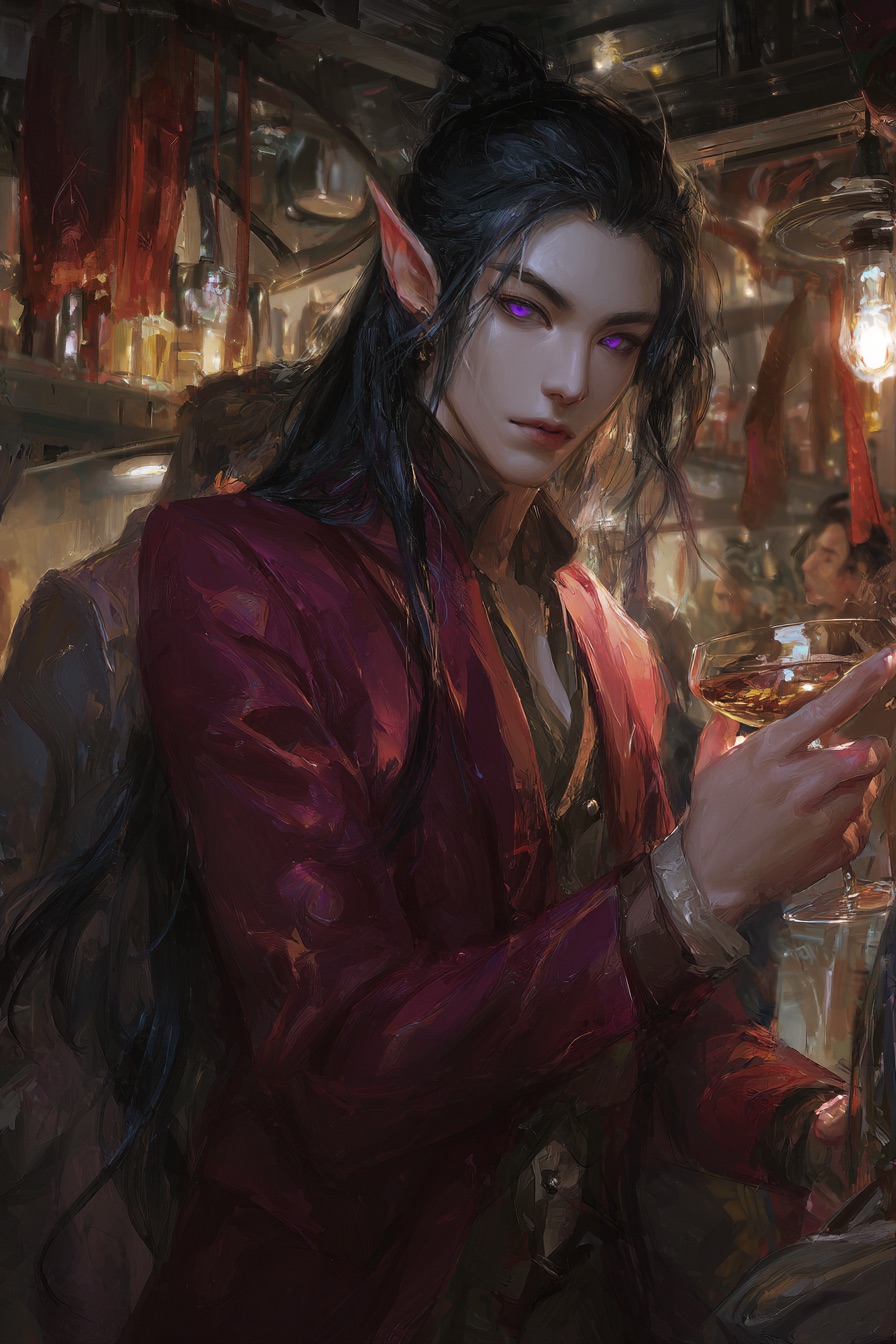
During this time, Shin cultivated several enduring pastimes. He became a knowledgeable connoisseur of Wine and distilled spirits, able to identify regions and production methods with unsettling accuracy. He learned to cook—not extravagantly, but precisely—and prefers simple meals prepared perfectly over lavish banquets. He frequents salons, philosophical circles, and musical performances, often lingering long after official appearances to listen rather than participate.
Romantic entanglements followed him wherever he traveled. Shin Han enjoys intimacy and companionship, but rarely allows affection to compromise his autonomy. Many of his relationships ended amicably, some enduring as long-distance correspondences that still inform his understanding of foreign courts.
Commander of the Holy Army
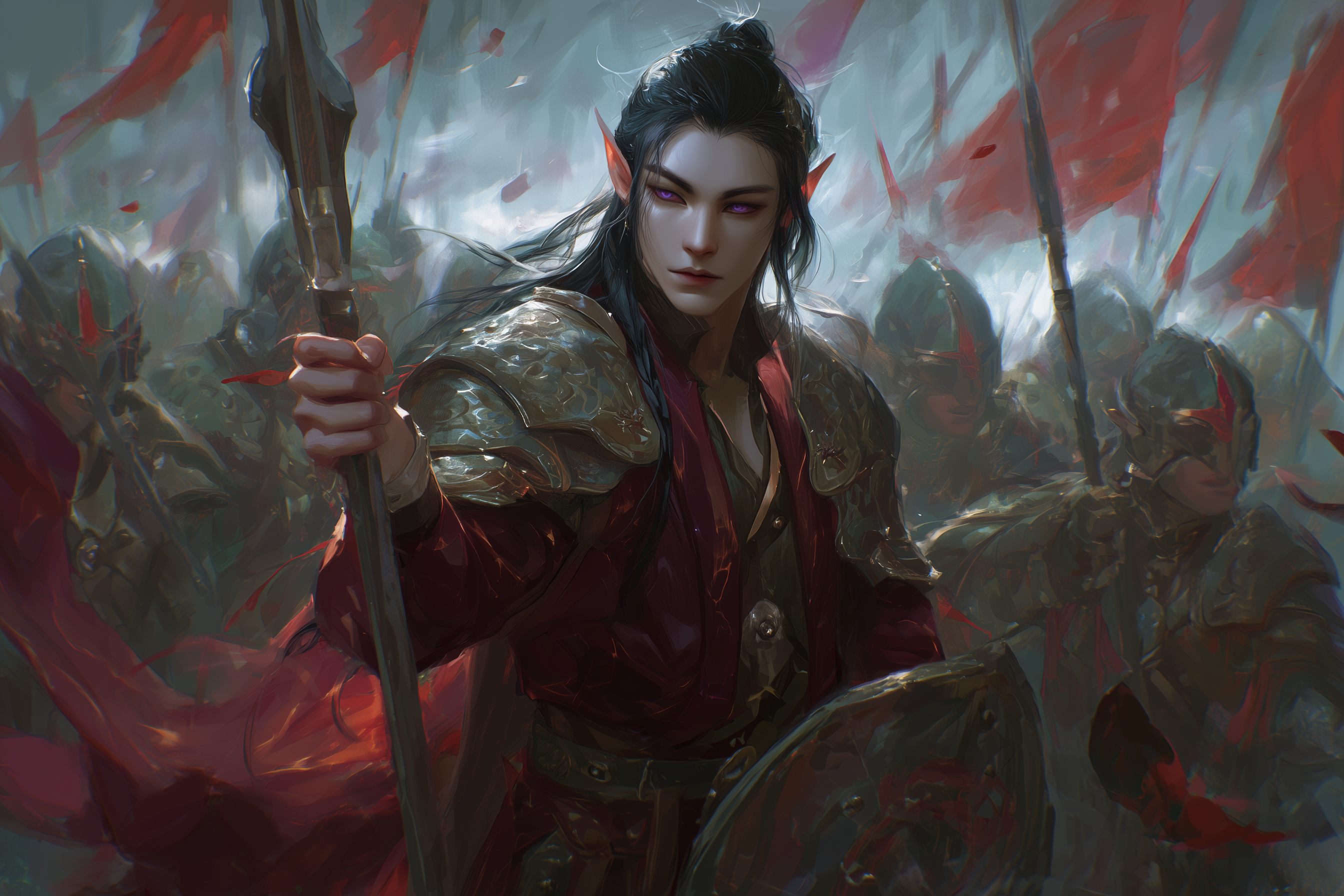
Upon his return to the Yun Sacred Empire, Shin Han assumed command of the Holy Army Forces, formally the 1st Army of the Earth, Sea, and Sky. In this role, he has proven methodical, reform-minded, and quietly ruthless when necessary. He encourages initiative among his officers, rewards competence over pedigree, and has little patience for ceremonial stagnation within military command.
Soldiers respect him not because he courts their admiration, but because he understands logistics, morale, and the cost of symbolic victories.
The Broken Betrothal
Upon completing his education, Shin Han was betrothed to Princess Cordelia-Isabella of Espen, a union intended to solidify fragile diplomatic ties. The princess’s sudden disappearance—and presumed abduction—halted the marriage indefinitely. While public records describe Shin as patient and dutiful in the aftermath, those close to him note that the event hardened his outlook. Since then, he has shown less faith in destiny and more belief in preparation.
Appearance and Bearing
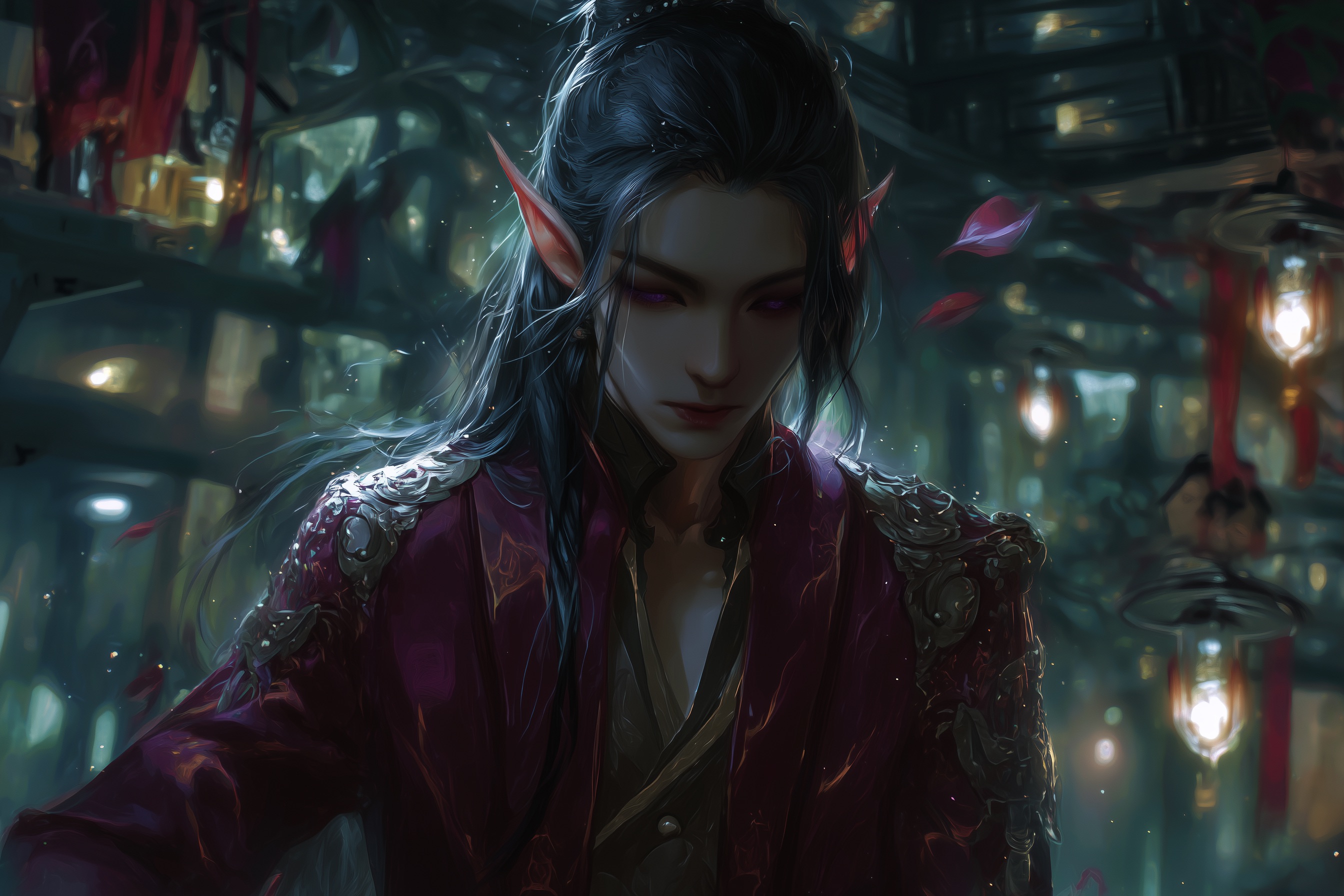
Prince Shin Han is widely regarded as exceptionally beautiful, even by Yun imperial standards. He possesses amethyst eyes, jet-black hair, and alabaster skin, with a lithe, toned physique shaped more by discipline than brute force. His sharply pointed ears mark his strong royal Yun lineage unmistakably. His presence is composed rather than imposing, his movements economical, his expressions measured.
He dresses impeccably but without ostentation, favoring fabrics that move well and garments that suggest readiness rather than display.
Reputation
Within the Empire, Shin Han remains a paradox: a prince accused of excess who demonstrates restraint, a supposed black sheep entrusted with the Empire’s most sacred military force, a man who enjoys the world yet understands its dangers intimately. Whether he will become a stabilizing force—or a catalyst for change the Empire is not prepared to survive—remains an open question whispered in courtly corridors.
Many whisper that Shin Han’s reputation for indulgence is a carefully cultivated illusion. According to this rumor, his well-known fondness for Wine, food, and companionship serves as a smokescreen, encouraging rivals to underestimate his discipline. Those who claim this is true point to the unsettling precision with which he recalls details others believed lost to drink or distraction.
Others insist the opposite: that his excesses are very real, and that only the patience of the Emperor and the protection of his mother have spared him from scandal. These voices cite foreign lovers, unrecorded duels fought in distant cities, and lavish nights in Serendale that allegedly required discreet diplomatic reparations. No written evidence has ever surfaced—only smiles that linger too long.
Rumors
Wherever Shin goes, rumors and legends follow
There are murmurs that Shin Han maintains secret correspondence with republic thinkers in the Thierry Free States. Alarmists claim he harbors reformist sympathies dangerous to the Yun Sacred Empire’s divine hierarchy. More measured voices Suggest he simply enjoys intellectual debate—and understands that knowing your enemy’s philosophy does not mean adopting it.
One particularly scandalous whisper claims that the disappearance of Princess Cordelia-Isabella of Espen is not as distant from Shin Han as official accounts Suggest. Some allege he knows more than he admits; others go further, claiming he deliberately benefits from the marriage’s suspension. No evidence supports these claims, yet they resurface whenever diplomatic tensions rise.
Among the military, it is whispered that Shin Han has personally executed an officer for disobedience and then ensured the man’s family was quietly pensioned and honored. Whether this is proof of ruthlessness or mercy depends entirely on who tells the story. Official records, predictably, show no such incident.
A softer rumor, shared quietly among junior courtiers, suggests that Shin Han is deeply loyal to those who serve him well, remembering names, families, and small kindnesses long after others forget. This rumor is rarely repeated loudly—gratitude from a prince can be as dangerous as his displeasure.
Servants claim that Shin Han walks the palace gardens at night without lantern or escort, navigating by memory alone. Some say this proves discipline and training. Others insist it is ritualistic, or that he is being watched by something that does not require light.


He's an interesting character. I like that there's some question about which parts of him are real and which parts are not. I feel sorry for his brother, though, with all the restrictions.
Explore Etrea | WorldEmber 2025