
Church of the Bench
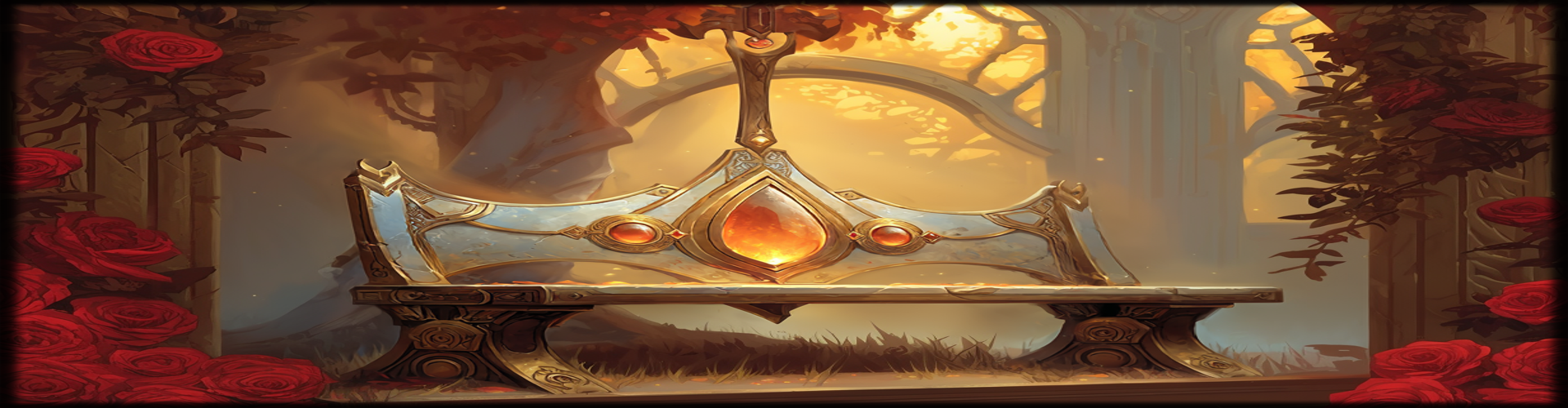
The genesis of the Age of the Bench could be traced with scholar’s precision—or so the elders of the faith would have it—to a single night of revelation, when Daruk Blackdance, known to posterity as the First Crafter of Gond, transmuted fate itself into mere memory. Long after the Creation of the Bench, a deed spoken of in reverent tones and reconstructed in drama and song, a great wave of devotion to Gond, the All-Hammer, swelled among the people of Shal’Azura. The legend of Daruk shimmered not only in the annals of history, but in every home where a hammer struck, every kitchen where a clever tool turned labor to joy, in every workshop where the rhythm of innovation beat like a collective heart. It was not merely a religion, but a living architecture of society, a scaffolding of purpose that connected the sublime art of creation with the mundane necessity of community.
At first, the followers were few—eccentric, ink-stained tinkerers and stoic metalworkers who nursed calluses and ideas with equal care. They gathered in candlelit alcoves of disused market cellars or run-down smithies, their debates punctuated by the scent of hot oil and the clamor of makeshift gears. But as word of Daruk’s miracle spread—of a bench that could turn back the unyielding clock of time and destiny—the faithful multiplied and the Church of the Bench gained momentum.
The priests of Gond dressed not in somber robes but in vivid patchworks of leather and brass, their vestments adorned with the tools of their trade. They sanctified their temples with the clangor of honest work, the ceaseless clatter of creation, and the hallowed silence that followed a completed project. In the sanctuaries of the All-Hammer, the act of making was itself a form of prayer; to work was to worship. Each congregation chronicled their innovations in scrolls of thinly-shaved birch, and the most ingenious inventions were paraded on festival days, when city squares became living museums of ingenuity. The most devout among them adopted the “Bench Vow”: a pledge to craft something new every day, no matter how small, as a daily offering to their god.
Yet for all their devotion to novelty, the followers of Gond revered tradition with a paradoxical fervor. The benches that lined the city’s corridors were sacred artifacts, each chronicling a lineage of improvement, each bearing the signature of its maker and the story of its function. Even the humblest footstool was more than a seat: it was a testament, a genealogy of craft, a fossilized hymn to the All-Hammer. And families, once fragmented by the city’s relentless ambition, now found unity at these benches—parents teaching their children the lost arts, elders recounting epic fails and triumphs, siblings collaborating on projects that would weather the storms of centuries. The Age of the Bench was not simply an era of invention; it was the communal re-forging of a people’s identity, hammered into permanence with every act of making.
As the faith matured, it established a hierarchy both rigid and playful. The High Benchwright presided over the Great Assembly—an annual conclave where the city’s most ingenious designs were judged, adopted, or ritually dismantled. Novices vied for apprenticeships under the city’s most renowned artisans, and heresies were settled not by dogma but by duel—of design, speed, or artistry. In disputes, the loser was obliged to build a contribution for the community, so even defeat became a form of progress. The Order of the Bench, Gond’s elite paladins, patrolled the city’s alleys, safeguarding the tools and techniques of the faith, and occasionally intervening when innovations threatened the fragile equilibrium of Shal’Azura’s airborne existence.
In the eternal shadow of Daruk Blackdance, the Age after the Creation of the Bench became a cultural revolution, every citizen a cog in the city’s whirring, benevolent machine. The windcarvers of Karam, the glassblowers of Makira, the pastry architects of Marifat—all were linked by the doctrine that creation was holy, and that each bench, each tool, each lovingly-spun screw was a prayer answered.
Those who followed the All-Hammer devoted their lives to the perfection of their craft, the relentless pursuit of innovation, and the preservation of community and family, thus shaping a vibrant artisan enclave that pulsed with invention and tradition.
Tenets of Faith
- Stay strong and determined when disaster strikes.
- Always support and encourage loyalty to your family, your clan, and your community.
- Creating a lasting legacy is crucial; it's how you can make a positive impact on the world.

Comments