
Ka Nakamoth
The Severed Place
These ruins south of Camp Thrifty have long held great mystery to goblinkin and the newcomers to Tokaru both. They are the focal point of an ancient time quake from the time of The Destruction itself.
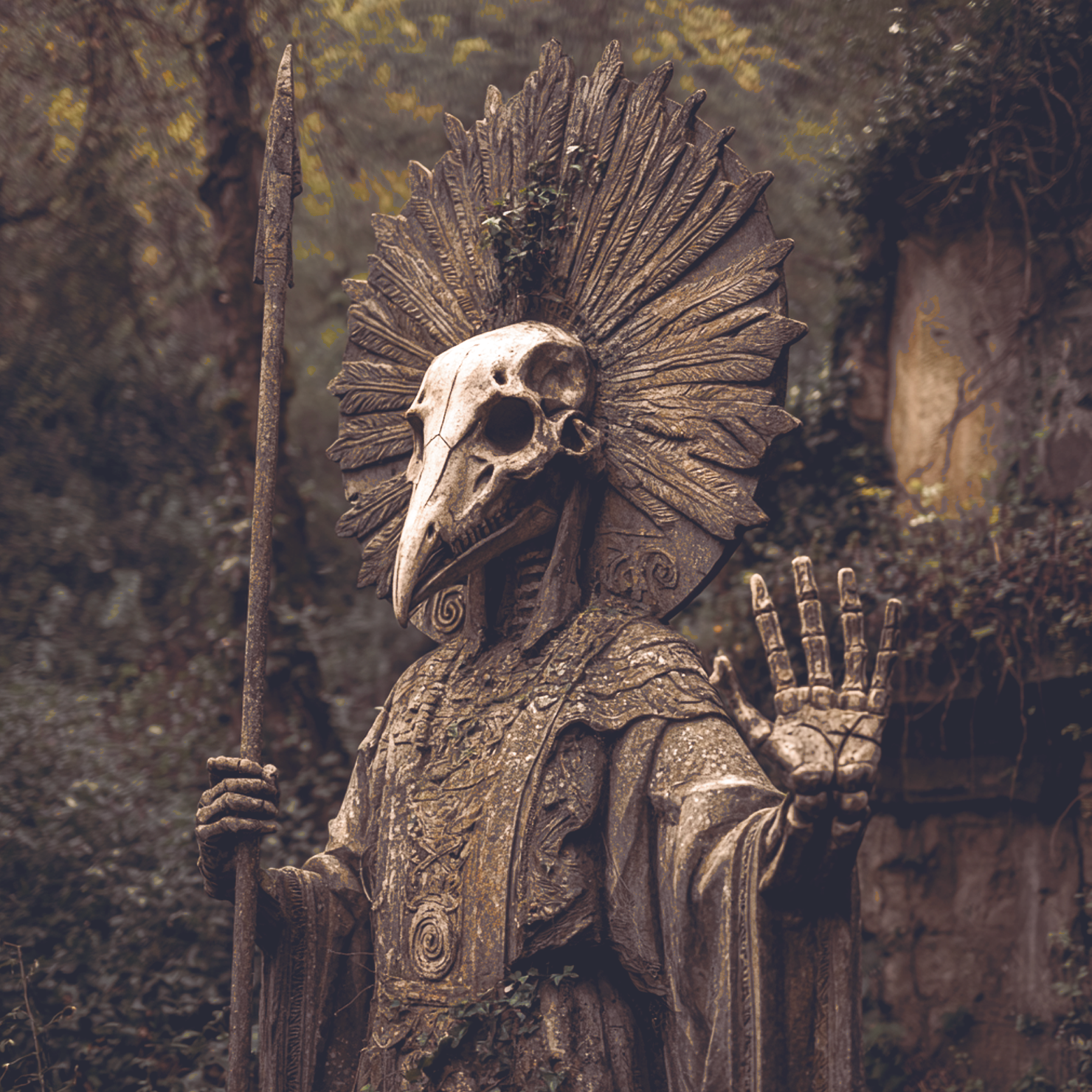
The ruins are hidden within dense and tangled evergreen forest on the sunside of shores of Tokaru. The area of the ruins covers roughly five square kilometers of the forest, and the perimeter is well marked by a ring of imposing volcanic statues of Kofa, the vulture-headed goddess of death. Each statue stands with its back to the ruins with one arm outstretched in warning.
The Spiritseers of the Tokari only teach that the place is forbidden. It's name, Ka Nakamoth, translates as "The Severed Place", and it is seen as one of the key locations beyond the ruins that surround The Uferbrech Gyre that is subject to Wala's Vigil. The Spiritseers guard the place, and the statues were erected in the deep past as a warning to their people to avoid this place of the ancients.
The forces of the Protectorates, and the fortune hunters from Camp Thrifty have no such qualms, but have learned a deep respect for the dangers within the ruins.
Peering ahead, a brave explorer will see clearings in the canopy, where the trees begin to thin out, and the glimpse of taller ruins of white stone walls at odd angles.
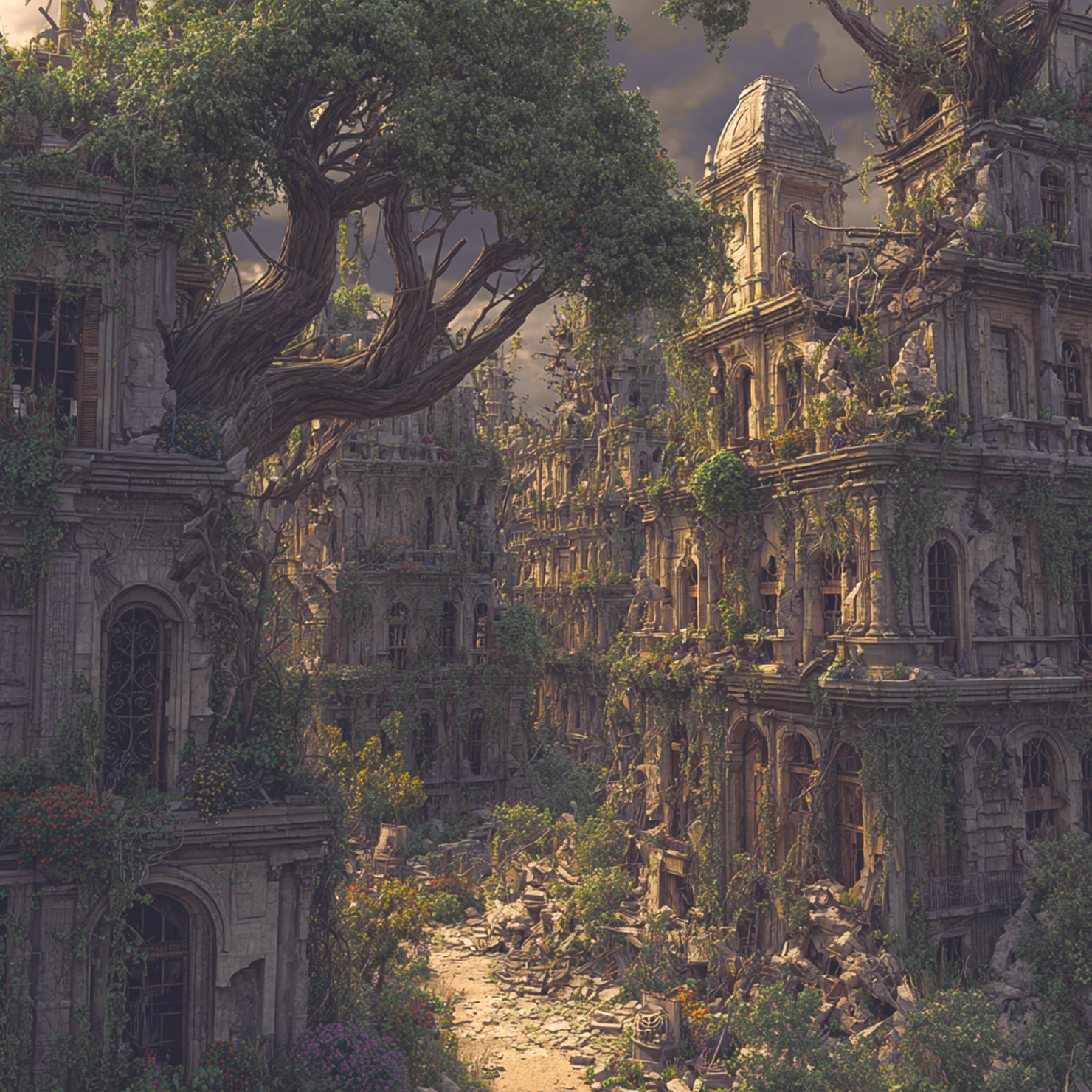
The stones of the pavement covered in moss and the buildings, some cracked and fallen as if by a quake, but others remain standing, with overgrown gardens cascading from their roofops. Skeletons and corpses still with remains of rotting clothes they once wore are fallen on the ground, all fleeing toward the edges of the ruins.
 But there is a light. Something as bright at the sun itself at the very centre of the ruins just ahead. It hurts to look at, and yet...
It casts no shadows.
The Spiritseers of the Uferbrech Goblins are determined to keep what they see as the hubris of the ancestors from being taken from this place.
But within can be found magics and technologies long lost to the world of Shadowfire, even if these were playthings for the rich, toys or tools seen as mundane at the time, much can be gleaned.
The academics from the College of Tempus in particular are fascinated by the time dilations themselves, hoping to discover clues to th nature of the Destruction itself.
But this investigation brings danger.
None have managed to enter the centre of the ruins and returned, only those who have observed it from relatively safe distance have been able to report anything. However, even those people, however, took many years to return from their exhbidition of what they thought was only a few days, to find those they left behind elderly or even dead.
So far, most treasure seekers remain content to salvage what they can from the edges of the ruin, and the price they get for even the simplest of ancient trinkets can make the dangers worth their while.
The ruins are hidden within dense and tangled evergreen forest on the sunside of shores of Tokaru. The area of the ruins covers roughly five square kilometers of the forest, and the perimeter is well marked by a ring of imposing volcanic statues of Kofa, the vulture-headed goddess of death. Each statue stands with its back to the ruins with one arm outstretched in warning.
The Spiritseers of the Tokari only teach that the place is forbidden. It's name, Ka Nakamoth, translates as "The Severed Place", and it is seen as one of the key locations beyond the ruins that surround The Uferbrech Gyre that is subject to Wala's Vigil. The Spiritseers guard the place, and the statues were erected in the deep past as a warning to their people to avoid this place of the ancients.
The forces of the Protectorates, and the fortune hunters from Camp Thrifty have no such qualms, but have learned a deep respect for the dangers within the ruins.
Time-preserved ruins
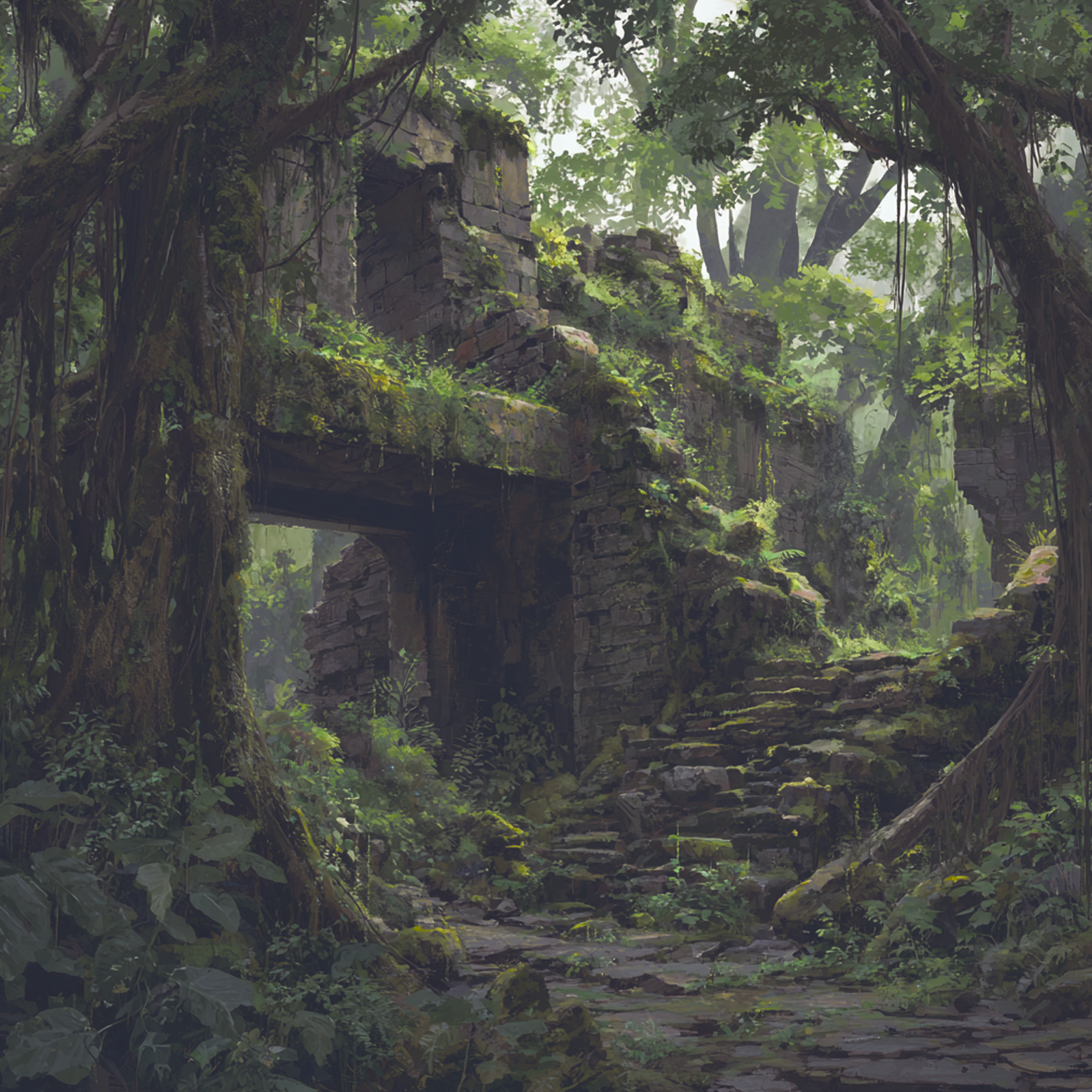
Just beyond the ring of statues, the overgrown forest floor starts to reveal rotted and crumbled stones, and the odd remains of walls half collapsed and covered in the roots of the towering trees.Peering ahead, a brave explorer will see clearings in the canopy, where the trees begin to thin out, and the glimpse of taller ruins of white stone walls at odd angles.
by Midjourney
Delving further, the forest floor reveals slabs of cracked stones that were once the streets of the city, flanked by these toppled buildings.
Vines and younger trees curl up from the cracks between, and huge gnarled fruit trees hold up the fallen walls with their gnarled branches. Crumbled bones can be found swallowed by the vegetation.
Even further within the streets become ordered, the fruit trees younger, still showing the cracked remains of the pots that once held them, and with signs of having once been manicured and cared for.
Vines and younger trees curl up from the cracks between, and huge gnarled fruit trees hold up the fallen walls with their gnarled branches. Crumbled bones can be found swallowed by the vegetation.
Even further within the streets become ordered, the fruit trees younger, still showing the cracked remains of the pots that once held them, and with signs of having once been manicured and cared for.
by Midjourney
The stones of the pavement covered in moss and the buildings, some cracked and fallen as if by a quake, but others remain standing, with overgrown gardens cascading from their roofops. Skeletons and corpses still with remains of rotting clothes they once wore are fallen on the ground, all fleeing toward the edges of the ruins.
From here, the centre of the ruins can be seen, gleaming like some fairytale. fountains still flowing, tables on the streets, and the glass of many windows still intact.
And the strangest things may be seen by those careful enough to observe closely. Ahead there is nothing but silence, and above, hanging in the sky can be seen birds frozen in mid flight. Butterflies hover over flowers. There are people sitting at cafes, walking the pavements stuck in mid-stride.
Nothing moves. Not even the wind.
And the strangest things may be seen by those careful enough to observe closely. Ahead there is nothing but silence, and above, hanging in the sky can be seen birds frozen in mid flight. Butterflies hover over flowers. There are people sitting at cafes, walking the pavements stuck in mid-stride.
Nothing moves. Not even the wind.
by Midjourney
It casts no shadows.
The lure of ancient treasures
Within the ruins are hidden many objects and much lore preserved from the time before The Destruction. The academics from the Protectorates and zealots from The Church of the Faceless seek what can be salvaged from that time, treasure hunters from Camp Thrifty seek them for profit, and even the eyes of The Gleaming City are trained upon what can be learned there.The Spiritseers of the Uferbrech Goblins are determined to keep what they see as the hubris of the ancestors from being taken from this place.
But within can be found magics and technologies long lost to the world of Shadowfire, even if these were playthings for the rich, toys or tools seen as mundane at the time, much can be gleaned.
The academics from the College of Tempus in particular are fascinated by the time dilations themselves, hoping to discover clues to th nature of the Destruction itself.
But this investigation brings danger.
Time dilation within the ruins
The most significant danger is the time dilation. In essence, the further one travels into the ruins, the further one travels back in time. Even at the edges, this can cause much disruption. An explorer may spend a few hours delving into the ruins, only to emerge to find weeks or even months have passed since they began, and the deeper someone delves, the worse this becomes.None have managed to enter the centre of the ruins and returned, only those who have observed it from relatively safe distance have been able to report anything. However, even those people, however, took many years to return from their exhbidition of what they thought was only a few days, to find those they left behind elderly or even dead.
So far, most treasure seekers remain content to salvage what they can from the edges of the ruin, and the price they get for even the simplest of ancient trinkets can make the dangers worth their while.
Other temporal and magical dangers
The entire ruin is subject to the types of impacts that all Jitters and time quakes bring, becoming more severe the closer people get to the centre of the ruins.History
Ka Nakamoth is a small part of what remains of the ancient city of Lafaelle, one of the capitals of the old Assembly before The Destruction. Other remnants of the city can be found across the archipelago, buried beneath the mountains of the islands and beneath the waters of the Uferbrech Sea. This portion of the old city was once a busy mercantile quarter, with many open squares of manicued parklands connected by wide avenues and streets flanked by cafes, taverns and shops of all kinds.
During the Destruction itself, the city was wracked by timequakes, one of which preserved the centre of the ruins of Ka Nakamoth. The surrounding areas of this temporal nexus have become progressively marked by ravages of time, crumbled by weather and siesimic actvity, and overgrown by the forest.
The survivors of the Destruction - the ancestors of the Uferbrech goblins - lost many explorers to the temporal anomaly at the heart of the ruins. The tenets of Wala's Vigil were in part set up to protect the Ancestors from these dangers, and the statues that now surround the ruins were placed there many hundreds of years ago by early Spiritseers as warning.
During the Destruction itself, the city was wracked by timequakes, one of which preserved the centre of the ruins of Ka Nakamoth. The surrounding areas of this temporal nexus have become progressively marked by ravages of time, crumbled by weather and siesimic actvity, and overgrown by the forest.
The survivors of the Destruction - the ancestors of the Uferbrech goblins - lost many explorers to the temporal anomaly at the heart of the ruins. The tenets of Wala's Vigil were in part set up to protect the Ancestors from these dangers, and the statues that now surround the ruins were placed there many hundreds of years ago by early Spiritseers as warning.
Show spoiler
Academics from the Protectorates believe that the cause of the timequake that originally preserved the ruins of Ka Nakamoth was that it is the location where Okudi, the Devourer and Vorca Kinsculo waged their epic battle above the streets of the city of lafaelle at the zenith of The Godling Wars. Some surmise that the blinding light that has been reported seen at the heart of the ruins may in fact be the final moments of that fight.
Architecture
At the edges of the ruins, kust beyond the ring of statues, there is little but overgrown rubble. But closer to the centre the original architecture has been better preserved.
The streets were made from some bright stone-like material, smooth and unbroken, but textured with some sort of glittery material that sparkled in the sun. Gutters and drains with ornate grills of iron. The wide pavements made from strange and beuatiful tessalations of polished marble tiles.
The buildings themselves were tall, three or four stories of appartments and offices, with manicured rooftop gardens and wide balconies looking over the streets below. The ground floor spaces were shops, cafes and other places of entertainment, many with areas for gathering that spilled out onto the pavements of the streets.
The construction of the buildings was of more marble, white and gleaming, inlaid with intricate fillagrees of gold and silver veins. The doors and windows framed by beautiful and flowing carved wood, polished. Regular niches along the outer walls are devoted to carvings and statues of many different people, decorative fountains, and huge ornate pots where fruit trees would grow to shade the streets.
The streets were made from some bright stone-like material, smooth and unbroken, but textured with some sort of glittery material that sparkled in the sun. Gutters and drains with ornate grills of iron. The wide pavements made from strange and beuatiful tessalations of polished marble tiles.
The buildings themselves were tall, three or four stories of appartments and offices, with manicured rooftop gardens and wide balconies looking over the streets below. The ground floor spaces were shops, cafes and other places of entertainment, many with areas for gathering that spilled out onto the pavements of the streets.
The construction of the buildings was of more marble, white and gleaming, inlaid with intricate fillagrees of gold and silver veins. The doors and windows framed by beautiful and flowing carved wood, polished. Regular niches along the outer walls are devoted to carvings and statues of many different people, decorative fountains, and huge ornate pots where fruit trees would grow to shade the streets.


Comments