

Craftsman
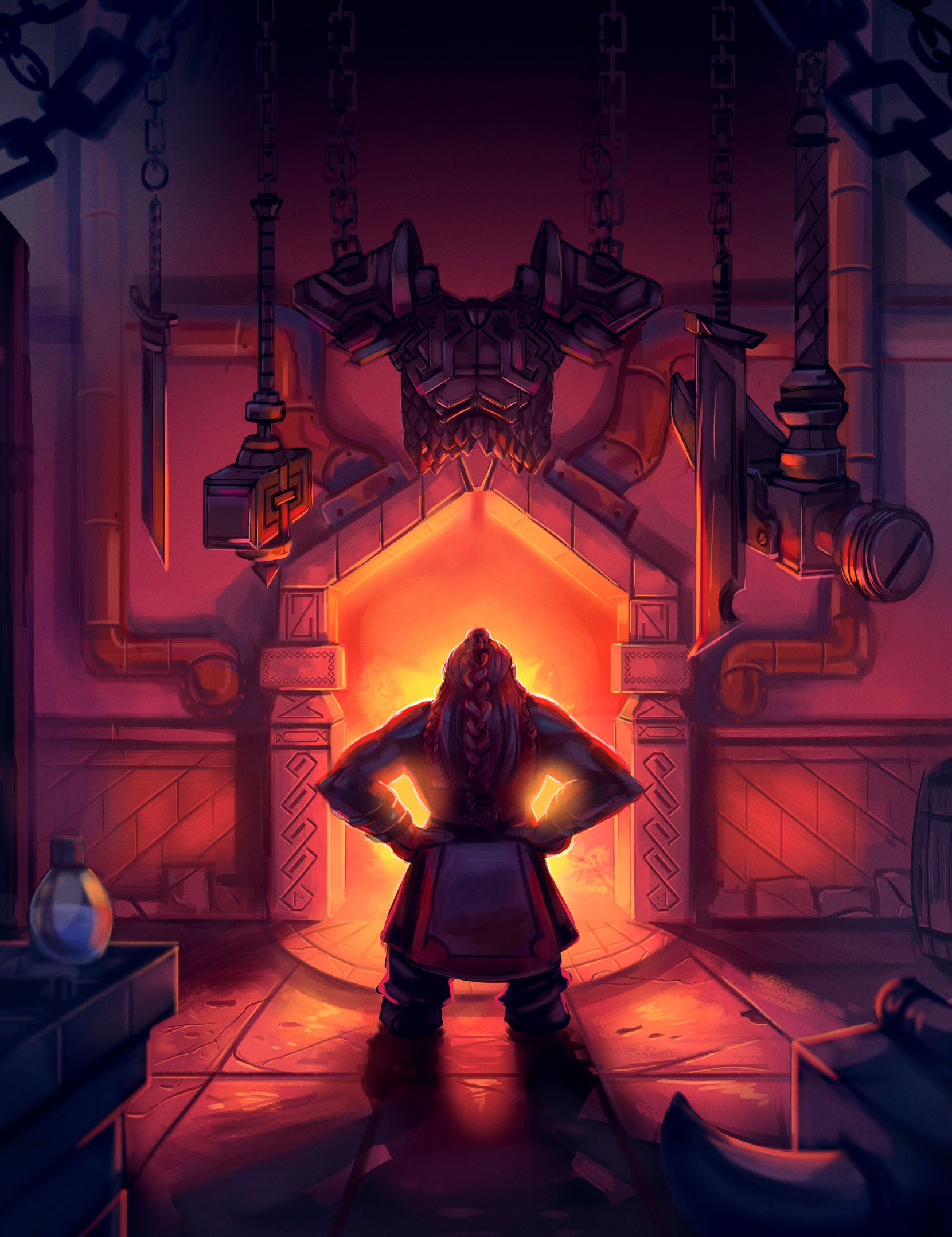
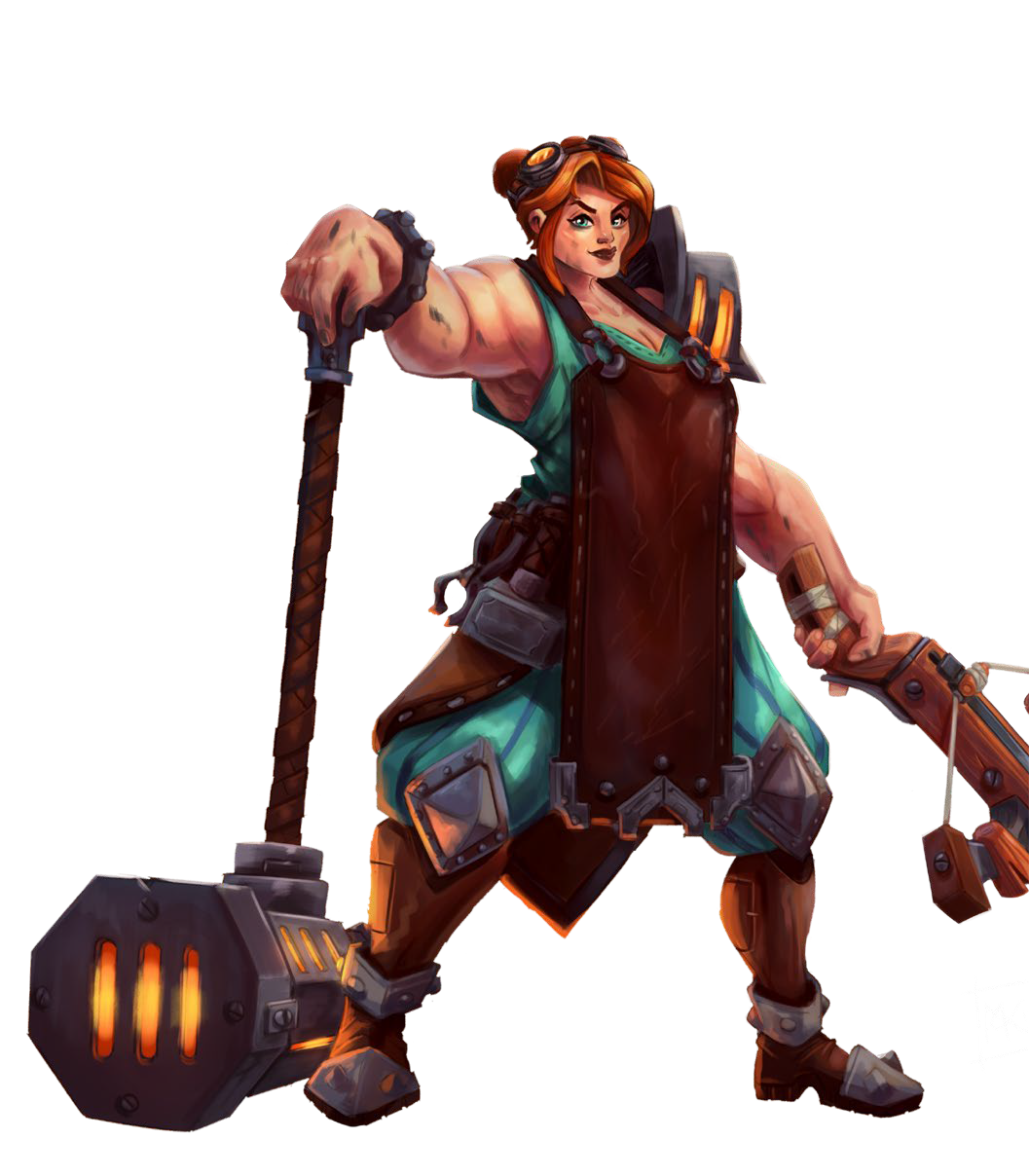
A burly dwarf brings her hammer down on a glowing hunk of steel, launching a shower of sparks into the air. The room resonates with the sound of metal impacting metal, while the bright, hot piece of steel in her tongs begins to take shape.
An elf threads a needle with an impossibly thin metallic wire, preparing to set the stitches into what looks to be leather armor, but made of dragon’s hide. Once satisfied with the measurements, he proceeds with a flurry of dexterous needlework.
A gnome with an intricate set of goggles examines the stock for her latest work: a portable ballista. She examines the gearing and loading crank, ensures the tension on the bowstring, and scans the bolt rail for imperfections. She smiles, for she knows her work is without flaw.
Craftsmen are virtuoso artisans and genius inventors. Not content merely creating masterwork pieces of weapons and armor, they invent and engineer ingenious devices and singularly deadly weapons.
Master of Craft
Artisans of all types are an integral part of every culture: buildings must be erected, pots must be sent to the kiln, tools must be forged. Despite their pervasiveness, master craftsmen are still as rare as they are prized. These artisans, creators, and inventors can smith items of mythic quality, and can solve most any problem simply by using the right tool and the appropriate amount of force.
Secret of Steel
Adventuring craftsmen come in many varieties, but nearly all leverage their advanced knowledge of metallurgy, smelting, and construction to forge arms and armor rarely seen, even by other adventurers. The smiths test their schematics and designs themselves, building prototypes and experimental gear that can later be refined into mass-produced items.
Creating a Craftsman
When you create your craftsman, the most important thing to consider is your crafting expertise. Though all craftsmen of adventuring stock can stitch leather armor, forge weapons, and tinker with magic items, only those who dedicate themselves to a single craft can attain legendary works. Each type of craftsman, from the practical to the wildly eccentric, have their place, but no craftsman can specialize in everything.
Moreover, few craftsmen are self-taught. Most learn the finer points of their craft under the tutelage of a master artisan (whether or not their master was a craftsman, in the conventional sense). Did you study under a master, and if so, what drove you to apprentice underneath them?
Lastly, consider how you view your work. Are you pragmatic, viewing your creations as tools to serve a purpose? Are you artistic, striving to craft pieces of unrivaled beauty and perfection? Or are you experimental, tinkering and building with wild abandon to break new ground and innovate on established norms?
Craftsman's ToolsAs a craftsman, you carry a set of craftsman’s tools, a combined toolkit that covers a broad range of applications. You can use a set of craftsman’s tools for any ability check you would make with any set of artisan’s tools. A set of craftsman’s tools costs 75 gp.
Level 1: Exotic Proficiencies
You gain proficiency with exotic weapons and exotic armor, which are unconventional, yet effective items with which no other class is proficient. If a feature or effect grants proficiency with a weapon or suit of armor, it doesn’t grant proficiency with exotic weapons or exotic armor, unless otherwise stated.
Level 1: Active Crafting
You can craft one nonmagical item each day when you take a long rest, without losing the benefits of a long rest. You pay half the item’s gold piece cost in materials, up to 25 gp. If an item costs more than 25 gp in materials, you can finish the item by working on it for multiple days, spending 25 gp each day until the item is completed.
As you gain levels in this class, your crafting speed increases, allowing you to spend more on materials for each day of crafting, as shown in the Active Crafting column of the Craftsman table.
Items you craft using this feature are worth half their gold piece cost when sold. This means that you can sell an item to refund its cost in materials, but not to make a profit.
Level 2: Masterwork
You begin to learn the deeper intricacies of weapon and armor craftsmanship.
MASTERWORK EQUIPMENT
As a craftsman, you are capable of creating weapons and armor of the utmost quality; such creations are known as masterwork items. To create a masterwork version of an item, add 50 gp to the cost in materials you pay to craft the item. Masterwork weapons you create have a +1 bonus to attack rolls. A magic weapon that adds a bonus to your attack and damage rolls doesn’t add this bonus to attack rolls.
Masterwork Properties
| Properties | Level | Cost |
|---|---|---|
| Apprentice | 2nd | -- |
| Journeyman | 5th | 100 gp |
| Master | 11th | 250 gp |
| Legendary | 17th | 400 gp |
MASTERWORK PROPERTIES
Masterwork weapons and armor can be modified with Masterwork Properties, advanced modifications that transform them into truly unique weapons and armor. Masterwork properties are separated into 4 levels: Apprentice, Journeyman, Master, and Legendary. You can apply any number of Apprentice properties to a masterwork weapon, or up to three Apprentice properties to a masterwork suit of armor. Additionally, you can apply one Journeyman, one Master, and one Legendary property to each masterwork item.
If you add a Master or Legendary property to an item, only you can use it.
MODIFYING EQUIPMENT
Using the Active Crafting feature, you can modify a weapon or suit of armor when you take a long rest. This allows you to do the following:
Improving Equipment. You can make any nonmagical weapon or suit of armor masterwork for a cost of 50 gp in materials.
Adding Masterwork Properties. Adding masterwork properties of Journeyman level or higher requires a cost in gold pieces and also requires you to be of a high enough level in this class, as shown in the Masterwork Properties table. When you learn a new level of masterwork properties, you can apply a property from that level to a masterwork item at no cost.
Check the Weapons Exceptions sidebar later in this chapter before adding masterwork properties to a weapon.
Whenever you modify the properties of a masterwork weapon, you can change its damage type to bludgeoning, piercing, or slashing damage, if its damage was already one of these types.
Removing Properties. You can remove any properties of a masterwork item, including those a weapon had when you first created it. You can’t remove a property from an item that is a prerequisite for another of the item’s properties. If you replace a property of Journeyman level or higher with a property of the same level over the same long rest, you can do so without an additional cost in materials.
CRAFTING ABILITY
Intelligence is the primary ability you use when crafting items. You use your Intelligence modifier when setting the saving throw DC for items that you craft.
Downtown Crafting
Any character can craft nonmagical items in their downtime; the craftsman is simply better at it. To craft an item, a character requires three things:
- Materials. In most cases, the raw materials for an item can be obtained for half the item’s gold piece cost. This cost can fluctuate depending on the character’s current circumstances, contacts, or access to materials.
- Tools. You must have a set of appropriate artisan’s tools and proficiency with them to craft an item. Occasionally, an item might call for an entire workshop or other special tools.
- Time. The time required to craft an item is measured against its cost in materials. A character makes progress toward crafting an item equal to 5 gp for each day of downtime, completing their work when this amount exceeds the item’s cost in materials. As a craftsman, you work faster than a normal character, and make progress equal to 10 gp progress each day.
You can sell any item you craft during your downtime for its total gold piece cost. As such, if you run a shop or craft items during your downtime purely to make profit, you can make 5 gp per day, assuming you sell all of your items.
Level 2: Tool Belt
You always have the right tool at hand. You can use your action to retrieve a piece of nonmagical gear from your belt, pack, cart, or wherever you keep your tools, even if you didn’t have it in your inventory before. The item’s gold piece cost can be up to 50 gp. You can’t use this feature to produce a weapon, suit of armor, shield, or potion. An item retrieved in this way becomes lost in your inventory and vanishes when you finish a long rest.
You can use this ability a number of times equal to your Intelligence modifier (a minimum of once), and you regain all expended uses when you finish a long rest.
Level 3: Artisans’ Guild
You join an Artisans’ Guild. Select one of the Guilds from those listed below; you gain the 3rd level feature of that guild. You gain an additional Guild feature at 7th, 10th, 14th and 18th level.
Level 4: Ability Score Improvement
When you reach 4th level, and again at 8th, 12th, and 16th, you can increase one ability score of your choice by 2, or you can increase two ability scores of your choice by 1. As normal, you can’t increase an ability score above 20 using this feature.
Level 5: Extra Attack
You can attack twice, instead of once, whenever you take the Attack action on your turn.
Level 6: Folded Steel
You discover or create new processes for making your masterwork gear even stronger than before. Masterwork weapons crafted or modified by you count as magical for the purpose of overcoming resistance and immunity to nonmagical attacks and damage.
Level 9: Eye for Quality
You can cast the identify spell at will, without using a spell slot or spell components. Additionally, when you cast the spell, you also appraise the target item, learning its market value in gold pieces.
Level 13: Flawless Construction
Masterwork items you create don’t rust, pit, fray at the edges, or otherwise show signs of aging. Additionally, they have resistance to all damage. Items you create can only be destroyed by effects that can destroy magic items.
Level 15: Uncanny Tool Belt
You have a knack for finding the most useful things buried away in your cart. You can produce a single common or uncommon magic item from your tool belt. The item becomes lost in your inventory and vanishes when you finish a long rest. Once you use this feature, you can’t use it again until you finish a long rest.
Level 19: Epic Boon
You gain an Epic Boon feat or another feat of your choice for which qualify. Boon of Truesight is recommended.
Magnum Opus
You complete an object of unparalleled majesty. You work feverishly for a period of 30 days to create a single magic item of very rare or legendary rarity. This item is tied to your very soul: regardless of type, you are always considered attuned to it, and no other creature can attune to it while you are alive. This item doesn’t count against your maximum number of attuned items, and you ignore all attunement requirements for the item. As long as you are on the same plane of existence as your item, you can use a bonus action to call it to your hand or onto your body (as appropriate). You can only craft a Magnum Opus once.

Comments