

Tōbu / Nâvren-ha Culture
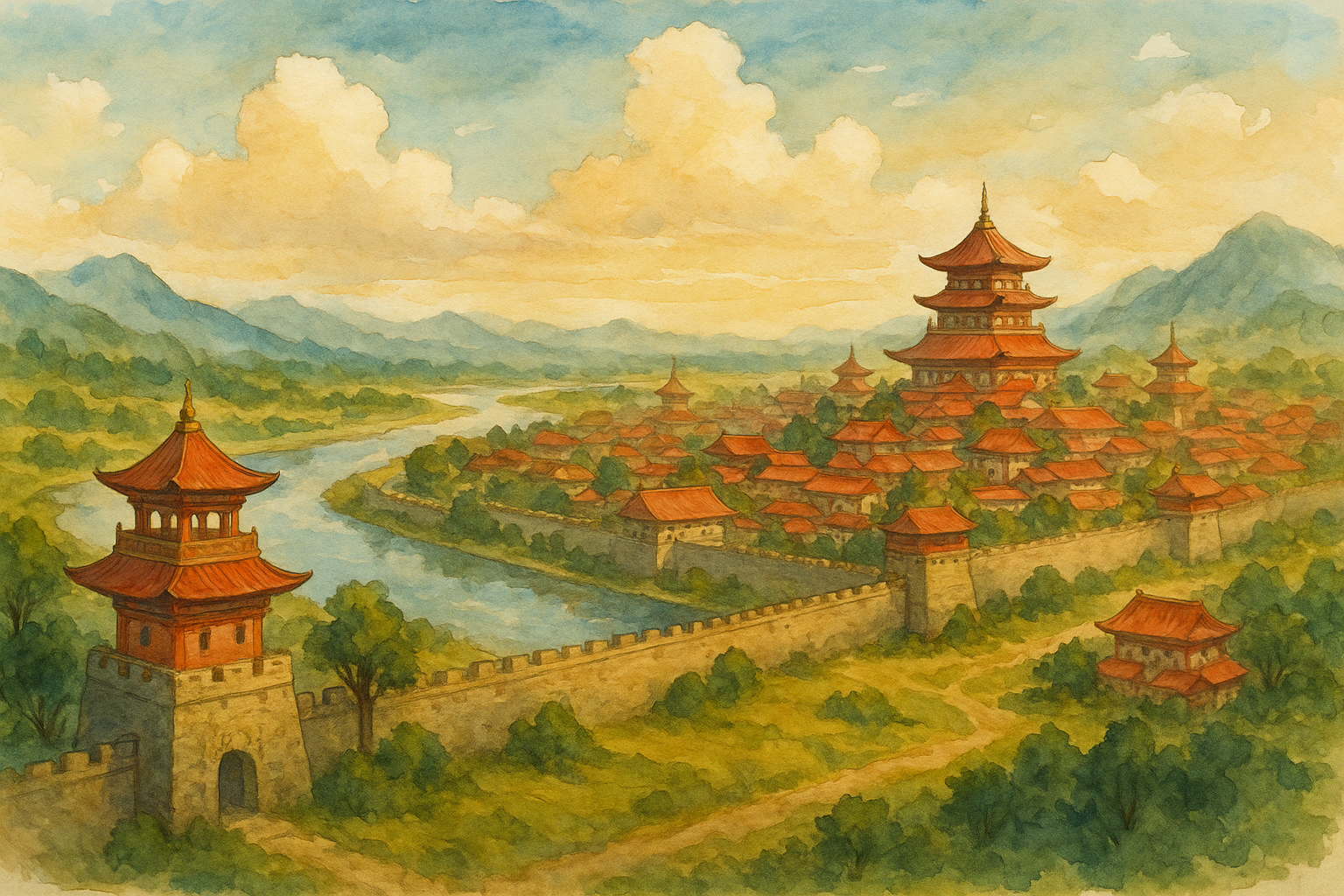
The Tōbu, or Nâvren-ha, carry themselves as if carved from the same stone that shapes their empire: enduring, deliberate, and sharpened by purpose. Their presence is not just political but atmospheric—one feels it in the cadence of their speech, the arrangement of their cities, and the unbroken rhythm of their rituals. Unlike other origins who bend with the seasons, the Tōbu cultivate a sense of inevitability, as if their way of life were the bedrock upon which Tilith itself must adjust. They do not ask for recognition; their dominance is assumed, the quiet weight of an empire whose order presses into the bones of all who walk its avenues. At the heart of this culture lies a profound tension between severity and artistry. Their society moves with discipline, yet channels its energy into precise beauty: banners cut with geometric exactness, gardens engineered to echo still water, and ceremonies that balance fervor with restraint. To outsiders, such expressions may seem ornamental, but for the Tōbu they are shields—subtle acts of warding against both chaos and spirit. Every detail, from the way a host greets a guest to the posture of a soldier at rest, is imbued with the same gravity: nothing is wasted, everything is a statement. What sets the Tōbu apart is their ability to weave destiny into daily life. The smallest gesture can feel as if it belongs to some greater pattern, a thread in a design extending beyond the living into the unseen. In this way, the people themselves become instruments of continuity, echoing the Everking’s long silence with lives lived as unbroken testimony. To serve, to endure, to perfect—these are not choices but conditions of being. It is this seamless joining of faith, governance, and discipline that allows the Nâvren-ha to stride across ages without faltering, carrying their empire forward as both shield and beacon upon Tilith.
Naming Traditions
Feminine names
In registries and shrine programs, feminine names carry a brisk rise and a clean stop—quick enough for a roll call, poised enough for ceremony. Most folk speak them in their shorter cadence day to day, while festivals and proclamations favor the fuller, heavier shape. Scribes smooth doubled letters or awkward clusters so the name sits neatly on the tongue and on the page; the tone itself draws from the feminine root lists long kept beside the ledgers.
Examples: Osa; Rmiqa; Ami; Eya; Isa; Koru; Suli; Renyo; Yasu; Ritor.
| d20 | Root A (1–2) | Root B (2–3) | Root C (1–3, optional) |
| 1 | a | mi | a |
| 2 | e | ya | i |
| 3 | i | sa | o |
| 4 | o | ko | u |
| 5 | u | re | y |
| 6 | y | su | r |
| 7 | l | na | e |
| 8 | m | li | an |
| 9 | n | ri | yo |
| 10 | r | to | ra |
| 11 | ya | qor | sh |
| 12 | mi | nol | qa |
| 13 | ko | kal | mu |
| 14 | re | tor | en |
| 15 | su | lun | ith |
| 16 | na | vem | kai |
| 17 | ri | sai | vel |
| 18 | sa | ren | rin |
| 19 | yu | shi | sha |
| 20 | ai | var | vor |
Masculine names
On muster boards and writs of office, masculine names read clipped and efficient—made for a gate sergeant’s shout across stone. The everyday form stays compact; when the banners come out or rank is being read, a longer, weightier construction is preferred. Where sound would snag, clerks adopt the customary smoothing so the cadence rings clear through court and camp alike.
Examples: Yura; Retuvel; Koren; Tavekrai; Naqor; Orlunith; Riken; Aveli; Yurash; Revar
| d20 | Root A (1–2) | Root B (2–3) | Root C (1–3, optional) |
| 1 | a | su | e |
| 2 | e | ra | i |
| 3 | i | no | o |
| 4 | o | tu | a |
| 5 | u | ka | u |
| 6 | y | ri | y |
| 7 | w | va | r |
| 8 | r | ro | en |
| 9 | n | ke | an |
| 10 | l | li | yo |
| 11 | yu | qor | ra |
| 12 | el | nol | sh |
| 13 | na | kal | qa |
| 14 | ka | tor | mu |
| 15 | or | lun | ith |
| 16 | ta | vek | kai |
| 17 | re | sai | vyr |
| 18 | ko | ren | qor |
| 19 | su | shi | ren |
| 20 | ai | var | vel |
Unisex names
Caravaners, officers, and artisans who slip easily between circles often wear neutral names—built in the same measured cadence prized by the Everkingdom’s paperwork. Spoken short, they pass crisply from mouth to ledger; given the formal third segment, they carry just as well beneath banners and temple bells. The practice follows the realm’s gender-neutral root tables, with the same courtesy smoothing where letters collide.
Examples: Ilun; Kokeo; Asu; Era; Sliyo; Xhvar; Yren; Orqa; Kovek; Suvyr.
| d20 | Root A (1–2) | Root B (2–3) | Root C (1–3, optional) |
| 1 | a | su | e |
| 2 | e | ra | i |
| 3 | i | no | o |
| 4 | o | tu | a |
| 5 | u | ka | u |
| 6 | y | ri | y |
| 7 | r | va | r |
| 8 | l | ro | en |
| 9 | n | ke | an |
| 10 | s | li | yo |
| 11 | yu | qor | ra |
| 12 | el | nol | sh |
| 13 | or | kal | qa |
| 14 | ta | tor | mu |
| 15 | re | lun | ith |
| 16 | ko | vek | kai |
| 17 | su | sai | vyr |
| 18 | ai | ren | qor |
| 19 | zh | shi | ren |
| 20 | xh | var | vel |
Family names
In Tōbu life, family names carry the Nâvren cadence used on ledgers, seals, and introductions: short, disciplined roots that read cleanly in records. Most people present “Given + Family” (e.g., Yura Teyonokozu), with the shorter A+B pattern common in everyday use and the longer A+B+C showing age or formality when it matters. The roots are expressly built to feel Nâvren-leaning while remaining a naming tool rather than a full language.
Examples: Teyonokozu; Sumayadono; Miyokazuta; Namioharomo; Yorimako; Kanonari; Sumayadori; Rakusumino; Rinuhaneyo; Teyoyori; Sukainoko; Yumesarona.
| d20 | Family Root A | Family Root B | Family Root C |
| 1 | Yori | mako | sa |
| 2 | Kano | nari | ka |
| 3 | Suma | yado | ri |
| 4 | Raku | sumi | no |
| 5 | Nazo | kori | mi |
| 6 | Rinu | hane | yo |
| 7 | Teyo | yori | zu |
| 8 | Sukai | noko | to |
| 9 | Yume | saro | na |
| 10 | Karo | raku | ji |
| 11 | Senji | yune | ra |
| 12 | Rizan | tano | mo |
| 13 | Hako | kazu | yu |
| 14 | Namio | morai | ne |
| 15 | Riyo | neda | ko |
| 16 | Kizu | haro | so |
| 17 | Miyo | sukae | re |
| 18 | Rion | yame | ta |
| 19 | Takai | rino | wa |
| 20 | Zeno | kito | ru |
Other names
Many Tōbu attach a locative—district-style and unhurried—to signal ward, water, or township ties. You’ll see it on seals, contracts, and grave plinths: a place-epithet stitched after the family name, sometimes with a binder that keeps the old administrative flavor. The hyphens are fashion rather than law; some keep both, some fuse the whole, and some let one hyphen linger like a hinge between districts.
Examples: Qor-no-Koro; Qornokoro; Qor-noKoro; Qorno-Koro; Qor-Koro; Rinka-Koro; Nalien-Zhun; Nali-ya-Koro; Ten-ha-Yado; Shai-ya-Zhun; Lun-enMoru; Vek-naSume; Yor-Kyen.
| d10 | Root A | Binder (optional) | Root B |
| 1 | Qor | — | zhun |
| 2 | Han | -na- | rako |
| 3 | Rin | -no- | nare |
| 4 | Sako | -ha- | koro |
| 5 | Nali | -ri- | yado |
| 6 | Vek | -en- | sume |
| 7 | Lun | -ka- | tano |
| 8 | Shai | -tu- | moru |
| 9 | Ten | -ya- | kyen |
| 10 | Yor | -zen- | veshi |
Culture
Major language groups and dialects
The Tōbu communicate through Nâvren, their common root language, a tongue designed for succinctness and resilience. This language reflects their disciplined thought and direct approach to all aspects of existence, conveying meaning with clarity and precision. Formal interactions, whether in the Everking's court, on the battlefield, or during sacred rites, employ specific cadences and phrasing, such as "Relu navr, Arû-Suj keep you" for greetings. The written form of Nâvren often incorporates flowing ring-marks, known as Gyr-run, used for significant symbols like halos, seals, and banners, which imbue them with symbolic weight. While subtle nuances might exist in regional speech or within specific governmental strata, the sources do not detail distinct major dialect groups beyond the unified Nâvren. Their emphasis on order and central authority likely discourages widespread linguistic divergence, maintaining a cohesive communication system across the vast Everkingdom. The language itself serves as a cultural shield, reflecting their unwavering commitment to Suijin's vision and their collective effort to hold chaos at bay. Thus, Nâvren is more than mere words; it is a direct expression of Tōbu identity and purpose.
Culture and cultural heritage
The Empire of the Everking, with its Tōbu people (Nâvren-ha), is a continental power defined by an unwavering devotion to Lord Suijin Everlight, shaping every aspect of their existence. Their culture stands on three pillars: rigorous martial training, deep spiritual fluency, and a vibrant arts tradition, ensuring cohesion without dulling their societal edge. Loyalty to the Everking is absolute, transforming military service into a sacred path to spiritual fulfillment, as their afterlife is intrinsically linked to this unwavering fealty. The Tōbu firmly believe Suijin is of human lineage, ascending to a divine purpose, which compels every citizen to strive for continuous self-improvement, mirroring his journey. This deep-seated conviction extends to the Mandate Ledger, a cosmic accounting that records all actions, ensuring an honored passage beyond. Their society operates under the River-Crown Ladder, a complex bureaucracy filled by Suijin's immaculately conceived children, who act as provincial governors. An omnipresent spirit barrier, woven from ancient magics, protects their borders, granting them immunity to possession and reinforcing their "inland purity" doctrine, which often views other origins as "lesser and unfocused". This isolationist stance, coupled with a cultural embargo on human-Beastkin intimacy stemming from ancestral pain, reinforces their distinct identity.
Shared customary codes and values
The core of Tōbu shared values is an absolute, fervent fealty to the Everking, Lord Suijin Everlight, and his vast lineage, believing their afterlife is irrevocably tied to service to him. This conviction fuels a disciplined path of ceaseless self-improvement, meticulously honing body, mind, and spirit to reflect Suijin's unparalleled ascent. Order is paramount, manifesting in symmetrically arranged cities and a deep aversion to chaos, perceived as a ward against unwelcome spiritual energies. Their lives are guided by the Mandate Ledger, a cosmic accounting where every act contributes to an invisible tally for their honored passage into the beyond. Vigilance against unseen spiritual threats is a daily war, woven into their customs and architecture. They maintain an isolationist stance, often viewing other origins as "lesser and unfocused," reinforcing their unique, human-centric narrative of ascension. This perspective extends to a strict cultural embargo on human-Beastkin intimacy, seen as a betrayal of ancestral pain and degradation of human purity. Every Tōbu strives for excellence, understanding that personal growth elevates their entire origin, a living homage to their Everking's divine example.
Common Etiquette rules
Tōbu etiquette is a rigid framework for maintaining order and mutual respect, deeply influenced by their spiritual awareness and reverence for authority. Hospitality is a profound contract, dubbed "Hospitality's Binding Chain," where hosts inscribe a guest's State Number by the hearth, spiritually binding them to the house's protection in exchange for obedience to three house laws. Disputes are meticulously resolved through "teacup challenges," emphasizing endurance and strict decorum over raw emotion, as poisons are strictly forbidden lest they attract jealous spirits. The "Duty of Vigilant Witness" transforms observation into a sacred obligation, with households meticulously reporting unusual occurrences on Witness Tablets to safeguard collective souls. Children learn through games like "Mask the Demon" to identify anomalies, understanding that naming a thing changes it, yet also binds the namer to its fate. The taboo of "Severing the False Tongue" forbids idle invocation of the Everking's light-oaths, treating them as sacred bindings not to be uttered casually. Nobles, burdened by the many digits of their State Numbers, learn to speak softly, lest the weight of their imperial identity attracts too much attention from envious spirits. Even tourists are expected to follow strict rules, such as not prying at shrines or pocketing ward pebbles, underscoring the pervasive spiritual etiquette.
Common Dress code
The Tōbu dress code is a pragmatic expression of resilience and spiritual consciousness, eschewing excess for purposeful design and functionality. Soldiers don distinctive red and gold armor, which is both functional for combat and ornate, intricately designed to symbolize their military rank and achievements. Daily attire for citizens prioritizes ease of movement and protection against elements, reflecting their active lives and constant vigilance against unseen threats. Frivolous adornment is avoided, with an emphasis on clean lines that maintain spiritual focus and avoid attracting unwelcome attention from spirits. On festival days, Tōbu wear pale garments, allowing any smudge left by a passing ghost to be easily detected and ritually beaten out with reed wands, transforming clothing into a direct spiritual defense. Shoemakers meticulously stitch iron thread into soles, believing some spirits fear the metallic ring of such steps, illustrating how spiritual awareness influences even the smallest details of their garments. Overall, their appearance reflects a personal journey and unwavering commitment to the Everking's disciplined vision, embodying both utility and honor.
Art & Architecture
Tōbu art and architecture are a profound reflection of their disciplined order and spiritual vigilance, where every line serves a purpose beyond mere aesthetics. Cities are meticulously planned with streets laid straight as blades and buildings arrayed with purposeful symmetry, a geometry believed to repel malevolent spirits and channel movement, limiting unseen ingress. Spirit-warding elements are integral to construction; door lintels are regularly washed with warding wine, and courtyards feature stone circles embedded with pebbles to neutralize stray malevolent energies. Fortifications and the colossal spirit barrier guarding their borders are seen not just as military defenses, but as profound acts of spiritual engineering, protecting the physical and ethereal realms from corruption. Water gardens, with their serene channels and descendants of Gyokuryu, the Imperial Jade Koi, are kept as living mirrors for patience and clear thought, integrating natural beauty with disciplined reflection. Beyond this, the Tōbu maintain a rich tradition of poetry, music, and dance, with artisans renowned for intricate designs and skilled craftsmanship, all reflecting their deep cultural heritage. The fusion city of Han'Jiin exemplifies this blend, showcasing towering Tōbu architecture alongside subtle Hikaru influences in ethereal sanctuaries.
Foods & Cuisine
The cuisine of the Tōbu mirrors their cultural ideals: precise, disciplined, and layered with hidden intention. Meals are rarely hurried, instead arranged as sequences that emphasize balance between textures, temperatures, and spiritual resonance. A typical spread will pair delicate riverfish steamed in leaf wrappings with coarse stone-milled grains, or crisped lotus-root with slow-braised meats glazed in fermented syrups. What distinguishes Tōbu food from neighboring traditions is not simply its flavors but its geometry—ingredients carved into angular patterns, sauces poured in strict lines, and dishes arranged to echo the rectilinear wards of their cities. Eating, like speaking or writing, becomes a kind of measured ritual, where even the placement of a chop or knife is treated as an act of order against chaos.
Underlying this artistry is a philosophy that food must guard as well as nourish. Spices are chosen less for heat than for their warding properties, with pungent roots and bitter herbs believed to cleanse the body of unseen influence. Salted broths steeped with iron-rich seaweed, pearl-colored teas, and vinegars aged in stone cisterns are daily fare, each sip thought to strengthen vigilance against the spirit world. Seasonal festivals bring elaborate dishes dyed in pale ash-whites and ember-reds—colors of purity and protection—while households often inscribe their State Number in rice flour across the table’s edge before dining, ensuring ancestors share in the meal. In this way, Tōbu cuisine is more than sustenance; it is both shield and statement, transforming every bite into a reaffirmation of their collective endurance and the Everking’s unseen design.
Common Customs, traditions and rituals
The Tōbu calendar is marked by a tapestry of customs reinforcing their devotion and vigilance, commencing with the solemn Day of First Light in Oblate, recalling the Everking's emergence and the world's rebirth. The Great Accord's Embrace in Raydiant celebrates Suijin's unification of their tribes with martial displays and feasting, solidifying their unity. During Elecdiant, the Festival of Bound Spirits honors the spirit barrier's creation with shamanistic rituals and Phoenix Guard parades, showcasing their collective immunity to spiritual corruption. Elecdiant 7 brings the Everlight's Whisper, commemorating Suijin's naming of the Akimoto, subtly asserting Tōbu influence and benevolence. The Blessing of the Royal Seed in Aqurra reveres the immaculate conception of Suijin’s children, elevating chaste women and their families. Daily life includes the Hearth-Circle Ritual, where families burn salt-incense and wash lintels for spiritual purity, acting as a constant war against unseen threats. The Duty of Vigilant Witness compels households to record unusual observations on Witness Tablets, feeding the Everkingdom's intelligence network to safeguard against corruptions and devouring debts. Annually, citizens perform "Confession Ink, Luck's Release," penning fears and desires to "bleed luck" and appease unseen forces, with these truths secured in Quiet Houses for spiritual intercession.
Birth & Baptismal Rites
The birth of a child in the Everkingdom is treated less as a private family matter and more as the recording of a new presence within Suijin’s cosmic order. Within three days, the infant is brought to the nearest warded riverbank, where saltwater and freshwater are mixed in a shallow basin carved with spiraled lines. The attending elder inscribes the newborn’s provisional State Number in ink across a pale strip of bark, which is then set adrift downstream, symbolizing the child’s first entry into the endless river of the Nâvren Orders. Instead of baptism by immersion, the child’s lips are touched with three drops: one of river water, one of rice-wine, and one of iron-infused broth, binding body, spirit, and lineage into harmony. Only after this rite is complete does the child’s name become fully recognized, and the family’s door painted with a thin, chalky line to mark their new addition as counted among the Everking’s faithful.
Coming of Age Rites
Adolescence among the Tōbu culminates in the Trial of Vigilance, a rite meant to temper both spirit and discipline before the young can enter adulthood. At the onset of their seventeenth spring, each youth is led into a warded precinct or abandoned fortress where they must remain for one full night, alone but under unseen observation. They are given a brush, a strip of parchment, and a single candle, with the expectation that they will spend the long hours keeping a written ledger of every sound, movement, or anomaly around them. At dawn, the candle is extinguished, and the ledger is sealed by the local steward-prince as a permanent record in the household archive. Those who fail to remain awake or whose notes are careless are said to invite shame, for it is believed the spirits themselves test the youth’s endurance. Only upon successful completion is the young person granted their adult State Number, their name entered into the family’s ancestral roll, and their first blade or tool marked with their household sigil, binding them to both duty and inheritance.
Funerary and Memorial customs
Tōbu funerary and memorial customs are deeply interwoven with their unwavering fealty to the Everking and the intricate accounting of the Mandate Ledger, which dictates their afterlife. Every act, breath, and death contributes to this cosmic tally, ensuring an honored passage into the glorious beyond for those who serve faithfully. The "Ancestral Weave of Memory" signifies a profound reverence for their forebears, who are believed to watch over them from the spiritual plane and guide the living. The "Night of Remembrance" is a solemn tradition where families gather to recount tales of their ancestors' great deeds, seeking guidance in times of need and ensuring their legacies are never forgotten. Children learn sums by counting war spoils and the number of funeral sticks offered, connecting death directly to the Mandate Ledger and collective purpose. Annual "Confession Ink, Luck's Release" rituals involve individuals meticulously recording their deepest fears and the names of recently departed family members, laying bare vulnerable truths to appease unseen forces and for spiritual intercession. Even in profound grief, survivors speak of the Ledger having "read" them, finding strength to continue forward by accepting their fate as part of a larger, divinely orchestrated plan. This ensures that even death is an act of service, leading to a revered place among their vigilant ancestors in the Everking's eternal design.
Common Taboos
The Tōbu enforce a strict cultural embargo on human-Beastkin intimacy, viewing such interspecies relationships as a profound betrayal of ancestral pain and a degradation of human purity. This deeply ingrained taboo stems from their history of enslavement by Beastkin, fostering a distrust that makes true equality, let alone intimacy, abhorrent and rare. Another severe taboo is the "Severing of the False Tongue," which forbids the idle invocation of Suj-Maleth, the Everking's light-oaths, as casual use is believed to undermine their sacred nature and weaken the spiritual fabric of the oath. Within the formal "teacup challenges" used to resolve disputes, the use of poison is strictly forbidden, as it is believed to attract jealous and destructive spirits who might retaliate by breaking household items. Speaking ill of Lord Suijin Everlight or suggesting he is anything other than a human who ascended to divine purpose is an unforgivable offense, a blasphemy that assaults their collective identity and the very foundation of their society. An undisciplined display of emotion or open conflict is viewed as a weakness, a dangerous chink in the spiritual armor that protects the Tōbu from unseen influences. Furthermore, losing a digit from one's imperial State Number through disgrace is considered a spiritual stripping, a reduction of worth akin to a fate worse than physical punishment. Even for tourists, prying at shrines, pocketing ward pebbles, or speaking true names near wells are forbidden, underscoring the pervasive spiritual etiquette and strict boundaries.
Common Myths and Legends
Tōbu myths and legends are deeply entwined with the Everking's genesis and the establishment of their ordered realm, reflecting their core values of divine purpose and control. The "Day of First Light" recounts the Everking’s emergence after the Cleansing, a period of world rebirth and the dawning sentience of animal origins, highlighting Suijin’s profound kindness and foresight. Legends celebrate Suijin’s pivotal role in unifying their scattered nomadic tribes into the formidable Everkingdom, a feat remembered during the "Great Accord’s Embrace". The establishment of the potent spirit barrier, a luminous shield against external threats, is honored during the "Festival of Bound Spirits," symbolizing their collective defiance against chaos. The "Everlight’s Whisper" details the moment Suijin bestowed identity upon the nameless rodent-folk, giving rise to the Akimoto, a narrative that subtly reinforces Tōbu benevolence and influence. The "Jade Koi’s Serenity" venerates the Imperial Jade Koi, descendants of Gyokuryu, kept in sacred pools as living emblems of calm wisdom and distant sovereignty. Ancient scrolls and astronomers whisper of a cataclysm that befell Tilith’s obscured moon, a distant cosmic trauma that may fuel their animosity towards the Hikaru, the "Moon Blessed" people. These narratives, from the origins of their spirit barrier to the celestial observatories charting the cosmos, solidify the Tōbu's self-perception as a divinely guided people, bringing order to a chaotic world.
Historical figures
Lord Suijin Everlight, known universally as the Everking, stands as the paramount historical figure, the ultimate, unseen ruler to whom all Tōbu are absolutely devoted. He unified the disparate Tōbu tribes into a formidable empire, created the potent spirit barrier, and famously bestowed identity upon the nameless rodent-folk, giving rise to the Akimoto. Though unseen by most for nine millennia, his passive force guides the Everkingdom, his presence felt through the rustle of leaves and the steadfastness of stone. The Phoenix Guard, an elite order of confidantes and guardians, serve as his direct instruments, intervening when the vast bureaucracy falters and rumored to be connected to his dearest friend from ancient ages. His innumerable royal children, the Sæyûn princes and princesses, immaculately conceived through his divine will, fill high-ranking administrative roles across the provinces, acting as local governors within the "River-Crown Ladder" bureaucracy. Beyond Suijin and his immediate lineage, the Daiyamo (Nav-Qoroth) serve as provincial lords, accountable to the higher strata of the government, embodying the Everking’s will in regional governance. Even a pragmatic Sæyûn prince, driven by imperial ambition, played a significant, if morally ambiguous, role by withholding aid from the Verve city of Aetheria's Respite during the War of Ruin.
Ideals
Beauty Ideals
To the Tōbu, beauty is a reflection of disciplined strength and unyielding purpose, mirroring the Everking's own serene power. They cultivate a physical form marked by dark hair and keen eyes, often possessing a muscular build that speaks to a lifetime of rigorous training. This strength is not for vanity, but for martial prowess, a dedication to service deeply ingrained from youth. Their average height, ranging from a focused five to a commanding six feet, contributes to an imposing presence, well-suited for the battlefield and the halls of governance. Presentation is paramount, not in ostentatious display, but in the clean lines and functionality of their distinctive red and gold armor, which is both ornate and deeply symbolic of rank and achievement. Every aspect of their appearance, from their measured movements to their precise attire, speaks of an internal order and a steadfast adherence to their cultural values.
The aesthetics of control and spiritual hygiene permeate their concept of beauty, eschewing frivolous adornment that might disrupt their focus. Clothing, though practical, displays a clean elegance, designed for ease of movement and protection against both the elements and unseen forces. On festival days, they favor pale garments, allowing any smudge left by a passing ghost to be easily detected and ritually cleansed with reed wands, transforming attire into a tangible defense against spiritual corruption. The very scent of a Tōbu—smoke and star anise interwoven with the thin, metallic note of warding pins—serves as a subtle, pervasive reminder of their constant vigilance against the unseen world. Their cities, with streets laid straight as blades and buildings arrayed with purposeful symmetry, reflect this deep-seated desire for balance and an aversion to chaotic disarray, perceiving order as a spiritual expression.
Ultimately, Tōbu beauty lies not in mere physical allure, but in the unwavering commitment to the Everking's vision and the ceaseless journey of self-improvement. They view their honed bodies and disciplined minds as living homages to Suijin’s unparalleled ascent, believing that personal growth contributes to the collective elevation of their entire origin. Military service, ingrained from childhood, is not merely a duty, but a sacred path to spiritual fulfillment, with their distinctive armor and weapons embodying this dedication. The ability to endure strains beyond mortal measure, to stand unbowed against adversity, is a physical and mental fortitude that sets them apart, embodying a powerful beauty that transcends the superficial.
Gender Ideals
The Tōbu Everkingdom, with its vast and intricate bureaucracy, operates under a system where roles are largely dictated by capability and adherence to the Everking's will, rather than by conventional gender expectations. Every Tōbu citizen, regardless of their intrinsic nature, receives military education from childhood, cultivating strength, tactical brilliance, and strategic thinking essential for upholding Suijin’s vision. The River-Crown Ladder, the complex hierarchy of Tōbu governance, features a multitude of positions from Oath-Hands (common soldiers) to Prow-Captains, and from Lotus Novices (apprentices) to circuit judges, implying that competence, not gender, determines advancement. This pervasive emphasis on disciplined training and unwavering loyalty means that individual contributions to the Everkingdom outweigh any societal expectations based on gender alone, reflecting a practical, merit-based approach to societal roles.
A unique and profoundly influential aspect of Tōbu gender ideals revolves around the Everking's ability to immaculately conceive children with virgin women, known as the Sæyûn. This belief elevates the status of virginity, viewing chaste women with an almost sacred respect as potential vessels for a divine lineage. Upon the miraculous conception and confirmation of a child sired by the Everking, the mother and her family gain instant prestige and are integrated into a specific royal bloodline, acquiring influence and protection within the vast domain. These thousands of royal children, both princes and princesses, are then granted specific territories and responsibilities, forming a sprawling, competitive bureaucratic network across the Everkingdom. This divine means of expanding the ruling class suggests that women are valued for their purity and their potential to contribute to the Everking's immortal lineage, rather than being confined to narrow, predetermined roles.
However, the Tōbu also enforce a strict cultural embargo on human-Beastkin intimacy, viewing interspecies relationships as a betrayal of ancestral pain and a degradation of human purity. This societal rejection, rooted in their history of enslavement by Beastkin, ensures that such relationships remain stigmatized and rare, reinforcing divisions between species. While specific rules for same-gender relationships are not detailed, the overarching emphasis on service to the Everking and the expansion of his divine lineage through immaculate conception suggests that relationships are implicitly viewed through the lens of continuity and utility to the imperial design. The Everking's pervasive influence and the Mandate Ledger's cosmic accounting ensure that personal choices are weighed against their contribution to the collective purpose and the honored passage into the afterlife.
Courtship Ideals
Courtship among the Tōbu is less a blossoming of individual affection and more a precise act of spiritual alignment and societal purpose, meticulously woven into the fabric of the Everking's grand design. The deepest current guiding all relationships is the reverence for the Everking's capacity to immaculately conceive children with virgin women. This sacred belief imbues chaste women with profound honor, marking them as potential vessels for the Everking's divine lineage, a possibility that elevates their entire family to a position of prestige within the Everkingdom. Such a powerful cultural tenet means that expressions of purity and suitability for this divine calling would subtly, yet undeniably, influence all courtships, even those not directly aimed at such a miraculous union. The expectation of such a profound potential shapes the very atmosphere of relational beginnings, aligning personal desires with the Everking's pervasive influence.
Beyond the unique possibility of divine conception, Tōbu courtship is grounded in a disciplined approach to life and a profound awareness of the unseen world. While grand romantic gestures are not explicitly detailed, the act of love is imbued with spiritual significance, marked by the exchange of practical and symbolic items rather than frivolous trinkets. Lovers exchange combs, not rings, believing the scalp to be where whispers enter, and a shared comb signifies a shared guard against unseen influences, a profound act of spiritual intimacy and mutual protection. This custom underscores that true commitment involves a shared vigilance against the chaotic spiritual energies that pervade Tilith, a practical alliance against the unseen. The solemnity of this exchange suggests that courtship is a negotiation of shared spiritual responsibility, rather than a mere pursuit of personal pleasure.
Furthermore, any burgeoning relationship would inevitably consider its contribution to the Mandate Ledger, the cosmic accounting of every act that determines one's afterlife. Courtship would therefore be a measured process, prioritizing a partner's discipline, loyalty, and potential for societal contribution over impulsive emotion. The Tōbu's strict etiquette and aversion to chaos would ensure that any disputes arising during courtship are resolved through formal means, such as "teacup challenges," emphasizing endurance and proper conduct over raw emotion. The goal of any union is not merely personal happiness, but the continuation of a lineage that upholds the Everking’s vision, ensuring a family's revered place within the sprawling bureaucracy and the esteemed Honored Passage to the Afterlife.
Relationship Ideals
The very bedrock of Tōbu relationships is an absolute and unwavering fealty to the Everking and his vast lineage, for their afterlife is irrevocably tied to their service to him. This profound conviction ensures that every action within a relationship, every shared sacrifice, and every moment of disciplined self-improvement contributes to their Mandate Ledger, securing an honored passage into the glorious beyond. Relationships, therefore, are not merely personal bonds, but sacred alliances woven into the grand tapestry of the Everking’s will, providing individuals with a profound assurance of purpose in a world often fraught with chaos. This pervasive spiritual dimension elevates loyalty to a central tenet, shaping familial and romantic bonds alike.
Discipline and order extend into the heart of Tōbu relationships, manifesting as a meticulous honing of body, mind, and spirit that partners undertake together. Emotional control and adherence to established social norms are paramount, ensuring internal stability and harmony within the household, even during moments of discord. Disputes, whether within the family or between households, are often resolved through formal "teacup challenges," which prioritize endurance and strict etiquette over raw emotion, thereby preserving the delicate spiritual flow of the home. An undisciplined display of emotion or open conflict would be viewed as a weakness, a chink in the spiritual armor that protects the Tōbu from unseen influences.
Protection and shared vigilance against the unseen world form a practical and profound aspect of Tōbu relationship ideals. The act of exchanging combs between lovers, rather than rings, symbolizes a shared guard against whispers entering the scalp, highlighting a deep spiritual intimacy and mutual defense against malevolent forces. The "Ritual of the Hearth-Clasp," which binds guests to the household's protection by hanging their State Number near the hearth, implies that committed relationships carry a reciprocal duty of spiritual guardianship, extending protection to those within the family's sphere. In a world saturated with tangible spiritual threats, such shared defense reinforces the practical and purposeful nature of their bonds, transforming everyday intimacy into an act of enduring resolve.
Major organizations
The Everkingdom, woven from the Everking Suijin’s vision, stands as a continent-spanning power, its very essence defined by structured order and unwavering fealty. Within this formidable realm, numerous organizations and complex hierarchies ensure stability, from the highest echelons of imperial command to the daily maintenance of societal and spiritual balance. These bodies, steeped in tradition and disciplined purpose, act as the living sinews of Tōbu cultural identity, shaping their interactions both internally and with the wider world of Tilith. The Tōbu meticulously govern their domain through a system designed to channel ambition, maintain control, and perpetually assert their dominance, all under the silent gaze of their revered ruler:
- Lord Suijin Everlight (The Everking): The silent architect of the Everkingdom, Lord Suijin stands as the ultimate authority, an unseen ruler whose divine will shapes the Tōbu people's very existence. His pervasive influence, maintained from a hidden throne for millennia, is the unyielding anchor for their society's order and purpose.
- Phoenix Guard: This elite order serves as the Everking's closest confidantes and direct instruments, intervening when the vast bureaucracy falters. Their movements in solemn parades are living emblems of dedication to the Everking’s distant, guiding authority.
- The River-Crown Ladder (Nâvren Orders): This complex and coordinated system embodies the Everkingdom's entire governmental bureaucracy, twisting like a river through provincial structures to ensure societal function. It operates with an almost living precision, its tiers dedicated to law, military, and civic administration, all serving the Everking's overarching design.
- Arû-Illorûm (Sovereign Halo): As the First Stratum of Command, these chosen heroes bear a faint aquamarine ring-mark, acting as the ultimate arbiters of the Everking's living mandate across all provinces. They possess the immense power to overrule provincial lords on crucial matters and ensure the Everking's will triumphs amidst high-level disputes.
- Suj-Vashir (Light-Standards / Edict Marshals): Occupying the Second Stratum, these marshals are the relentless implementers tasked with transforming the Sovereign Halo's profound rulings into tangible reality across the Everkingdom. They meticulously manage logistics, standardize military musters, and secure vital networks, ensuring unwavering precision in policy execution.
- Imar-Qorûm (Lotus Bench / Civil & Rite Tribunal): This formidable Third Stratum tribunal dedicates itself to upholding the purity of Tōbu law and sacred rites, meticulously judging disputes among the crown, guilds, and temples. They scrutinize festivals and funerary passages, wielding the authority to censure powerful lords and lineages for transgressions against tradition and balance.
- Qhûr-Navrel (Canal Crown / Exchequer & Works Directorate): Serving as the Fourth Stratum, this pivotal directorate manages the Everkingdom's vital resources, overseeing the intricate flow of coin and meticulously tending to extensive public works. They are the economic heart and infrastructural backbone, ensuring prosperity and stability through judicious accounting of wealth, labor, and demographic shifts.
- Nol-Talmar (Stone Bastion Stewards): These unyielding guardians of the Everkingdom's far-flung borders constitute the Fifth Stratum, commanding formidable citadels and protecting crucial frontier towns. They secure the vital spirit-barrier nodes that shield the realm from external threats, embodying resilience against encroaching danger.
- Talmaris Sæyûn (Provincial Steward-Princes/cesses): This Sixth Stratum represents the vast network of the Everking's innumerable royal children, immaculately conceived through his divine will. They are tasked with governing specific river-town clusters and districts, meticulously maintaining local records and ensuring the smooth flow of commerce.
- Ministry of Omen Hours: This administrative body holds the solemn responsibility of overseeing the Shizugane, the state wardens dedicated to handling Spirit Breaks. While its precise hierarchical placement is fluid, it answers to multiple higher strata within the Everkingdom's intricate governance.
- Todo Military Academy (Tôdorin): This prestigious institution is a cornerstone of Tōbu society, providing advanced military training and education to every citizen who shows exceptional skill or leadership potential. It cultivates both martial prowess and strategic brilliance, essential for upholding the Everking's vision and ensuring the empire's formidable defense.
- Mandate Ledger: A profound, cosmic accounting system, meticulously maintained by the Everking alone, where every Tōbu act and sacrifice contributes to an invisible tally for their afterlife. This foundational belief transforms daily life into continuous service, ensuring an honored passage into the next existence and solidifying unwavering loyalty.
- Shizugane (Quiet Bell Directorate): As the state wardens for Spirit Breaks, the Shizugane operate at a local level, deploying bell teams and veil medics to cleanse areas of malevolent spiritual energies. Their solemn processions and methodical bell-ringing act as spiritual beacons, warning unseen forces and reinforcing the Tōbu's commitment to spiritual purity.
- Provincial Crown Council: Chaired by the Nav-Qoroth, the provincial lord, this council draws its leadership from various administrative, military, and judicial ladders, ensuring comprehensive governance at a regional level. Its members are accountable to the Daiyamo and their respective higher strata within the River-Crown Ladder.
Parent ethnicities
Related Locations

Comments