Rongeur
House Rongeur of the Tudor Empire
Lords of Leadenport, Grindton, Emberport, and Him Feppir
Origins and Foundation
House Rongeur traces its lineage back to the waning years of the Tibur Empire, when the coastal territories that would become the Tudor Empire were still under fragmented rule. The name Rongeur—Old Tudor for gnawer or burrower—was once a mocking term used for the family’s earliest founder, Lord Valen Rongeur, who rose from a rat-catcher’s guildmaster in Leadenport to a noble by force of cunning and coin. Through marriage, bribery, and opportunistic betrayals during the Devil Wars (512–609 PR), Valen secured four harbors for his family: Leadenport, Emberport key coastal trade points along the western Tudor Gulf and Him Feppir and Grindton In-land Trade Towns .
By 520 PR, the Rongeurs had established themselves as indispensable to the empire’s naval logistics—commanding the shipyards that fed Tudor’s war machine. When Darion Tibur renamed his empire to Tudor (510 PR), Valen Rongeur was among the first to pledge fealty, gaining hereditary titles as Lords of the Lower Ports.
The Merchant-Lords and the Rise of Leadenport
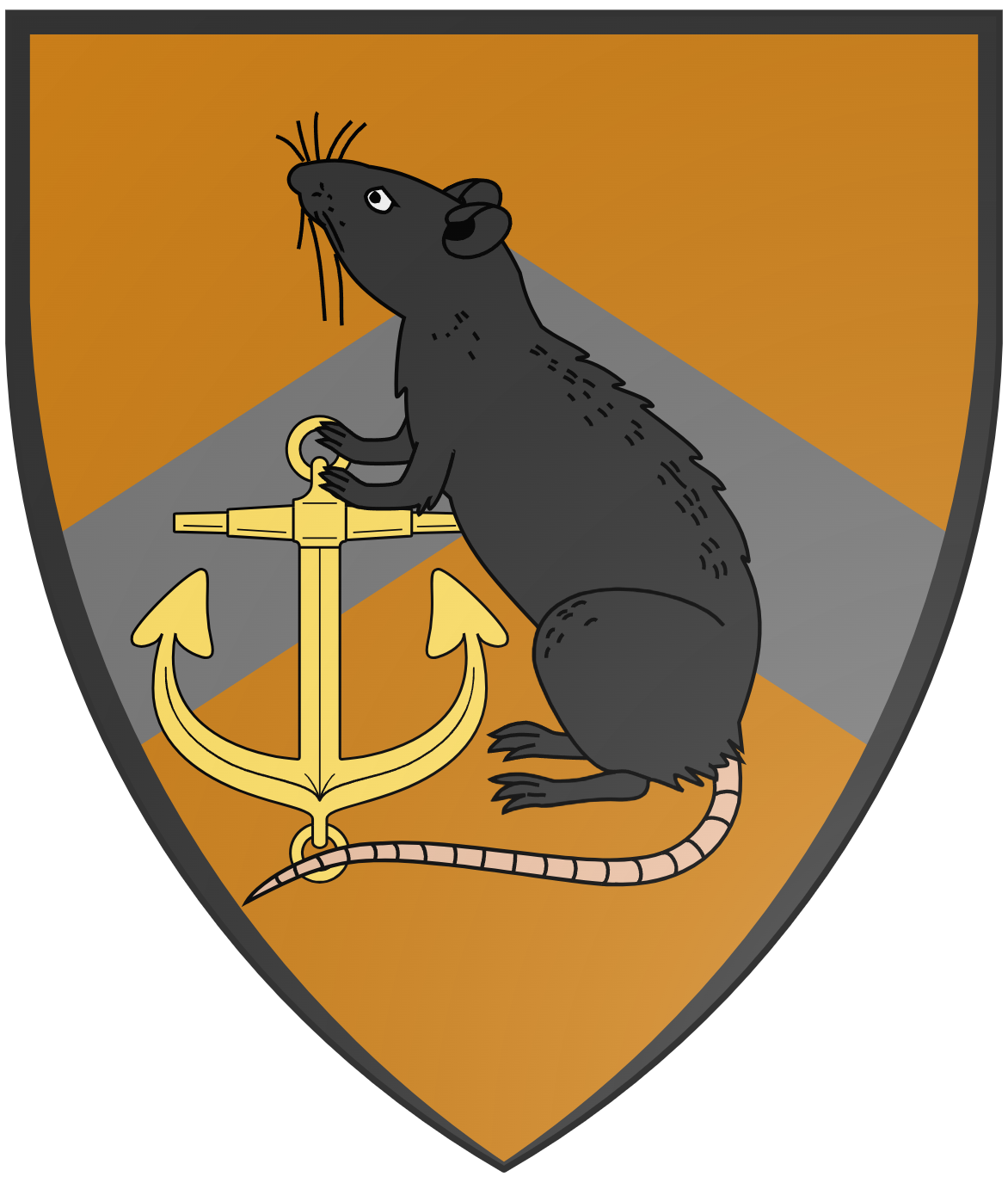
Leadenport grew under House Rongeur’s patronage from a salt-trading port into a hive of commerce, piracy, and espionage. The family’s crest—a black rat clutching a golden anchor—became both feared and respected across Tudor waters. The Rongeurs trafficked in iron, slaves, spices, and secrets, holding alliances with pirate captains like Cynthia Richmond of the Sea Foxes (614 PR).
Their loyalty to the Tudor crown was always practical, never moral. When the Tudor Civil War erupted (599–603 PR), House Rongeur secretly armed both sides—selling ship-timbers to the southern lords while smuggling food and healers south to Abritus’ loyalists. This duplicity made them enemies of many but ensured their survival when both empires later made peace.
Grindton and the Fire Years (560–606 PR)
Grindton’s foundries—established by Lord Efram Rongeur, Valen’s grandson—became the Empire’s source of war-iron. During the Dragon-Bane Wars (561–566 PR), Grindton supplied siege-spears and the early dragon-piercers used against the Mireborn Dominion. When plague struck the port in 586 PR, Efram sealed the gates and burned the lower city—an act known as the Fire Years. Thousands died, but the Rongeurs survived and took the upper citadel as their stronghold.
From that act onward, House Rongeur’s motto changed from “We Endure” to “By Ash We Rise.”
Emberport and the Red Hands
By the mid-600s PR, the Rongeurs extended their influence to Emberport, a smuggler’s haven that would later birth the Red Hands thieves’ guild (614 PR). Many suspected the Rongeurs themselves founded the guild to police their underworld. The family’s younger heirs were often seen in the taverns of Emberport, negotiating “trade” deals that often turned into black-market contracts for relics, Skaven gunpowder, and God Hand curiosities.
Modern Era (620 PR – Present)
By 620 PR, the Rongeurs had become the de facto merchant-lords of Tudor’s coast. They financed rebuilding Paratel’s docks after Emperor Bastien Tudor’s assassination (620 PR), profiting immensely from the chaos.
Today, Lord Merthin Rongeur, descendant of Ysmera, rules from Leadenport Keep, a fortress of black stone and sea-salt glass. His banner still bears the black rat and golden anchor, a warning and a boast. His house commands fleets of privateers, mercenaries, and smugglers. Though officially loyal to the crown, many believe House Rongeur quietly dreams of carving an independent maritime dominion, answering to no emperor.
Him Feppir and the God Hand Shadow
Him Feppir was the Rongeur’s inland holding—a fortified hill-town overlooking the southern river routes. It was here that Lady Ysmera Rongeur, the family’s matriarch during the Zonid Blood Eclipses (620 PR), allegedly sheltered a cult of the void-god Zonid. Her dealings brought both wealth and ruin; the Rongeur banners were seen beside God Hand symbols in smuggled relics uncovered later by the Order of the Silverbrand. While never proven, the stigma has followed the house ever since—nobles whisper that “rats gnaw at the fabric of time itself.”
House Motto:
“By Ash We Rise.”
Sigil:
A black rat clutching a golden anchor upon a orange field, encircled by faint silver runes symbolizing trade, secrecy, and survival.