
Final Process Paper
What a semester this has been! In 16 short weeks, I began with a tentative spark of hope to create a story, and by the end, a full blaze of creative ideas became manifest in a document nearly 50% longer than I originally intended it to be. Through this process, I was challenged and pressured in just the right ways to spark growth, and I learned about my own processes of creation and development. I learned to release my own expectations and stake in a story, and from this gained the freedom I needed to complete the story of Maverick. I learned to do the work, inspiration or no, and to make sense of the hot garbage that comes out. The world of writing stories feels much more accessible to me now. With the long-term gratification from this project blooming in my creative center, I am excited and ready to see what is next for me on this journey.
This story idea has been percolating in me for quite some time. Maverick was originally one of the main “bad guys” for the story concept I started when I was 11. He was very Darth Vaderesque, a one-note villain, once dead, now under the domination of a sinister necromancer. Eventually, I decided it would be fun and interesting to make him the brother of the protagonist’s mentor/grandfather figure. This relationship was how I started to deepen and make his character more intriguing. In the years since, I have drastically overhauled the world they live in, including the political dynamics of the setting on the stage of nations. By far the great majority of creative work on this project has been world-building, and I have a rich vision of Ilmitar living in my mind. I began pondering the backstory of the two brothers, Maverick and Methuselah, and how I could write their story as a prequel to the main story idea I had.
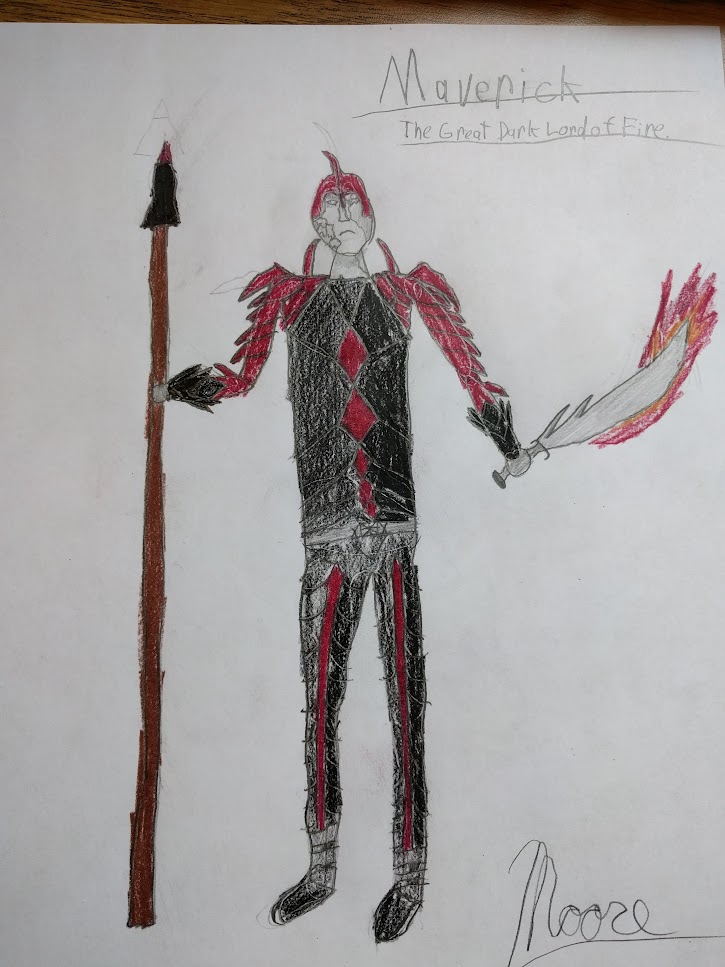
A very very old drawing of Maverick from childhood.
When I started this class, my immediate thought was to start this story. I have struggled to create the systems I need to write consistently in my own time, due to distractions and other activities that compete for my attention. In previous writing classes, I have managed to write much more than I normally do, due only to having a deadline and expectation around the project itself. I had much of the vision for this project at its inception, but the class requirements and the process of writing certainly shifted many of these expectations, and I had to be flexible with them. The interdisciplinary component was a major source of adjustment to the story, but I feel it added a richness and complexity that the story did not have otherwise. Bringing in the psychology and sociological process of violent radicalization is both interesting and readily applicable to today’s world. A great deal of media and organizations today have a focus on trying to radicalize people for their own gain. For me, it was important to show what the consequences of this could be, albeit in a fantasy setting.
After the long gestation period was ended by the beginning of this class, I began this project in earnest. I started with an outline. A simple list of general ideas that I knew I wanted to make happen for the story in one way or another. As part of making this list, I researched my interdisciplinary component and began to think about how I could weave that into the narrative. This process did not take me very long, and I was off to the races, filling in each “step of the ladder of radicalization”. This, of course, took the longest. Next came editing, fueled by feedback from several individuals.
Alongside this process, I read “The War of Art” by Steven Pressfield. The work diverges from his novels and poetically and sarcastically explains the war of the artist. This war is entirely focused on beating what Pressfield calls “Resistance". A malignant, universal, and impersonal force that obstructs every person from being who they are meant to be. His book is very focused on two things, in my opinion. First, the aspects of resistance help us overcome it. Secondly, Pressfield's method of overcoming resistance is the only effective way to do so. It is truly striking that the first half of the book paints a detailed picture of the enemy, resistance, how it works, and the ways it deceives us into giving up our creative work. Reading the next section then whips you in the face with an almost smug expression of just one way to enact the creative process. His method is extremely rigorous, pseudo-religious in its ritual and intention, and delivered with a smarmy pen that would make the Pharisees jealous. It is primarily focused on cutting everything and anything out of your life that could distract from your work, including people, as well as writing in such a rigorous schedule that interruptions should be seen as tantamount to the Devil’s work. I will concede that many of the things Pressfield describes are powerful and useful methods for integrating consistent creative work into one’s life, but his words are contrasted by some of those read in our class. The two most striking examples are from Rick Rubin and Anne Lamott. Their descriptions were distinctly different from that of Pressfield’s, and I found that I liked their methods better. In Rubin’s chapter on patience, he says that “We can’t force greatness to happen,” While I have not read all of Anne Lamott’s Bird by Bird, she seems to have a similar opinion to Rubin thus far.
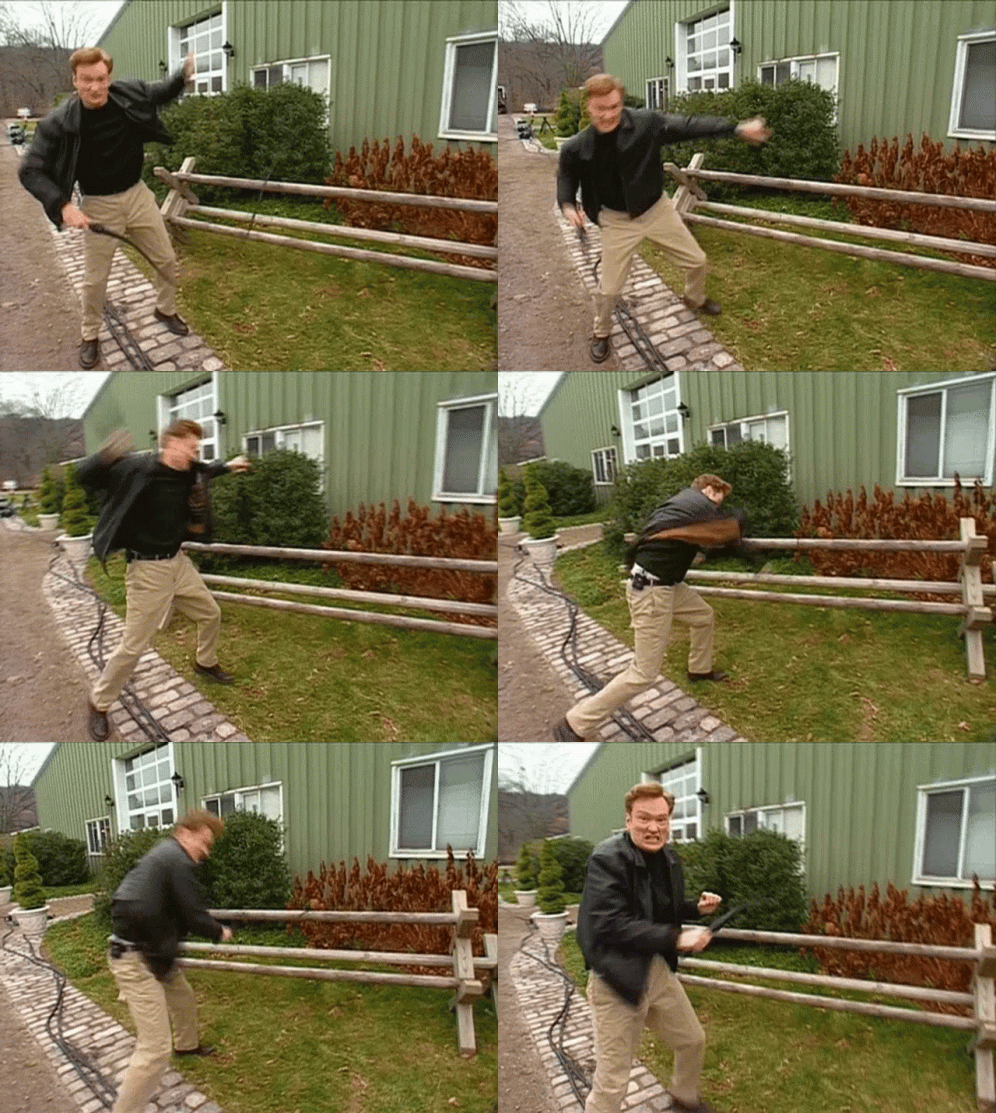
Steven Pressfield's method of overcoming resistance (Ben's interpretation)
This being the case, my integration of Pressfield’s work was partial. I swept away the chaff of his insane rule-bound orientation, but attempted to embrace the truth of Resistance, the inner enemy, critic, and distractor that tried to keep me from my work. There were times I had to sit down and force myself through a barrier of resistance that was making the next scene impossible to write. A major breakthrough that came from this project was the choice to write a scene and finish it, despite what I was writing being hot garbage. Most of the time, this perception of mine was accurate, with some small exceptions. This gave me a great challenge during the editing phase, but that is what second and third drafts are for. This method of ignoring my inner critic and writing the crappy first draft absolutely is the only reason I made it through the resistance that tried to halt my progress on this project. One of my other major challenges was my busy schedule and time management. Life hit me like an 18-wheeler driving at a comfy 94 miles per hour this semester, and managing the time I had for this project was extremely challenging. Many times, due to deadlines and working hours, I would attempt to reserve time at the end of a day to work on my project, only to reach the end and be completely exhausted and unable to write anything meaningful. Over the course of the semester, I only found one consistent solution for this. I would take a relatively empty day and spend as much time as I could hold my focus and simply draft. This worked out surprisingly well, and much of the story was drafted in single sittings. In a perfect world, where I don’t have to pay rent or work at Walmart, sitting down every morning at the same time and spending a large chunk of time working on a creative project sounds like a wonderful creative practice. It would also be wonderful to even have a consistent, short time to work on a project. Despite my best efforts, I was mostly unable to do this. I experienced a somewhat significant weight of guilt over this. Much of the culture I have been raised in idolizes this kind of consistent effort. It is hard for me to let myself operate on a different cycle. I am still undecided whether or not it is better to aspire for this apparent fantasy (at least for me) of a system, or to try and create a different, more sporadic system that works better for my native creative process.
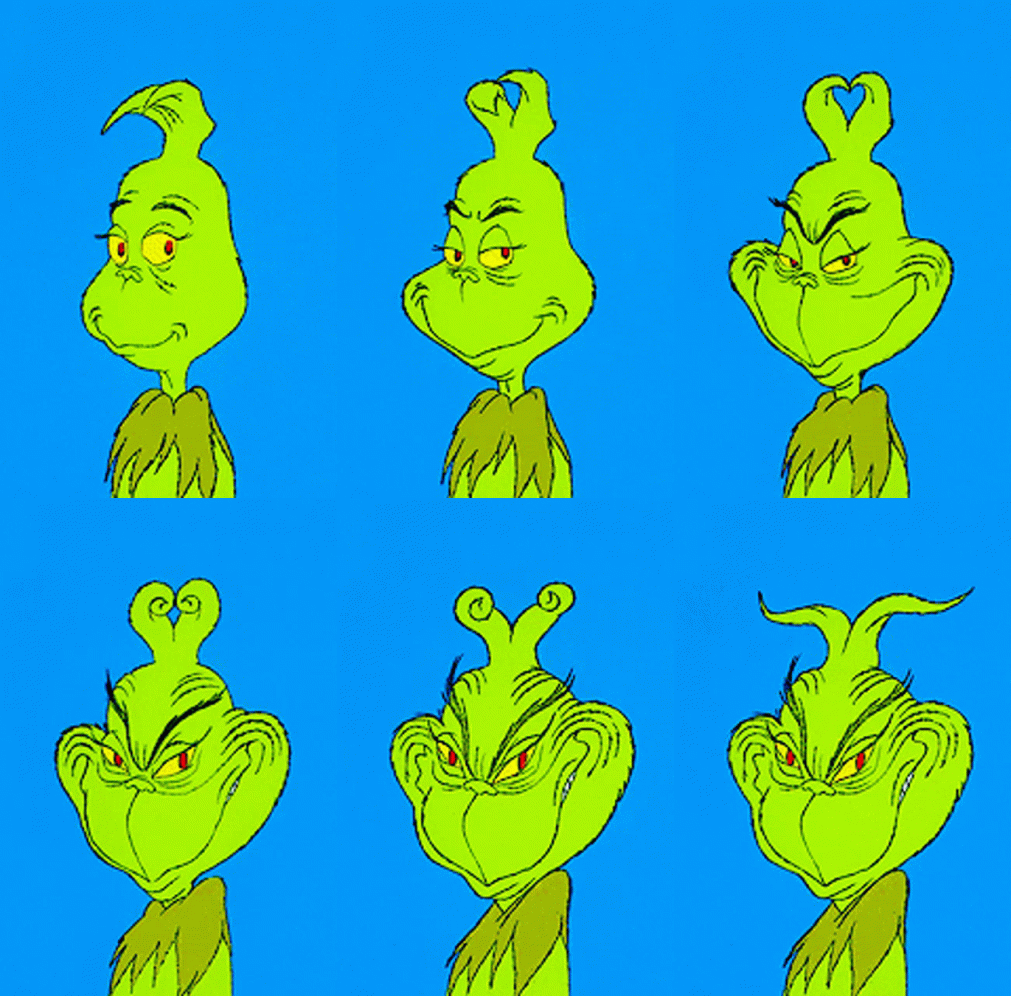
I think every story I write diverges somewhere from my original concept; however, this story in particular diverged in a way I did not expect. Because I entered into this project knowing the full timeline of the stories involving Maverick, his brother, and his yet-to-be-born great nephew, I had a very specific ending in mind for this story. I also had a very specific version of Maverick living in my head that seemed to have friction with the version of Maverick that existed in the story that I actually wrote. This Maverick grew into a nigh-psychopathic killer who delighted in the burning of his enemies. This just did not feel right while I was writing, and it took me several weeks to figure out how exactly my own understanding of the story and characters was diverging from the story itself. Interestingly, I narrowed down the source of this disparity to my interdisciplinary component. This story’s focus on radicalization did actually diverge from how I wanted to present my characters. The final chapter of the story was the crux of the issue. Nothing fit, the whole thing felt awful from the moment I put it on paper. I reached a point of exasperated distaste (after trying three different endings) and just cut the final chapter. I adjusted the second-to-last to an ending where Maverick dies alone, from wounds in battle, relieved that his work was finished. I accepted the differences between this project and my overarching story goals. I can always return and change it, and considering I have plans to make a longer and richer version of this story, it serves me well to have a “class version” and a “canon version”. This simple mental separation allowed me to write with more risk and more intention to fulfill my goals for the class, and write a compelling story that did not need 11 years of worldbuilding to understand. It felt very freeing, actually.

What it felt like to try and figure out what was wrong with the ending
This semester was a wild rush of growth. The whole thing felt like it took about an hour and a half, to be quite frank, but on the other side, I can look back and see places where I grew and became a better artist. Most striking to me was the first half of my creative practice. My intensive dialogue study was very challenging, stressful, and hard to fit into my daily schedule, but I do think it significantly improved my ability to write engaging and realistic dialogue. It was such a compliment to hear Alyson Hagy call my dialogue refreshing, compared to her experience with a beginner-level creative writing class. I see dialogue as being core to creating relatable and realistic characters that people will connect with. I may very well return to this practice in a more relaxed way and write more snippets of stories using dialogue to flex those creative muscles.
The editing process also informed me about the change in approach necessary to create meaningful edits within a story. At first, when I tried to edit, I got stuck just skimming over the lines themselves. Because I had recently written them, and they were still rattling around in my brain, it was difficult to step away from the work itself and look at it from a position outside myself. It took significant effort to pull away and shift my perspective to that of the reader and work on identifying why a scene felt flat to me. I was greatly assisted in this process through the feedback I received from class, but especially by Caleb, whom I have mentioned before. He read much of my work and gave me excellent critiques and recommendations for adjustment. He is an avid reader and can catch a plot hole like a cat catching a mouse. I can’t thank him enough for his contributions to this project and for listening to several long and pointless rambles about it. All of these things will contribute to my future work. Simply the experience of writing a long story and bringing it to completion is a landmark achievement for one such as myself, with 1400 projects sitting on the back burner at any given time. I look forward to continuing this work and bringing more projects into a similar stage, and advancing the story of Maverick into a full-fledged origin story.
This class opened the door to all the creative projects I have been dreaming of for years. That might sound a little excessive, but I believe it is true. For over a decade, I have dreamed of stories that I want to tell. Places, people, struggles. I have been placed in a system where I had the guidance, feedback, and encouragement that I needed to fully pursue one of these stories and bring it to a point of completion. I proved to myself that I can do it. More than this, I have been reminded of the richness that is brought through creative expression. I have been given the gift of ideas, the privilege of time to practice and develop my skills, and education to help me reach my goals. It would be a shame not to utilize these blessings and leave my stories to gather dust. I am pleased with the progress I have made. I will continue Maverick’s story, but I am shifting my attention, for a time, to a different creative project I am working on. I have a collaborative story to tell with my friends, and I wish to spend more time this winter working on my Dungeons & Dragons campaign that is just beginning. I am incredibly excited to integrate what I have learned in this class and bring it into my process for being a game master, and hopefully create an even better experience for my friends. Will they unravel the plot behind King Zeredechiah’s murdered son? Will they stop the looming civil war? There’s only one way to find out.

Comments