
Harlakite Worship
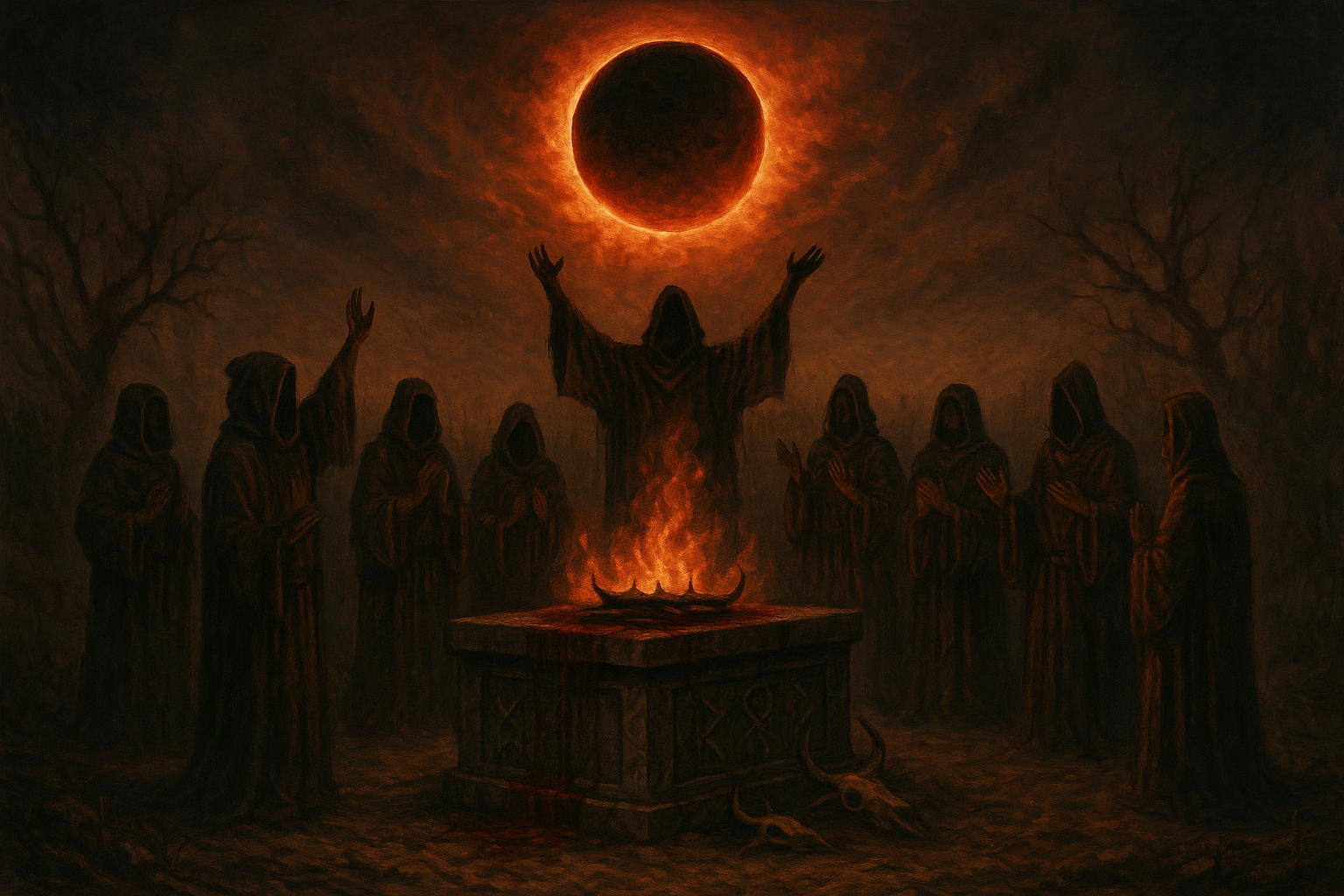
When Harlak, Lord of Mortality, was cast into exile by his fellow creators, his rites were stricken from temples and his name denounced as heresy. Yet fragments of devotion persisted. Over the millennia, scattered sects clung to his memory, keeping alive the belief that death, entropy, and forgetting are not enemies of creation but essential parts of its balance.
In Elven histories, these groups are portrayed as aberrations. Small circles of worshipers who could not let go of their dead god. But accounts of strange ceremonies across the North suggest that Harlak worship never fully died, and merely went underground.
All states of the North outlaw Harlakite worship.
Structure
Harlakite cults are small, insular, and secretive. Rarely numbering more than a dozen, they are organized into hidden circles, bound together by oaths of secrecy. Leadership is usually assumed by figures called Ash Priests, who preserve fragments of older prayers and claim to hear Harlak’s whispers in dream or vision.
Though hunted by kings and priests alike, reports of such circles persist:
In Velvet Coast cities, beneath ruined amphitheaters or forgotten cellars.
In Novaya, among bog-shrines where travelers vanish under the crescent moon.
In ruined Elven sanctuaries, where ancient murals of eclipses are periodically refreshed with fresh ash and paint.
Divine Origins
The God Wars shattered the old world. When Harlak, Lord of Mortality, rose against his fellow creators, he drew to himself mortals who feared death less than insignificance. Warriors, sorcerers, and priests alike swore to him, promising their blood so that his dominion might endure. At the height of his rebellion, his followers bore eclipse banners, and whole tribes offered ash and bone in his name. When Harlak was cast down, most of his followers perished alongside him. However, fragments of his faith endured.
With Harlak's divine voice having fallen silent, his disciples burrowed into the earth. In caverns, crypts and blackened ruins, they preserved his rites. T Oral liturgies, forbidden sigils, and eclipse-marked relics were passed hand to hand, disguised as funerary rites or ancestor veneration. Some scholars believe the first Beastmen tribes were themselves corrupted remnants of Harlak’s armies, bound by these same rituals.
When Elves ascended to dominion in the north, Harlakite cults proved stubborn survivors. Although the Elven Kingdoms outlawed them, the secrecy of their worship made them difficult to eradicate. Among enslaved Humans, whispers of an entity that stood in opposition to the deities of their oppressors proved alluring. Rogue Elves also sheltered fragments of the faith, treating it as a philosophy of freedom from divine law.
While the Human Rebellion destroyed Elven rule, Harlakite worship did not vanish with it. In the Imperial League, certain senators and generals were whispered to have consulted eclipse-priests for prophecy or relic magic. The League’s own chroniclers accused Harlakites of infiltrating guilds, festivals, and city councils. While the Order of Alerio declared Harlakite worship heresy of the highest order, Harlakites thrived on the margins: among mercenaries who sought luck before a campaign, among relic-hunters in the Ashes of Skyreach, and among Beastmen warbands in the wilderness.
By the time of the Velvet Coast city-states, Harlakite worship had evolved into a mismatch of folk rituals, death idealisation and underground conspiracy. Each generation reinterprets the same sigils, the same litanies of ash and eclipse. Yet all are bound by the conviction that Harlak has not fallen forever. His shadow endures, and when the world once more turns against the gods of law and knowledge, Mortality will rise as king of creation.
Tenets of Faith
Reclaim Dominion Over Death — They teach that all souls rightfully belong to Harlak.
Spread Entropy — They seek to unravel cities, dynasties, and memory itself.
Guard Sacred Ruins — Ruins and forgotten places are revered as fragments of Harlak’s domain.
Summon the Final Eclipse — A prophesied night when Harlak will step from exile and reclaim the living world.
Sects
Identified Harlakite Cults:
The Whispered Choir: Operated in the Velvet Coast city-states, embedding eclipse hymns into festival songs, plays, and masked rituals. Especially active in Floria’s Plaza of Masks. Brutally suppressed by the Order of Alerio. Officially stated to have been destroyed, but rumours persist of cells hiding within guilds of actors and maskmakers.
The Ashward Brotherhood: Relic-hunters and mercenaries tied to Tiberia and the ruins of Skyreach. Used blood-rites before delving into the Ashes, claiming to “feed” relics with mortal essence. Diminished after repeated Alerian inquisitions in Tiberia.
The Ashen Stag Sect: A Novayan cult that reinterpreted the famine-omen of the ghostly Ashen Stag as Harlak’s divine avatar. Blended eclipse worship with plainsfolk traditions of ash, antlers, and sacrifice. Survived Imperial purges by hiding within rural customs. Still whispered of in the wheatbowl during times of scarcity, though diminished and merged with regional folklore today.
Common Rumors
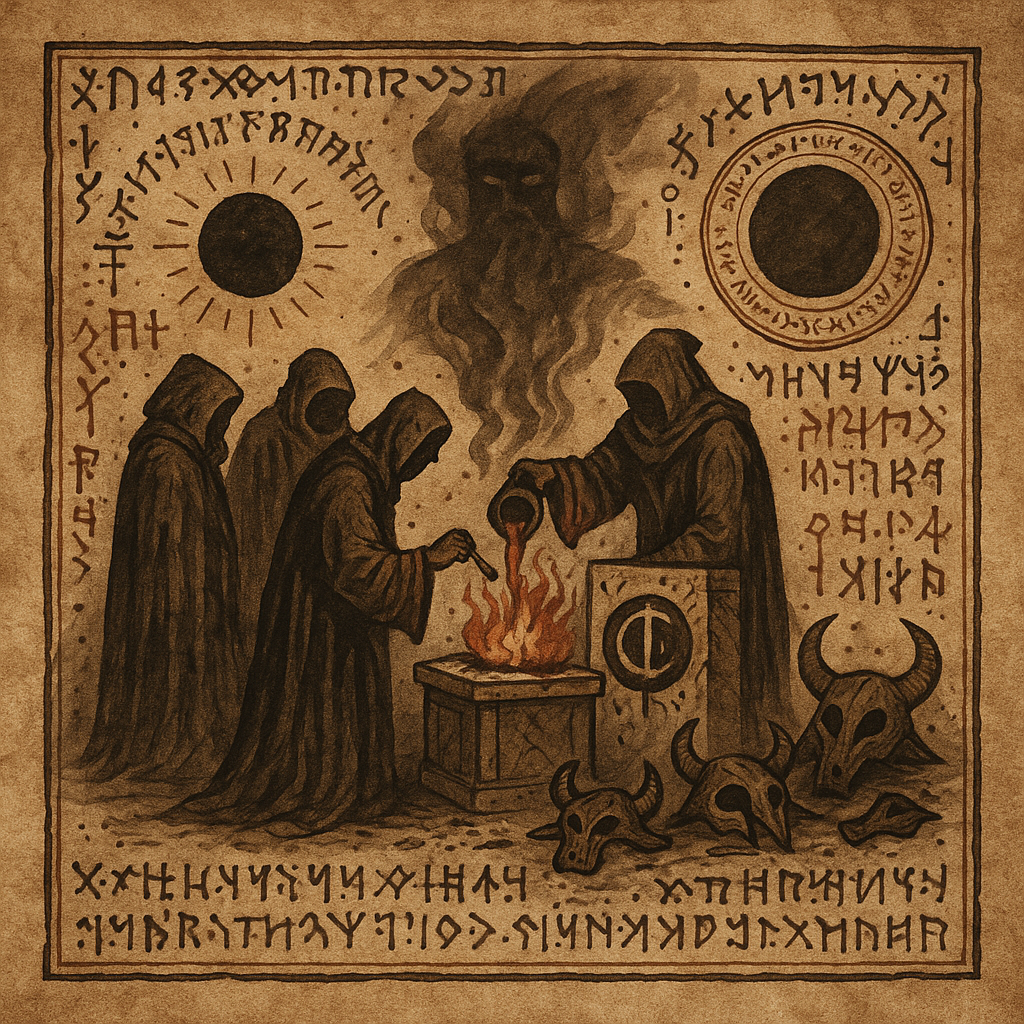
Most accounts of Harlakite worship come from frightened witnesses, sensational tales, or hostile chroniclers. Scholars disagree on whether these describe an organized faith, or merely scattered superstitions:
Funeral Cult: Some argue Harlakites are nothing more than fringe mourners who honor death more than life, preserving funerary rites outlawed by the Elves.
Peasant Superstition: Others dismiss them as ignorant farmers or herders, clinging to old folktales about eclipses and shadows.
Echoes of Elven Heresy: The most common interpretation is that Harlakite worship is a corrupted offshoot of Elven liturgy, stripped of context and turned sinister over centuries.
Masked Rites as Theatre: A minority of scholars argue that horned masks and chants are misinterpreted seasonal dramas or folk plays, not genuine devotion.
In public discourse, these explanations allow governments and churches to dismiss Harlakite worship as “nothing to fear.”
Related Plots

Comments