

Halenth
Halenth is one of the three prime creator deities of the Elven pantheon, alongside Lorinth and Harlak. Known as the Lord of Wisdom, he is the architect of structure, judgment, and governance in the Elven Creation Myth. Where Lorinth gifted memory and artistry, and Harlak embodied mortality, Halenth provided clarity, order, and discernment.
To the Elves, Halenth is the patron of kingship, judgeship, and lawgivers. He is invoked at councils and oaths, and in war his name is called to ensure discipline and righteous command. Though once venerated as one of the balance-keepers of creation, Halenth’s legacy grew harsher after Harlak’s fall, as his faithful took up the burden of maintaining order in a world stripped of divine unity.
Divine Domains
Halenth, the Elven Lord of Wisdom, presides over the realms of discernment, judgment, and philosophical truth. Revered as the guiding force behind intellect and the application of knowledge, Halenth's influence shaped the moral and intellectual philosophies of the Elven Age. While his sister, Lorinth, represents the pursuit of knowledge, Halenth governs its application, ensuring that wisdom tempers raw intellect and prevents its misuse.
Wisdom & Judgment: Halenth presides over councils, trials, and the search for truth.
Order & Law: He embodies the structures that hold society together — laws, hierarchies, and oaths.
Kingship & Governance: In the Elven kingdoms, rulers claimed legitimacy through Halenth’s blessing.
Discipline & War: Though not a war-god, he is invoked to maintain discipline and structure in armies.
Holy Books & Codes
The Oracles of Halenth: A series of poetic verses chronicling the insights and prophecies granted to Elven seers by Halenth during pivotal moments in history.
Divine Goals & Aspirations
To Uphold Order: Halenth’s greatest charge is to maintain balance in society and the cosmos, ensuring that creation does not fall into chaos.
To Guide Leaders: He seeks to inspire rulers to act with wisdom, justice, and restraint.
To Preserve Oaths: Sworn promises are sacred to Halenth, whose priests believe broken vows fray the very fabric of reality.
To Resist Corruption: Halenth stands in direct opposition to Harlak, viewing entropy and jealousy as the greatest threats to the cosmic order.
To Endure Through Structure: His faithful argue that empires may fall, but the laws and structures of Halenth endure across ages.
Mental characteristics
Personal history
The Debate Over Halenth’s Fate
A significant theological debate centers on the fate of Halenth, with some sects contending that he was slain during the Mortal Wars by Harlak, the God-King. These sects argue that Halenth, as the embodiment of wisdom and justice, directly opposed Harlak's brutal dominion, and his destruction symbolizes the ultimate triumph of chaos over divine order during that tumultuous era. Further bolstering this theory is the claim that Halenth's death left the world bereft of his guidance, which some believe explains the rise of unjust and morally corrupt civilizations in the centuries following the Age of the Gods. The gradual descent into exploitation, slavery, and tyranny during the Mortal Interregnum and beyond is often cited as evidence of Halenth's absence, as mortal leaders struggled to govern without his tempering influence.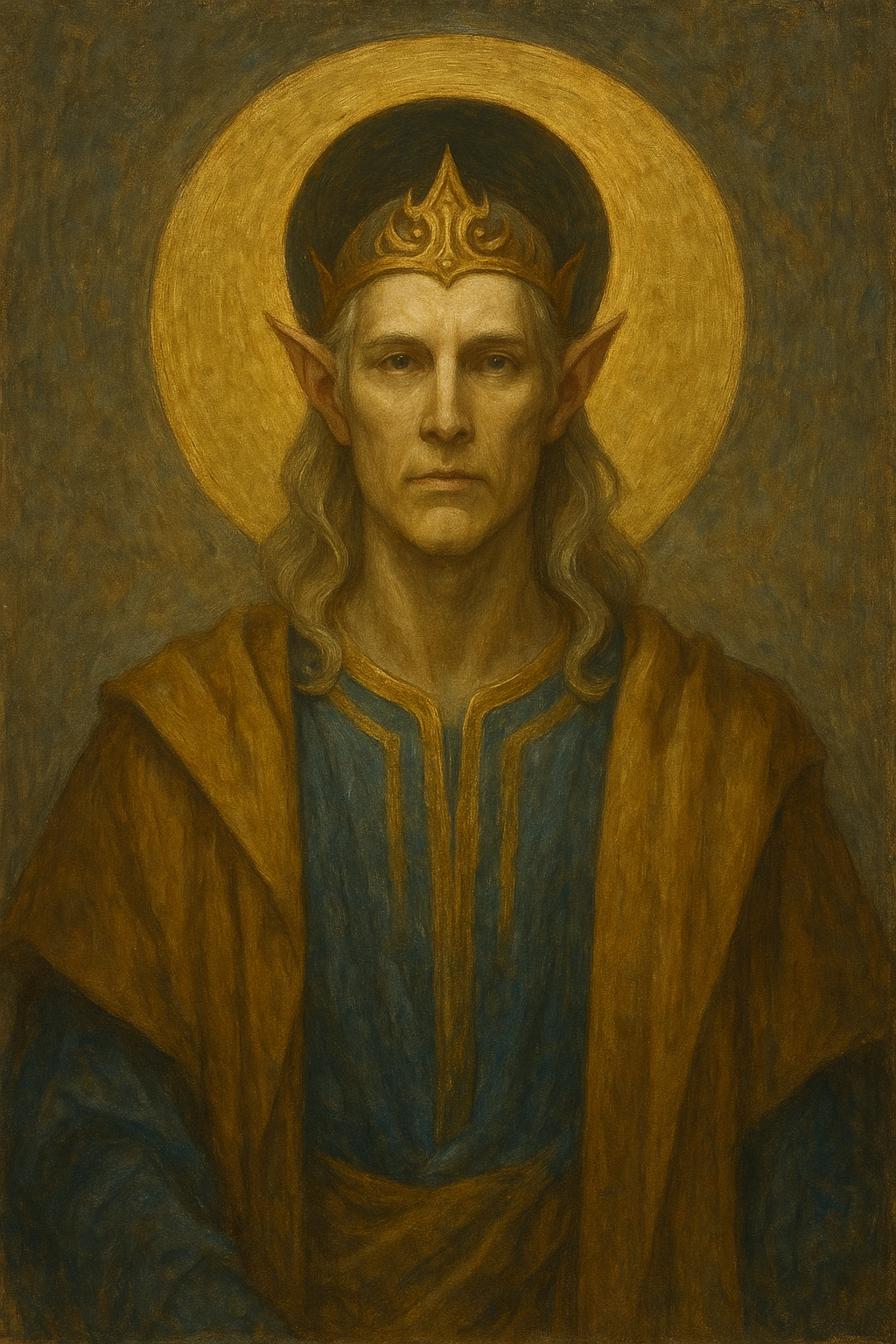
Children

Comments