
Beastmen of Varen
The Beastmen of Varen are a race of human-beast hybrids that are purported to dwell in and around the shattered ruins of ancient Varenthia and the woods on the western bank of the Bay of Varen. They are said to descend upon merchant caravans and small villages in sudden, violent raids.
Survivors of Beastmen attacks describe horned silhouettes, twisted misshapen bodies and savage faces with it being widely disputed by scholars whether the Beastmen are true monstrosities or merely degenerate, feral men clad in ritualistic garb.
Basic Information
Anatomy
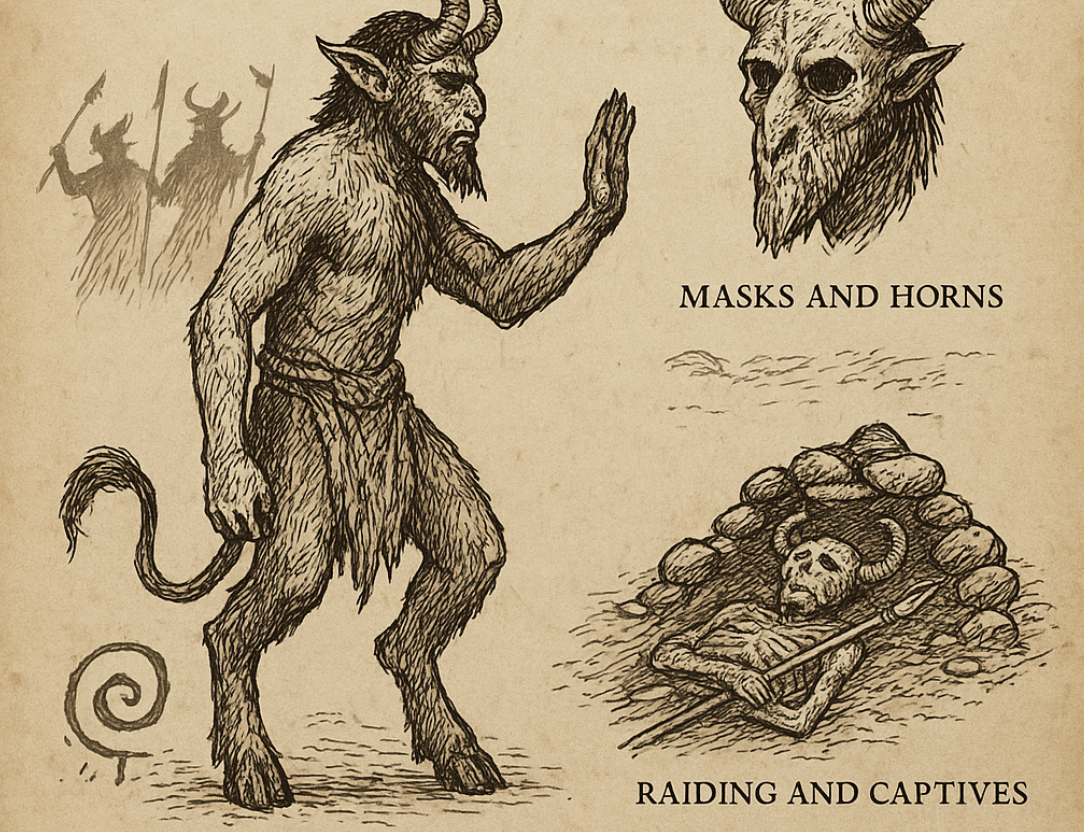
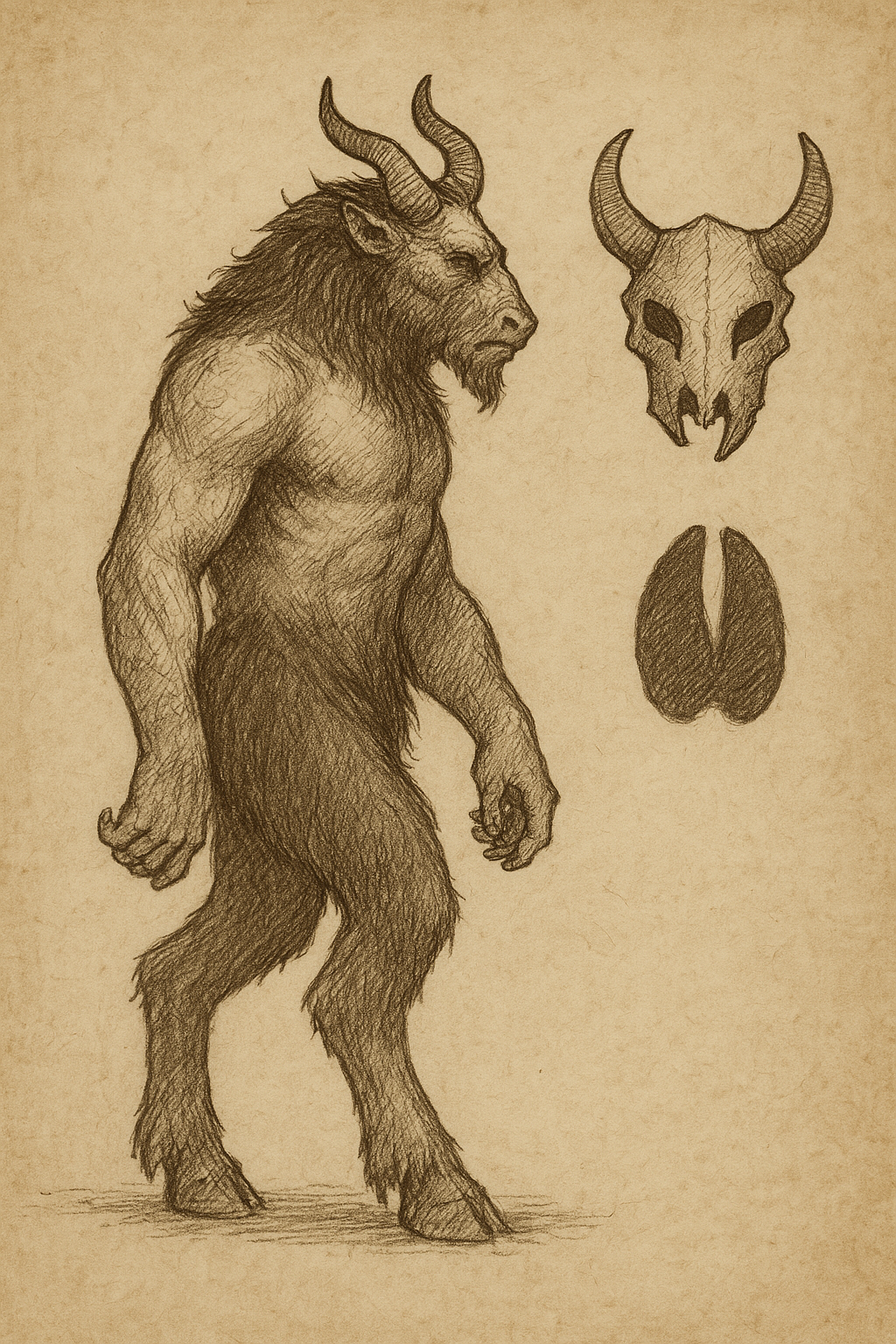
Accounts vary, but common descriptions include: horned heads resembling bulls or goats, cloven hooves and furred limbs in place of human feet and hands, masks and helms fashioned from bone, hide or bronze and a distinctive rank stench described as "rot and smoke".
Some witnesses have alleged to have seen beastmen shift forms between man and beast under moonlight.
Behaviour
The Beastmen strike at passing merchant caravans, isolated villages in the region and explorers daring to delve into the ruins of Varenthia. They favour ambushes and overwhelming violence before retreating swiftly into the cover of forests or ruins. Survivors report that they often take captives in their raids, however they are seldom recovered, their fate subject only to grim speculation.
Additional Information
Geographic Origin and Distribution
Bay of Varen
Civilization and Culture
Common Customs, Traditions and Rituals
History
Popular tradition holds that the beastmen are what remains of the last inhabitants of Varenthia, twisted into monstrous foms by Elven magic or divine wrath.
The Scholum Argentum holds that they are most likely feral men that don horned masks and hides to inspire terror in their victims.
Other accounts claim they are the result of pacts with ancient dark powers.

Comments