
Sanctyrite
The blessed metal forged in the blood of the holiest of martyrs that forms the backbone of the Ironite War Machine
"...and most of all, praise be to the estimable Martyr Jermain, whose holy bones and sacred essence has blessed this most holy of steel and bathed it in the fires of his sacrifice. May his most honorable death at the hands of the undead hordes earn him a place at the side of the The Diesel-God forevermore, and may his spirit live on in the reliquary stationed aboard this mighty vessel that it may strike down the enemies of the faith without end. Blessed be."
Mechanical Benefits
HP/inch 60 Hardness 40 Special: Weapons or armors fashioned from Sanctyrite are always masterwork items as well; the masterwork cost is included in the prices given below.Weapons: Weapons forged of Sanctyrite, anointed with the blood of holy martyrs, are forever imbued with their holy power - such weapons are always considered to possess an extraordinary version of the Holy Weapon Special Quality, and count as silver and cold iron for bypassing DR. The Holy Quality of Sanctyrite Weapons also applies to any creature vulnerable to Silver or Cold Iron as if they were evil creatures. Finally, Sanctyrite Weapons are unnaturally receptive to certain enchantments, and half the cost of applying the below weapon special qualities to them:
- Flaming
- Flaming Burst
- Patriotic
- Treasonous
- Brilliant Energy
For Armor: Armor forged of Sanctyrite infuses its wearer with the strength of holy martyrs of ages past - granting its wearer the strength to stand against adversity of both body and spirit. Such armor grants its wearer a constant supernatural Protection from Evil effect at CL 10. Additionally, one of the below Rites may be applied to the armor depending on which aspect of the fallen martyr's death is extolled during the forging process:
- Rite of Resolve: The wearer of Sanctyrite Armor blessed by this rite gains immunity to all pain effects, and gains the Ferocity UMR and ignores race-based prerequisites on feats that benefit or alter ferocity. Additionally, a living wearer's death threshold increases by 15, and can as an immediate action after taking damage capture the damage they just suffered and store it in their armor as holy energy. During any point within the next minute after the damage's capture, any other creature can make physical contact with the wearer's armor(Requiring a melee touch attack if the wearer is unwilling) as a move action to receive positive energy healing for an amount equal to the damage amount stored in the armor. The wearer may also disperse this healing to a touched target besides themselves as a standard action. Storing new damage while old damage is stored erases the old amount, and any stored damage vanishes after 1 minute.
- Rite of Conflagration: Armor affected by this rite grants the wearer +1 damage per die of fire damage rolled and protects the wearer from all non-magical fire environmental hazards. The wearer ignores up to 10 points of Fire Resistance when dealing fire damage, and may ignite or extinguish mundane fires in any square within their natural reach as a move action, or release a wave of mundane fire in a 30ft cone as a standard action that causes no direct damage but sets all flammable materials in the area alight. Fire Damage Over Time effects inflicted while wearing this armor deal an additional dice of damage.
- Rite of Reliquary: As a swift action, the wearer can activate a stored capsule location somewhere on or within the armor containing the blood or other body part of a holy martyr to cause the armor to radiate a consecrate effect in a variable radius depending on its category(10ft for Light, 20ft for Medium, 30ft for Heavy). A given suit of Sanctyrite Armor with this rite can radiate a consecrate effect for a number of rounds per day equal to 2x its AC bonus. Additionally, 1/day, the wearer of Sanctyrite Armor infused with this rite can call upon the martyr's reliquary to replicate either an augury or a commune spell with their spirit.
Sanctyrite-A
Items made of Sanctyrite-A largely function identically to those made of Sanctyrite - however, items made of Sanctyrite-A are largely immune to all forms of elemental damage(Though it does not confer this immunity upon its wearers). Additionally, items made of Sanctyrite-A possess a miraculous ability to reinforce its own internal structures after taking damage - whenever an item made of Sanctyrite-A takes damage in excess of its hardness, its hardness permanently increases by 1(To a maximum of 150% of base hardness). Inversely, whenever such an item takes damage that does not exceed its hardness, it restores 1d10 hit points. Finally, when used in the construction of buildings, large vehicles, or otherwise gathered in similarly large amounts, Sanctyrite-A naturally emits a holy aura so potent that the entire surface area of the structure or vehicle made of it or in which it resides is considered consecrated ground. When such a site is home to a holy reliquary containing the blood or remains of a saint or other powerful holy martyr, the holy energies will naturally and exponentially magnify into a hallow effect instead, with an attached spell effect determined by the nature of the reliquary and reflecting who the martyr entombed within was in life. When used in smaller amounts(Such as for weapons and armor), Sanctyrite-A has little mechanical benefit - its only clear benefits emerging when worn or wielded by those with innate holy energies themselves. When such an item is worn or wielded, the owner doubles the radius of all auras gained from the Paladin class or the Sanctum Knight prestige class, and increases any numerical bonuses provided by those auras by an amount equal to 1 + 1/2 the item's enhancement bonus(Rounded down, Minimum 1). Additionally, a creature wearing or wielding such an item may as an move action upgrade a Consecrate effect into a Hallow effect or attach a suitable spell of their choosing to the Consecration effect - which lasts for as long as they remain the radius and 1 round afterwards.Price
Ammunition: +50 gp per missile Armor: +10,000gp Weapon: +4,000gp Sanctyrite-A: +2,000gp price increase
Properties
Material Characteristics
By virtually every metric, Sanctyrite is basically identical to mundane steel: taste, texture, smell, overall appearance - the only metrics by which Sanctyrite is known to different from the generic high-grade Ironite Steel it is forged from are Durability, and Coloration. The first, of course, is much more obvious upon any degree of inspection - Sanctyrite is, after all, one of the most durable and sturdy materials on the planet - the second, however, is a bit more difficult to notice unless one is both highly perceptive and actively seeking to notice such differences; For while Sanctyrite is mostly identical to normal high-grade Ironite Steel in terms of appearance, it does bear distinct differences - chiefmost of which is the the faint glimmer of golden-yellow light that lines its edges and almost seems to shine from within the metal, sourceless. This lighting is more prominent in the dark and in areas of desecration or unholy influence, but can be seen by any who look closely enough or who catch the material at the right angle while light is shining upon it just right - while many also report an odd ripple in the metal of Sanctyrite items, hearing faint holy arias while nearby, or even seeing sunrises in the reflections on the metal.
Physical & Chemical Properties
By and large, the properties of Sanctyrite are virtually identical to that of high-grade Ironite Steel - though it is a great deal more durable, and is often slightly warm to the touch. Much of the unique properties of Sanctyrite come from its unique forging process that harden the bonds between the material's components to a nearly supernatural degree - almost imbuing the material with a life of its own and a conviction as potent and unyielding as those who were sacrificed to bless the metal and imbue it with its holy power.
Geology & Geography
Sanctyrite is somewhat unique in that it is not a naturally occurring material - instead, it is created from mundane albeit high-grade Ironite Steel and transformed into Sanctyrite through a unique ritualistic forging process that alters the mundane metal into a hallowed metal imbued with the conviction and will of ancient martyrs and holy heroes, and a conviction to remain intact and unbroken until its very last 'breath'.
Origin & Source
As it is created by transforming mundane high-grade Ironite Steel rather than from any specific ore or compound, Sanctyrite's origins lie in steel itself - a material so common in the iron empire as to be virtually infinite.
Life & Expiration
Though there are unconfirmed reports of Sanctryite losing its blessed properties over time, none have ever been substantiated - making such rumors either unconfirmed superstitions or highly abnormal edge cases where the material was found to lose its properties due to magical interference or outside corruption of its holy energies.
History & Usage
History
One of the most ubiquitous materials in the entire Iron Empire, Sanctyrite and its higher-grade sibling material Sanctyrite-A were originally discovered by accident by enterprising clergymen of The Iron Emperor who, while content with their lot in life and their service to the Diesel-God, had grown somewhat indignant at the actions of their era by figures such as Isaiah Aberdeen, who constantly sought to undermine their divine authority and divinely appointed powers by inventing new practices or technologies that they hopes would invalidate the divine abilities of they, the clergy. It was, then, from this competitive ambition to prove themselves to the country that so often shunned their powers while simultaneously ruthlessly exploiting them, that these clergymen discovered the means of forging the metal beyond compare during their study of one of the other most widespread and heavily relied upon special materials of the empire - Kinslayer Steel.
This metal, discovered not by The Iron Empire but on the shores of a far-distant continent in the unholy forges of an Empire of the Undead, rapidly proved invaluable to the Ironite War Machine despite its murky origins - brought to the Iron Empire by ancient traders who braved the oceanic trade routes to reach other continents, Kinslayer Steel was a metal that required the potent energies of necrolysis and the accumulated grudges of the dead to desecrate high-grade iron and steel and imbue it with the powers of the grave. The Clergy, during their study, postulated a theory - what then, would happen, if rather than the grudges and hatreds of the undead, the holy martyrdom and devout belief of the living were used instead? Through this theory and the countless months and years of study that followed, Sanctyrite was eventually born from the consecrated forges of the Iron Empire's mighty forge-cathedrals - not in the hallowed halls of The Technis Brotherhood, but in the bowels of the faith of Tavross, The Iron Emperor himself.
Ultimately, the tale of Sanctyrite is a rare beacon of warmth in a world so often overcome by despair - for with the invention of Sanctyrite, a metal so durable and resistant to damage that it remains to this day as one of, if not THE MOST durable materials on the entire planet, the Clergymen and women of The Iron Empire finally earned the begrudging respect of the populace they served. For while the exploitation of the clergy and their divine powers would never truly cease, with the invention of the holy metal Sanctyrite, their duties finally earned them respect as their sermons and divine powers earned them respect as they held funerary rites for holy martyrs and hallowed saints of the Iron Empire, fallen in battle but chosen to water a new batch of Sanctyrite with their holy blood and bones. This respect would ultimately only grow with the later invention of Sanctyrite-A - an even higher-grade Industrial and Military upgrade of Sanctyrite that, put through a rigorous second round of consecration by the most powerful and devout members of the clergy, watered with the mightiest and holiest of martyrs and saints, and subjected to scientific augmentation, came to be used as the defacto material used to construct the engines of the Ironite War Machine for its legendary durability and unique properties that allow it to reinforce its own internal structures and even repair damage automatically.
Discovery
See the history section of this article for the tale of Sanctyrite's discovery.
Everyday use
Though Sanctyrite bears many uses on the battlefield and indeed often sees use amongst warriors of The Iron Empire(Particularly members of the Ironite Clergy of The Iron Emperor), it and its higher-grade equivalent Sanctyrite-A are primarily an industrial material used in the construction of buildings, defensive structures, warships, vehicles, and the like for the sheer fact that its durability and innate holy energies make the material virtually priceless to the Iron Empire and, in some ways, almost too valuable to waste on arming and outfitting individual soldiers with it when the material can turn entire warships into invincible machines of devastation that radiate holy energy so potent as to turn the entire vessel and its immediate surroundings into hallowed ground.
Cultural Significance and Usage
As its forging process requires it to be consecrated by powerful members of the clergy and sanctified by the blood, bones, and bodies of fallen martyrs, saints, or other ironite heroes, Sanctyrite carries a powerful cultural significance to The Iron Empire - who often name the vessels made of the material and its stronger upgraded version Sanctyrite-A after the fallen heroes whose bodies were used to consecrate the material and imbue it with its power, and consider the metal to be not only the tomb for such fallen legends, but a way for the fallen to remain in this world even after their death.
Refinement
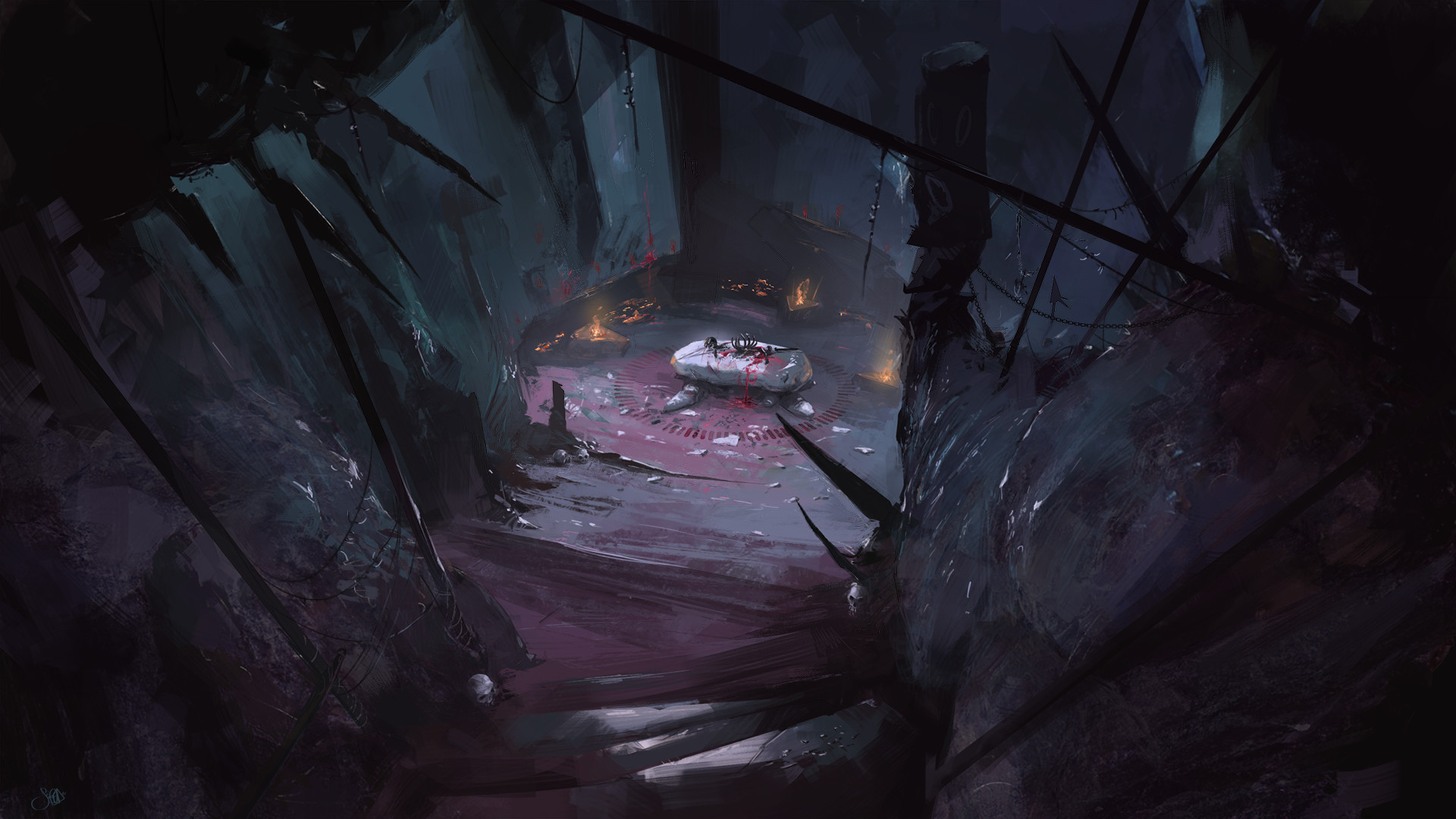
The means of refining high-grade Ironite Steel into Sanctyrite is ultimately a fairly protected series of rites jealously guarded by the Ironite Clergy of The Iron Emperor, who consider the material one of the greatest pillars of their authority and power in the entire Iron Empire. However, from what is gleamed from the occasional public smelting ceremony, Sanctyrite is a metal forged by complicated divine rites requiring a blessed and ranking member of the Clergy to preside of a ceremony that sees the fallen body of an Ironite Martyr, Saint, or other valorous hero who fell in battle and was deemed pious enough and of suitably morally just conviction to earn the immensely high honor of being canonized by the clergy into a Martyr or saint used to to literally coat and shower the steel, imbuing the metal with the pious devotion of the fallen to solidify the material's internal structures and imbue it with the overwhelmingly holy energies of the fallen martyr whose corpse is used in the ritual. Oftentimes, upon the ritual's completion, a hand or other shard of the martyr's body(Which is often largely consumed by the consecration ceremony) is entombed within a sacred container known as a reliquary, which can be attached to a suit of Sanctyrite Armor to enhance its holy power and allow for communion with the spirit of the deceased or brought on board larger vessels to serve as the centerpiece for mighty onboard cathedrals which take in and magnify the holy power of the Sanctyrite used in the vessel or vehicle's construction.
Sanctyrite-A, however, requires more steps beyond the initial consecration ceremony - a very difficult and more complex rite of hallowing must be performed within the most holy of grounds by the mightiest members of the clergy whose zeal and dedication tower above their peers, using a second fallen martyr or saint who is subject to even more stringent piety inspections than the fallen martyr used in the material's initial consecration rite. Here, the fallen must have been utterly devoted and devout their entire life, and possessed of enough piety and divine radiance in life that oftentimes only members of the clergy themselves or members of specific ironite monastaries dedicated to living pure, divine monastic lives will suffice for this purpose(Or occasionally, truly mighty and pious Ironite Soldiers or heroes known across the empire). With the second ritual of hallowing performed, the metal is then subjected to a series of scientific augmentations that alter the metal's makeup in subtle but significant ways to give the material its infamous ability to reinforce itself upon taking damage and to repair itself when subjected to certain conditions.
Manufacturing & Products
As a material otherwise identical to steel, Sanctyrite can be used for all such materials and products that steel could - however, the difficulty of its creation and its extreme value to the Ironite War Machine means it seldoms sees use outside of war or construction.
Hazards
The forging of Sanctyrite is, surprisingly, an unexpectedly lethal process - part of the reason the Ironite Clergy are so maddeningly selective and neurotic about the Forge-Priests chosen to performing the Consecration and Hallowing Rituals for Sanctyrite and Sanctyrite-A is precisely because the given Forge-Priest's conviction is tested in ways few can truly fathom during the forging ritual; The Forge-Priests piety must meet the spirits of the dead, the energies of necrolysis, and the fallen martyr's own grudges during the ritual and drive them back into the howling dark with nothing but his devotion, love, and piety alone. Failure, ultimately, can lead to not only the corruption of the chosen martyr's remains, but the return of the martyr as a profane undead, the Forge-Priest's own death, or the catastrophic detonation of the metal that was to be imbued and transformed into Sanctyrite.
Reusability & Recycling
Through means known only to the Ironite Clergy, Sanctyrite and Sanctyrite-A are capable of being reforged - though attempts to do so via untrained hands often lead to disastrous results, as if the material, once forged and imbued with the holy will of fallen martyrs and saints, is loathe to abandon its duty.
Distribution
Trade & Market
Though the material is predominately sold and distributed by the Ironite Clergy of The Iron Emperor to The Iron Empire's various governmental and military bodies for use in arms, armor, war machines, and other construction projects, it is available for purchase at most official Ironite Temples and Forge-Temples across the empire for those with enough money to afford it.
Law & Regulation
Surprisingly to some, there are somewhat strict laws governing the use of Sanctyrite - though most focus on laws governing the material's personal use in arms, armor, and the like. For while the material is available to be sold to any with the money to purchase it, most of the laws regarding the metal surround the idea of the metal being an extension of the martyr whose sacrifice consecrated the material during the ritual which must be treated with the appropriate reverence, honor, and piety. Oftentimes, those sold this material are asked to return to forge-temples for yearly inspections of purchased Sanctyrite to ensure its proper upkeep, and those found to have mistreated or corrupted their Sanctyrite often face stiff fines, imprisonment, or worse.
SY
As steel
Type
Metal
Value
Moderately Valuable
Rarity
Moderately Rare
Odor
None
Taste
Metallic
Color
Virtually Indistinguishable from normal steel, save for a slight golden sheen
Boiling / Condensation Point
As steel
Melting / Freezing Point
As steel
Density
As steel
Common State
Solid
Related Species

Comments