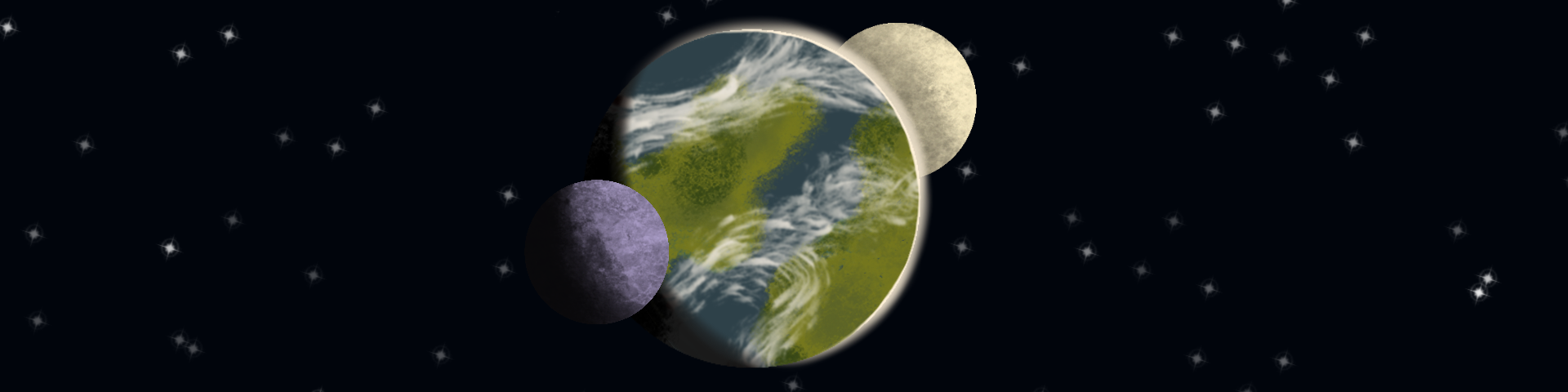
UTA - United Terran Accord

The UTA arose out of necessity. The necessity to protect humanity from itself and to find a way to give it a new home. Thirteen years after the exodus, the nature of that necessity has changed, but it has not rendered the UTA obsolete. Since contact with the rest of humanity was lost 13 years ago, this article deals primarily with the UTA as it exists today on Nuria.
History
Two circumstances made the establishment of the UTA indispensable. Firstly, the UN had dissolved in 2047 after becoming more or less incapable of acting. Secondly, in 2052, an alien ship was found under the melting ice cap of the Arctic. The resulting tension between different parties prevented progress in researching the ship. As a result, the United Terran Accord was founded in 2067.
We, the last nations of Earth, unite in the knowledge that our future no longer lies in borders, markets or rivalries, but in the survival of the species.
The United Terran Accord is committed to preserving humanity, protecting its knowledge and guiding its children to a place where they can live without repeating the mistakes of the past.
The stars are not our inheritance, they are our responsibility.
From the outset, the UTA's main focus was on researching alien technology and exploring its potential uses for humanity. Between 2080 and 2120, the first shipyards were built in Earth's orbit and work began on developing the Arch ships. In addition, mining of the necessary metals began on the Moon, Mars and various asteroids. Construction of the first modules for the Arch ships began in 2145, with the first ship being finished in 2171.
One of the most important and controversial aspects of the UTA's plans was the selection of the population that would be allowed to board the arch ships as colonists. It was obvious that certain professional groups had to be given access. These included the military, personnel from the fields of education, health, security, justice, etc., but also scientists, engineers and people from the logistics industry. Together, these groups made up 35% of the colonists. However, as this excluded the majority of the population, the UTA decided in 2271 to establish the so-called Nova Lottery. Sixty-five per cent of the colonists were selected in this way. The remaining 5% consisted of public figures, primarily artists and wealthy individuals. It was this 5% that the UTA was always criticised for, as the majority of humanity believed that they too should have been included in the lottery.
The UTA on Nova Gaia
Once it became clear that the TSS Confidence would not reach its planned destination, the UTA representatives on board the ship had to react quickly to the new circumstances. During the flight to Nuria, an interim administration was set up, which was retained after the ship landed and remains in place to this day.
Structure
At the head of the UTA sits the High Council, which is composed of one representative from each of the largest interest groups on Nova Gaia. This includes a representative from Ark Command, the Nova Gaia Development Initiative, and the Kaarn. The Council meets every two weeks to pass resolutions by simple majority. It is also responsible for overseeing the directorates.
Five directorates report to the High Council, which are also responsible for implementing the decisions made by the Council. Four of these directorates are the same ones that the UTA had already established on Earth.
Directorate for Security and Defence - DSD
With almost 8,000 employees, it is the largest directorate. These are divided into just under 1,500 administrative staff and 6,500 soldiers. Its main tasks include planetary security, emergency and disaster management, and cyber defence. Currently, the police forces are still docked here, but plans to move them to the Home Affairs Directorate are already in development.
Directorate for Research and Development - DRD
The directorate's tasks include researching the new home planet on the one hand, but also finding ways to transport the inhabitants of Nova Gaia to the Andromeda Nebula after all. Space travel innovation, energy systems, but also the development of adapted seeds or the implementation of local ingredients for medical purposes are among its tasks. The ministry employs around 4,500 people who are directly or indirectly involved in these research projects.
Directorate for Infrastructure and Logistics - DIL
The second largest directorate employs around 6,500 people. As the name suggests, it is primarily concerned with housing construction, energy supply, transport, maintenance and similar areas. Since the population is now spread across several settlements, this area is particularly critical in ensuring an adequate supply of essentials.
Home Affairs Directorate - HAD
The ministry's approximately 4,500 employees are responsible for administration, justice, education, health and social affairs. Most of them do not work in the ministry itself, but are involved in the practical implementation of tasks, as teachers or in the context of psychological care. Fortunately, however, the need for the latter has declined in recent years.
After landing on Nova Gaia, the UTA recognised the need to establish another directorate. To be precise, it was the encounter with the Kaarn, Nova Gaia's indigenous population, that made this step necessary. Initially, the tasks of this directorate were handled partly by the HAD and partly by the DRD, but due to rising tensions, it was decided after a short time to establish a separate administration for this purpose.
Foreign Affairs Directorate - FAD
This directorate deals with cultural exchange with the indigenous population. While this initially focused on linguistic communication at the beginning of colonisation, it now primarily concerns diplomatic disputes in the areas of colonisation and research into ancient Kaarn technology.
Ongoing challenges
As might be expected, the UTA also has to contend with a wide variety of challenges. Three areas in particular stand out here, requiring a great deal of attention and, often enough, tact and sensitivity.
1. Resource scarcity
Resources are scarce. The five-year journey through space had severely depleted the ship's supplies, especially since they were never designed for such a long voyage. Now, on Nova Gaia, humanity must learn to economise with the planet's different resources and not repeat the mistakes made on Earth. The challenge is to strike a balance between development and conservation.
2. Ideological conflicts
Where many people come together, there are inevitably many opinions. The greatest ideological discrepancy exists between the Ark Command and the Nova Gaia Development Initiative. While one group sticks to the original plan to reach the Andromeda Nebula, the other now sees the future of the colonists on Nuria. In addition to these two groups, there are several others, and all of them consider their goal to be the most important.
3. Intercultural tensions
Humans are tolerated on Nuria, at least by the majority of the Kaarn. Colonisation is viewed with suspicion, but it is by no means the greatest source of conflict. Endemic species from Earth and differing opinions on the exploration of Kaarn ruins and artefacts repeatedly lead to lengthy discussions on both sides, with both parties containing moderate and extreme factions.
Public perception
It is not surprising that not everyone agrees with the UTA’s decisions. However, public perception of the Accord remains largely positive. Support is often pragmatic rather than ideological, rooted in the UTA’s role as provider of stability, resources and security. The organization controls critical infrastructure, resource allocation, and long-term planning, making it an unavoidable presence in everyday life.
Public opposition exists, but it is usually subdued and expressed in private rather than openly. Criticism of the UTA is often framed as irresponsible or shortsighted. As a result, dissent rarely develops into organized resistance.
For many citizens, the UTA is less a government than a safeguard, the institution that stands between order and collapse. This quiet tension defines the current relationship between the population and the Accord.
Fuck the UTA! They are just holding us back, holding everyone back. Progress isn't made behind some desk.
I am glad that the UTA exists. Does it always do everything right? Probably not. But without it, we would certainly all have died on the TSS Confidence after the accident.
Comments