

Orcs
Scorned and Shunned
Considered outsiders in every land they come across, Orcs are a pastoralist and nomadic people who value strength and tribal ties above all else. Each tribe has its own unique character, traditions, and history, but they remain united in their heritage, language, and adherence to a tribal code of conduct. Orcs are well known for their ferocity in battle, passionately held ideals of strength and conviction, and fierce independence. They have always been outsiders in every land they find themselves in, neither truly welcome by the sedentary folk of the kingdoms and city-states of Sol or the disparate folk of the wildlands. Orcs have learned to feverishly advocate for self-reliance and fight for their independence at every turn. Their way of life tends to isolate them as pariahs in some sense, but keeps them strong. Orcs are a people who have a sincere connection to the lands they reside on, communing with the spirits and honoring the land while benefiting from its bounty.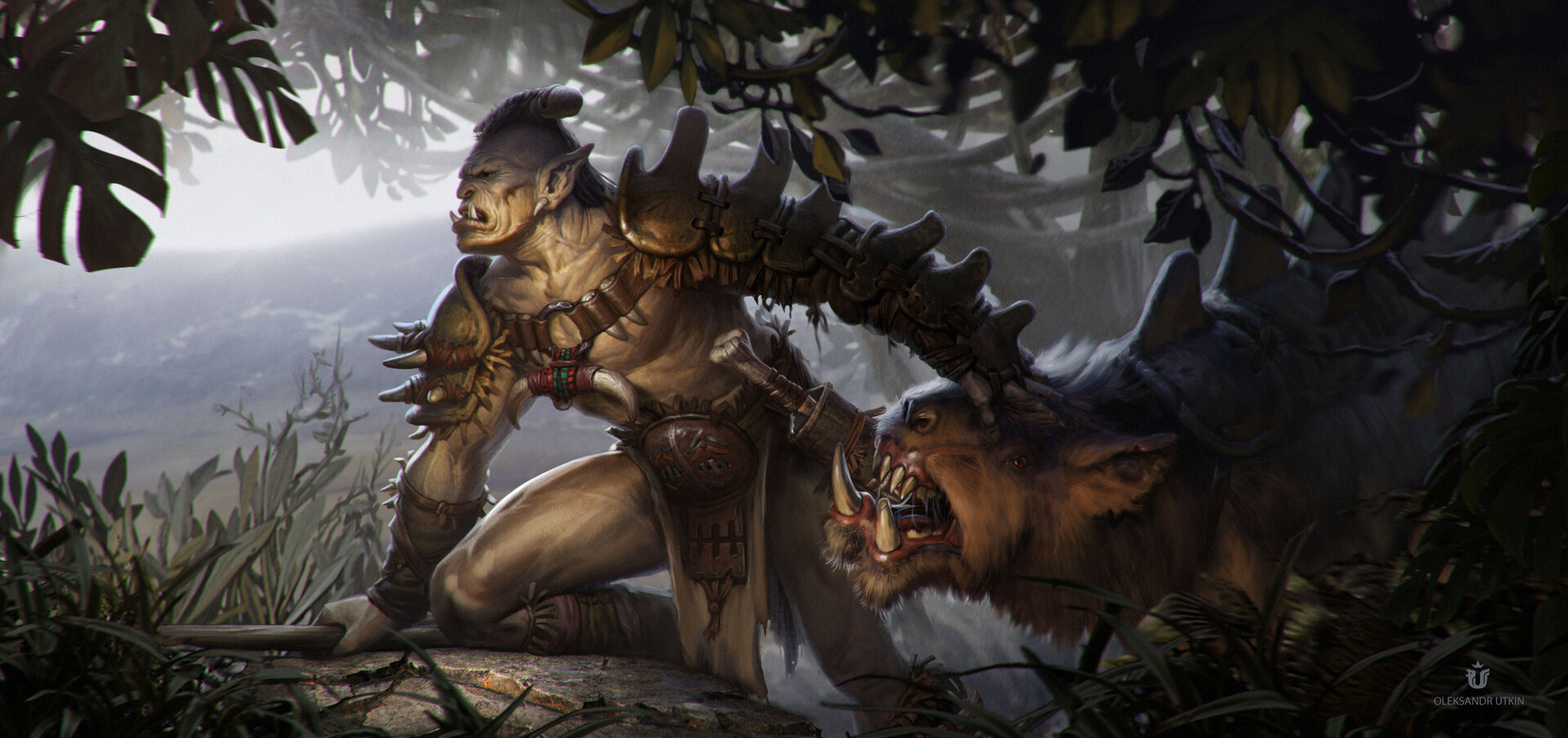
Elven Exiles
To many across Sol, no two people could be further apart than Elves and Orcs. The former are seen as svelte, graceful, and otherworldly, while the latter are seen as rugged at best or bestial at worst. However, while many contradictory stories about the origins of the Orcs compete for prominence, most begin in the Svaelyn Isles, the ancestral homeland of all Elves. The ancestors of the Orcs were one part of waves of exiles, pioneers, and emigrants from the isles, groups from among the ancient Elves who sought a different life in a different land. Though many of these pioneers sought to found a new home, the ancestors of the Orcs, likely led by a voice from among the Infernal Order, would never find one. As permanent wanderers, they would each settle in different places, from the mountains of Mistvall to the deserts of Asvathas to the jungles of Shanrao. While some would be more welcoming to them than others, the Orcs would never truly establish a permanent home of their own, but would always be guests in someone else's country. Throughout the ages, before the empires of today, there would be moments where it seemed an Orcish city-state or kingdom might be established, but each one found itself unable to last the test of time. In response, some Orcish groups turned away from their gods, others hardened in their traditions, and yet some Orcish individuals sought to leave their clans behind and carve their own path in the lands of others, often finding work as mercenaries, artisans, and soldiers.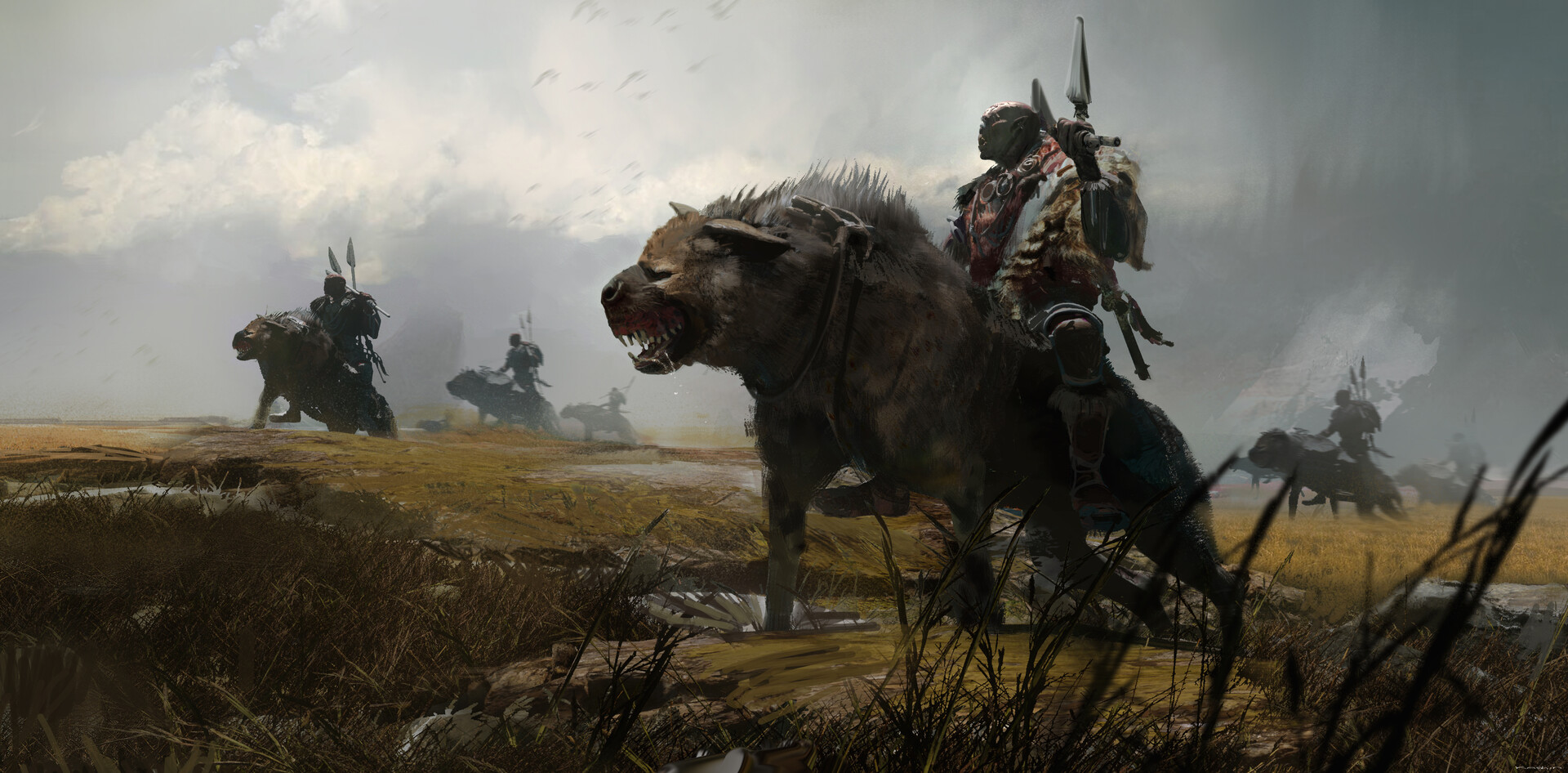
Death Seekers
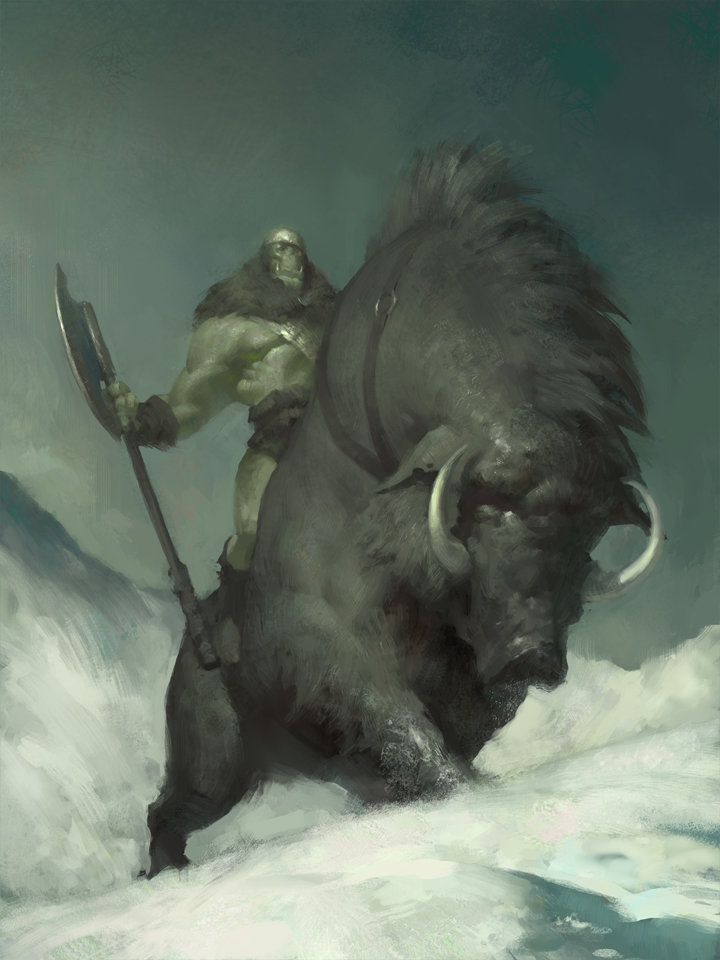
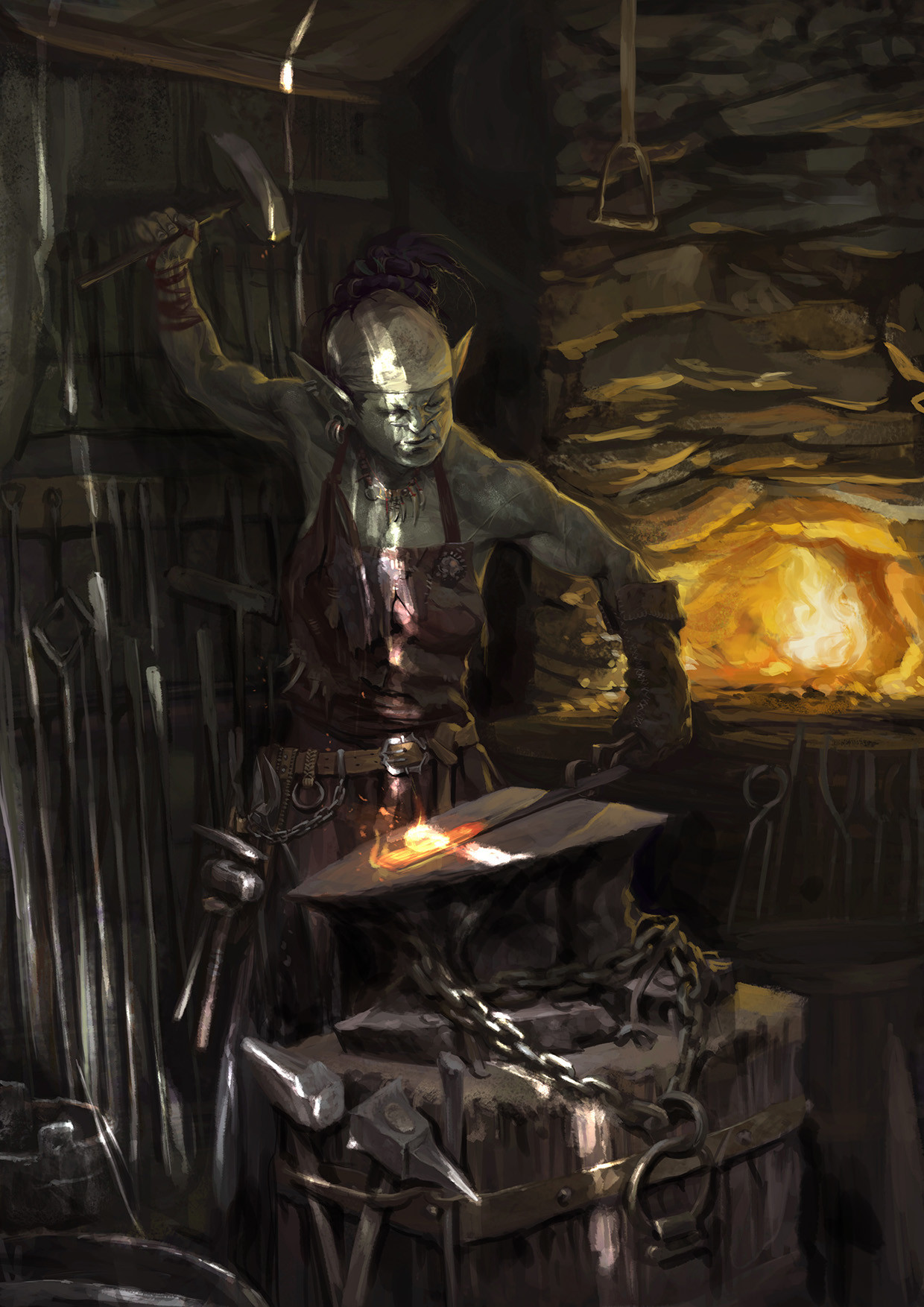
In tandem with their lack of permanent settlement, kingdom, or homeland, Orcs tend not to cling to things needlessly, their life included. They charge into battle with a ferocity that shocks and horrifies their opponents. Unafraid of death, an Orc berserker will distinguish herself by taking on a dozen enemy soldiers on her own. While many Orcs patronize the expert smiths of their culture and wear heavy armor that deflects enemy attacks with ease, some prefer to go without it and rely on speed and ferocity over raw durability. While some may imagine them as chaotic brutes, it has been observed that Orcish war bands employ military tactics, formations, and strategy as well as any other culture. They have also been known to tame almost any beast to be used as a war beast by riders and rangers. In the frigid north, they ride dire boars and dire wolves into battle, while in the south, their scouts and hunters prowl alongside displacer beasts. While their lack of fear of death in battle is well known, less known is their tendency to seek death at the first sign of graying. Orcish warriors reject the notion that one should cling to life as long as possible, seeking every concoction, magic, and herb just to extend their life even a meager few years. For them, life is vitality, and when that vitality turns to decrepitude, they have essentially already died. Orcs who reach this age without dying in battle in their youth often leave their clans to seek an honorable death in the wild.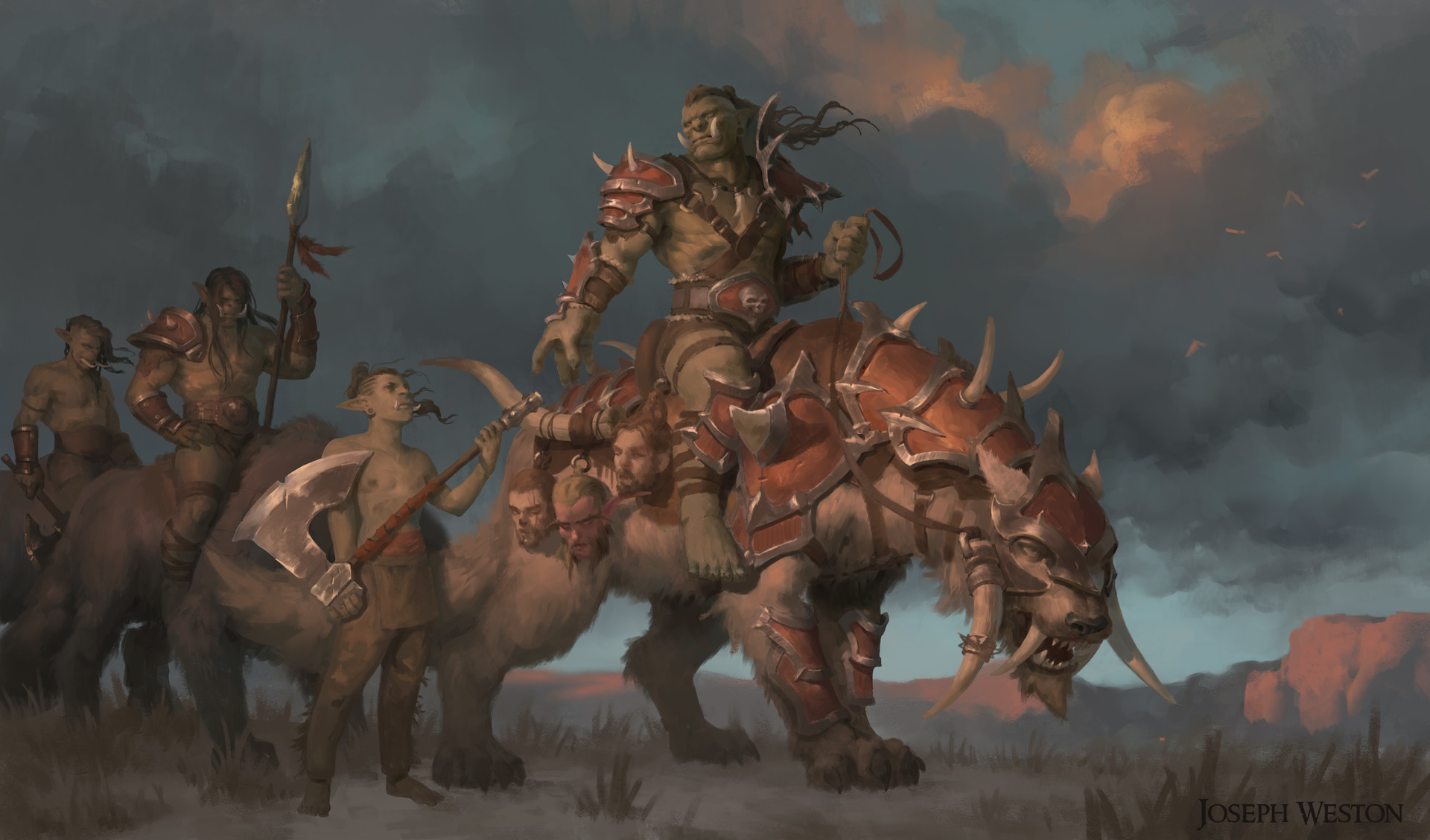
Naming Traditions
Feminine names
Show spoiler
Abimfash, Adkul, Adlugbuk, Agazu, Agbava, Agdaz, Agdesh, Aglash, Agli, Agral, Agrash, Agrulla, Agzurz, Akarah, Akash, Akgruhl, Akkra, Aklash, Aklobesh, Akur, Alga, Algrakh, Alzula, Anbarah, Arakh, Argurgol, Arzakh, Arzogbesh, Arzorag, Ashaka, Ashgara, Ashgel, Ashrashag, Atarga, Atgulka, Atoga, Atorag, Atugol, Atzurbesh, Aza, Azabesh, Azadhai, Azga, Azhnakha, Azhnolga, Azhnura, Azilkh, Azlakha, Azulga, Baag, Baagug, Badush, Bafthaka, Bagda, Bagrugbesh, Bagtul, Bagul, Bagula, Balga, Barazal, Bargrazh, Barza, Barzog, Bashgara, Bashotha, Batara, Batasha, Batorabesh, Bazbava, Bazbozag, Bazgabesh, Bazgara, Bhagruan, Bizra, Bluga, Bolaag, Bolash, Bolgar, Bolgurakh, Bolugbeka, Borbgava, Borbgur, Borbuga, Borgburakh, Borgdorga, Borghak, Borgrara, Borgurakh, Boroth, Borzog, Brekgun, Bugbekh, Bugbesh, Bugha, Bulag, Bularkh, Bulfor, Bulra, Bumava, Bumbuk, Bumgrakh, Bumphalarg, Bumzuna, Burzura, Dagarha, Darezha, Drienne, Droka, Druga, Dufbash, Dulasha, Dulfra, Dulfraga, Dulkhi, Dulroi, Duluka, Dulzugha, Dumoga, Dumuguk, Dumula, Dumurzog, Duragma, Durash, Durga, Durgura, Durhaz, Durogbesh, Dushug, Elzugoth, Erisa, Fnagdesh, Gahgra, Gargahz, Gargum, Garl, Garlor, Garlub, Garotusha, Gelekh, Gharakul, Gharn, Ghat, Gheshol, Gheshula, Ghobub, Ghogogg, Ghoral, Ghorbog, Ghorzolga, Ghratutha, Ghrudrog, Glagag, Glagosh, Glarikha, Glash, Glath, Glatha, Glathakha, Glathuhl, Glathut, Glega, Glesh, Globura, Gloglut, Glolbikla, Glorgel, Glothum, Glurbasha, Glurbdak, Glurduk, Glurmghal, Glurzakha, Glurzul, Gluth, Gluthesh, Gluthogna, Gluthurzog, Gnush, Gogul, Golakha, Golga, Golgakul, Gonbubal, Gonbush, Gondubaga, Goorga, Goorul, Grabash, Graghesh, Grahla, Grahuar, Grakguhl, Graklha, Grash, Grasha, Grashla, Grashorag, Grashug, Gratbog, Gratog, Gratorga, Gratubal, Grazda, Grazdar, Grazoth, Grazubesha, Grenbet, Groddi, Grubalash, Grubathag, Grubazh, Grubesha, Grugleg, Grularz, Grumgha, Grundag, Gruzbura, Guazh, Gugbesh, Gula, Gulara, Gulgula, Gulorz, Gulugash, Gulza, Gulzurgol, Gunzga, Gurar, Gurhul, Gurikha, Gursthuk, Gurum, Guth, Guurzash, Guuth, Guz, Guzash, Guzgazh, Guzmara, Haghai, Hagra, Harfza, Harza, Hurabesh, Ilg, Irsugha, Jorthan, Junlock, Kashurthag, Kelagi, Khagral, Khagruk, Khaguga, Khaguur, Kharekh, Kharza, Kharzbara, Kharzolga, Khazasha, Khazrakh, Kiva, Kora, Korgha, Krithgra, Kroma, Kruaga, Kuhlon, Kurlash, Kurz, Ladurash, Lagabul, Laganakh, Lagbaal, Lagbuga, Lagdabash, Lagra, Lagrolga, Lagruda, Lahzga, Lakhazga, Lamazh, Lambur, Lamburak, Lamugbek, Lamur, Lamzakha, Lamzikha, Larzgug, Lashakh, Lashbesh, Lashbura, Lashdura, Lashgikh, Lashgrul, Lashgurgol, Lashza, Lazdutha, Lazghal, Lazgara, Legdul, Lhazbura, Lig, Logdotha, Loglorag, Logru, Lokra, Lorak, Lorku, Lorogdu, Luga, Lugharz, Luglorash, Lugrugha, Lugurzog, Lugzurash, Lulgra, Lurgush, Luruzesh, Lurz, Mabgikha, Mabgrolabesh, Mabgrorga, Mabgrubaga, Mabgruhl, Magarakh, Magula, Mahgrok, Maraka, Marutha, Maugruhl, Mazgroth, Mazog, Mazrah, Mazuka, Megruk, Mogdal, Moglurkgul, Mograg, Mogul, Mordra, Morga, Morndag, Mornamph, Morndolag, Morushna, Mozgosh, Mugaga, Mugumurn, Muguur, Mula, Mulgabesh, Mulgrul, Multa, Mulzah, Mulzakul, Mulzara, Mulzurbesh, Murboga, Murotha, Murzaga, Murzgut, Muzgraga, Muzgurbesh, Narboth, Naroga, Narol, Narzbash, Narzdush, Nazdura, Nazhag, Nazhataga, Nazubesh, Noguza, Nulra, Nunchak, Nuza, Nuzak, Nuzuhl, Ogzaz, Oorga, Oorgnag, Oorlar, Oorsha, Oorza, Oorzuka, Orbuhl, Orcolag, Ordasha, Ordatha, Ordurzog, Orgdush, Orgotha, Orgugbekh, Orlfeth, Orlozag, Orlugash, Orluguk, Orthuna, Orutha, Orzbara, Orzdara, Orzorga, Oshgana, Othbekha, Othgozag, Othikha, Othrag, Othrika, Ozrog, Pruzag, Pruzga, Ragbarlag, Ragushna, Rakhaz, Rakuga, Ranarsh, Razasha, Razbela, Rogag, Rogba, Rogbual, Rogoga, Rogzatha, Rogzesh, Roku, Rolbutha, Rolfikha, Rolfogbesh, Rolfzal, Rolga, Rulbagab, Rulbza, Ruldor, Ruldzara, Ruldzusha, Rulfala, Rulfalash, Rulfgolabesh, Rulfub, Rulfuna, Rulfzub, Rulgum, Sgala, Sgrugbesh, Sgrugha, Sgrula, Shabaga, Shabeg, Shabeshga, Shabgrut, Shabon, Shadgolga, Shagareg, Shagduka, Shagora, Shagra, Shagrum, Shagrush, Shagugbeka, Shagura, Shakul, Shaldagan, Shalug, Shamuk, Shamush, Shara, Sharbarga, Sharbarz, Sharbzur, Sharduka, Shardush, Shardzonk, Shardzozag, Shardzum, Sharga, Shargalash, Shargduguk, Shargra, Sharuk, Sharushnam, Shaza, Shebakh, Shelboth, Sheluka, Shelurash, Shera, Shezul, Shgrag, Sholg, Shubesha, Shufdal, Shufgrut, Shufthakul, Shuga, Shugubekh, Shugzur, Shurkul, Shuzrag, Sloobdakha, Sloogara, Sloogolga, Sloomganakh, Sluz, Snabdub, Snabgrara, Snabugha, Snagara, Snaghusha, Snarataga, Snarga, Snargara, Snargbazh, Snaruga, Snarzikha, Sneehash, Snilga, Snoogh, Snushbesh, Solgra, Stilga, Stroda, Stuga, Stughrush, Tamozag, Thazglaru, Theg, Thegbesh, Thegshakul, Thegshalash, Theshaga, Theshgat, Theshgoth, Thishnaku, Thoga, Thogra, Thrugrak, Thugnarz, Thugnekh, Thulga, Thushleg, Torghi, Tugha, Ubzigub, Udai, Ufalga, Ufgabesh, Ufgalash, Ufgaz, Ufgel, Ufgra, Uftheg, Ugarnesh, Ugduk, Ugrash, Ugrush, Ulabesh, Uldushna, Ulg, Ulgush, Ulliceta, Ulmog, Ulsha, Ulu, Ulubesh, Uluga, Ulukhaz, Umbaka, Umbozag, Umbugbek, Umgrut, Umgubesh, Umutha, Umzolabesh, Undorga, Undush, Undusha, Unsulag, Uratag, Urbalash, Urbutha, Urbzag, Urdboga, Urgarlag, Urshra, Uruka, Urulga, Urzikh, Urzula, Urzutha, Usha, Ushaga, Ushdolabesh, Ushenat, Ushruka, Ushuta, Ushutha, Uthik, Uzka, Vosh, Vumnish, Vush, Vusha, Yagrigbesh, Yakhu, Yarlak, Yarulorz, Yashurah, Yatanakh, Yatava, Yatul, Yatular, Yatzog, Yazara, Yazbava, Yazga, Yazgruga, Yazhul, Yazoga, Zaag, Zagla, Zagula, Zazsha, Zelguma, Zubesha, Zugh, Zugrusha, Zuugarz, Zuugozag, Zuuthag, Zuuthusha
Masculine names
Show spoiler
Abz, Abzag, Abzrolg, Abzug, Agganor, Aghurz, Agnar, Agrakh, Agrobal, Agstarg, Aguz, Ahzug, Arghragdush, Arghur, Ashzu, Aturgh, Avreg, Azarg, Azgarub, Azimbul, Azo, Azogu, Azrath, Azulg, Bakh, Balarkh, Balknakh, Balmeg, Balorgh, Baloth, Balrook, Balzag, Bargo, Bargrug, Bash, Bashagorn, Batgrul, Bazrag, Begnar, Begok, Begozug, Bekhwug, Berbog, Bhagrun, Biknuk, Bisquelas, Blodrat, Blograth, Boagog, Boggeryk, Bogham, Bognash, Bogodug, Bogzul, Boldarkh, Bolg, Bolgrul, Borab, Boragrul, Borbuz, Borgath, Borgh, Bormolg, Borolg, Borth, Borz, Borzighu, Borzugh, Bothamul, Braadoth, Braghul, Bragulug, Brog, Brogdul, Brogul, Brokk, Brugagikh, Brugdush, Brughamug, Brugothmag, Bruimag, Brulak, Bugnerg, Bugunh, Bulg, Bullig, Bulugbek, Bulzog, Bulozog, Bumnog, Buragrub, Burush, Burzgrag, Burzol, Burzunguk, Buzog, Buzug, Carzog, Charlvain, Cognor, Cothor, Dagnub, Dorzogg, Dragom, Dromash, Drudun, Dugakh, Dugan, Dugroth, Dugtosh, Dugug, Dugugikh, Dular, Dulphago, Dulragh, Dulrat, Dumolg, Durak, Durang, Durzog, Dushgor, Dushkul, Dushugg, Fangoz, Farbalg, Fheg, Gag, Gagogru, Gahar, Gahgdar, Gahznar, Gard, Gargak, Garikh, Garmeg, Garnikh, Gashdug, Gasheg, Gboguzh, Gezdak, Gezorz, Ghagrub, Ghak, Ghaknag, Ghakorz, Ghamborz, Ghamokh, Ghamosh, Ghamron, Ghamulg, Ghash, Ghashugg, Ghashur, Ghatrugh, Ghaturn, Ghaz, Ghobargh, Ghogurz, Ghorn, Ghornag, Ghornugag, Ghrashorog, Ghrategg, Ghromrash, Ghrubugbash, Ghrum, Ghruzeg, Ghum, Ghun, Gladba, Glag, Glagbor, Glamalg, Glarg, Glaz, Glazgor, Glazulg, Glegokh, Gloorag, Gloorot, Gloorz, Glorgzorgo, Gloth, Glothozug, Glothun, Glud, Glundeg, Glunrum, Glunurgakh, Glurdag, Glurnt, Glushonkh, Gluthob, Gluthush, Gobur, Goburbak, Godrun, Gogaz, Gogbag, Gogrikh, Goh, Gohazgu, Gohorg, Golbag, Golg, Goorgul, Goragol, Gorak, Goramalg, Gorbakh, Gorblad, Gorbu, Gordag, Gorgath, Gorgrath, Gorgrolg, Gorlar, Gorotho, Gorrath, Goruz, Gorzesh, Gothag, Gothurg, Gozarth, Graalug, Graguz, Gralturg, Grashbag, Grashegg, Grashub, Grashuzag, Grat, Gravik, Grazhwu, Grezgor, Grishduf, Grodagur, Grodoguz, Grog, Grolag, Gromazgu, Gronov, Grookh, Grookhogru, Grubdosh, Grudogub, Grugnur, Grulbash, Gruldum, Gruloq, Gruluk, Grulwugz, Grulzul, Grumog, Grumth, Grundu, Grunyun, Grushazbur, Grushbub, Grushnag, Gruudus, Gruzdash, Gruznak, Guargorkh, Gulargh, Gulb, Gulburz, Gulfar, Gulug, Gulzog, Gunagud, Gunda, Gunran, Gurag, Gurg, Gurgozod, Gurlak, Guruz, Guruzug, Gushagub, Gushorg, Guzg, Gwilherm, Hagard, Hazbur, Horak, Hothmuk, Hruz, Ilthag, Inazzur, Kadrun, Kargnuth, Kazok, Kelrog, Kentosh, Khal, Khamagash, Kharsh, Kharsthun, Khartag, Khoruzoth, Khralek, Kurog, Kirgut, Klang, Klovag, Kogaz, Kradauk, Krodak, Krog, Krogrash, Kulth, Kurd, Kweel, Lagarg, Lagrog, Lahkgarg, Lakhalg, Lakhdosh, Larhoth, Larob, Lashbag, Lashum, Latumph, Laurig, Lazgel, Lob, Logbur, Logogru, Lorbash, Lothdush, Lothgud, Lozotusk, Lozruth, Lozwug, Lug, Lugbagg, Lugbur, Lugdakh, Lugdugul, Lugnikh, Lugolg, Lugrots, Lugrun, Lugulg, Lugzod, Lum, Lumgol, Lungruk, Lurash, Lurbozog, Lurg, Lurgonash, Luzmash, Maaga, Mag, Magrol, Magunh, Makhoguz, Makhug, Makob, Margog, Marzul, Maugash, Maugh, Mauhoth, Mazabakh, Mazgogub, Mazgro, Mazogug, Megorz, Mekag, Mog, Mogazgur, Mogrub, Mokhrul, Mokhul, Molozu, Monru, Mor, Morborgol, Morbrogug, Mordrog, Mordugul, Mordularg, Morgaz, Morgbrath, Morlak, Morothmash, Morotub, Mort, Mothozog, Muduk, Mudush, Mugha, Muglugd, Mugrub, Muhaimin, Mulatub, Mulgargh, Mulgu, Mulur, Mulzalt, Murdodosh, Murgbakh, Murgonak, Murgoz, Murgrud, Murkh, Murlog, Murukh, Murzog, Muzb, Muzbar, Muzdrulz, Muzgalg, Muzgash, Muzgu, Muzogu, Nagoth, Nagrul, Nahzgra, Nahzush, Nakhul, Namoroth, Narazz, Nargbagorn, Narhag, Narkhagikh, Narkhozikh, Narkhukulg, Narkularz, Narzba, Nash, Nashruth, Nenesh, Norgol, Nugok, Nugwugg, Nunkuk, Obdeg, Obgol, Obgurob, Obrash, Ofglog, Ogmash, Ogodosh, Ogog, Ogorosh, Ogozod, Ogruk, Ogularz, Ogumalg, Ogzar, Ogzor, Okrat, Olfim, Olfin, Olfrig, Olgol, Olugush, Ontogu, Oodeg, Oodegu, Oogron, Ookhulg, Oorg, Oorgurn, Oorlug, Oosh, Opgog, Ordooth, Orgak, Orgdragog, Orgdugrash, Orgotash, Orgush, Orntosh, Orzbara, Orzorg, Orzuk, Osgrikh, Osgulug, Othbug, Othigu, Othogor, Othohoth, Otholug, Othukul, Othulg, Othzog, Ozor, Pergol, Putor, Rablarz, Ragbul, Ragbur, Ragnast, Ramash, Ramazbur, Ramonash, Ramorgol, Ramosh, Razgor, Razgugul, Razgurug, Rhosh, Rogbum, Rognar, Rogrug, Rogurog, Roguzog, Rokaug, Rokut, Roog, Rooghub, Rooglag, Rorburz, Rozag, Rugdothmog, Rugdugbash, Rugdrulz, Rugmeg, Rugrol, Ruzgrol, Sgagul, Sgagunh, Sgolag, Shab, Shagol, Shagrod, Shakh, Shakharg, Shakhighu, Shakhrath, Shamagug, Shamar, Shamazh, Shamlakh, Shargarkh, Shargunh, Sharkagub, Sharkuzog, Sharnag, Shogarz, Shogorn, Shugral, Shukul, Shulthog, Shulug, Shurkol, Shurrog, Shuruthikh, Skagurn, Skagwar, Skalgunh, Skalguth, Skarath, Skordo, Skorgat, Skreg, Skulzak, Slagwug, Slayag, Slegbash, Smagbogoth, Smauk, Snabazkur, Snagbash, Snagdurl, Snagg, Snagh, Snakh, Snakzut, Snalikh, Snarbugag, Snarbul, Snargorg, Snazumph, Sneg, Snegbug, Snegburgak, Sneghar, Snikhbat, Snoog, Snoorg, Snugar, Snugok, Snukh, Snushbat, Snushogu, Sogh, Spagel, Storgh, Stugbrulz, Stugbulukh, Szugburg, Szugogroth, Targak, Targoth, Tazgol, Tazgul, Thagam, Thagbruth, Thagbush, Thakaz, Thakh, Thakush, Tharag, Tharkul, Thaz, Thazeg, Thaznog, Thegb, Thegur, Thereg, Tholog, Thoogh, Thorkh, Thorzh, Thorzhul, Thrag, Thragdosh, Thragdulub, Thragdus, Thragosh, Threg, Thrug, Thrugb, Thrunikh, Thukbug, Thulsgreg, Thungdosh, Todrak, Togbrig, Tograz, Torg, Torug, Tugam, Tugawuz, Tumuthag, Tungthu, Ufthag, Ugdush, Uggnath, Ugorz, Ugron, Ugruntuk, Uguntig, Ugurz, Ulagash, Ulagug, Ulgdagorn, Ulghesh, Ulgonash, Ulmamug, Ulozikh, Umgaak, Undrigug, Undugar, Ungruk, Unrahg, Unthrikh, Uragor, Urak, Urdbug, Urgdosh, Urlmarz, Urok, Ushang, Usn, Ushdag, Usnagikh, Uugus, Uulgarg, Uuth, Uznom, Uzrub, Vargos, Vregaak, Vulmon, Vundrum, Vunp, Waghuth, Wardush, Wort, Wuzgu, Yagarg, Yagorkh, Yagramak, Yagut, Yakegg, Yamukuz, Yargob, Yargonk, Yargugag, Yarnabakh, Yarnag, Yarulg, Yarzrobal, Yat, Yatog, Yggnast, Yggoz, Yggruk, Yggurz, Yozth, Yzzgol, Zagh, Zaghurbak, Zagrakh, Zagrugh, Zbulg, Zegol, Zgog, Zhagush, Zhasim*, Zhosh, Zilbash, Zogbag, Zosh, Zugnor, Zugoth, Zulbash, Zulbek, Zulgozu, Zulgroth, Zulgukh, Zulohoth, Zumog, Zungarg, Zunlog, Zurgrol
Family names
Show spoiler
Agdur, Arzug, Badbul, Bagat, Bagol, Barbol, Bashnarz, Bazgar, Bazul, Bekh, Birgo, Bor, Borgakh, Borgub, Born, Bugurz, Bulfimorn, Bumolg, Burbulg, Burgal, Burku, Burz, Buzbee, Dasik, Drol, Drom, Drublog, Dugronk, Durbug, Durgamph, Durgoth, Dushnikh, Fakal, Garbug, Gatuk, Ghammak, Ghash, Ghol, Ghorn, Ghralog, Goldfolly, Gorzoth, Gular, Gum, Gurba, Guthra, Khamagash, Khambol, Khamug, Khargub, Khazgur, Kogg, Korith, Korma, Kruts, Kush, Ladba, Logdum, Lort, Lumborn, Luruk, Madba, Makla, Malak, Malorz, Marguz, Mashul, Mol, Mora, Morad, Murgob, Murkha, Murug, Namor, Nar, Narzul, Nogremor, Oglurn, Olub, Oluk, Orgak, Orguk, Othmog, Ram, Rimat, Ruguk, Ruumsh, Shagob, Shagrak, Shagronk, Shar, Shatub, Shatur, Shazgul, Shelakh, Shegub, Sheluk, Shub, Shurgak, Shurkul, Sgrugdul, Shugduk, Shugharz, Shuhgharz, Stugbaz, Stugh, Thormok, Thumog, Ugrush, Urku, Urkub, Urula, Usharku, Uzguk, Volkar, Vortag, Wroggin, Yarzol, Yggrub
Culture
Major language groups and dialects
The Orcish language is related to the language of the High Elves, though it has drifted over the centuries since the initial Orcish departure from the Svaelyn Isles. Since the Orcs remain scattered across the continent in tribes, each region has its own dialect. These dialects are mutually intelligible for the most part but remain distinctive, using regional loanwords and sometimes adopting the scripts of more prominent nearby cultures. Otherwise, Orcs often speak Common.
Shared customary codes and values
Regardless of tribe or location, most Orc groups follow a shared, unwritten code known as the Wanderer's Way. It is a guide for the Orcish way of life, from organizing a tribe to dealing with local lords and communities living nearby, to how to punish criminals. It is a collection of traditions, practices, and codes of conduct that seek to keep the Orcs on a path of honor, honesty, and courage.
A significant part of the code is the lack of Slavery. In fact, the practice is virtually unknown in Orcish culture. In many reaches of the continent, Orcish tribes are a common escape destination for runaway slaves seeking freedom and protection. Even when under the dominion of foreign kings and empires that deal in the slave trade, Orcs refuse to partake and will fight to maintain this stance. Some have hypothesized that the reason for its inclusion echoes back to the ancestors of the Orcs being enslaved by the ruling class of the Svaelyn Isles.
Even concerning defeated enemies, Orcs have a policy to offer inclusion in the tribe, being ransomed back to their people, or an honorable death. Orcs consider respect for their enemies to be a form of respect for themselves. Even practices such as keeping mementos of defeated enemies are seen not as a humiliation but a way of remembering their fiercest foes. Orcs do not employ prisons either, considering it a waste of valuable resources to keep a wrongdoer alive for no purpose other than satisfaction. Internally, concerning criminal justice, Orcs punish crime through bloodletting or blood money. That is, either the criminal is willing to suffer for their crime or satisfy the victim or their kin with blood money to escape physical punishment. Traitors, adulterers, rapists, and murderers are treated very harshly and will usually be executed, though typically only if their crimes negatively impacted members of the tribe.
Common Etiquette rules
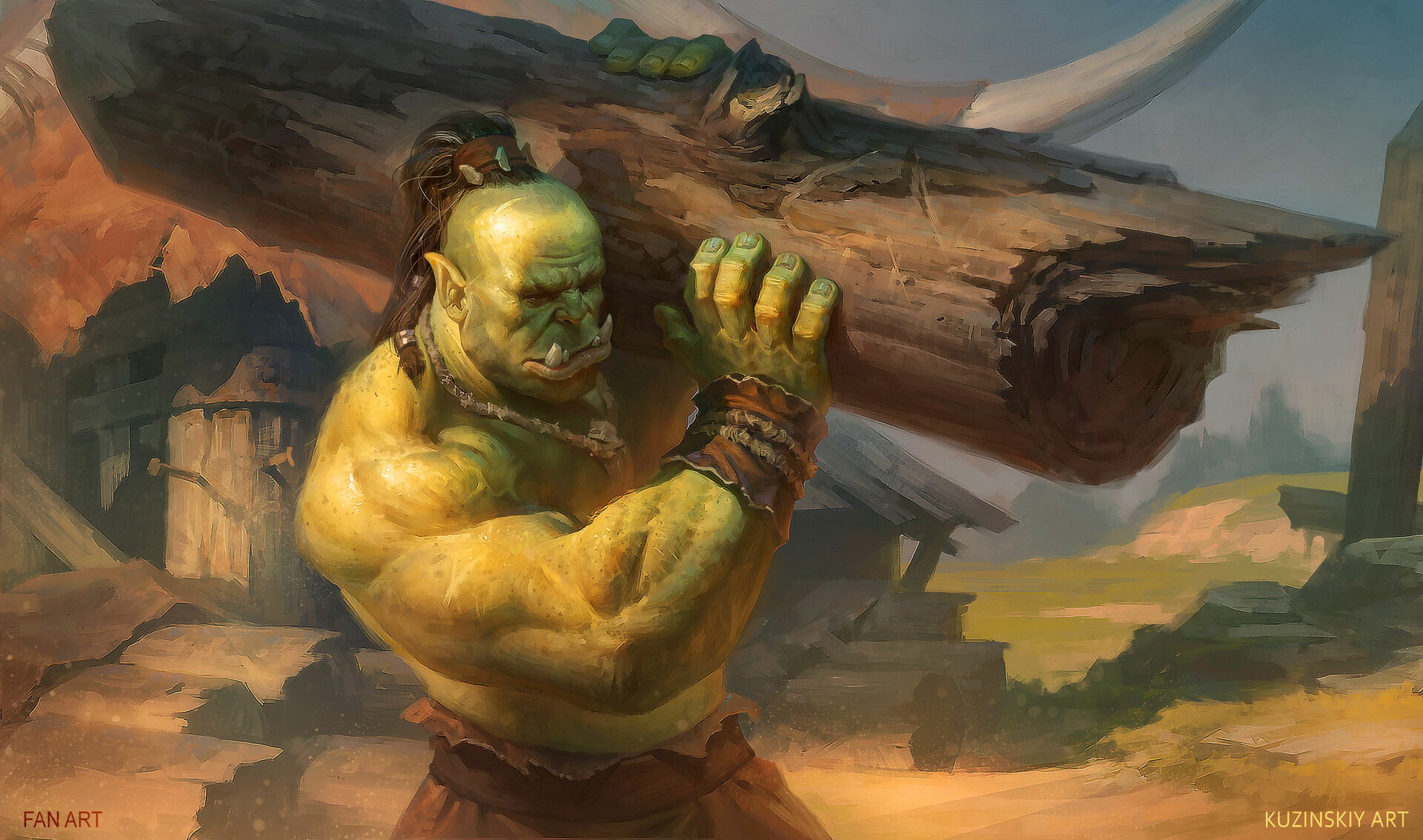
Orcs tend to be direct, plainspoken, respectful, honorable, and courageous. They show great respect to their closest kin, taking secrets to the grave and refusing to partake in gossip. Treacherous or deceptive behavior, like idle slander and backstabbing, is seen as a grave social taboo. A finer point of Orcish etiquette is altitude. In their great halls, everyone is seated at precisely the same level. Even the chieftain does not reign from above; rather, they consult on an equal level. Orcs are not overly punctual and don't seem to mind lateness. When giving gifts, it is always expected to give one in return, either something spontaneous from one's person or possessions, or something in the near future. Not returning a gift in at least a week is seen as bad form and an insult. Common gifts include pelts, mementos from slain beasts such as drinking horns and animal skulls, weapons, or milk and alcohol, though livestock and mounts, typically horses, are the finest gifts.
Art & Architecture
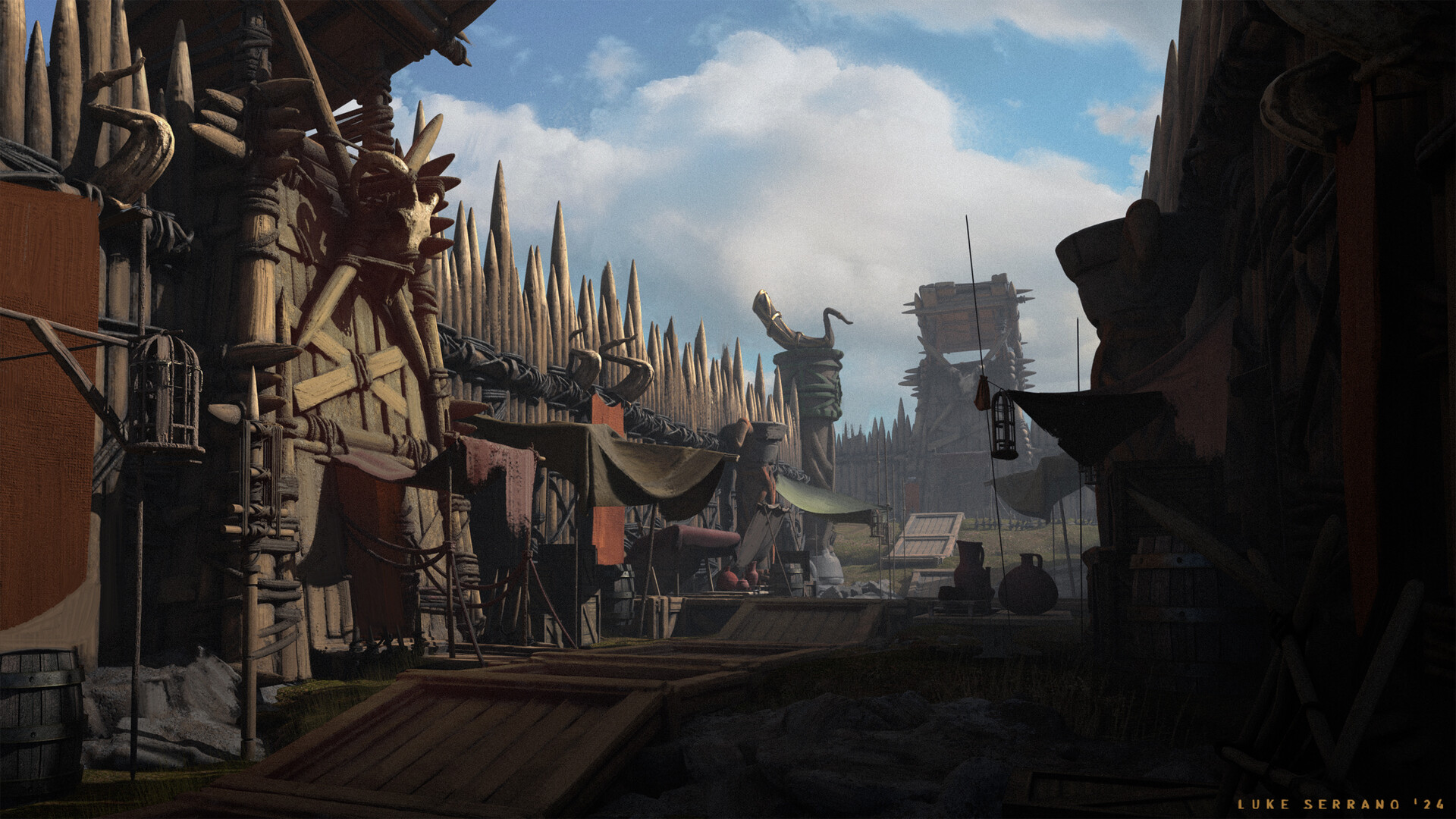
Orcs tend to prefer simple or even temporary architecture such as yurts, tents, wooden war camps, and the like. After being exiled from so many lands, they have learned to build to survive rather than to lay down long-lasting roots in lands they're not welcome in. There have been Orcish settlements that have been established, but in most cases, they were conquered by overwhelming opposition, nature's wrath, or cunning. Man Vasa, a city in the eastern plains of Ayrith, stands as perhaps one of the better examples of traditional Orcish architecture. The city has a large Half Orc population alongside the Droth who took the city over after the Orcish settlers lost the city to plague. Its buildings are largely stone and stalwart, favoring austere defense over beauty.
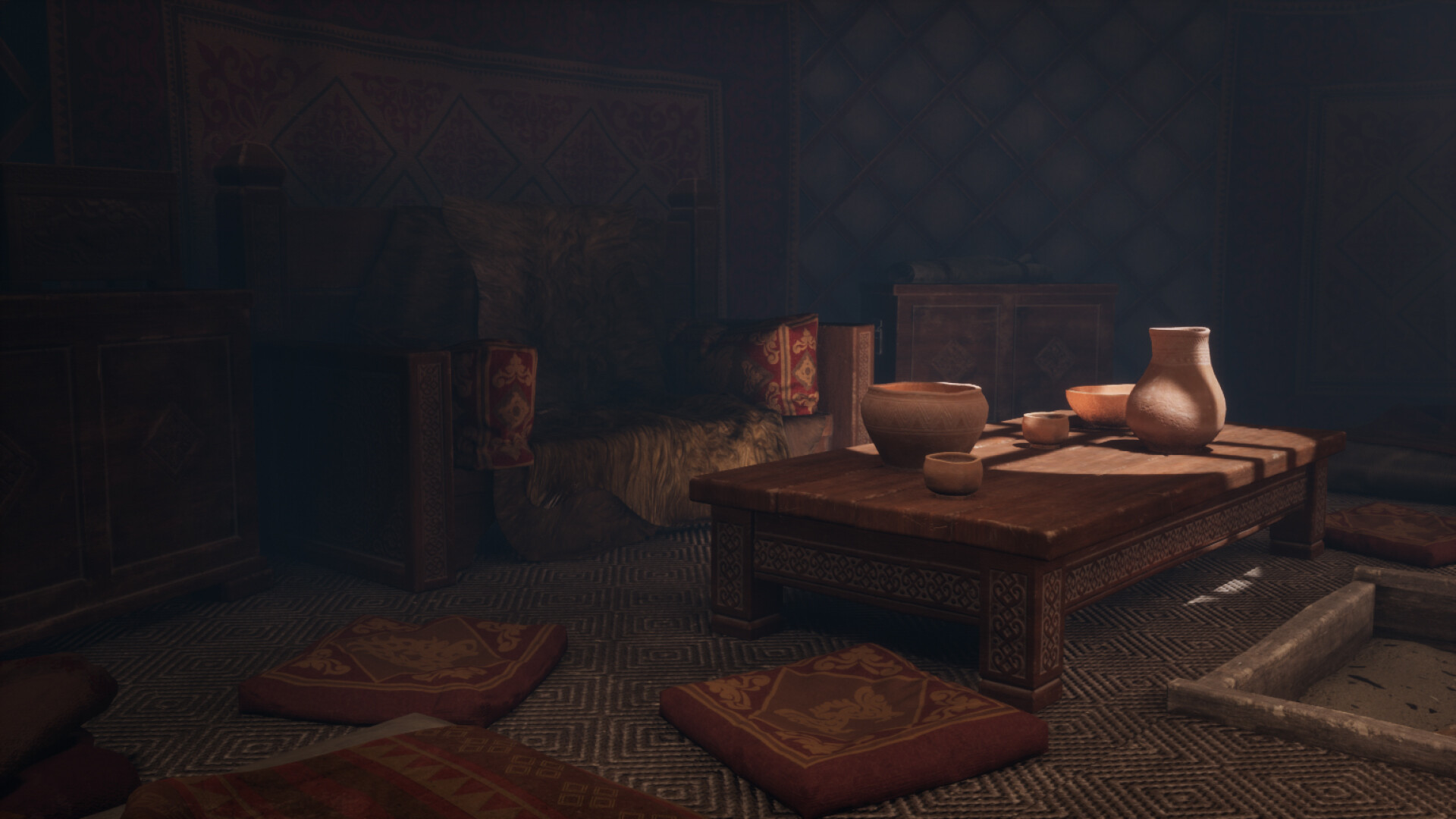
 Their interiors are comfortable, often featuring well-woven cushions, patterned rugs, and any fineries they've come across in raiding or trading. Tools and implements tend to decorate the walls of the yurt for maximal usefulness. It is common to have nooks inside the yurt for herbal work or cooking. Orcs do not much partake in the so-called fine arts such as oil painting and sculpture. Instead, they focus on smaller-scale art forms such as weaving, stonework, jewelry, carpet patterns, and embroidery. They often decorate weapons and armor after battles with mementos to remember the struggle.
Foods & Cuisine
Orc cuisine differs wildly based on tribal location and traditions. One mainstay regardless of location is kumyz, a milk-based drink, typically made using mare's milk and fermented into a mildly alcoholic beverage. It is not only a very customary drink in general, but it is also used in social and religious rituals. Two tribes drinking kumyz together implies good faith for a negotiation and hospitality, while spilling it on the ground when offered is an insult. Otherwise, Orcs tend to lead pastoralist or nomadic lifestyles with a heavy emphasis on animal husbandry or hunting, so their cuisines tend to feature meat heavily. Stews are especially common in colder climates.
Common Customs, traditions and rituals
Blood Kin
Orcish social stratification can be quite complex and nuanced, based on shared ancestry or tribal affiliation. One rank that is decided and lifelong is that of the blood brother or blood sister. Blood kin refers to a practice in which two people swear a lifelong bond of friendship, symbolized through the act of slicing each other's palms and shaking hands. While the ritual is simple, the implications are extremely serious in their culture. Blood kin will only carry out such a commitment with someone they truly intend to honor and be bonded to their entire life. In such a quarrelsome culture as that of the Orcs, even in cases where relations fall through and blood kin become formal enemies, enormous respect and consideration will be paid to each other. Certain crimes or even social taboos committed against blood kin are considered more egregious and earn worse punishments than they would against another member of the tribe.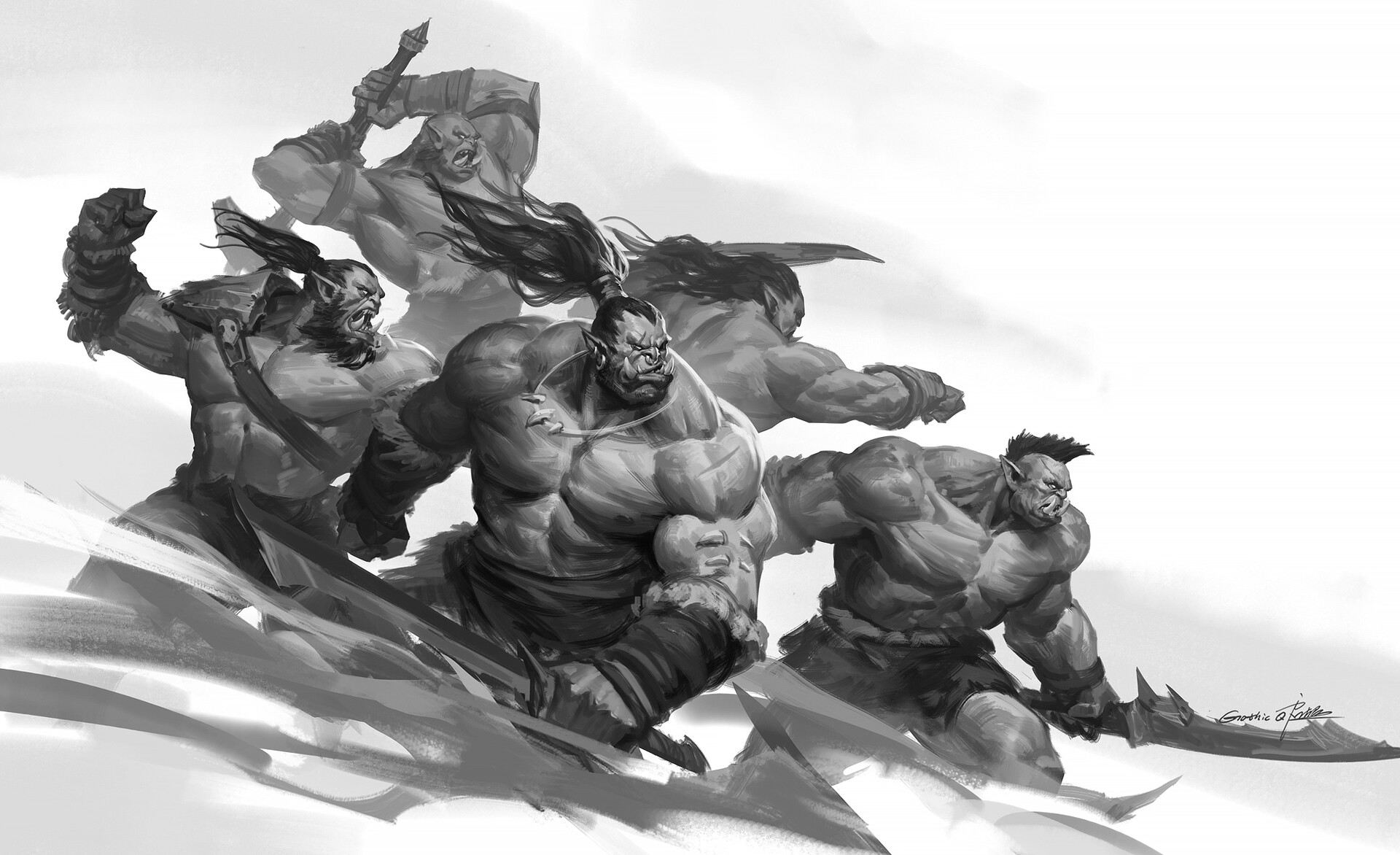
Kurultai
An important tradition observed by most Orcs around the continent is the kurultai. While they spend the year raiding and trading amongst themselves or their neighbors, annually, the tribes convene in a temporary city or a standing settlement if the region has one. This is more regional than continental, so each region where Orcish tribes are prominent has its own kurultai. Among the Orcs of the eastern steppe of Shanrao, they meet in the tent city of Khagana. Here, the tribes convene and the tribal leaders drink together, exchange gifts, and secure marriages. Spilling blood is not allowed, and the kurultai is traditionally attended by all the regional tribes, though non-Orcish friends of the tribes may join as well if a tribal leader vouches for them. The kurultai ends with a ceremonial feast meant to show good faith and adherence to traditions.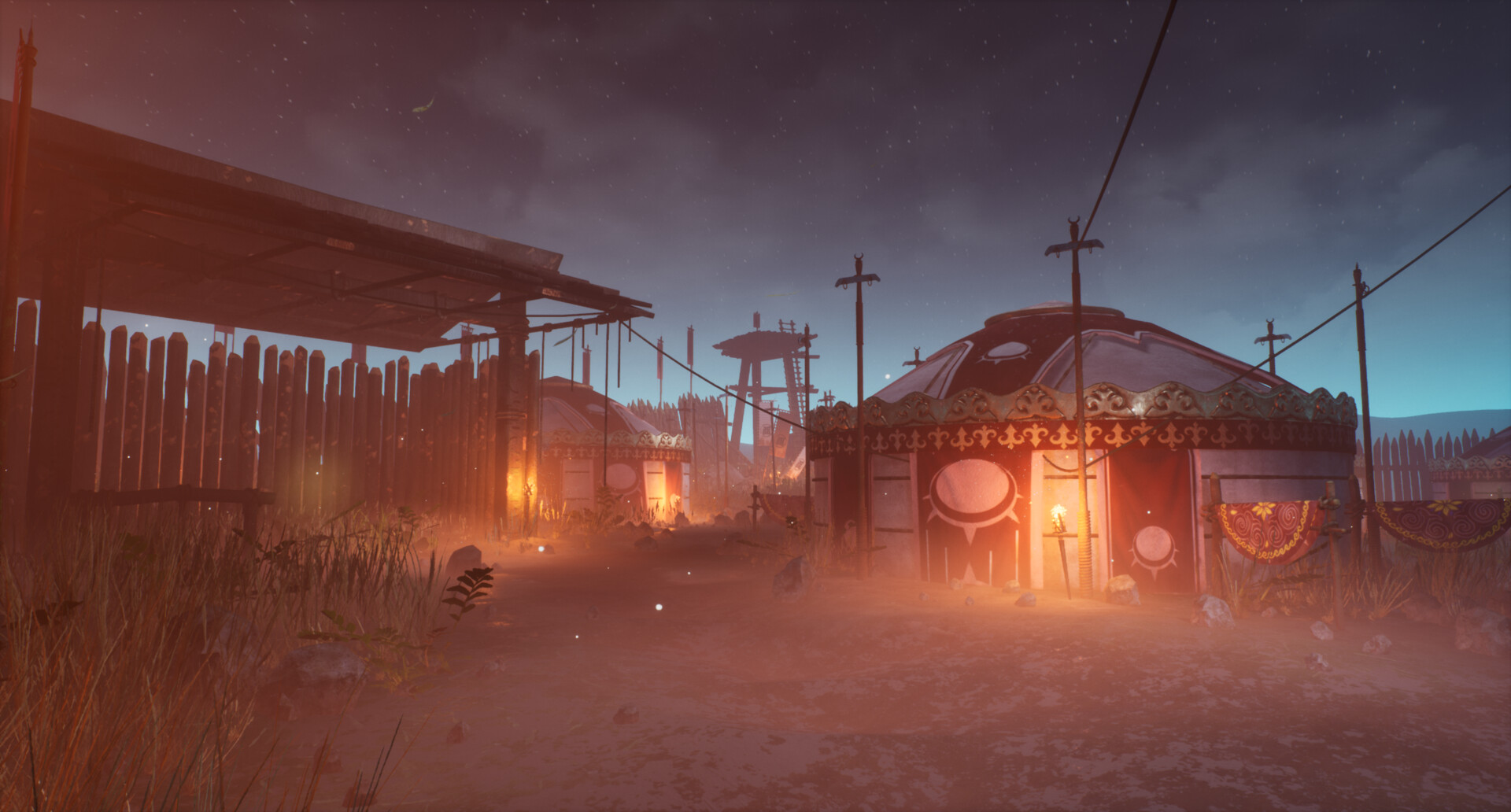
Coming of Age Rites
When Orcs reach the age of six, they participate in a series of trials known as the Crucible. They are a set of exercises to test mental, physical, and spiritual fortitude. They differ based on tribe and traditions, but they often involve challenges of navigating and overcoming nature, besting their peers in combat, and enduring a trial against the animistic spirits of the natural world. The Crucible takes place again at the ages of eleven and fifteen, the age of manhood and womanhood in their culture. If someone fails all three trials, they are often given a lower place in the tribe, reduced almost to the rank of a servant, never expected to see greatness in combat or craft.
Funerary and Memorial customs
While Orcs will often leave their tribe at the first sign of graying to seek an honorable death in the wilds, those who die for whatever reason in their own tribe are given a proper funeral and will be left on a high place to be consumed by scavengers. It is seen as a way of providing use to the living one last time before departing the material world. Orcs believe their kin spirits continue to protect the tribe after death, except those who weren't given proper funerals with a wise woman attending and blessing the ceremony. Those who aren't given proper rites are the traitors and other dishonorable among their kin, forced to wander the deadlands forever. Some sages have likened these so-called deadlands to the realm known to the Elves as the Shadowfell.
Common Taboos
To the Orcs, a coward is the worst thing one can be. Craven. Gutless. Meek. They have many words for such a person, and the label covers many kinds of people, from traitors to adulterers to those who flee battle in fear. Bravery is among the greatest virtues for the Orcs, and those who abandon it shame not only themselves but their kin. Such people are typically exiled for the sake of the rest of the tribe. If they committed a crime worthy of it, they may be executed. Exiles in general are considered fair game to kill, irrespective of the law of the land, as Orcs tend to consider their own cods above the laws of other races. Such people are branded and are never permitted to enter any Orcish tribal territory ever again.
Ideals
Beauty Ideals
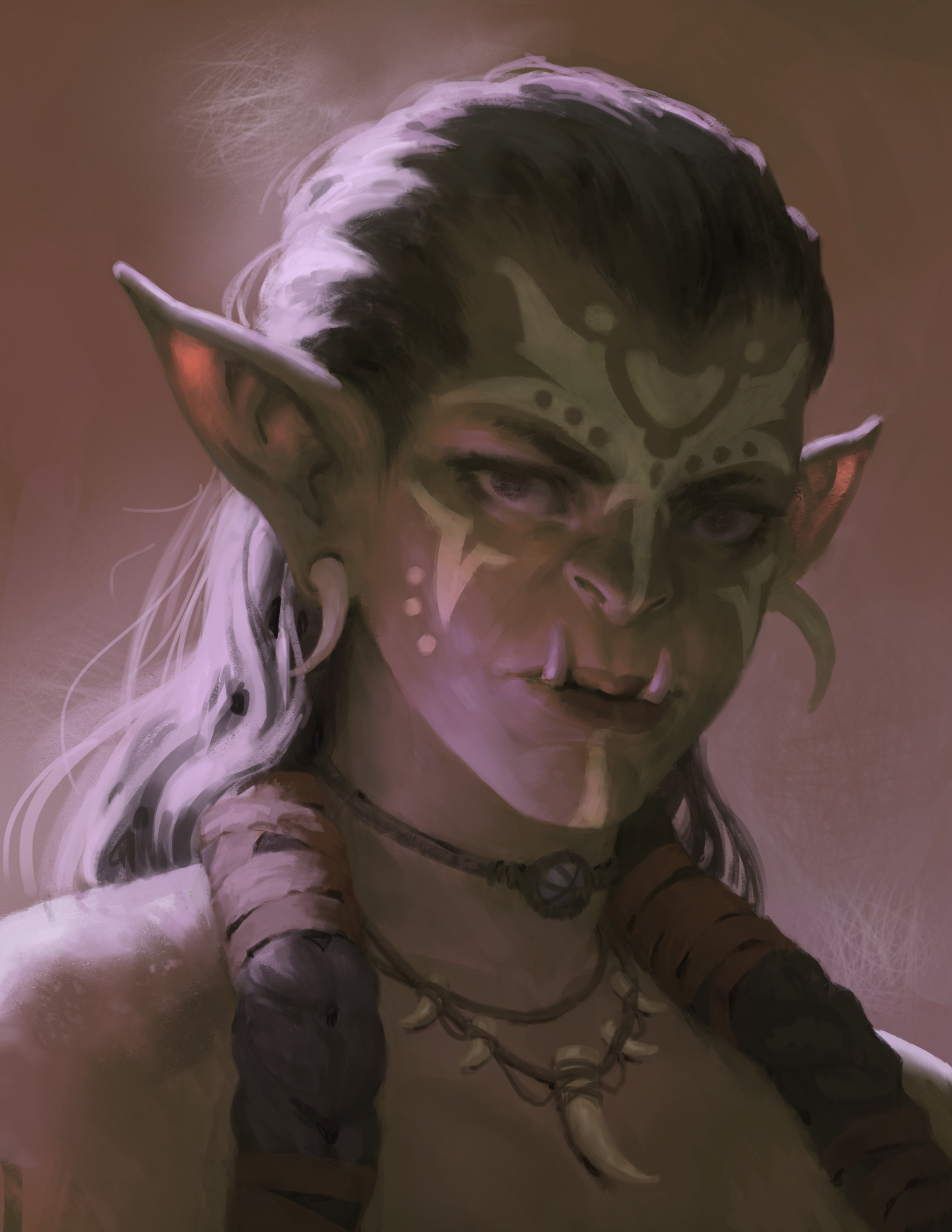
Orcs consider strength, life, and prowess to be beautiful. They are naturally quite tall and strapping. Orcs. rigorously train their bodies to be as large, muscular, and robust as can be, both for battle and for beauty. Beyond physical prowess, they also enjoy expressing their individuality through tattoos, piercings, pieces from other cultures, and proudly displaying spoils of their exploits, whether pelts of great beasts or a drinking skull of an honorable enemy they bested. For an Orc, one's status as a proud warrior should be visible before they speak a word.
Gender Ideals
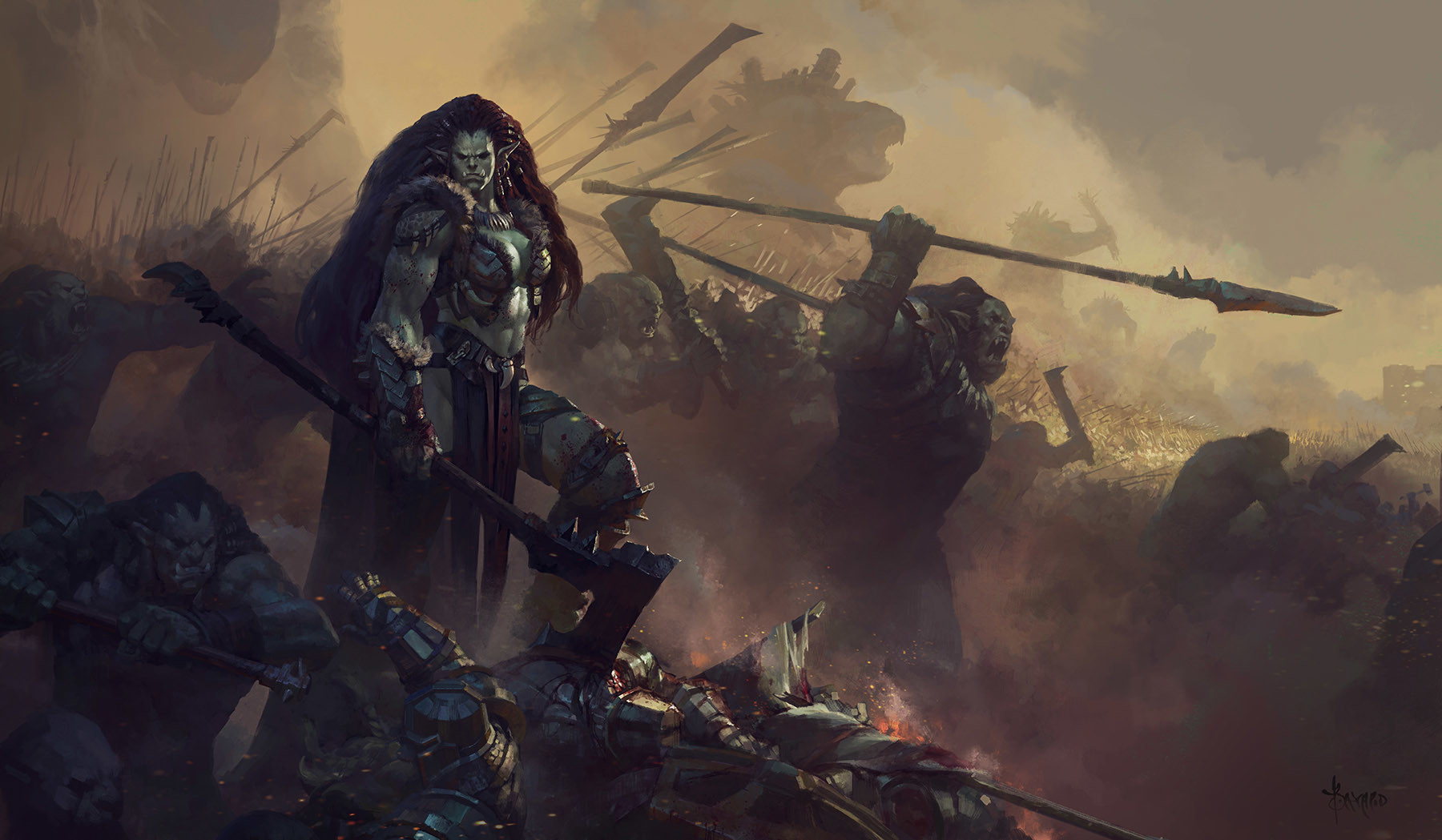
Due to the harshness of Orcish life for most tribes, scattered throughout the continent and always struggling for survival, fighting and defending the community is not a task that only half the tribe participates in. Both men and women are expected to be fearsome warriors and will train in the sword, the spear, and the axe. Beyond that, certain professions and roles tend to be filled by only men or women. For example, shamans and wise women are almost always women. These women cannot be married to a chieftain or anyone else and are considered to be married to the gods. They are also the only ones in a tribe permitted to grow old, to carry the wisdom and secrets of their kin, and protect them from spiritual weakness. Chieftains tend to be masculine, but there is no rule about it, and many women throughout the ages have risen to the highest echelons of strength in their tribes, becoming chieftains in their own right.
Courtship Ideals
Orcs tend to waste little time when it comes to finding a suitable mate. Preferring directness and plain speech, they will often outright tell the object of their affection their feelings and see where it takes them. Often, it takes more than confidence to impress an Orc, and something more bold will be needed. Sometimes, a gift, such as a keepsake from a great beast or a shiny bit of loot from a raid, will be offered to show sincerity. Other times, a good fight can show an Orc who someone really is, beneath the surface. Some outsiders imagine a courtship brawl to be a sign of taking someone by force. This is a misunderstanding; rather, it should be understood as a social ritual to make two people shed their insecurities and facades, tasting blood and experiencing pain together.
Relationship Ideals
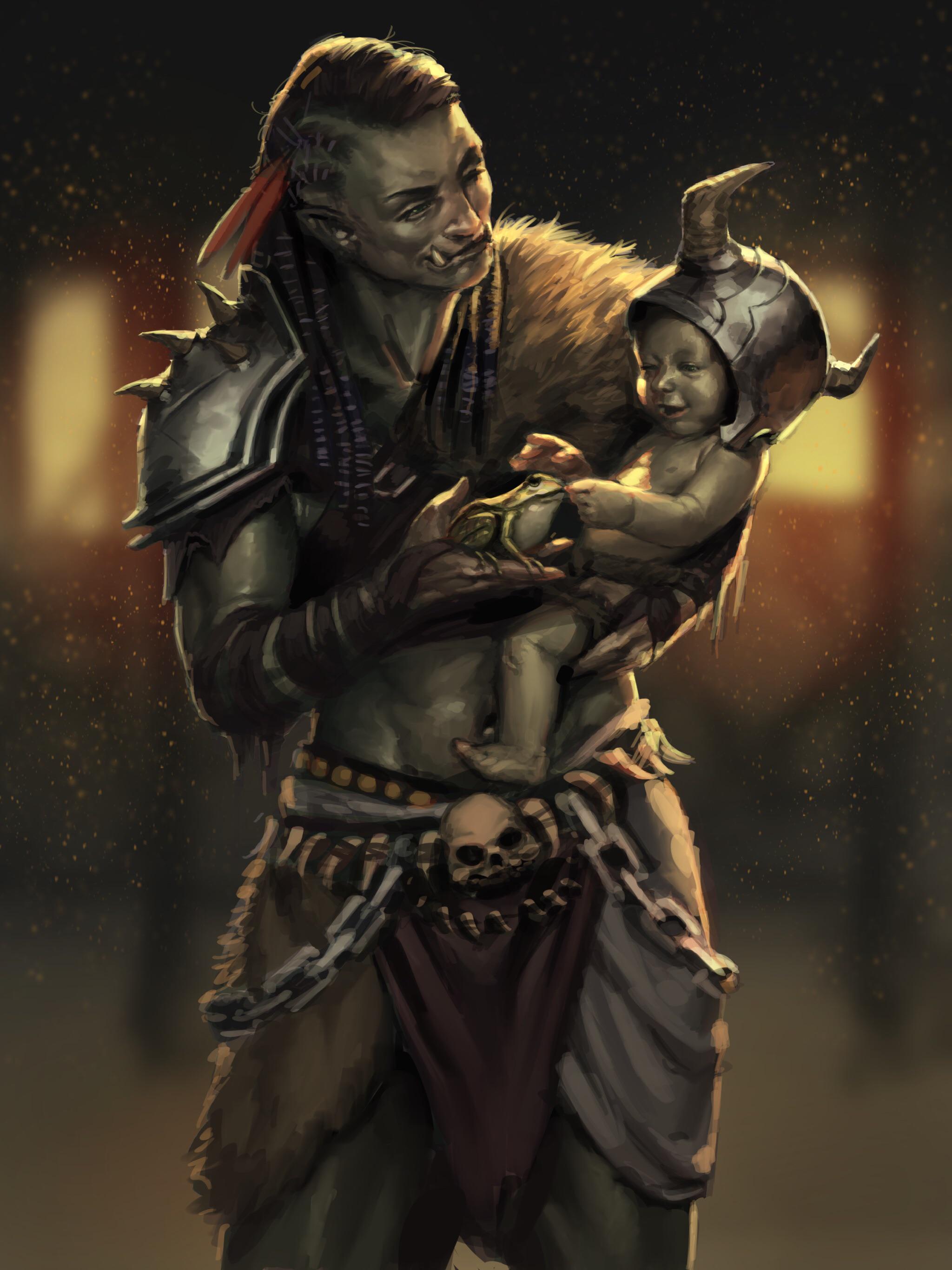
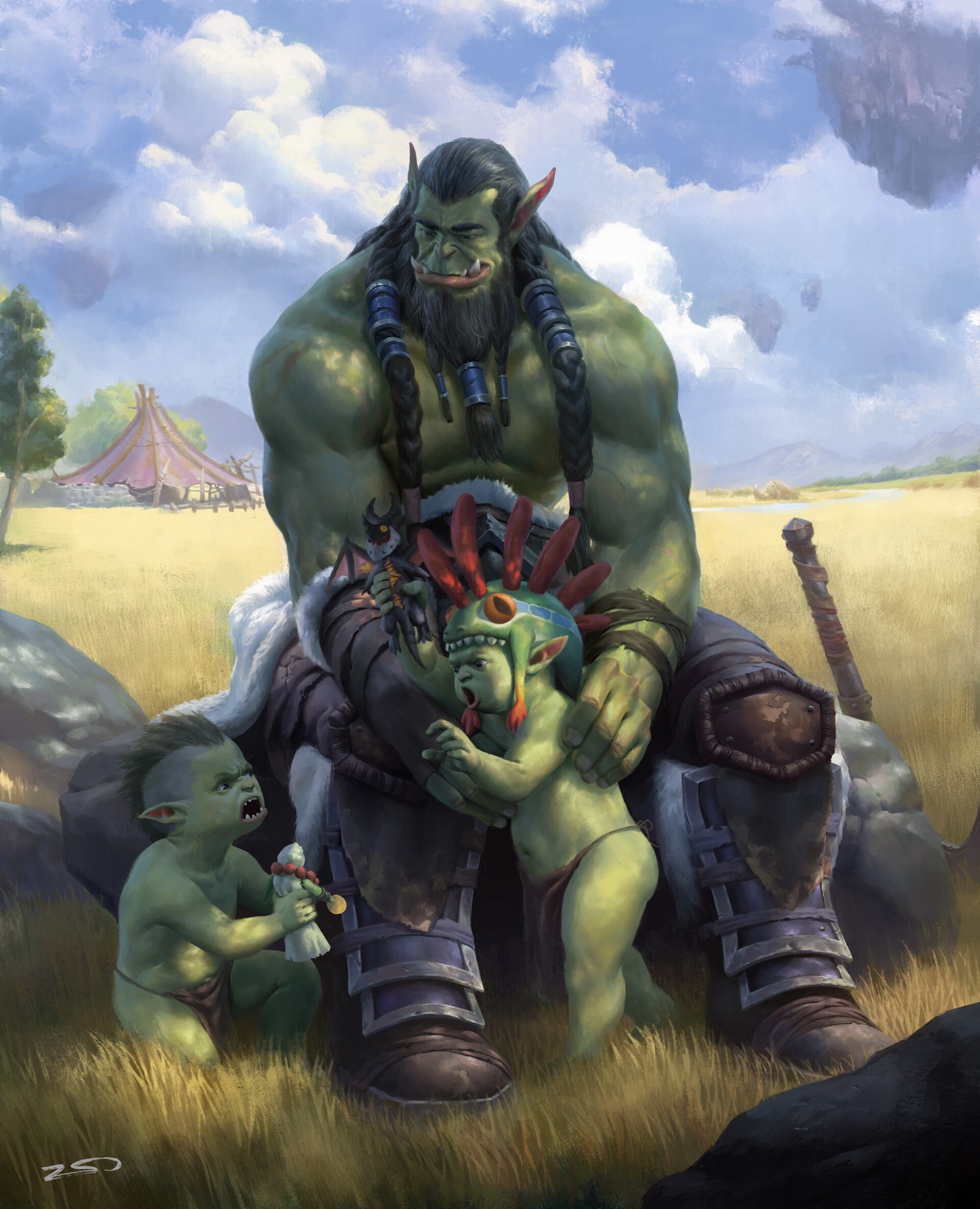
Orcish relationships tend to prioritize childbearing and close family bonds. They prefer to have many children and keep the tribe healthy and plentiful. For any Orc, raising many children is seen as something beautiful and attractive. As for relationships themselves, fierce loyalty and a willingness to die for one's love are customary. While previous family ties are kept intact, the relationship between lovers and their children is seen as primary, overriding previous ties to parents, siblings, and blood kin. Love between people of different tribes is fairly uncommon, but it does happen now and again. Some tribes are polygamous, while others are monogamous.
Comments