
Spell Weavers
In the beginning, Weftyr sat at her wheel and spun the most delicate threads. And as she spun, she brought forth beings to help her. In time, the world was woven on the Loom of Eternity.
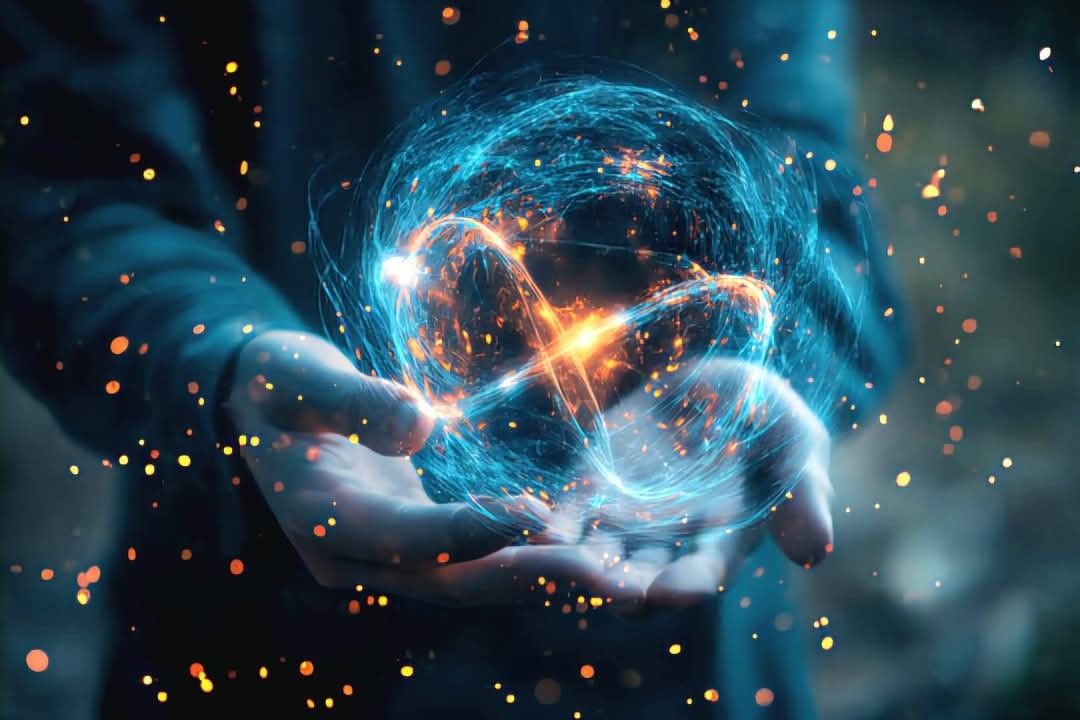
These Arcane Threads form the world around us. Those with skill and training can manipulate the threads around them to affect change.
Methods of Casting
In the modern era, casting is divided into two overarching types - the Arcane and the Divine. This divide could also be described as instructed and intuitive casting. In both cases, the mage manipulates the threads that surround them. When the changes are released, the mage's vision is brought into being.
Arcane Casting
These casters are taught a structured form of casting. These students will often be taught in an institution or by an individual mentor. Students will be taught a specific method of drawing on these threads and casting set spells. Institutions often have a set curriculum, starting with the analysis of the Threads, progressing to simple spells, and moving to more complex spells as the earlier steps are mastered.
The early teachings involve a mix of theory and analysis. Students will be taught standard spell notations. While learning that theory, they are also taught how to observe the threads around them. Eventually, they will be taught to interact with the threads.
When casting, the students will often follow a standard progression set by their institution. Early spells involve small changes to simple items (like changing the colour) and move towards interacting with the elements or changing their state (freezing water, lighting a candle ect).
Casters will then learn to interact with things on a more theoretical level. This can involve nudging chance (a coin landing on heads every time) and affecting living things (change hair colour, simple healing spells). Those who do not intend to make magic their primary career often stop at this point. This includes the children of noble families who see these institutions as a finishing school of sorts and use magic only as a status symbol.
Casters who are particularly skilled or particularly dedicated will continue their studies. At this level of study, Casters beging to bring things into being instead of affecting what is already there. More difficult healing spells are also among what is taught at this level because of the complexities created by interacting with living things. Students who graduate from this level are generally able to cast any but the most specialized spells. Students who complete this level of training can work with the Teleportation Circles with only a few hours of study to learn those specific spells. Teleportation Mages and advanced magical Healers comprise the majority of students at this level.
Study from this point focuses primarily on arcane research and the development of new spells. They will also work as teachers. Over time, these Casters often leave their Institutes to work independently on their specific areas of interest before taking an apprentice of their own.
Divine Casting
These casters generally belong to a religious order of some kind and learn an intuitive style of casting. Most of these Orders focus on the teachings of their faith and extrapolate these teachings to casting. Each student will have a unique method of casting spells, though there are often trends within an Order.
Early lessons are the same for students who learn to cast as for those who simply wish to study the faith. For most orders this involves some form of meditation and prayer. Students are also taught to observe the Threads around them as a way to witness the divine plan.
This is the point where the path diverts between those wishing to devote themselves specifically to the faith and those who wish to learn to cast in the name of a deity. Casters will be taught how to interact with the Threads. After that point, most instruction is self-guided. Students will be instructed on deeper meditations and forms of prayer specific to their Order and suggestions may be made on the type of spells which may suit them. However, students will not be instructed on a specific method.
Because of the personal nature of these spells, they rarely take the same form even if they have the same affect. This means that certain spells may be much more complex for some casters than others. For Casters who follow similar faiths this disparity tends to be less pronounced.
The intuitive casting method mean that Divine Casters tend to be more comfortable creating their own spells because this so closely lines up with how they learn familiar spells as well. It also means that casters can perform more flexible healing as the spell can be modified during the process in response to how the wound changes.

Comments