
Goblin
Goblins
Small, cunning humanoids shaped by fear, hunger, and the iron order of their gods.Overview
Goblins are small, sharp-toothed humanoids known for their quick wits, vicious tempers, and relentless adaptability. They thrive on the margins of other civilizations, lurking in forests, hills, ruins, and warrens carved into the earth. Driven by a mixture of fear, ambition, and religious fanaticism, goblins oscillate between pathetic scavengers and terrifying raiders when united under strong leadership.Goblins rarely fight fair. They prefer ambushes, traps, overwhelming numbers, and darkness to direct, honorable combat. To them, survival is the highest form of intelligence.
Appearance
Goblins are small humanoids, usually standing between 3 and 4 feet tall, with wiry builds and long, spindly limbs. Their skin ranges from sickly yellow-green to dull brown or ashen grey, often mottled with scars, burns, and ritual brands. Their ears are long and pointed, their noses sharp or flattened, and their eyes gleam red, yellow, or sickly amber in low light.Many goblins shave or hack off their hair for practicality, though some leaders or priests grow greasy topknots or crest-like manes as a show of status. Jewelry and trophies—bits of bone, teeth, and metal—are common, especially among warriors.
Biology & Lifespan
- Type: Small humanoid
- Sexual dimorphism: Minimal; females are often slightly broader in the shoulders, but both sexes can serve as warriors, scouts, or priests.
- Maturity: Goblins reach physical maturity around 8–10 years of age.
- Lifespan: Typically 30–40 years; few reach old age due to violence, disease, and internal power struggles.
- Diet: Omnivorous scavengers. They prefer meat (fresh or otherwise) but will eat roots, fungi, stolen grain, and almost anything remotely edible.
Temperament & Psychology
Goblins are shaped by a culture of fear, scarcity, and hierarchy. Most grow up under the constant threat of violence—from rivals, superiors, other species, or even their own gods’ expectations.This creates common traits:
- Opportunistic: Goblins instinctively look for advantage: higher ground, more allies, weaker foes.
- Cowardly in the open: Alone, many goblins flee. In numbers, or under a strong leader, they become bold and frightening.
- Vindictive: They rarely forget insults or humiliations. A goblin might wait years to sabotage an enemy or rival.
- Superstitious: Omens, signs, and dreams are taken seriously, especially if they can be twisted to justify existing grudges.
Culture & Society
Goblins organize into tribes, warrens, and warbands built on brutality and survival. The strong lead, the cunning survive, the weak obey—or die. Status is measured in slaves, loot, and the favor of their gods and priests.Common cultural elements:
- Hierarchy: Chieftains, warlords, or hobgoblin masters rule, backed by priests and elite warriors. Below them, common goblins jostle constantly for slightly better positions.
- Slavery: Enslaving outsiders (and sometimes other goblins) is normal, even sacred. Slaves are labor, shields, sacrifices, and bargaining chips.
- Raiding: Tribes often survive through raiding caravans, isolated farms, and poorly defended villages, then retreating into terrain they know intimately.
- Craft & Scavenging: Goblins are inventive with scrap. Their gear is often mismatched, but surprisingly functional and adapted with cruel ingenuity.
“In goblin tongues, ‘peace’ usually means ‘we are not killing you right now, but we might.’”
Language
Goblins speak their own harsh tongue, known as Grashkûl (“the We-Speech”). It is full of hard consonants, glottal stops, and clipped syllables. Commands and insults come easily in Grashkûl, and much of its vocabulary reflects war, hunger, and hierarchy.Goblins often know crude forms of Common or neighboring tongues, used mainly for threats, bargaining, and mockery.
Sample Goblin Phrases:
• Grash’tok! — “Alert!”
• Nakh’tuur? — “Where is it?”
• Krash dak grosh-elk! — “Get that filthy elk!”
• Maglubiyet grash! — “Maglubiyet with us!” / “For Maglubiyet!”
Religion
Most goblins pay fearful reverence to the goblinoid war gods, with particular devotion to:- Maglubiyet: The Mighty One, god of conquest and domination. To goblins, he is the distant storm of war.
- Khurgorbaeyag: The Overseer, a goblin god of slavery, order, and discipline. He is much closer to their daily lives.
Khurgorbaeyag’s priests and lash-masters are among the most feared figures in goblin society. They maintain order through whips, brands, and ritual punishments, preaching:
- Obedience through pain.
- Hierarchy through strength.
- Unity through domination.
Temples to these gods are often little more than fortified pits, altars of stacked skulls, or caverns daubed in blood and smoke where sacrifices and oaths are made.
Relations with Other Peoples
Goblins are widely distrusted and hated by most other cultures—and they return the sentiment.- Humans & Demihumans: Usually seen as prey, slavers, or masters to revolt against. Persistent raiding and kidnappings fuel long-standing vendettas.
- Hobgoblins: Feared and resented. Goblins view hobgoblins as harsh “older siblings” or overlords—both role models and oppressors.
- Bugbears: Respected and feared as brutal enforcers. Goblins treat them like living weapons, pointed at the enemy by priests or warlords.
- Other goblins: Rivals, tools, or temporary allies. Tribal infighting is common, especially when leadership is weak or divine favor is in doubt.
Names
Goblin names are short, hard, and often hissed or barked. Many are descriptive or earned over time rather than given at birth.Male Names: Drik, Krug, Vark, Snag, Grash, Thrin, Mog, Brakk, Skiv, Gorth
Female Names: Rikka, Grima, Shur, Vesh, Drekka, Norga, Thrima, Mogga, Skara
Epithets: One-Eye, Rat-Eater, Filth-Knife, Red-Hand, Chain-Biter, Elk-Hunter
Adventuring Goblins
Most goblins never leave the safety of their tribe’s warrens—but some do:- Runaways: Fleeing slavery, abuse, or a failed coup, they take to the wider world out of desperation.
- Exiles: Cast out for perceived weakness, blasphemy, or “thinking like a hum,” they wander in search of survival or revenge.
- Fanatics: Those with visions or “blessings” from the gods who seek relics, holy sites, or glorious death.
- Pragmatists: Goblins who realize they can become stronger, richer, or more feared by learning from outsiders before returning home.
An adventuring goblin often struggles between old instincts (fear, spite, treachery) and new opportunities (trust, respect, real power beyond the lash). This tension makes them volatile, but also deeply compelling as player-characters or recurring NPCs.
Goblins in the World
Goblins make excellent recurring villains, complicated allies, or tragic victims of their own brutal system. A warband may be a mere symptom of a deeper problem:- A priest of Khurgorbaeyag forging a disciplined slave-empire.
- A hobgoblin general using goblin tribes as expendable shock troops.
- A goblin uprising against their own overlords, spilling violence into neighboring lands.
“They breed in the shadows, bicker in the tunnels, and bleed on the front line. Laugh at goblins if you like—but never underestimate a people who survive by being afraid of everything and everyone, even their gods.”
Goblin Language (Grashkûl) – Lexicon
Note: Apostrophe (') marks a glottal stop. Vowels are short unless marked with a macron in the pronunciation notes (ā, ū, etc.).Pronouns & Little Words
I / me – zug (“zoog”)you (singular) – ruk (“rook”)
you (plural) – ruken (“ROO-ken”)
we / us – grash (“grash”)
they / them – targ (“targ”)
it / that thing – 'tuur (“toor”)
this – dek (“dek”)
that – dak (“dak”)
here – lurk (“lurk”)
there – lur-naar (“lur-NAHR” – lit. “place-north/away”)
who – nakhr (“NAHK-hr”)
what – nahg (“nahg”)
where – nakh (“nahk”)
when – nakh-tim (“nahk-teem”)
why – nah-raak (“NAH-raahk”)
not / no – nor (“nor”)
no (exclamation) – nor’ak! (“NOR-ak!”)
and – ug (“oog”)
but – gru (“groo”)
if – vak (“vak”)
yes – ghur (“ghoor”)
Commands & Common Verbs
to go – drok (“drok”)to come – drok-naar (“drok-NAHR” – lit. “go-toward”)
to run – dursh (“dursht”)
to walk – trom (“trom”)
to stop – krat (“krat”)
to see – vek (“vek”)
to hear – ursh (“oorsh”)
to smell – snakh (“snak”)
to speak – graal (“grahl”)
to shout – grallok (“GRAL-lok”)
to take / seize – krash (“krash”)
to grab / hold – krugash (“KROO-gash”)
to give – vekhn (“VEKH-n”)
to break – skar (“skar”)
to bind / chain – thang (“thang”)
to kill – drak’tul (“DRAK-tool” – lit. “blood-cut”)
to die – mor'g (“morg”)
to burn – naag'tul (“NAHG-tool” – “fire-cut”)
to obey – korvak (“KOR-vak”)
to rule / command – gorthak (“GOR-thak”)
to hide – skulk (“skulk”)
to sleep – drem (“drehm”)
to eat – glot (“glot”)
to drink / devour – bloth (“bloth”)
to bleed – drak’run (“DRAK-roon”)
to watch / guard – tok’ven (“TOK-ven”)
Battle, Rank & Social Words
war – grash’drak (“GRASH-drak” – “we + blood”)battle – drek’tul (“DREK-tool”)
fight (noun) – krash’drek (“KRASH-drek”)
enemy – ur-gak (“OOR-gak”)
outsider / non-goblin – ur-gak (same word)
friend / ally – ug-grash (“oog-grash” – “and-we”)
slave – vakna (“VAK-nah”)
master – thurog (“THOO-rog”)
overseer – gorth-lash (“GORTH-lash” – “command-whip”)
captain – krug-lash (“KROOG-lash” – “warrior-whip”)
warrior – krug (“kroog”)
scout – snakh-vek (“SNAK-vek” – “smell-see”)
priest – lash’ven (“LASH-ven” – “whip-watch”)
warband / group – grash
camp – lurk
prison / slave pen – vak-lurk (“VAK-lurk”)
order (command) – gorth (“gorth”)
discipline – krath-lash (“KRATH-lash”)
Insults & Expletives
filthy / unclean – grosh (“grosh”)coward – mehkrug (“MEH-kroog” – “half-warrior”)
weakling – thrin (“thrin”)
stupid – dumm-gak (“doom-gak”)
soft / gentle – mushk (“mooshk”)
traitor – ur-grash (“oor-grash” – “un-we”)
damn / curse – grakk! (“GRAK!”)
rot / corruption – skroth (“skroth”)
“curse you!” – vragh ruk! (“VRAGH rook!”)
“damn it all!” – grakk grash’tul! (“GRAK grash-tool!” – “damn us-blood!”)
Directions & Place
north – naar (“nahr”)south – surn (“soorn”)
east – vash (“vash”)
west – gorv (“gorv”)
up – urk (“urk”)
down – drokh (“drohk”)
toward / to – rak (“rak”)
away / from – rak’nor (“RAK-nor”)
path / trail – treg (“treg”)
cave – grolk (“grolk”)
forest – mor-naar (“mor-NAHR” – lit. “death-north / dark-wood”)
town / village – hum-lurk (“hoom-lurk” – lit. “human-place”)
fortress – gorth-lurk (“GORTH-lurk” – “command-place”)
Nature & Creatures
goblin – gob (“gob”)hobgoblin – hobgob (“hob-gob”) – they often keep the Common-ish form
bugbear – brakhr (“BRAHK-hr”)
human – hum (“hoom”)
elf – aelf (“aylf”)
dwarf – dorv (“dorv”)
orc – ork (“ork”)
wolf – vur (“voor”)
worg – vur’gob (“VOOR-gob” – “goblin-wolf”)
elk – elk (“elk” – borrowed from Common)
horse – harsh (“harsh”)
rat – skiv (“skiv”)
boar – gruush (“groosh”)
tree – branakh (“BRAN-ak”)
fire – naag (“nahg”)
smoke – naag’mur (“NAHG-moor” – “fire-breath”)
blood – drak (“drak”)
stone – grom (“grom”)
iron – irnak (“IR-nak”)
night – dren (“dren”)
day – solm (“solm”)
Religion & Concepts
god – magh (“magh”)gods – maghren (“MAGH-ren”)
Maglubiyet – Maglubiyet (stays the same; spoken with deeper emphasis)
Khurgorbaeyag – Khurgorbaeyag (“KHOOR-gor-bay-ag”)
Bargrivyek – Bargrivyek (unchanged)
holy / sacred – vak-magh (“vak-mag” – “slave-of-god”)
cursed – grosh’mor (“GROSH-mor” – “filthy-death”)
soul – drem’drak (“drem-drak” – “sleep-blood”)
spirit – naag’drem (“nahg-drem” – “fire-sleep”)
prayer – graal-magh (“grahl-mag” – “speak-god”)
sacrifice – drak-vek (“drak-vek” – “blood-given”)
oath – throk’graal (“THROK-grahl” – “strength-speech”)
honor (twisted, goblin sense) – throk-grash (“THROK-grash” – “strength-of-we”)
fear – drem-ur (“drem-oor” – “sleep-of-enemy”)
Qualities & Descriptions
big – gromm (“grom”)small – pikk (“pik”)
strong – throk (“throk”)
weak – thin (“thin”)
fast – durshak (“DUR-shak”)
slow – molg (“molg”)
good / useful – vrak (“vrak”)
bad / useless – trashg (“trashg”)
quiet – shhrek (“shrek” whispered)
loud – grall (“grall”)
brave – throk-krug (“THROK-kroog” – “strong-warrior”)
cowardly – mehkrug (“MEH-kroog” – “half-warrior”)
filthy – grosh
sacred – vak-magh
Numbers (1–10)
1 – akh (“akh”)2 – dugh (“doogh”)
3 – trug (“troog”)
4 – gar (“gar”)
5 – mak (“mak”)
6 – shak (“shak”)
7 – sevnak (“SEV-nak”)
8 – aght (“akt”)
9 – nagh (“nahg”)
10 – dreg (“dreg”)
many / a lot – grash’grash (“grash-grash” – “we-we”)
Sample Phrases
“Alert!” – Grash’tok!“Where is it?” – Nakh’tuur?
“To the north!” – Rak-naar!
“Get that filthy elk!” – Krash dak grosh-elk!
“Set camp here.” – Nakh-tha lurk. (lit. “make-place here”)
“Kill the outsider!” – Drak’tul ur-gak!
“For Maglubiyet!” – Maglubiyet grash! (lit. “Maglubiyet-with-us!”)
“Obey the Overseer!” – Korvak Khurgorbaeyag!
“Curse you, human!” – Vragh ruk, hum!
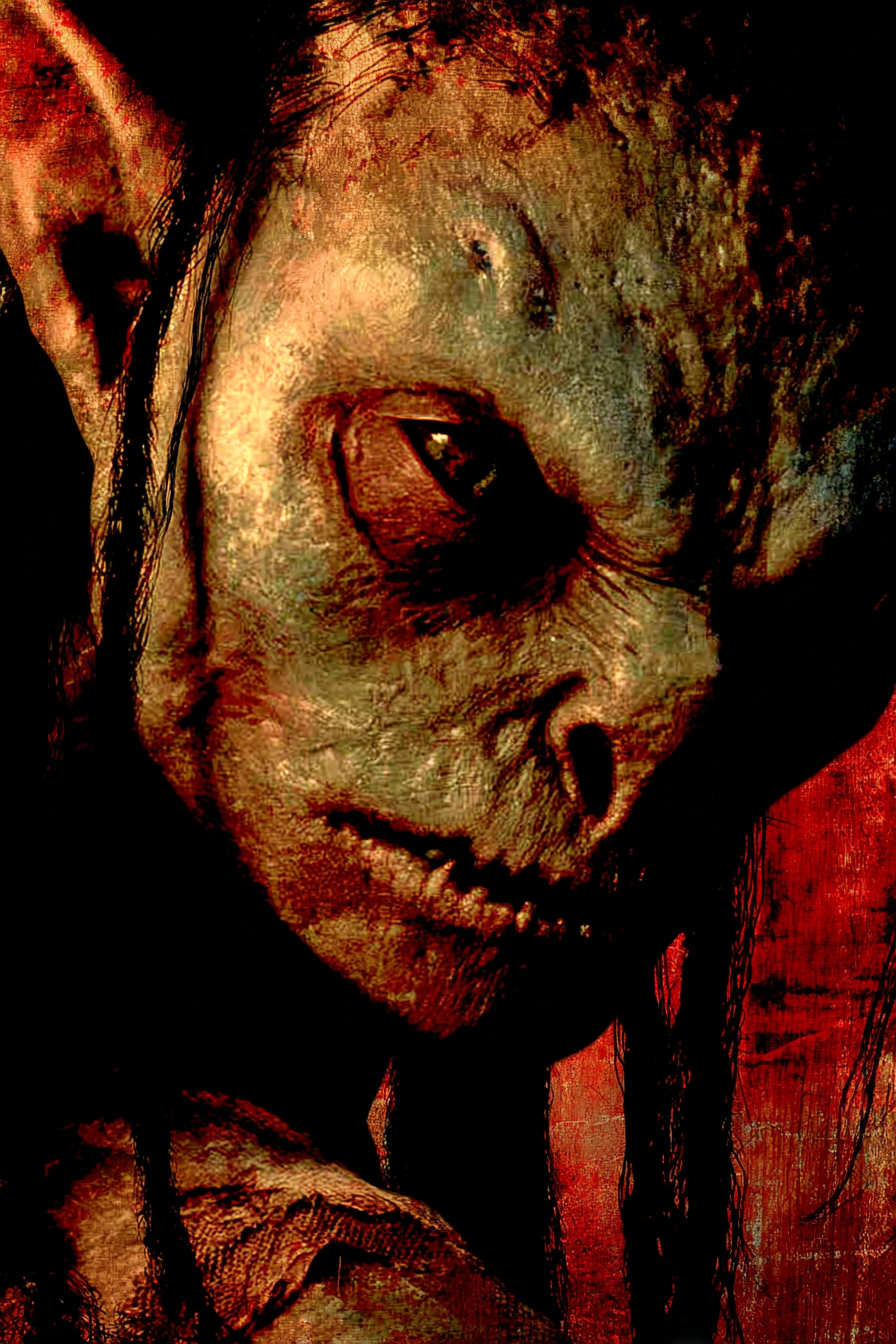
by Chad Watson via Midjourney

Comments