
Sea Elf
Sea elves are the children of moonlight and tide who chose the water when the ocean tore itself into the sky. Where other elves clung to soil and forest, these folk followed the climbing sea into its new home, vanishing into hanging lagoons, cloud-shadowed kelp forests, and the glassy shallows that cling to reef and walker alike. To most dryfolk they are rumor and song more than neighbors, glimpsed as pale shapes among the waves or as bright eyes beneath the piers at dusk.
Among the peoples of the High Seas, sea elves are known for quiet artistry, eerie songs that carry through water and cloud, and a stubborn refusal to let the ocean belong to anyone cruel or careless. They are the poets and wardens of the shallow sky-sea, content to remain hidden until a threat rises from the deep or a story is worth leaving home for.
Their hair tends to flow in loose, heavy strands that trail in the water, with colors that echo coral and reef growth: seaweed black, kelp green, foam-white, sandy blonde, and streaks of vivid blue or violet. Eyes are large and reflective, in shades of gold, silver, sea-green, or ink-black, and can appear almost solid underwater. Ears are long and fin-edged, with delicate translucent frills that flutter when they swim.
Sea elves favor close-fitting, flowing garments that move well in water. Woven sea-silk, treated leathers, and layered kelp-cloth are common, often embroidered with tiny shells, glass beads, and motifs of waves, stars, and fish. Armor is usually elegant coral plate or scaled mail grown and shaped by magic rather than hammered metal, light enough to swim in but strong enough to turn a spear.
They organize themselves around extended families and close-knit pods, each led by elders who remember what the world was like before the sea climbed skyward. Decisions are debated in long, measured councils, usually accompanied by art and music. Sea elves do not rush. They plan for seasons and centuries, not days. They are protective of their homes and routes, but prefer to guide trouble away rather than meet it head on, at least at first.
Art and memory sit at the center of their lives. Sea elves carve stories into coral, braid lineages into beadwork, and sing sagas that can last for hours. Every enclave maintains a memory reef, a place where the shells, carvings, and magical echoes of past events are tended. Many sea elf mages are also archivists, shaping currents to replay old battles or storms as shimmering illusions for the community.
Sahuagin are their oldest and most hated enemies. The shark-folk claim that all sea, including the High Seas, belongs only to them. Their raids on shallow settlements and hunting grounds are brutal and relentless. Sea elves answer with wards, spear walls, and finely targeted magic rather than brute force, but when a reef has been bloodied enough times, entire enclaves can turn into quiet, merciless war-hosts.
Individually, sea elves often appear serene and slightly distant. They take insults lightly but do not forget them. Friendship is slow to win and slower to break. Curiosity, though, runs underneath that still surface. Many sea elf adventurers are driven by wanderlust, questions about the world below the High Seas, or a desire to test their skills far from the safe rhythms of home. A few feel called to act as ambassadors, trading with sky-sailors and landfolk and trying to keep the peace between the ocean above and the world below.
They are similar in size to other elves, usually between 150 and 185 centimeters tall, but they are lighter and more buoyant. They move through water with very little wasted effort, using fine shifts in posture and limb angle to slip along currents. On land their gait can seem smooth and unhurried, as if they are always saving their strength for the next dive.
Like other elves, sea elves mature slowly. Childhood stretches for many decades, with an adult usually declaring themself grown sometime after their first century. They can live for well over 700 years if disease or violence does not cut that time short. Age shows in the fading of vibrant colors to soft pastels, the deepening of facial lines at the corners of eyes and lips, and in a certain stillness of movement. Elder sea elves often claim to feel the “weight” of all the tides they have lived through, but very few are eager to put that burden down.
Sleep for sea elves is more like a trance. Even in deep rest they remain faintly aware of currents and sound, which helps them avoid predators and sahuagin raids. Some elders can share waking dreams with younger elves, letting them relive old journeys or battles through a shared trance.
Many enclaves are grown rather than built. Coral is coaxed into arches and domes, kelp is braided into living walls and nets, and pockets of air are caught and shaped into dry chambers for trade and guests. Luminous fish and enchanted shell-lamps provide light. The line between “city” and “reef” is often impossible for outsiders to spot.
Sea elves also maintain a scattering of settlements in the lower world. Some cling to the coasts beneath High Seas ports, occupying sea caves and flooded ruins and acting as quiet guardians of harbors that treat the ocean kindly. Others live near great river mouths, tidal marshes, and ancient drowned forests that still whisper of the time before Saltfall. These ground-touched enclaves tend to be more cosmopolitan and more used to dealing with tritons, sea-born folk, and surface sailors.
They prefer waters where light can still reach the bottom. Deep, lightless trenches and chaotic storm-zones are usually ceded to tritons, sahuagin, and stranger things. That said, every sea elf court maintains a handful of scouts and mages who know how to reach those dark places when they must.
Their hatred of sahuagin is open and absolute. The shark-folk raid sea elf settlements, defile memory reefs, and try to claim every stretch of sea as their rightful hunting ground. Sea elves answer in kind, sabotaging sahuagin shrines to Sekolah, luring sharks away, and striking at leaders with precise, surgical raids. These conflicts rarely reach the surface, but their echoes shape much of sea elf military culture.
Relations with tritons are complex but generally friendly. Tritons see themselves as stewards of all High Seas waters, while sea elves are more rooted to specific enclaves and routes. They often cooperate against sahuagin and other threats, though they can argue fiercely over who has the right to patrol or judge a given stretch of reef. Sea elves tend to find tortles, locathah, and water genasi easy company, and many mixed communities form in shared shallows.
With landfolk, sea elves see a reflection of their own people from long ago. Humans fascinate and frustrate them in equal measure, burning bright and changing quickly. Dwarves and gnomes earn respect for solid craftsmanship and stubbornness. Smallfolk impress sea elves with their resilience, and birdfolk like aarakocra and owlin are viewed with curiosity as cousins of the upper air. Orcs, goliaths, and other sturdy peoples often find work alongside sea elves as hired guards or storm-partners.
Sea elf adventurers who leave their enclaves often become envoys, scouts, or loreseekers, carrying songs and stories between High Seas, coasts, and deep inland lands. Many adopt or translate new names as they go, and even the most rooted elders understand that sometimes a child of the sea must go walking to learn what the tide cannot teach.
Among the peoples of the High Seas, sea elves are known for quiet artistry, eerie songs that carry through water and cloud, and a stubborn refusal to let the ocean belong to anyone cruel or careless. They are the poets and wardens of the shallow sky-sea, content to remain hidden until a threat rises from the deep or a story is worth leaving home for.
Appearance
Sea elves share the long-limbed grace of their landborn kin, but everything about them has been shaped by water. Their bodies are slender and flexible, with slightly longer limbs and narrow hands that end in webbed fingers. Skin tones range from pale shell-white through copper and bronze to deep seagrass green and soft, stormy blue. Along the cheeks and ribs, faint patches of pearly scales often catch the light like wet stone.Their hair tends to flow in loose, heavy strands that trail in the water, with colors that echo coral and reef growth: seaweed black, kelp green, foam-white, sandy blonde, and streaks of vivid blue or violet. Eyes are large and reflective, in shades of gold, silver, sea-green, or ink-black, and can appear almost solid underwater. Ears are long and fin-edged, with delicate translucent frills that flutter when they swim.
Sea elves favor close-fitting, flowing garments that move well in water. Woven sea-silk, treated leathers, and layered kelp-cloth are common, often embroidered with tiny shells, glass beads, and motifs of waves, stars, and fish. Armor is usually elegant coral plate or scaled mail grown and shaped by magic rather than hammered metal, light enough to swim in but strong enough to turn a spear.
Culture & Society
Sea elf communities are small, quiet, and intensely rooted in place. Most live in hidden enclaves in the shallows of the High Seas, within kelp forests, reef shelves, or the flood-carved caves. These enclaves are often lit by soft bioluminescence and moonlight filtered through water, filled with drifting song and slow, careful crafts.They organize themselves around extended families and close-knit pods, each led by elders who remember what the world was like before the sea climbed skyward. Decisions are debated in long, measured councils, usually accompanied by art and music. Sea elves do not rush. They plan for seasons and centuries, not days. They are protective of their homes and routes, but prefer to guide trouble away rather than meet it head on, at least at first.
Art and memory sit at the center of their lives. Sea elves carve stories into coral, braid lineages into beadwork, and sing sagas that can last for hours. Every enclave maintains a memory reef, a place where the shells, carvings, and magical echoes of past events are tended. Many sea elf mages are also archivists, shaping currents to replay old battles or storms as shimmering illusions for the community.
Sahuagin are their oldest and most hated enemies. The shark-folk claim that all sea, including the High Seas, belongs only to them. Their raids on shallow settlements and hunting grounds are brutal and relentless. Sea elves answer with wards, spear walls, and finely targeted magic rather than brute force, but when a reef has been bloodied enough times, entire enclaves can turn into quiet, merciless war-hosts.
Individually, sea elves often appear serene and slightly distant. They take insults lightly but do not forget them. Friendship is slow to win and slower to break. Curiosity, though, runs underneath that still surface. Many sea elf adventurers are driven by wanderlust, questions about the world below the High Seas, or a desire to test their skills far from the safe rhythms of home. A few feel called to act as ambassadors, trading with sky-sailors and landfolk and trying to keep the peace between the ocean above and the world below.
Biology & Lifespan
Sea elves are amphibious, able to breathe both air and water, though they are most comfortable in cool, clear shallows. Their lungs are supported by subtle gill structures along the neck and ribs, and their bodies adjust quickly to changes in pressure and temperature. They can survive long periods on land, but prolonged time away from open water leaves them restless and physically strained, and their skin cracks without regular immersion.They are similar in size to other elves, usually between 150 and 185 centimeters tall, but they are lighter and more buoyant. They move through water with very little wasted effort, using fine shifts in posture and limb angle to slip along currents. On land their gait can seem smooth and unhurried, as if they are always saving their strength for the next dive.
Like other elves, sea elves mature slowly. Childhood stretches for many decades, with an adult usually declaring themself grown sometime after their first century. They can live for well over 700 years if disease or violence does not cut that time short. Age shows in the fading of vibrant colors to soft pastels, the deepening of facial lines at the corners of eyes and lips, and in a certain stillness of movement. Elder sea elves often claim to feel the “weight” of all the tides they have lived through, but very few are eager to put that burden down.
Sleep for sea elves is more like a trance. Even in deep rest they remain faintly aware of currents and sound, which helps them avoid predators and sahuagin raids. Some elders can share waking dreams with younger elves, letting them relive old journeys or battles through a shared trance.
Homelands & Environment
Traditional sea elf realms lie in the bright shallows of the High Seas. Think of forests of drifting kelp anchored to broken cliff faces, coral spires growing down from the underside of islands, and glass-clear basins that hang above the clouds where moonlight falls directly into the water. These places are often hidden from above by mist, rock overhangs, or enchantment, which suits the sea elves very well.Many enclaves are grown rather than built. Coral is coaxed into arches and domes, kelp is braided into living walls and nets, and pockets of air are caught and shaped into dry chambers for trade and guests. Luminous fish and enchanted shell-lamps provide light. The line between “city” and “reef” is often impossible for outsiders to spot.
Sea elves also maintain a scattering of settlements in the lower world. Some cling to the coasts beneath High Seas ports, occupying sea caves and flooded ruins and acting as quiet guardians of harbors that treat the ocean kindly. Others live near great river mouths, tidal marshes, and ancient drowned forests that still whisper of the time before Saltfall. These ground-touched enclaves tend to be more cosmopolitan and more used to dealing with tritons, sea-born folk, and surface sailors.
They prefer waters where light can still reach the bottom. Deep, lightless trenches and chaotic storm-zones are usually ceded to tritons, sahuagin, and stranger things. That said, every sea elf court maintains a handful of scouts and mages who know how to reach those dark places when they must.
Relations with Other Peoples
Sea elves are cautious neighbors. To sky-sailors and coastal communities they appear as distant, occasionally helpful ghosts. A crew that respects fishing grounds, avoids dumping waste, and responds well to gentle warnings is likely to find a sea elf observer or guide in times of trouble. Ships that hunt whales for sport, tear up reefs, or ignore agreed channels may discover their nets empty, their hulls tangled in kelp, or their course quietly redirected.Their hatred of sahuagin is open and absolute. The shark-folk raid sea elf settlements, defile memory reefs, and try to claim every stretch of sea as their rightful hunting ground. Sea elves answer in kind, sabotaging sahuagin shrines to Sekolah, luring sharks away, and striking at leaders with precise, surgical raids. These conflicts rarely reach the surface, but their echoes shape much of sea elf military culture.
Relations with tritons are complex but generally friendly. Tritons see themselves as stewards of all High Seas waters, while sea elves are more rooted to specific enclaves and routes. They often cooperate against sahuagin and other threats, though they can argue fiercely over who has the right to patrol or judge a given stretch of reef. Sea elves tend to find tortles, locathah, and water genasi easy company, and many mixed communities form in shared shallows.
With landfolk, sea elves see a reflection of their own people from long ago. Humans fascinate and frustrate them in equal measure, burning bright and changing quickly. Dwarves and gnomes earn respect for solid craftsmanship and stubbornness. Smallfolk impress sea elves with their resilience, and birdfolk like aarakocra and owlin are viewed with curiosity as cousins of the upper air. Orcs, goliaths, and other sturdy peoples often find work alongside sea elves as hired guards or storm-partners.
Sea elf adventurers who leave their enclaves often become envoys, scouts, or loreseekers, carrying songs and stories between High Seas, coasts, and deep inland lands. Many adopt or translate new names as they go, and even the most rooted elders understand that sometimes a child of the sea must go walking to learn what the tide cannot teach.
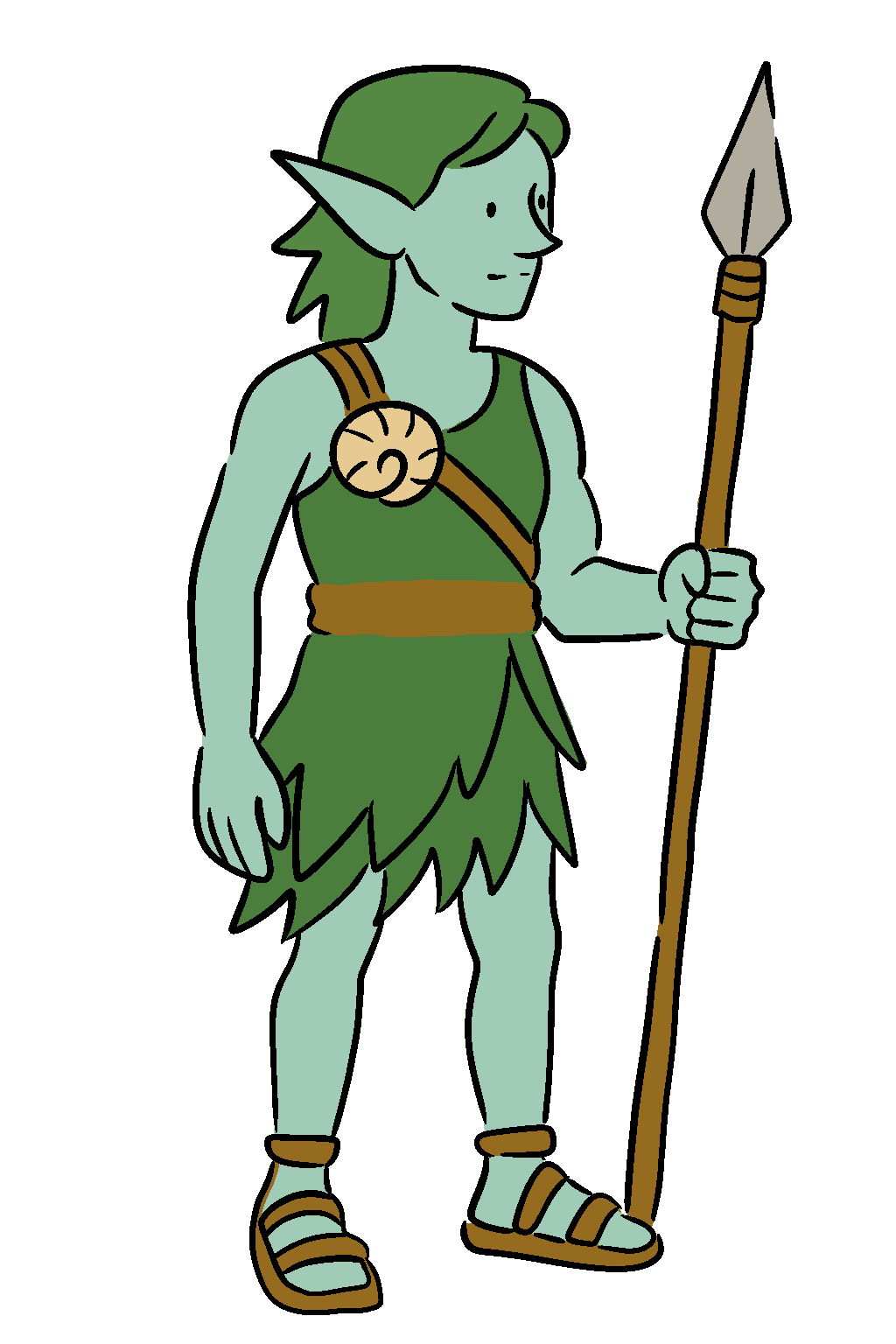
Sea Elf by Lou
Basic Facts
- Classification: mortal, elven sky-sea folk
- Average Size: medium, roughly 150 to 185 cm tall, slender build
- Average Lifespan: typically 700+ years, adulthood declared after the first century
- Typical Homelands: High Seas shallows, kelp forests, reef cities, coastal caves beneath High Seas ports
- Common Languages: Elvish, Trade Tongue, Seaspeech dialects.
- Societal Structure: small family enclaves and pods, gathered into loose courts and city realms
- Rarity: uncommon, common in certain High Seas regions, rare far from large bodies of water

Comments