
Thundrass
Properties
Material Characteristics
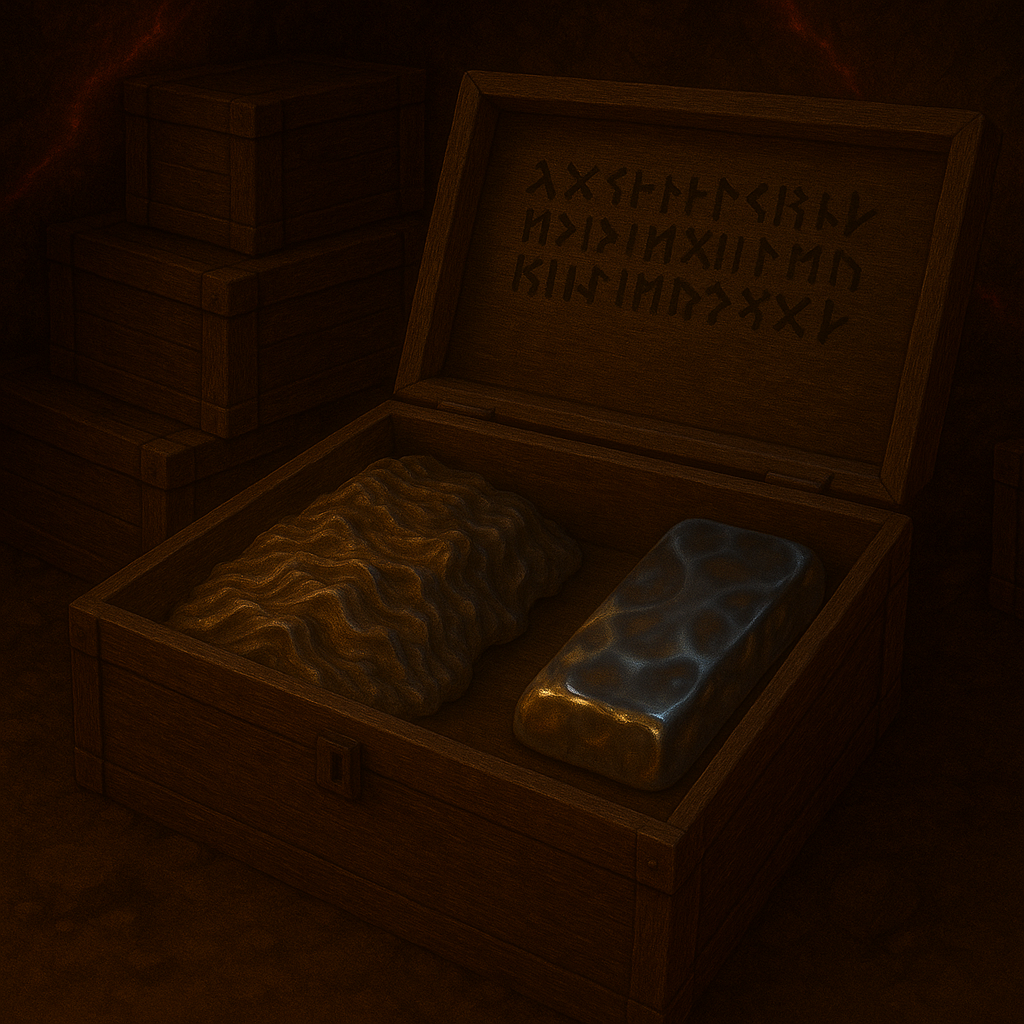
Thundrass only slightly varies between its raw and refined form with both containing shimmering ripple patterns which produces a natural "Damascus look" in finished products. Has a magical conductivity rating of 9 out of 10.
Geology & Geography
Native to the Stormshatter Coastline of Macilya Lérië, Thundrass is formed when oceanic lightning strikes metallic sediment. Each storm cycle renews its supply and many mining teams time their operations with the seasonal thunder tides. Occasionally underwater phenomenon in the Tho Strait causes extreme lightning storms, significantly increasing yields.
History & Usage
Discovery
Thundrass was discovered in the year 6890 when oceanographers noted thunder‑resonance in a new oceanic seam. Oceanic miners descended into the charged depths wearing protective layers around their diving suits and quickly discovered thick layers of the material coating many of the seam's walls.
Everyday use
Thundrass' unique shape makes it ideal for many sonic applications such as sound cannons, sirens, resonant armor and thunderplates. Many emergency service vehicles across Beaumont use trace amounts of Thundrass in their sirens which amplifies the tone nearly tenfold.
Refinement
For the best results smiths often forge to a metronome set between 81 and 89 beats per minute. This helps the material retain its signature design and helps reduce flatness in the reverberated tone. While it has been deemed unnecessary, traditionalist smiths choose to quench on with oil subjected to low-frequency harmonic vibrations throughout the process.
Byproducts & Sideproducts
Slag from Thundrass has been renowned for its excellent use in tuning forks and other musical tuning devices. Sound baffles, dampeners and silencers also see traces of Thundrass slag in their construction.
Reusability & Recycling
Thundrass cannot be reforged but old or damaged products can be melted down for slag, allowing for nearly endless recycling.
Type
Ore
Value
9 gold per gram
Rarity
Uncommon
Color
silver with an oily sheen
Melting / Freezing Point
3300° T
Density
540 lb/ft³