
Drakescale Alloy
Properties
Material Characteristics
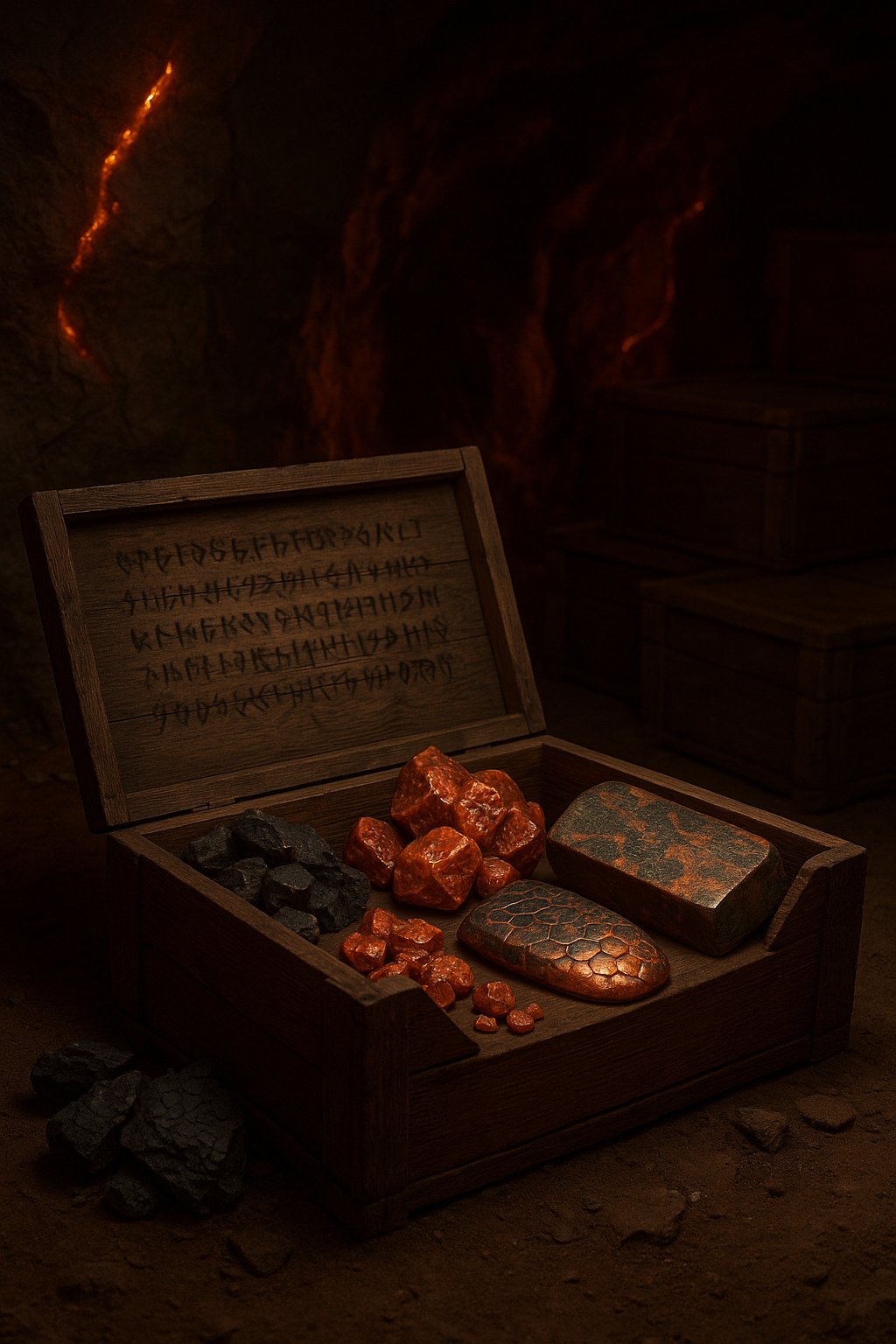
Shimmering lamellar veins with scale patterns catch the light like polished armor, reflecting the legacy of dragons. Regardless of any etched or stamped pattern or state of the material once it is forged, it always forms into a scale-like pattern over 2-15 years. Has a magical conductivity rating of 8 out of 10.
Origin & Source
Drakescale Alloy originated from the forges of Egron Paldertapp where blacksmiths first combined molten drakebone dust and refined Tinverium. The alloy’s discovery coincided with the first domesticated drakes used in industrial labor and was originally part of early-Necromancy experiments to create living prosthetics.
History & Usage
Discovery
Drakescale Alloy was discovered in the year 5112 when Tinverium was first mixed with drakebone dust by BRN Necromancers. This, along with hundreds of other alloys using once-living organic compounds sparked a medical revolution which has since been replaced with nanotechnology.
Everyday use
Drakescale Alloy sees no common use any longer due to more reliable materials as well as laws protecting the remains of creatures, though it can still be found in ancient warforged, pre-revolutionary ceremonial armors and heatflux weapons.
Cultural Significance and Usage
Drakescale Alloy was once regarded as a major advancement in medical technology, allowing for easy casting and replacing of lost or broken bones. Individuals with Drakescale prosthetics often spoke of hallucinatory, lucid dreams and several verifiable reports confirm fluent draconic speech even though the subject lacked comprehension of their own words. Lasting for only three centuries before being outlawed, Drakescale -and other organic compounded metals- Alloy was renowned by activists as the landmark material for posthumous rights leading to a global ban of reusing remains.
Refinement
Drakescale Alloy's refinement processes have been intentionally redacted due to international law.
Byproducts & Sideproducts
Bone ash was a common component of the alloy which could be fired with ceramics to create a similar scaled effect.
Environmental Impact
Mass excavation and slaughter of drakes decimated the population and caused waves of city-wide sickness due to the exhumed bacteria from the corpses. Hatcheries struggled to maintain a population of drakes which lead to further ecological impacts such as regional food shortages, severe injuries and dismemberment at the hands of the creatures and centuries of animal activist protests and riots.
Reusability & Recycling
Any Drakescale Alloy found today is required to be buried at designated burial grounds.
Distribution
Trade & Market
Trade is strictly prohibited.
Law & Regulation
The trade, possession and use of any organic-compound alloys mandates a life sentence in prison without opportunities for early release. Many Kiqueo countries enact the death penalty for the trade or attempted recreation of this alloy.
Type
Ore
Value
750 gold per gram
Rarity
Exotic
Color
matte gray-black and glossy copper
Melting / Freezing Point
4300° T
Density
560 lb/ft³