

Tanimaut
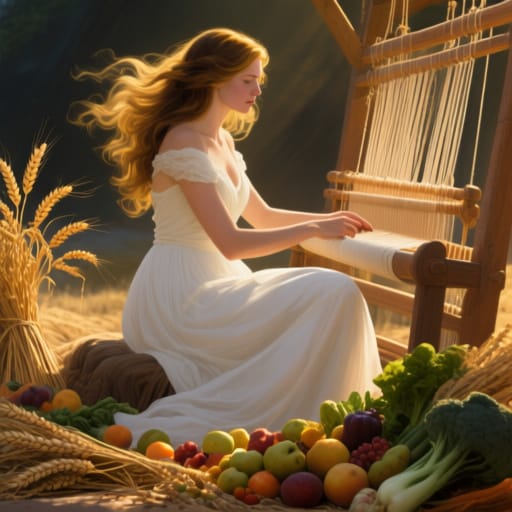
Tanimaut is the goddess of motherhood, agriculture, and compassion. She is also frequently called upon by crafters, especially weavers, as she is believed to be the principal weaver of the very fabric of reality.
She is worshipped individually, and also as part of the triad called the Fatespinners. Within the Fatespinners, she is seen as the center of the triad, the measurer of the thread of life, the Mother.
Her spouse and consort is Medenis, god of fatherhood, hunting and forestry. One of her offspring is Sukunabikona, god of magic, healing, hot springs, and brewing. Tanimaut's faithful believe that the reason Sukunabikona is so small of stature is because when Tanimaut is working a difficult section of the Great Weave of the cosmos, she calls upon her son to serve as her shuttle.
Most parts of Keradrin honor Tanimaut at two festivals each year, one in the early spring at planting time, and one in early autumn at final harvest time. Music, dance and feasting accompany rituals to honor the goddess and bless the season's seeds (in spring) and the fruits of the harvest (in fall).
Rituals to honor the birth of children are common among the worshipers of Tanimaut; it is also common for childless couples to petition the goddess to bless them with offspring of their own.
Large temples dedicated to Tanimaut are rare, even in cities; her clergy tend to serve out of much smaller temples and shrines, closer to the fields, pastures and craft halls where her worshipers live and work. Adventuring clerics or paladins dedicated to Tanimaut are relatively rare, and where they do exist tend to focus on healing and supporting their more martial comrades. It is rare for Tanimaut to intervene or interact directly with her worshipers; however, such interventions or interactions, when they do take place, quickly assume the status of legend.
Her symbols are the loom and a wheat sheaf crossed with a bundle of flax; her sacred animals are the cow, goat and chicken. It is common for her temples to be decorated with fruit blossoms in the spring and autumn leaves and evergreen boughs in the fall.

Comments