
Sukunabikona
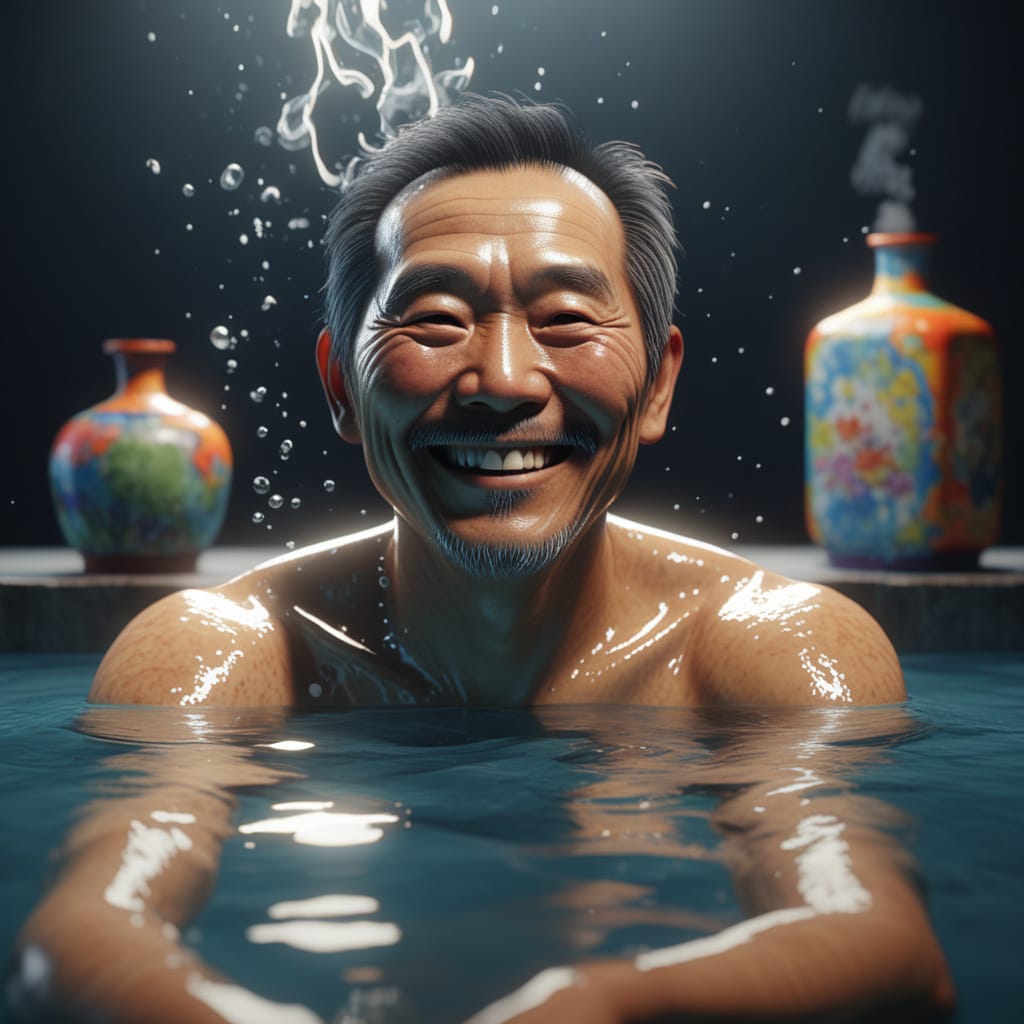
Sukunabikona is the god of magic, hot springs, healing, and brewing (especially of sake). Healers, many druids, hedge magicians, and brewers are richly represented among his worshippers. Those who are fond of carousing and revelry pay homage to him, often praying for a pleasant night of drinking without the hangover in the morning. He is a happy god, almost always depicted as smiling or laughing.
Sukunabikona is almost always depicted as a very small person, no more than a foot tall. He is the child of the forest god Medenis and Tanimaut, the goddess who weaves the fabric of reality; it is said that when Tanimaut must weave a most difficult section of the Great Weave of the cosmos, she calls upon her son to serve as her shuttle.
His main festival day falls on the the last full moon of the spring season, and commemorates the day when a young Sukunabikona discovered a magical hot spring and used it to heal himself of a debilitating illness. He is also celebrated during the harvest of rice, wheat, hops, barley, and other crops used in brewing.
Temples to Sukunabikona are located in most cities and towns throughout Keradrin, and shrines to him can be found in most hot springs and breweries in smaller settlements. His larger temples can best be described as one part spa, one part brewery, and there is always a taproom where drinks may be had for a donation to the temple. Sukunabikona's clergy make a good living selling the produce of their breweries, enough that they can offer healing services to worshipers and others at little to no cost to the patient.
Unlike many of the pantheon, but like his fellow deity Bahamut, Sukunabikona is known to wander the material plane of Keradrin, as well as the Feywild and occasionally even the Shadowfell. Like Bahamut, Sukunabikona generally does so in disguise, often as a young halfling, leshy, pixie or other ancestry of small stature; less often he will take the disguise of a person of more typical humanoid stature. He is often accompanied in these wanderings by Kira Suma, originally the spirit inhabiting the hot spring that healed the young god and who now serves as his companion, teacher and bodyguard. She too usually remains incognito, in some manner that compliments her lord's chosen guise.
These travels have, not surprisingly, resulted in many tales and legends. One tale, repeated in many variations across the continent, relates how the god visited a young farmer (sometimes herdsman or crafter, depending on the telling). The carefree god encourages the farmer to leave his fields and come with him to enjoy a drinking contest. The farmer insists that he must see to his work before he does such a thing. The god finally accepts this and pledges to wait for him at the nearest tavern. When, long past sunset, the farmer arrives, Sukunabikona (ignoring the wise advice of Kira Suma) has already begun on the sake. The contest proceeds, and the god, having already drunk far too much, soon loses both consciousness and the contest. Kira Suma uses her magic to awaken and sober her master and the farmer. The farmer sees the god in his true form, and falls to his kness in abject terror, begging forgiveness for offense. The god, laughing, lifts him to his feet and calms him, saying, "The fault is all mine, and you have taught me a valuable lesson about doing one's duty before indulging in pleasures." He departs after pronouncing a divine blessing on the fields of the entire village, giving them exceptional harvests for a generation.
Sukunabikona's symbol consists of a sheaf of wheat and a sheaf of rice, crossed over a stylized cloud of steam. He does not have a sacred animal, but those plants involved in brewing and yeasts of any kind are considered sacred to him. The taprooms and spas of his temples are often considered to be equal parts social and sacred places, and non-believers are welcome so long as they behave respectfully toward the god and their fellow guests. If they do not, the usual punishment is for them to be made so thoroughly drunk that they will not suffer too much harm -- but likely a fair bit of embarrassment -- as they are none-too-gently escorted out and pushed down the temple's front steps. Temple attendants have learned over time that by the time a guest becomes disrespectful, they are often quite drunk already!

Comments