
Zóni Stripes
Symbiotic Fish of the Tropics
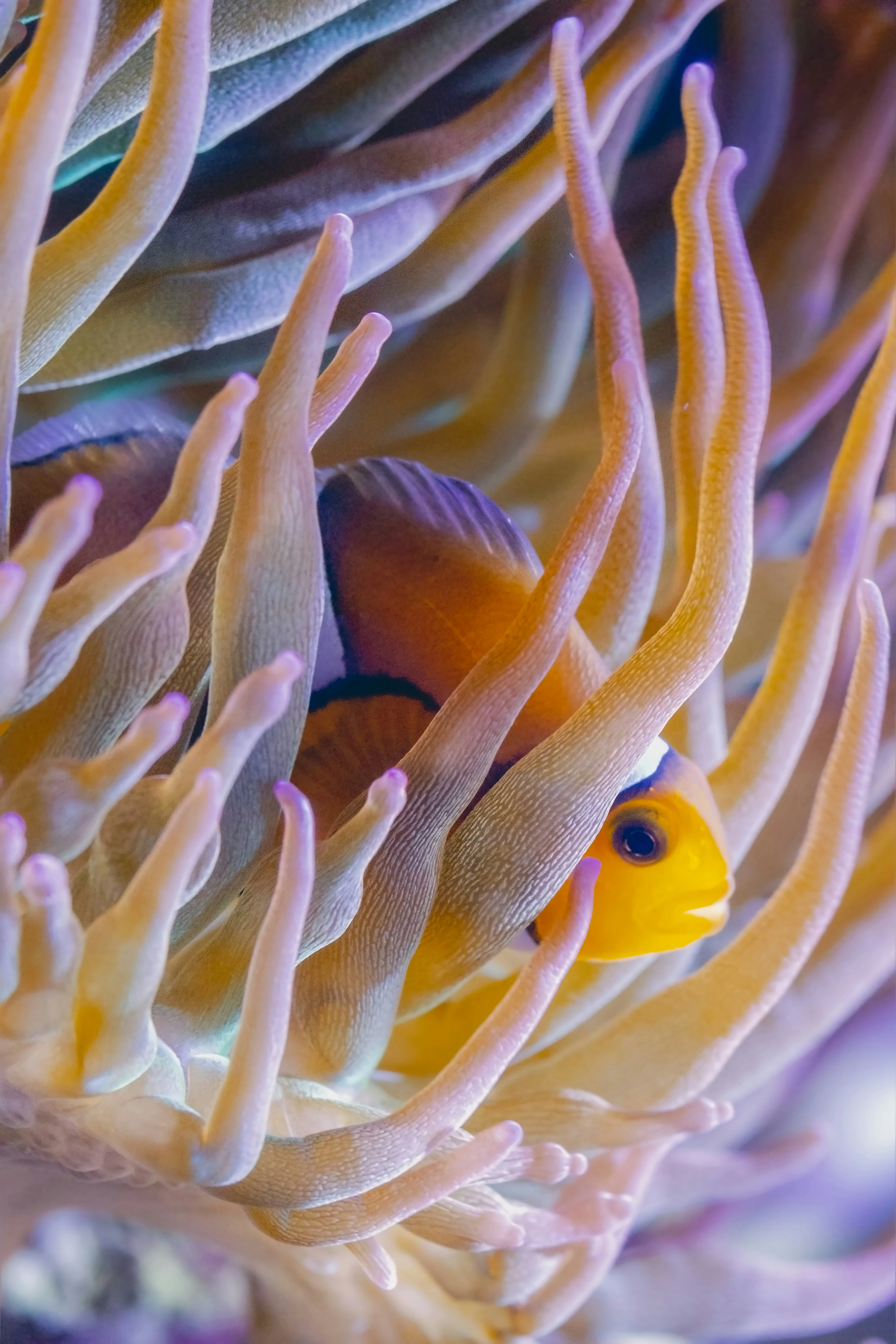
Stripes of orange, white, and black weave between waving arms of anemones and other coral life as they search for their food in a world of brilliant color and filtered light. Soon, their movements will stop as they feed on the tiny organisms that fulfill their needs before the stripes begin moving again, slipping back into the safety of their home. The soft waves of the anemone hide their homes and children, providing safety against the wild ocean just inches away, but the striped fish provide something to the living thing that is their home as well. The anemone will be fed just as much as the fish are sheltered.
Zóni Stripes are a type of tropical fish found in the warm saltwater areas surrounding the Zóni. These small fish prefer to live in the colorful reefs that sit just offshore of these islands, where they can blend in and live relatively safe lives. Their small size allows them some measure of safety along with their speed, but the largest advantage these fish have is their symbiotic relationship with the anemones that also call the reefs home. Most predators will stay away from the anemones, providing safety to the fish, while the fish provide sustenance to the anemone through the microorganisms that catch on their scales.
Few ever see the Zóni Stripes as they are elusive creatures that prefer to stay close to home. One may see the brilliant orange body with stripes of white and black in passing, but in a blink, the fish are gone again, hidden by the movement of the anemones. The eggs of these fish are important, so they tend not to tempt fate, hiding and moving only when they know it is safest and predators are not close by. The relationship between the Zóni Stripes and the anemones is one of study by Scholars, but so little is still truly known about these creatures.
Basic Information
Symbiotic Relationship
Zóni Stripes benefit from a symbiotic relationship with anemones. The anemones provide safety for the fish while the fish provide much-needed nutrients to the anemones through the microorganisms that catch on their scales.
Anatomy
Zóni Stripes are extremely small fish, often ranging from a quarter inch to three inches long. These fish often weigh less than half a pound, even those that are the largest of their species. Of all fish species, the shape of the Zóni Stripes varies the most, with fish either being very round and short or streamlined and long. These fish get their name from their vibrant stripes that set them apart from other tropical fish living around the Zóni. While other tropical fish species may have a wide color range, the Zóni Stripes are mostly a brilliant orange color with white and black stripes of varying sizes and widths depending on the fish. Zóni Stripes have small overlapping scales that often catch a number of tiny microorganisms. These small microorganisms are cleaned from the fish's scales by the movement of the anemones when the fish return home, feeding the anemones useful nutrients that they require to survive. It is believed that Zóni Stripes are some of the oldest recorded tropical fish in the world due to their distinctive coloring. Various accounts from ancient Scholars have noted similar fish near the reefs of the Zóni, but it is difficult to know for sure if these ancient fish are the same as the Zóni Stripes of today.Genetics and Reproduction
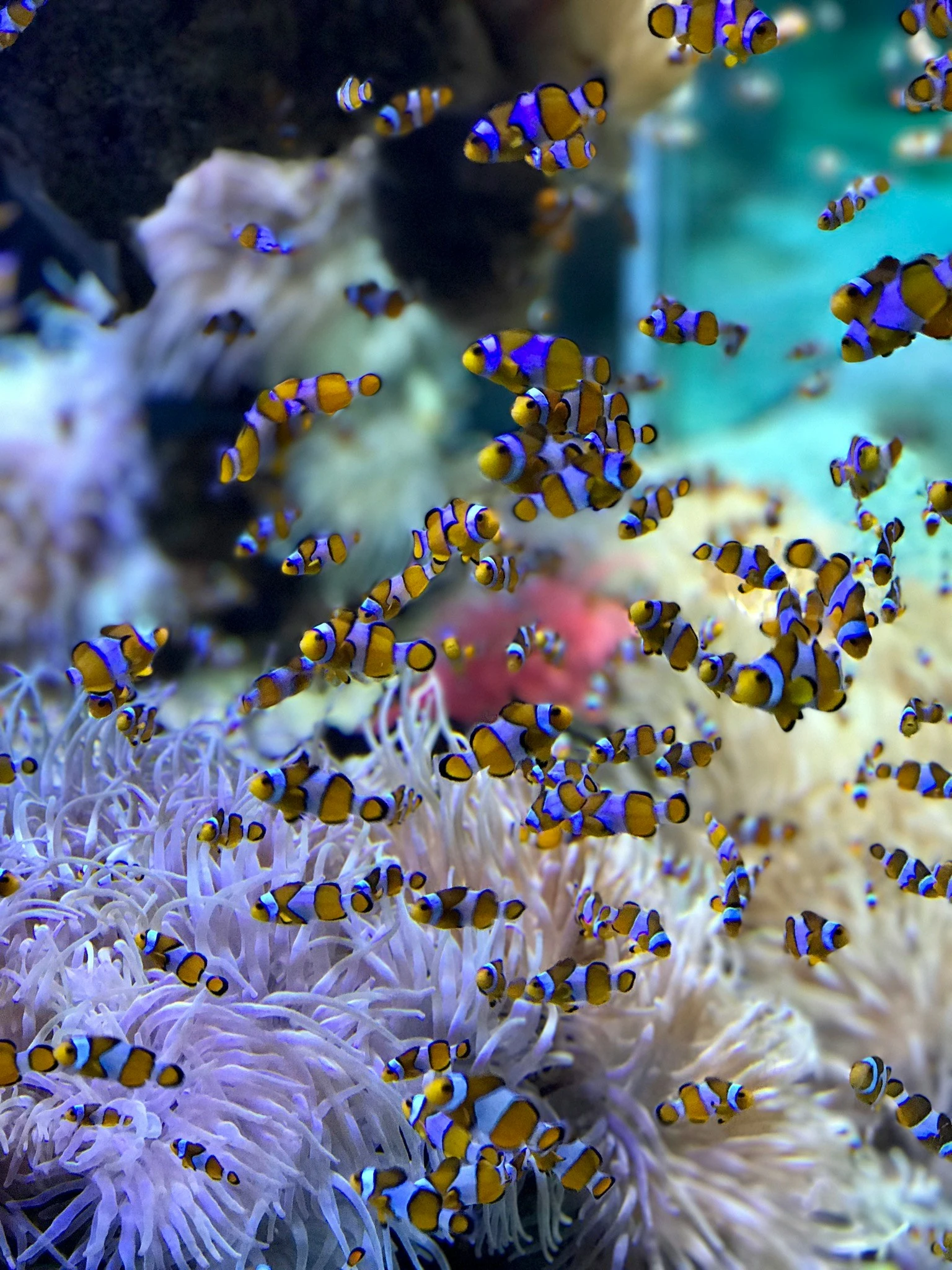
A school of Zóni Stripes is made up of a number of fish, but there is only one breeding female. The largest fish in the school is often the breeding female and her partner, a male fish that will take over the protection and raising of the children once the eggs are laid. During the incubation period, the female will leave the anemone to feed while the male remains, caring for the eggs until they hatch and can join the school. A large majority of the school is the breeding female's children, but this number fluctuates heavily due to the mortality rate of the young fish.Additional Information
Geographic Origin and Distribution
Zóni Stripes prefer the warm saltwater regions of the tropics, mostly found around the Zóni, but other sightings elsewhere in the world have been noted. The reefs near the Zóni have a large number of anemones that serve as the main habitat of these fish. These anemones are often within twenty miles of the shores of the islands.
Other areas of large anemone habitats have been recorded across the world where similar fish reside, but Scholars have largely confirmed that the fish known as Zóni Stripes strictly inhabit the anemones that are within a specified distance of the Zóni. Similar fish in other groups of anemones have shown traits that set them apart from the Zóni Stripes and prove that Scholars require greater research to fully understand the oceans of the world.
School of Stripes
Zóni Stripes often live in large schools for safety reasons and also to care for their young. The largest fish in the school is often the breeding female while the smallest ones are often her children.
Lifespan
6 to 20 years
Average Weight
Less than 1/2 lb
Average Length
1/4 to 3 in
Group Name
School of Zóni Stripes
Geographic Distribution

Comments