
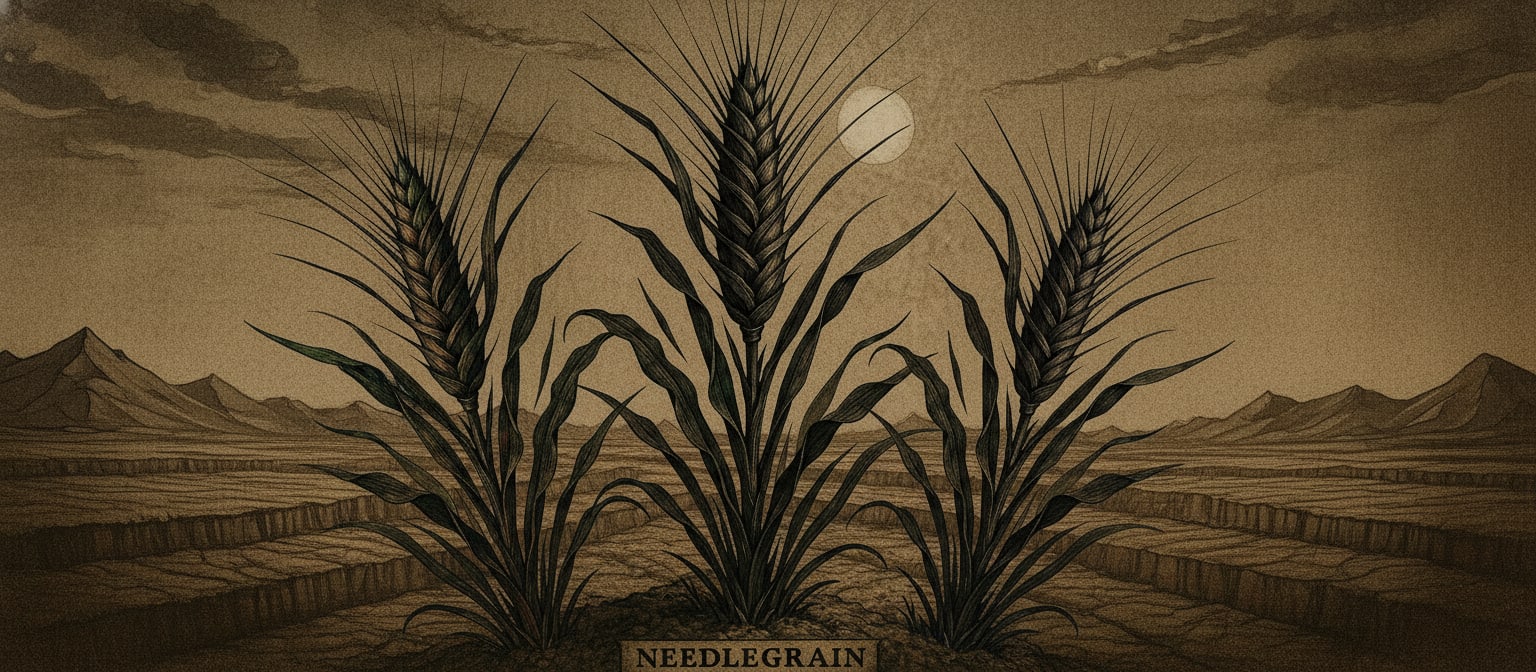
Needlegrain
Needlegrain is Sameb’s primary cereal crop, a domesticated grass originally from milder climates that has been aggressively selected for short, intense growing cycles. It only works on the terraces because the soil is enriched and the irrigation is tightly controlled; without that, it withers quickly. It provides flour, porridge, and feed, and is the backbone of most staple rations.
Basic Information
Anatomy
Needlegrain grows as a tall, flexible stalk with elongated heads of grain. Each head is wrapped in thin, stiff bracts that dry into sharp “needles” as the grain ripens, which is where the name comes from. The leaves are long and narrow, folding along the midrib during the hottest part of the day, giving the plant a slightly rolled look in full sun. Its roots form a shallow, spreading mat that hugs the top layer of soil where irrigation water actually sits; it does not chase deep groundwater.
Genetics and Reproduction
It is a self-fertile cereal, and Sameb’s farmers maintain it through careful seed saving rather than letting it reseed on its own. The strains grown in the terraces come from generations of selecting plants that respond best to enriched soil and short watering windows. If planted outside that regime—ordinary soil, irregular water—it may sprout, but it does not reach maturity reliably. Crosses with older, temperate strains exist, but they’re kept in test plots and rarely used.
Growth Rate & Stages
Needlegrain is fast by design. Seeds germinate quickly once the soil is moistened. The plant then throws up its first shoots within a few days, spends a short period thickening its stalk and leaves, and moves into head formation faster than its original lineage ever did. Ripening is abrupt: over the span of a few days, the grain hardens and the bracts stiffen. The whole cycle from sowing to harvest fits neatly into a tight seasonal window, which lets Sameb squeeze multiple plantings into a year when water and fertilizer are available.
Ecology and Habitats
It has no true habitat outside human cultivation. It does not naturalize in the wild and cannot compete with native scrub without constant attention. On the terraces, it is essentially part of the constructed ecosystem: shallow soils, controlled flooding, and enhanced nutrients. Small birds and rodents eat the grain if fields are left too long, but in general, Needlegrain exists where people make space for it and nowhere else.
Biological Cycle
The plant is annual. Farmers plough under the stubble after harvest or burn it out of the beds before replanting. Seed heads are dried, threshed, and stored in cool, sealed containers. Each year’s planting comes from the carefully chosen portion of the previous year’s yield. Left on its own, Needlegrain would cycle once and vanish; the terraces, and the people who run them, are what keep it going.
Comments