
Embermelon
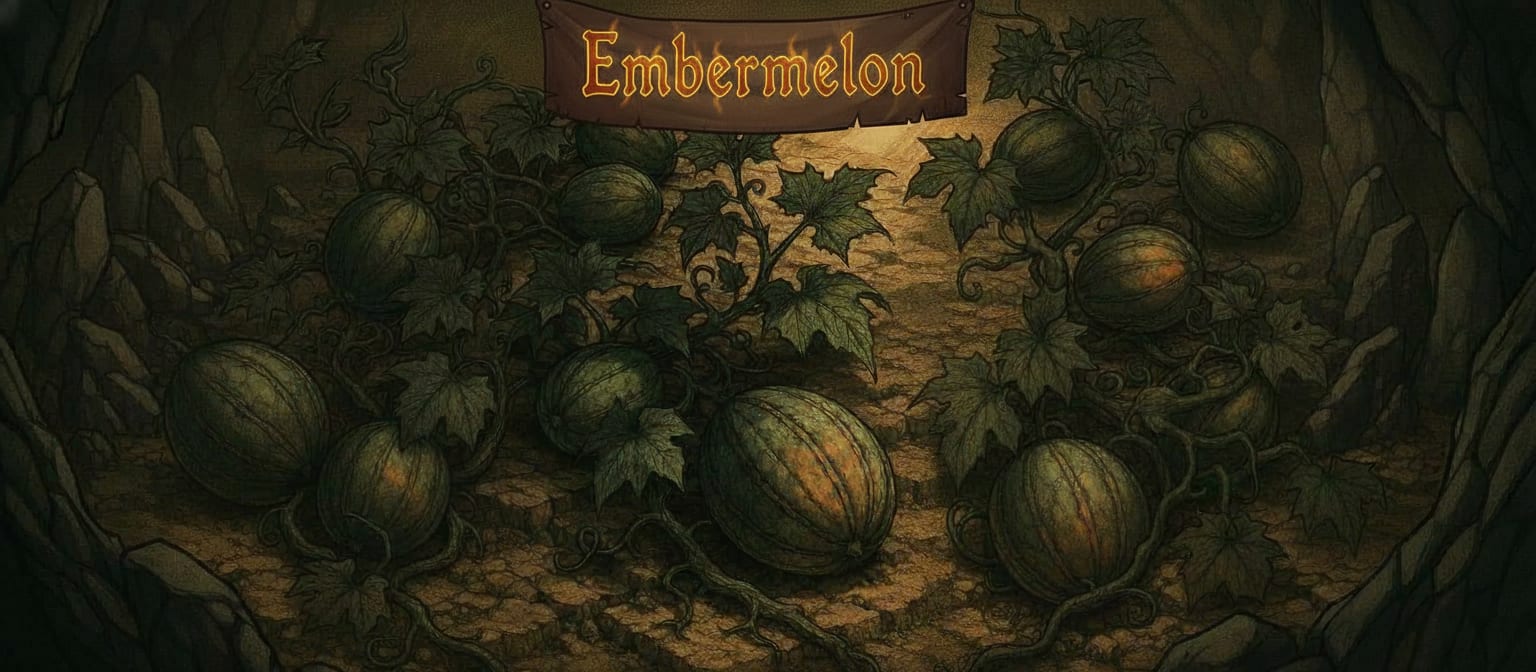
Embermelon is a thick-rinded melon cultivated for its ability to keep a cool, moist interior even when the outer air is brutally hot. It’s one of the few fresh fruits people can expect to eat at the height of the season, and it has become a staple in markets and caravan stores.
Basic Information
Biological Traits
The plant itself is a sprawling vine with broad, slightly fuzzy leaves. It creeps along the ground or over low supports in the terraces, rooting at nodes if left unchecked. The fruits are oval or slightly flattened, with a tough outer rind that can show faint mottling in reds, oranges, or dull greens depending on the strain. Inside, the flesh is dense, juicy, and lightly sweet, with a color that tends toward deep orange. The rind acts as a heavy barrier against moisture loss, and its thickness is what lets the melon endure in high heat.
Genetics and Reproduction
Embermelon is sexually reproducing, with separate flowers on the same plant for pollen and fruiting. Pollination is often supported by local insects and, in some cases, by hand if yields matter. Seeds taken from the central cavity of mature fruits are washed, dried, and saved. Different families maintain slightly different lines, mostly distinguished by rind color and flesh sweetness. Without terrace conditions, the vines are weak and rarely set proper fruit.
Growth Rate & Stages
It is slower than the grains and beans. After planting, Embermelon spends time establishing vine and leaf mass before producing flowers. Fruits develop over a longer period and need time to fully mature and harden their rinds. The plant can sometimes push more than one fruiting cycle if the season and water allow, but in Sameb this is rare; most farmers are content with one solid harvest.
Ecology and Habitats
Embermelon vines occupy ground-level spaces on or between terraces. They need consistent irrigation at the root zone and enough room to spread. Their large leaves shade the soil, reducing evaporation in their immediate area, which some farmers take advantage of when planning bed layouts. They do not survive in open desert; without water and enriched soil, they collapse quickly.
Biological Cycle
The plant is treated as annual. After the main fruiting, vines are cut back and cleared to make room for the next crop cycle. Seeds are stored for the next planting. Occasionally, stray seeds germinate in spoil heaps or drainage ditches, but without care these volunteers rarely reach fruiting stage.
Comments