
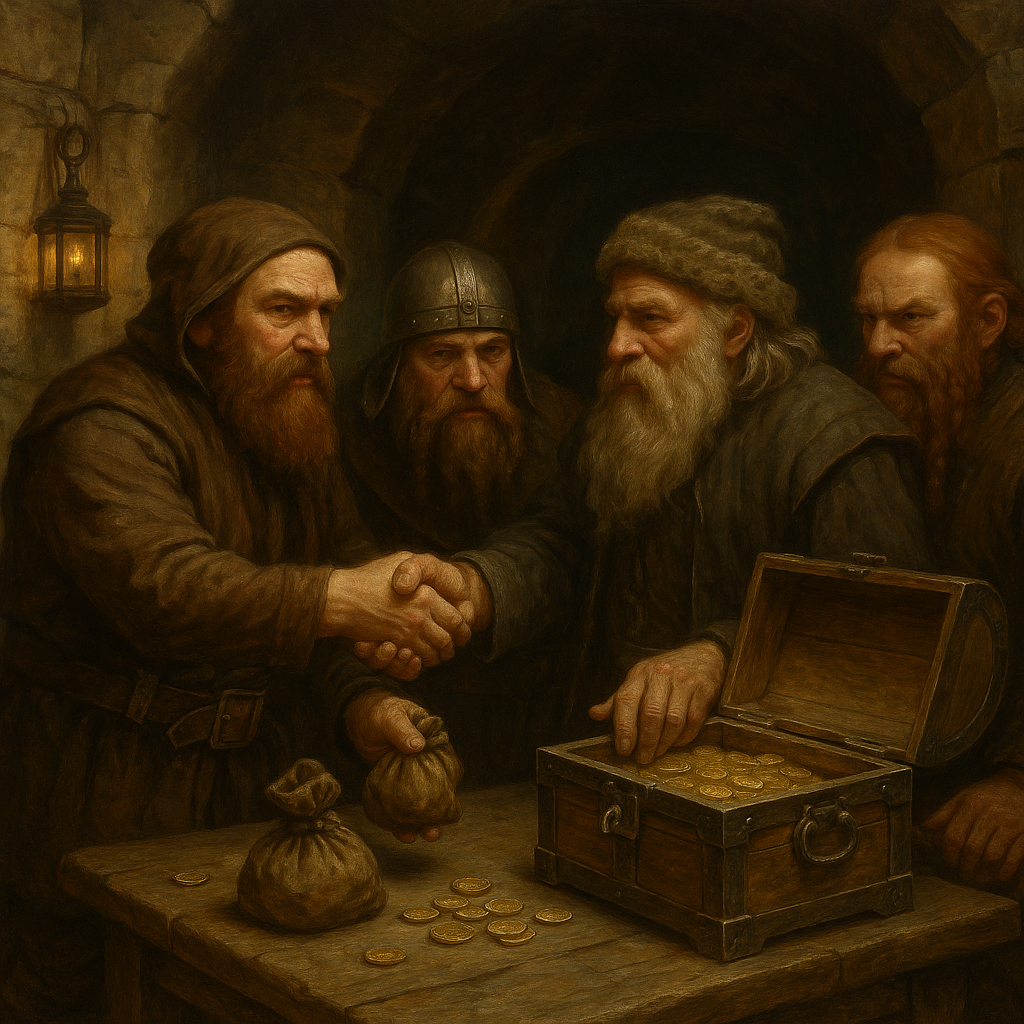
The Dwarfish Cartel
"Take heart, ye be family now." -Spoken initiation into the Dwarfish Cartel.
They’ll tell you the Dwarfish Cartel is a crime ring. That’s true, but it’s a poor name for what they really are. Down in the tunnels, beneath the thrum of forge and furnace, they’re a family, a brotherhood of soot and silence bound not by trust, but by debt paid in full. Every deal is honored, every betrayal avenged, every coin accounted for. They don’t trade in favors; they trade in certainty. To work for the Cartel is to live by the hammer’s law, break once, and you’re melted down to something useful. They deal in the dangerous, the kind of goods that sweat power and scream when opened. Potions that heal faster than the flesh can handle, metal that remembers pain, runes carved too deep to forget their purpose. They smuggle what the surface fears, and they do it with the discipline of soldiers and the precision of craftsmen. Every shipment is a heartbeat, every client a confession, every risk a ritual. They don’t ask if it’s right. They ask if it’s worth it. Join them, and you’ll learn the code they burn into every recruit. Take only fair weight. Leave no debt unpaid. Speak no name that isn’t family. You’ll lie, cheat, steal, and maybe die, but you’ll never be uncertain. Because up in the misty towers of Newspire , the Cartel isn’t about good or evil. It’s about keeping the fires burning, no matter what kind of bones it takes to feed them.
Career
Qualifications
The Cartel doesn’t take volunteers, it takes survivors. Schooling means nothing down here; Bloodline even less. They recruit the lost, the hungry, and the unremarkable, the kind of folk no one would miss if they vanished into the smoke. A failed apprentice, a fugitive tinker, a debtor’s child, these make better shadows than any soldier ever could. Candidates are tested in silence and fire, their first errand is a trial, their first mistake a funeral. Skills in metallurgy, rune-etching, or potioncraft are welcome, but the true measure of worth is endurance, the ability to keep a secret while your lungs fill with fume and your conscience buckles. The Cartel teaches trade and treachery in equal measure. Before you’re trusted with a name, you’re given a task. Before you’re given a task, you’re told one rule: Loyalty is weight. Carry it or be crushed beneath it.
Career Progression
There’s no ladder in the Cartel, only layers of pressure, each one deeper and hotter than the last. Every promotion comes from survival, not recognition. To rise, another must fall, and every rung smells faintly of ash.
- Runner - A living decoy. Sent above ground with false manifests or empty crates, Runners learn early that ignorance is the only armor worth having.
- Smudge - Trusted with real product, though always under the eye of a handler. They work long hours and short lives, staining their skin and souls alike with the residue of magick.
- Drip-Hand - Alchemical specialists who handle the volatile stock. They know the burn of potion acid and the weight of death better than priests know their prayers.
- Nail - The Cartel’s iron teeth. Enforcers, escorts, and quiet killers. Their job is to make problems disappear and leave messages carved where words won’t do.
- Broker - The smiling face of organized sin. They manage trades between factions, set prices, and ensure the money flows faster than the guilt. Most die rich and paranoid.
- Spine - Regional heads who bend, never break. They coordinate entire networks across tunnels and towns. Each Spine carries the Cartel’s mark tattooed into their ribs, burned so deep it scars the bone.
- Gilded Vein - The unseen architects of the Cartel’s power. They speak rarely, move unseen, and are rumored to know the old oaths that keep the tunnels breathing.
Payment & Reimbursement
The Cartel pays in coin, blood, and silence, usually all three. Silver flows easily to the expendable: Runners and Smudges paid by the trip, their purses always lighter than the risk. Drip-Hands and Brokers take cuts of their shipments, earning fortunes that last until their next mistake. The real money lies in contraband relics, the kind of cargo that hums and resists being weighed. A single crate of Hexsteel or bottled aether can make a pauper a prince, but every delivery carries a whisper, you’ve lived too long to stay lucky. Injury, arrest, or exposure voids your cut. So does betrayal. But the Cartel buries its dead properly and pays their kin in full, sometimes in gold, sometimes in vengeance. They call it “reimbursement.” The surface calls it justice too slow to matter.
Other Benefits
Among themselves, they use titles that sound half like jokes and half like hymns, Shadows of the Forge, Spicers, Graysmoke. They work by firelight and speak in codes older than kings. To outsiders, they’re called Tunnel Rats, Vein-Slugs, or worse, but none of that sticks. Not when your work keeps a dying village alive another winter. For all their crimes, the Cartel keeps a code most nobles could learn from. They never cheat the sick, never sell false cures, and never leave a customer bleeding who paid in good faith. Their routes carry forbidden miracles, healing draughts that knit flesh the Church abandoned, charms that keep curses at bay, potions that mend the mind’s fractures. Their ethics are simple, if the law denies mercy, mercy becomes contraband. The Arcane Coalition calls them heretics. The people call them Ash Saints. Both are right.
Perception
Purpose
The Cartel exists to move forbidden goods, magickal, alchemical, or otherwise, through the cracks of a kingdom rotted by overreach and fear. They enable forbidden healing, hidden resistance, and dark empowerment. Where the Arcane Coalition enforces control, the Cartel enforces access.
Social Status
Openly reviled, secretly respected. Newforge denounces them, but buys from them. Nobles scorn them, then quietly send runners. The Arcane Coalition marks them as heretics and threats to public order. Among the working class and magick-starved communities, they are whispered of with hope or awe.
Demographics
Rough estimates place Cartel-affiliated workers at around 4-6% of Newforge's total population, though numbers swell during times of war or famine. Nearly a third of all smuggling in Everwealth can be traced, if indirectly, to Cartel hands or tunnels.
History
Formed after the Schism, when surviving Dwarfish Exiles from their main band sought to rebuild in the face of ruin, famine, and martial law. The Cartel began as a network of forgers and salvagers skirting ration restrictions. As magickal oversight increased and alchemical materials were outlawed, they evolved into a full-scale resistance economy beneath the Republic’s polished stone.
Operations
Tools
Standard kits include collapsible crates, lead-lined pouches, rune-dampening blankets, false-bottom carts, signal lanterns, and poison vials (for either silence or bargaining). Higher operatives carry ward-broken blades and shadow-slick armor that resists tracking or magickal residue.
Materials
Essential supplies include forged permits, blank scrolls, disguise kits, swamp oil (for transporting volatile goods), binding twine soaked in hexbane, wax-sealed rune capsules, and pre-treated ashcloth used for transporting living alchemical matter such as volatile potions or whispering relics.
Workplace
The Cartel works where light dares not linger. Their sanctuaries are not built, they’re carved, clawed, and scorched into being. Every chamber hums with a dull vibration, the heartbeat of a thousand forges long dead, their ghosts kept alive by the hiss of alchemy and the scrape of coin. Nothing down here is clean. Even the walls seem to sweat.
- Drip Dens - Secret basements dripping condensation and secrets alike. Shelves sag beneath the weight of potion vials, each one glowing faintly, like bottled organs still pulsing with life. The air reeks of acid, rust, and dreams gone bad. Every Drip Den has a ledger nailed to the doorframe, names of those who didn’t make it through the fumes, recorded without sentiment. It’s said the Cartel doesn’t waste failures. They’re distilled.
- Smuggler’s Pits - These are not rooms but moving shadows, carved into tunnels that shift as fast as the tides of law above them. Goods are unpacked, divided, and rebranded by hands that never stop trembling. One wrong mark, one misplaced sigil, and the whole pit becomes a tomb. The Cartel calls them “mobile stations,” but they’re more like veins, if a Pit dies, something deeper always bleeds to replace it.
- Greyledgers - The surface faces of the Cartel’s heart. Taverns, smithies, apothecaries, and mortuaries, places where laughter is forced and ledgers never balance. Patrons come and go without realizing they’re standing on centuries of blood-debts paved into the floor. Beneath every cheerful signboard and taproom hearth, there’s a hatch that opens into the truth. Business, like faith, requires both a front and a grave.
Provided Services
The Dwarfish Cartel sells salvation the way a butcher sells meat, clean cuts, no questions, and always by the pound. Every service they offer has been outlawed, priced, and perfected. Smuggling of potions, relics, enchanted weapons, and forbidden ingredients. They move magick like veins move blood, fast, hidden, and always for profit. The relics they trade aren’t trinkets; they’re hungers encased in metal and glass, eager to remember their purpose. Handling them too long makes the mind hum, the hands twitch, and the conscience rot.
- Cursebreaking (unlicensed) - Where the Church offers prayer for pay, the Cartel offers results. Their cursebreakers work with tools made of bone and copper, muttering half-remembered rites scavenged from before the Schism. The curse always goes somewhere. Usually into the ground. Sometimes into the client.
- Safehouse operation for wanted magick users - These sanctuaries are lined with silence. No prayers, no windows, no clocks. Just the breathing of those who’ve paid for one more night alive. Many go in dreaming of redemption; most leave owing a debt larger than their life. A few never leave at all, sold to the same clients they once fled from.
- Acquisition of outlawed healing or enhancement items - The Cartel traffics in miracles and side effects. They can regrow your arm, but not your faith. Their potions mend the flesh but leave you hearing whispers in the marrow. Every cure demands its pound of purity, and the Cartel knows exactly how much a soul weighs.
- “Gray fixes” for alchemical accidents the Coalition refuses to address - They clean what no one else will touch, laboratories that exploded in forbidden color, families twisted by faulty tinctures, corpses still breathing where they shouldn’t. Their methods are ugly, but effective. For the right price, they’ll bury your sin, or put it to work.
Dangers & Hazards
The Cartel doesn’t list hazards; they list inevitabilities. Death is an occupational expectation, and survival is merely the delay between payments.
- Death by exposure, trap, or betrayal - The tunnels shift. The routes collapse. Partners turn. When the air gets thin, it’s not the lack of oxygen that kills you, it’s the knowledge that someone else is breathing what’s left.
- Brutal execution or experimental punishment by the Arcane Coalition - Caught Cartelmen are not imprisoned; they’re unmade. The Coalition strips them for data, how long flesh can remember enchantment, how deeply a sigil can be burned before it still screams. Their ashes are kept in locked jars labeled “evidence.”
- Imprisonment in The Quiet Vaults, where captured mages and smugglers are muted and dissected - The Vaults are the end of sound itself. Those taken there are sealed behind runic silence, their throats sewn shut to prevent even a death-rattle. Sometimes their bones return to the surface, etched with new designs. Sometimes they walk out again, but only in service to their captors.
- Volatile goods, cursed items, and spiritual backlash from moving enchanted relics without proper wards - Every shipment is alive in some way. The potions whisper. The blades dream. The relics hunger. You can feel it in your teeth, the sense that the cargo knows your name and is waiting for the right moment to say it back. Handling them is like holding a god’s heartbeat. Drop it, and the explosion doesn’t just take your body, it rewrites the room to forget you ever existed.
Alternative Names
'Bearded Brigands'.
Type
Illicit
Demand
Exceptionally high. In war-torn or isolated regions where licensed alchemists are rare and Arcane-approved goods cost a fortune, Cartel services are a lifeline. Healing draughts, cursed item disposal, make them an underground necessity in many parts.
Legality
Fully illegal under Everwealth law. The Arcane Coalition classifies Cartel activity as high treason, necromantic trafficking, and magickal terrorism. The Ironclad Republic outwardly enforces this position but has been caught looking the other way when the Cartel’s services prove politically or economically convenient.

Comments