The Temple-Library of Oghma
The Temple-Library of Oghma in Evenshade Village is both a place of worship and a sanctuary for seekers of knowledge—a site where architecture, atmosphere, and intent all conspire to draw pilgrims deeper into reflection, revelation, and return.
Current steward: High Librarian Arisilya
Exterior
The building is low and sinuous, nestled into the village with a gentle reverence. Crafted from warm-toned woods and set into carefully sculpted grounds, it evokes something between a monastery and a bardic retreat. Its roof undulates like a scroll unrolling or a phrase winding across parchment. Each study nook is marked by a distinctive window—some round, some arched, some latticed—each styled in keeping with the personalities of the spaces within.
The exterior windows hint at mysteries beyond—spilling light, shadows, and curiosity. Carved into the woodwork are Oghma's runes of truth, silence, and revelation, though many are difficult to spot at first glance.
Despite its modest scale, its character feels profound. The structure harmonizes with nature, as if the forest itself gave permission for its construction.
Interior
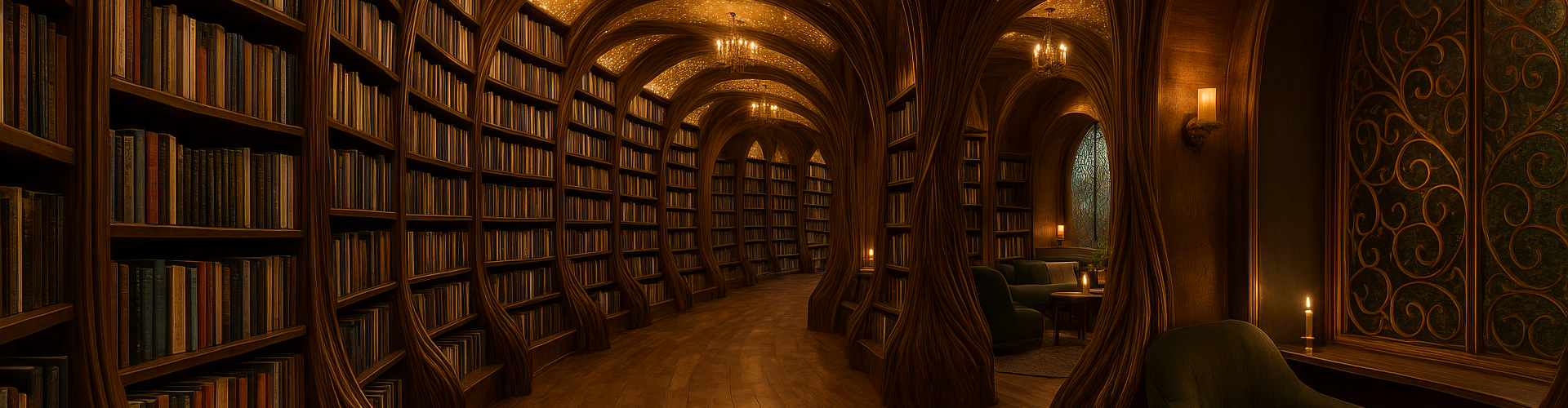
The central "Long Hall" curves gently, branching into dozens of eclectic reading alcoves. Some are lush and plant-filled, others spare and meditative, some whimsical with stained glass moons and stars. Chandeliers, magical and mundane, shed light carefully arranged to avoid eye strain.
Every study alcove offers a different intellectual or emotional texture. Some resemble warm studies, others feel like celestial observatories or tranquil groves. Each visit can provide a different experience and fit the study preferences of the singular pilgrim or group.
Carved beams, glowing sconces, and quiet shelves create an atmosphere where time seems to slow. Stone, bone, and wooden seats nestle beneath round windows, offering silence and solitude. Scribes pass through like gentle ghosts, offering aid to those who seek it but never lingering long.
Notable Features
- The “Long Hall”: A corridor that runs the entire length of the building and holds the majority of the books kept by the Temple-Library.
- The Window of Returning Thought: An enchanted window near the entrance, which reflects not your image but the last question you asked yourself in silence.
- Temple Retreat and Forbidden Archives: The building has a second floor underground that runs the entire length of the building. However, only half of that length is typically accessible, and only to the librarians who are charged to care for the Temple-Library--this half houses the "temple retreat", which consists of some office space for the High Librarian and relaxation spaces for the other librarians and workers. The other half, which is known only to the High Librarian and the Evenshade family (and even then, usually only to the adult family members), is a hidden and secured area known as the Forbidden Archives. This vault holds books, scrolls, and items (both magical and non) that are considered too dangerous to share.
Notes on the Existence of a Secret Forbidden Archive in a Temple to Oghma, as Penned by Edric Evenshade
- House Evenshade’s Oath of Stewardship
- Legacy of Guardianship. For generations, House Evenshade has pledged not merely to collect lore, but to protect it. The Forbidden Archives represent the culmination of that duty—knowledge too potent, too corruptible, to be entrusted to every hand.
- Ethos of Responsibility. As Baron, I bear the moral weight of every volume in our care. My word stands as guarantee: sealed tomes will never see the light until the world is ready to wield them with true understanding.
- Logical Necessity (Logos)
- Irreversible Consequences. Certain rituals—once spoken—cannot be “un‑said.” A single mispronounced incantation could rend the veil between realms, or unleash plagues long dormant.
- Asymmetric Knowledge. Ordinary scholars possess neither the training nor the perspective to judge when a text is safe. “Open access” becomes “open danger.”
- Preservation vs. Proliferation. Secrecy does not mean destruction. We preserve these writings so that, when the time is right, informed custodians (such as Arisilya and her successors) may evaluate them without the risk of mass misuse.
- Moral Imperative (Pathos)
- Duty to the Innocent. Should the arcane secrets within these vaults fall into rash hands—brigands, zealots, or power‑hungry tyrants—the price will be paid in blood and sorrow. Our first commandment, as followers of Oghma, is to do no harm with knowledge.
- Sacred Balance. Knowledge is light; but every light casts a shadow. House Evenshade accepts that some shadows must remain unilluminated until the world grows wiser and more tempered by compassion.
- Alignment with Oghma’s Teachings
- “Preserve All Truths.” We owe Oghma the devotion of keeping every truth intact.
- “Teach What Can Be Safely Taught.” We must discern between truths that enlighten and those that corrupt. The Forbidden Archives lie beyond that safe threshold.
- Conclusion & Charge
- By these principles—and by the solemn vow of House Evenshade—I maintain the vault’s secrecy. Let this stand as both warning and promise: when the world proves ready, the knowledge shall emerge; until then, it remains under lock, ward, and watchful eye.
— Baron Edric Evenshade, Defender of Knowledge & Keeper of the Forbidden Archives
Hidden Features
Show Spoiler
History and Architectural Influence
Built around 300 years ago, the Temple-Library predates much of the village. It was commissioned by Baroness Ariseth Evenshade, an adherent of Oghma and Gond and an early believer in knowledge over bloodright.
Its architectural design actually drew gentle inspiration from the ancient mage tower: asymmetry made graceful, deliberate misalignments that become meaningful upon reflection. The round windows, sinuous roofline, and use of non-linear geometry echo the mystic curves of the tower—though softened, made humane.
What Draws Visitors?
- First-time pilgrims come for quiet insight, or to consult one of the rare manuscripts housed there. Many seek the temple in moments of crisis or confusion, drawn by tales of the "library that listens back."
- Repeat visitors return because the experience changes: different rooms call to them at different times. One returns not to find the same answer, but to ask a better question.
The temple never tells you what you must know. But it always gives you what you're ready to learn.
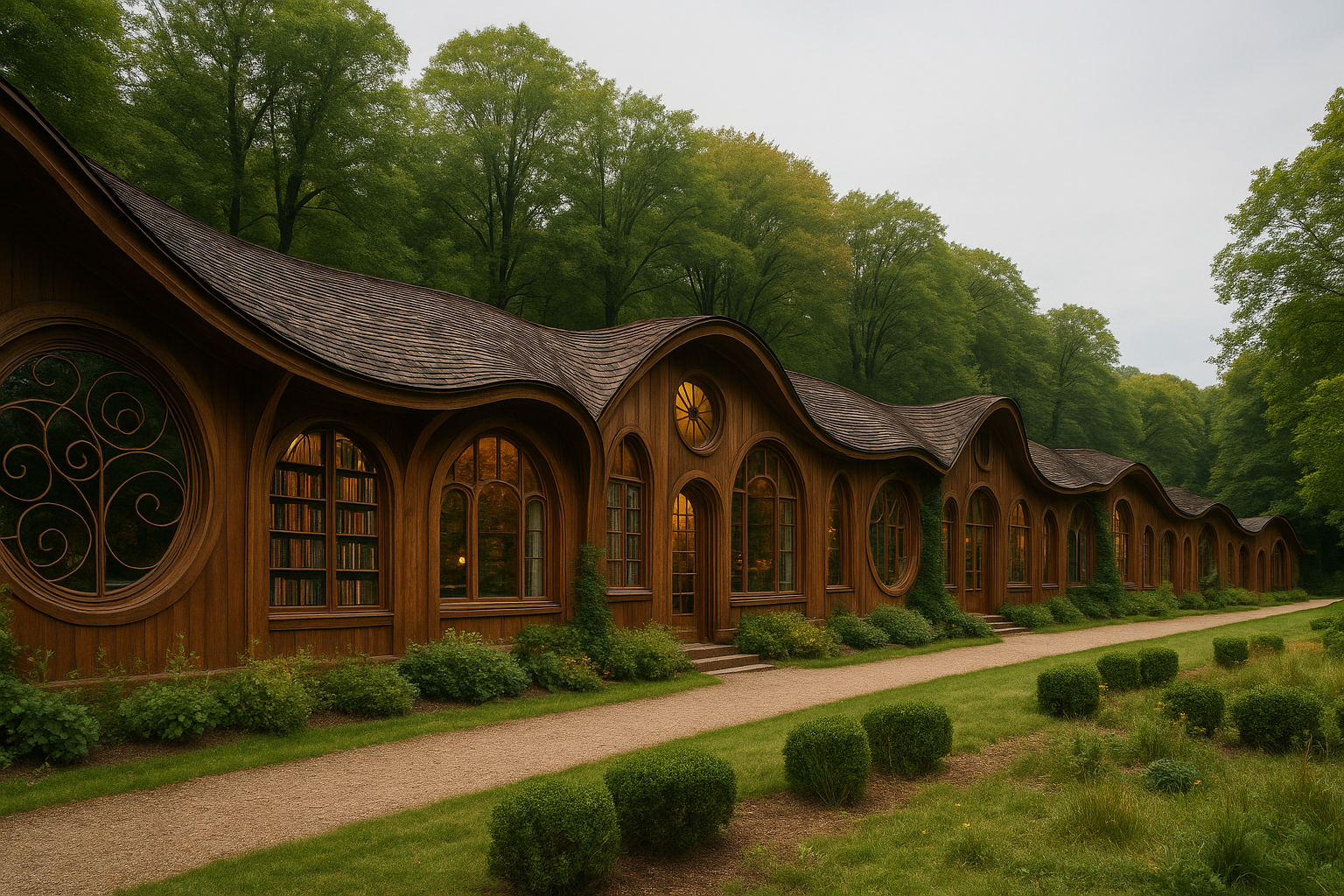
External view of the Temple-Library of Oghma
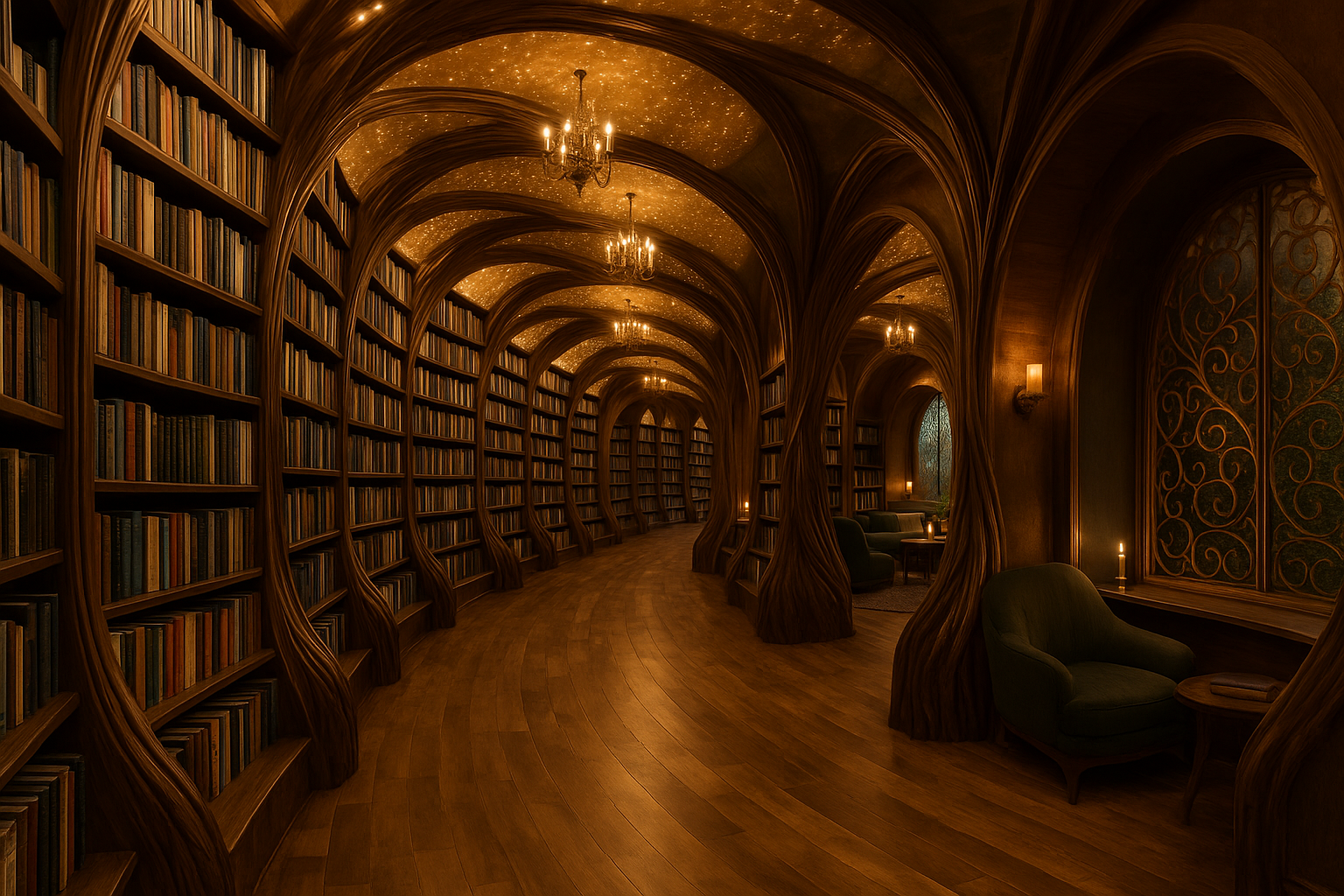
Interior view down the Long Hall in the Temple-Library of Oghma

Comments