
Sun Spider
A strange arachnid which is somewhere between a spider and a scorpion resides in the solar landscape of the Shamsi Desert yet evades direct sunlight, skittering between shadows. They provoke fear not for their venom but for their horrific chelicerae--their jaws armed with potent radiation. Sun spiders stalk desert nights and hunt surprisingly large prey, subduing even rodents, birds and lizards! Their significant size, painful bite and aggressive behavior make these spiders feared even by locals, purported to hide in peoples shadows to deliver lethal radioactive bites! |
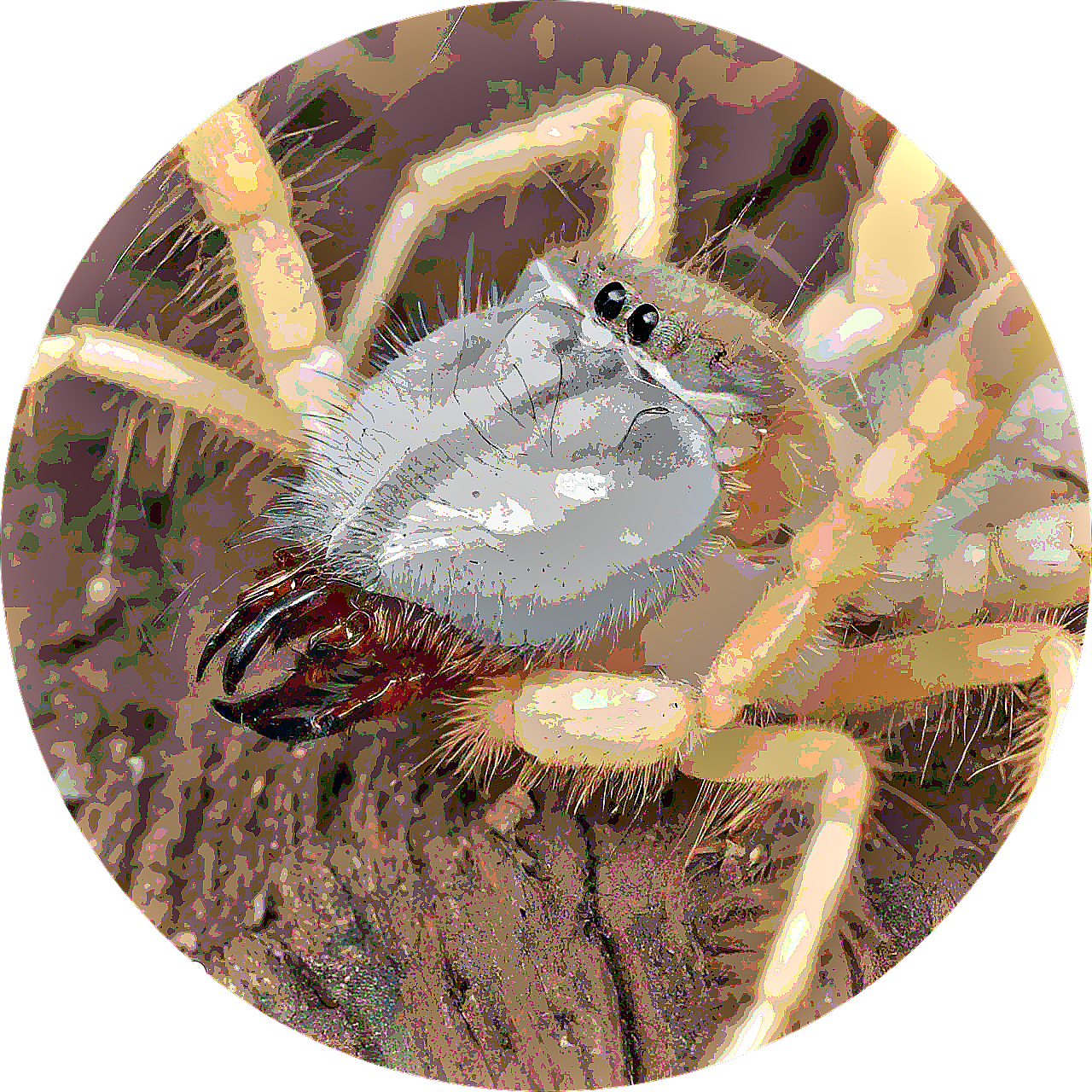
Tertiary Predator | Prey | Nocturnal | Touch | Smell | Vision | Fast |
Lore |
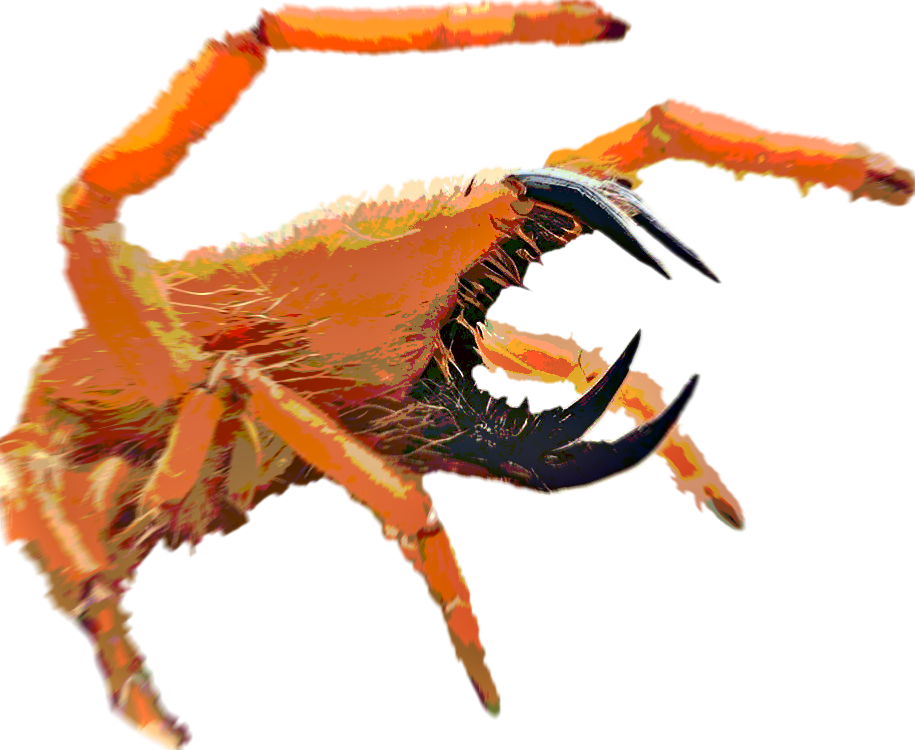
Thanks to their size, speed and imposing bite, sun spiders are a feared species throughout the desert, supposedly even driving people from their homes when discovered. Some believe they are venomous, which they are not, but their bite is certainly painful! In legends, they are known to chase people and hide in their shadows, purportedly afraid of direct sunlight. Sun spiders will dash from shadow to shadow during the day but mostly do so to avoid excessive heat and predators. |
Rithaldis' Form
Sun spiders with Rithaldis Form can transform the jagged edges of their chelicerae, their jaws, into solar plasma or imbue them with radiation. They use this ability to kill and chear apart their prey with their saw like edges of their jaws!
Rithaldis' Touch
Sun spiders with Rithaldis Touch can impart a considerable and potent dose of radiation through their bite, used to weaken and kill their prey!
Rithaldis' Sense
Those with Rithaldis' Sense can perceive sunlight, solar magic and even radiation in their environment. This is usually imbued into the setai or sensitive hairs on their legs, allowing them to feel these forces to hunt radiant prey with solar magic or better avoid sunlight prevalent in the Shamsi Desert. This ability also protects them from being damaged by solar magic and radiation in their habitat despite their general aversion to sunlight!
Ilnid's Sense Those inheriting Ilnid's Sense can sense sand and glass in their environment or more importantly they can sense vibrations within the sand from anything interacting with or moving it! Sun spiders use this ability mainly to perceive prey in their desert habitats but also to avoid their own predators! This sense is present in their setae, the sensitive hairs on their legs.
Ilnid's Craft Sun Spiders with Ilnid's Craft can reshape and transform sand or glass in their environment with their legs, often used to craft stable burrows in their desert environments. Females in particular inherit this ability, digging glass-walled burrows for their eggs to better protect them!
|
Anatomy |
Original Ancestor |
Lifespan |
|---|---|
Galeodes arabs, Camel Spider |
1-3 years |
Diameter |
|---|
12–15 cm |
5–6 in |
Coloration |
|---|
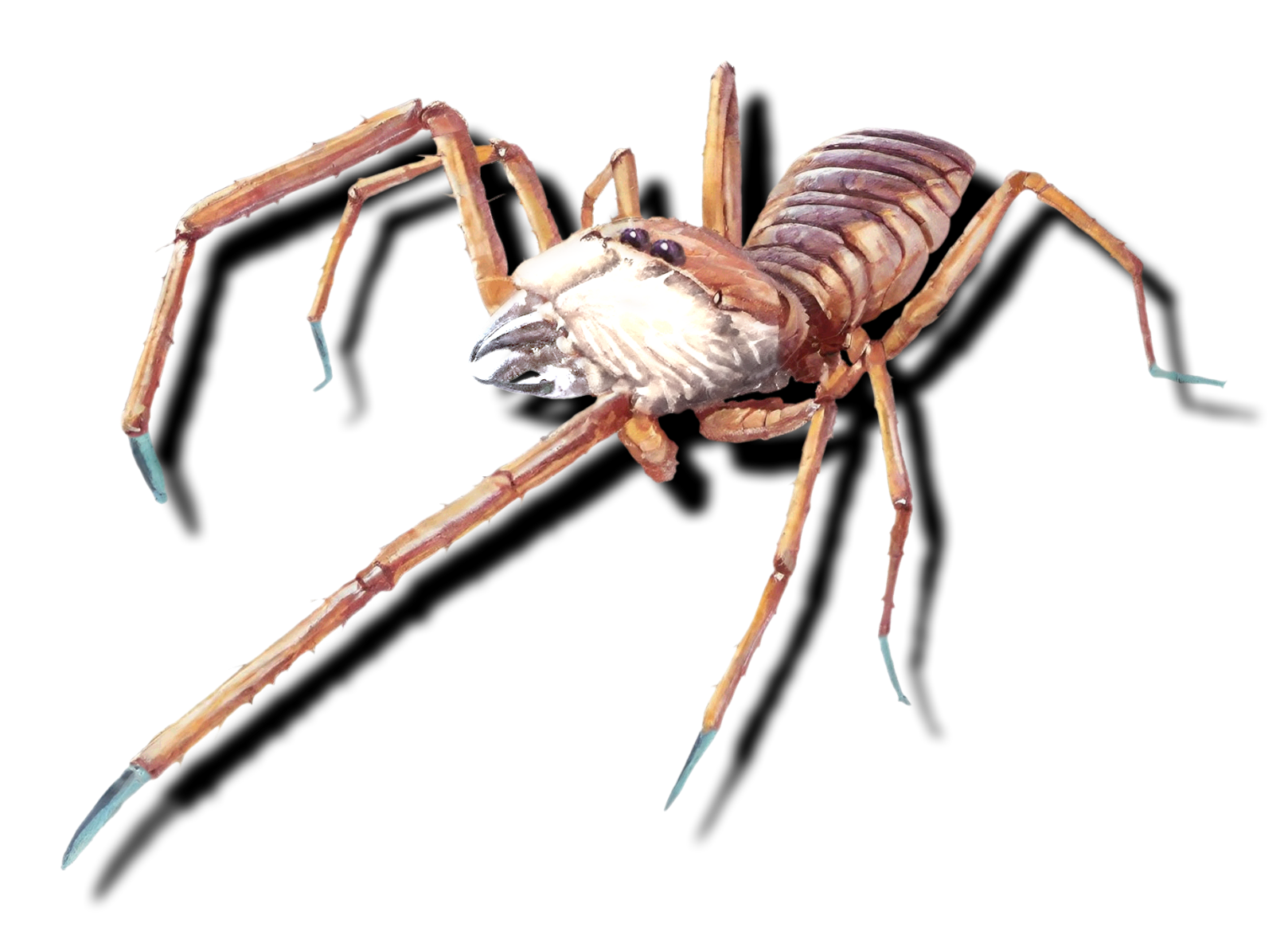
Tan or sandy brown colored hairy body with jaws which are a deep orange. It's face is a much darker brown or umber shade while its abdomen is grey-brown. In their magic form, their jaws become sheer white. The hairs on their legs or the paws of their feet may also become white or can take on a glassy transparency!
|
Detailed Anatomy
While they are arachnids, sun spiders are not true spiders. Instead they are somewhere between spiders and scorpions! They have a considerable diameter of up to six inches, though legend claims they can grow much larger. While females tend to be larger than males, males have longer legs. Like spiders, their body can be split into two parts, the cephalothorax and abdomen. Unlike spiders, they have no venom and no silk glands and unlike the scorpions which they resemble, they have no tail or stinger. This means they have no way to impart any kind of venom and they cannot weave webs.
The cephalothorax fuses together the sun spiders head, chelicera (jaws) and legs all covered by a tough carapace. They are most known for their large chelicerae or jaws which they can pinch prey between and even saw back and forth! These are actually longer than the cephalothorax and can be broken down into two segments which form a strong pincir resembling that of a crab. Each are lined with jagged teeth which can be sawed back and forth, shearing flesh, hair, feathers, skin and even small bones! They can even produce a rattling noise by grinding their chelicerae together. A sun spider's eyes are also located on the cephalothorax, having two large forward facing central eyes called ocelli. These are both light-sensitive and can see color, located closely together. A second set of lateral ocelli are located along the sides of the chelicerae which are sensitive to movement and changes in brightness.
The abdomen of a sun spider is split into 10 segments connected by stretchy membranes, making them particularly flexible for having an exoskeleton. Unlike other arachnids, these spiders do not have book lungs in their abdomen, instead having a tracheal system which inhales and exhales air through 3 pairs of spiracle openings between its legs and on its abdomen.
The cephalothorax fuses together the sun spiders head, chelicera (jaws) and legs all covered by a tough carapace. They are most known for their large chelicerae or jaws which they can pinch prey between and even saw back and forth! These are actually longer than the cephalothorax and can be broken down into two segments which form a strong pincir resembling that of a crab. Each are lined with jagged teeth which can be sawed back and forth, shearing flesh, hair, feathers, skin and even small bones! They can even produce a rattling noise by grinding their chelicerae together. A sun spider's eyes are also located on the cephalothorax, having two large forward facing central eyes called ocelli. These are both light-sensitive and can see color, located closely together. A second set of lateral ocelli are located along the sides of the chelicerae which are sensitive to movement and changes in brightness.
The abdomen of a sun spider is split into 10 segments connected by stretchy membranes, making them particularly flexible for having an exoskeleton. Unlike other arachnids, these spiders do not have book lungs in their abdomen, instead having a tracheal system which inhales and exhales air through 3 pairs of spiracle openings between its legs and on its abdomen.
Habitat |
Desert | Semi-Desert | Montane | Shrubland | Grassland | Urban | Rural |
Sun Spiders can be found throughout Northern Alkelbulan, especially in the Shamsi and Arabiyyan Deserts. Sister species can be found in tropical deserts throughout other parts of Alkelbulan, Yaxiya and even the Continent Beyond! |
Sun spiders can reside in all parts of the desert whether these are the sandy dunes of ergs, salty flats of shatts, gravelly stones of regs, dry soils of shrublands, dessicated riverbeds of wadis, in craggy crevasses of mountains and between the buildings of human settlements urban or rural. Highly adaptable, they may even be found in dry grasslands and arid forests! They survive one of the harshest settings in Emynea by burrowing or hiding during the day and hunting at night, yet they might also be seen scurrying between shadows during the day. And in the most extreme conditions of heat, cold or flooding, sun spiders may even take on a state of diapause to survive--a state of dormancy or hibernation. |

Diet |
Carnivore | Insectivore | Araneovore | Herpetovore | Avivore | Mammalivore |
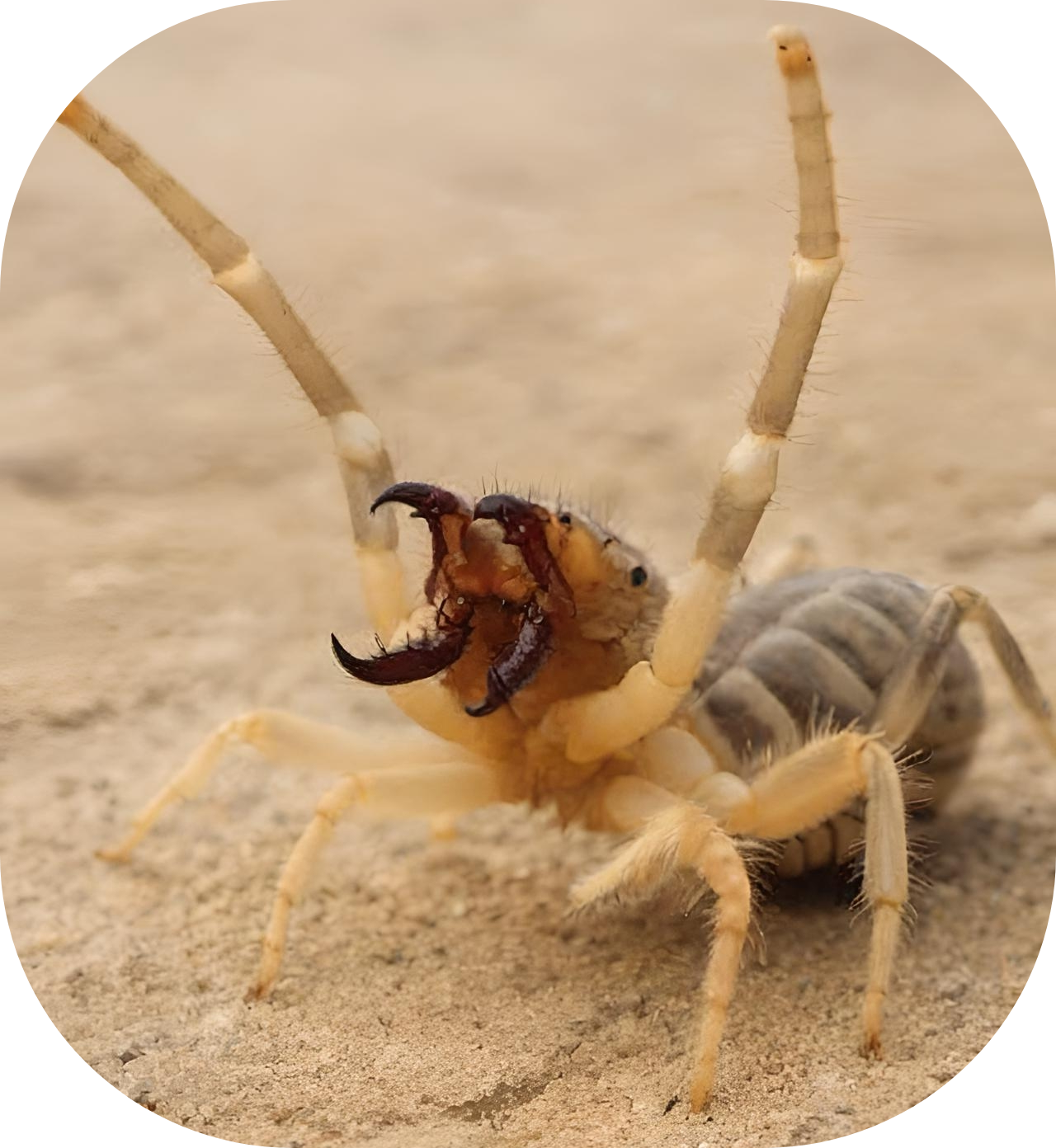
Between their considerable size and imposing jaws, sun spiders are known to eat everything from insects to small rodents and even lizards and birds! While insects make up the bulk of their diet, they are opportunistic, feeding on any creature they can successfully overcome. This includes other spiders, termites, scorpions and millipedes but also small reptiles, birds and mammals. This is made possible by their saw like chelicerae which can chop and even shear the fur, skin and thin bones or quills off of prey. Once prey has been cut to pieces, the sun spider liquefies remaining flesh with digestive fluid which is sucked up into their stomach! |
Sun spiders have a voracious apetite, sometimes rendering themselves unable to move from eating too much! In fact, their exoskeleton is connected by flexible membranes so their exoskeleton can expand. They skitter through the night restlessly, finding prey with their pedipalps, catching movement with their eyes, picking up vibrations with their setae (sensitive hairs) and even by smell. And these senses are further amplified by their kaithur. Sun spiders may even climb trees, shrubs or buildings but most prefer scavenging on the ground. Overall, sun spiders employ three different strategies: stalking, chasing or ambushing their prey and finishing them off with their infamous jaws! When chasing prey, they can reach an astonishing 10 mph (16 kh/h) but unlike most arachnids, they lack both venom and silk glands. They are also far from apex predators, sometimes falling prey to bats, scorpions, frogs and other large insectivores. |
Life Cycle |
Oviparous | Polygynous | Precocial | Solitary |
Breeding just once a year, male sun spiders use their sensory magic to locate females. Lacking the reproductive organs of other animals, the male will create a spermatophore (sperm capsule) which is then inserted into a female's genital pore with his jaws. The pore is located on the underside of her abdomen so the male will flip her onto her back. Once fertilized, female sun spiders dig a burrow using Ilnid's Craft which is lined with a hardy glass shell. She will lay anywhere from 50 to 200 eggs, carefully guarding this burrow until her young hatch. She doesn't even hunt while guarding her eggs, instead fattening herself up in preparation before mating. Once the young hatch, they go through 10 stages which are call nymphal instars before being considered adults. |


Comments