
Awtuf Spider
These are particularly small but clever spiders which exclusively eat ants, mimicking their prey to invade their colonies! They resemble their prey in both the shape and color, readily blending in if not masking themselves with illusions. And in a pinch, they can even manipulate their prey while they make their escape! But unlike the ants they hunt, these spiders aren't able to withstand the extreme heat of the Shamsi Desert, only its radioactive influence. During the day they retreat into igloo shaped nests and hunt at sunset or during the night. These nests are both shelter and nursury, hidden beneath pebbles and rocks in arid regions. |
Predator | Nocturnal | Crepuscular | Camouflage |
Rithaldis' Shield
Thanks to Rithaldis' Shield, these ants are immune to dangerous radiation and the solar magic of their prey. It occurs in those residing in the Shamsi Desert.
Kalitho's Aura Those with Kalitho's Aura can create visual illusions, often cloaking their bodies so that they look exactly like the ants they hunt or to hide their attack and consumption of their victim before fleeing. This ability is most prevalent in Eluzian habitats.
Bulok's Manipulation
Thanks to Bulok's Manipulation, these spiders can manipulate and influence the behavior of the ants they hunt. This can be in the form of mild alterations or an easing of aggression or suspicion. They can even, however briefly, influence the actions of the entire colony! They use this ability for infiltration and for mitigating aggression in the face of confrontation, especially when fleeing the colony after killing their victim.
|
Anatomy |
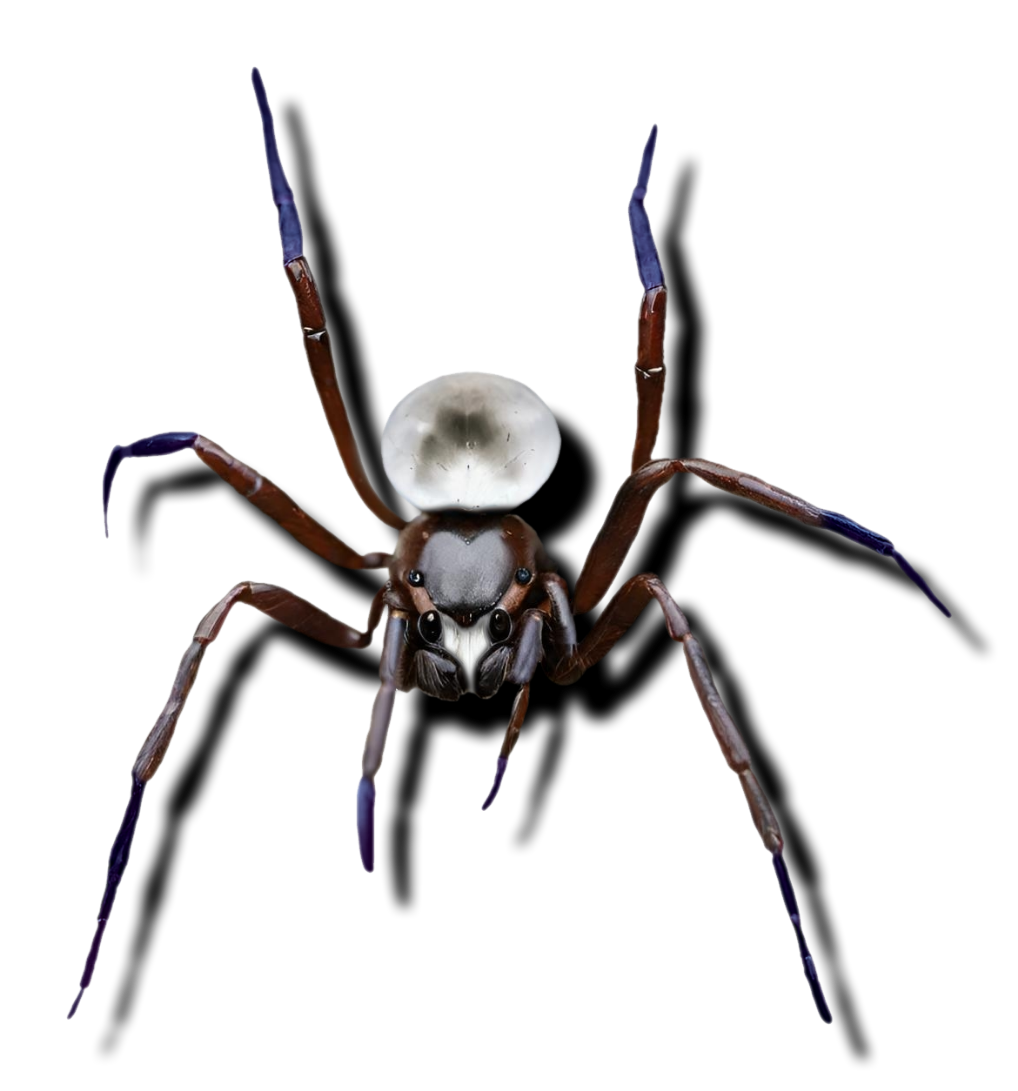
Awtuf spiders have adapted absolutely everything in order to better resemble their prey. Their abdomens are rounded, bulbous and especially dark to resemble that of an ant and their legs also have a similar shape to their prey when tucked close. Their eyes are clustered close together on the front of their cephalothorax and even their pedipalps resemble antenae. |
Original Ancestor |
Lifespan |
|---|---|
Zodarion elegans/pusio Ant-Eating Spider |
1-2 years |
Body Length |
|---|
2-3 mm |
Coloration |
|---|
Exact coloration can differ between subspecies, each hunting a particular kind of ant. But most have dark brown to blackish bodies, the cephalothorax sometimes lighter than their abdomen. Their legs are closer to a yellowish or reddish brown and may be somewhat translucent, usually matching the cephalothorax. Meanwhile their undersides are yellow. Males and females can be told apart by an M shape on the epigyne of females. In their magic form, their bodies take on a white or silverish sheen while their legs and pedipalps become dark purple! |
Habitat |
Semi-Desert | Shrubland | Grassland | Temperate Forest | Coastal |
While most awtuf spiders inhabit the Shamsi Desert, they have a surprisingly large range extending northern Alkelbulan and Eluziar! This includes regions of Marrakesh, Libu and Aznag but also mainland and coastal regions of the Eluzian Valley and Flumen Pontem. They live in arid habitats, making their home beneath stones and plant litter alike--wherever their favored prey resides. |

Diet |
Carnivore | Insectivore |

Beyond their ability to infiltrate colonies, awtuf spiders have specific ways of hunting ants. Their venom is particularly quick and effective against ants but will do little to other insects. They will bite the leg of a target quickly and retreat while the venom takes effect, avoiding confrontation as much as possible. Those capable of creating illusions might even hide this attack with their kaithur. But overall, awtuf do little damage to the colonies themselves which lockdown for days after an attack, the spider moving from colony to colony to feed. |
Life Cycle |
Oviparous | Monogamous | Maternal | Solitary | Altruistic |
These are highly independant and solitary ants, wandering large areas as they move from colony to colony. Both males and females create igloo shaped nests hidden beneath stones and pebbles crafted of soil, rocks and silk. However, males die after mating and females are known to stay and protect their egg sacs within the nest. And unlike many other spider species who have nothing to do with their hatchlings, she offers them one further parental act after they hatch: she becomes their first meal before they disperse into the desert! |


Comments