
Anapoi
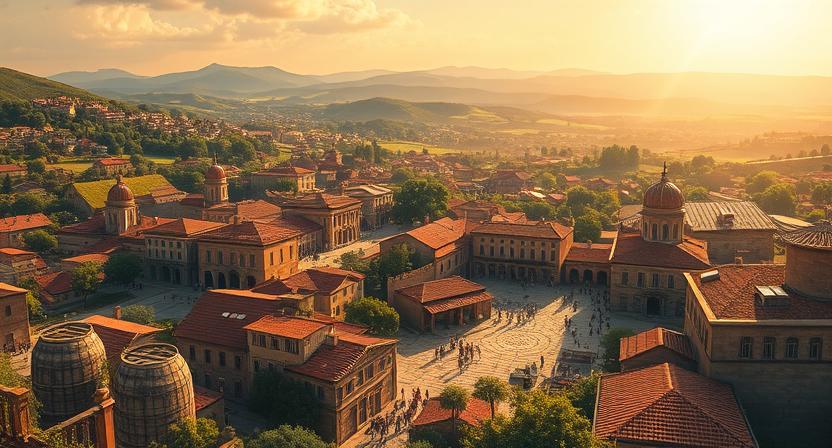
Anapoi is the breadbasket of eastern Imenia—rolling farmlands, bustling markets, and sun-warmed fields that stretch as far as the eye can see. It is a city of honest labor and rustic charm, deeply connected to the rhythms of the land. With fertile soil and an ideal climate, it produces much of the Republic’s food supply and is the central hub for transporting agricultural goods to the rest of the country. Perhaps less glamorous than the river cities, Anapoi’s influence is quietly felt in dining tables and city stores across Imenia and the rest of Iroth.
Life in Anapoi revolves around seasonal cycles, and the people are deeply spiritual in their gratitude toward the land. Temples to deities of harvest and hearth are commonplace, and shrines dot the roadside paths leading out of the city. There’s a strong oral tradition, with folk songs and tales passed down over generations. The locals are proud, pragmatic, and fiercely loyal to their traditions and one another.
Life in Anapoi revolves around seasonal cycles, and the people are deeply spiritual in their gratitude toward the land. Temples to deities of harvest and hearth are commonplace, and shrines dot the roadside paths leading out of the city. There’s a strong oral tradition, with folk songs and tales passed down over generations. The locals are proud, pragmatic, and fiercely loyal to their traditions and one another.
Government
Anapoi is governed by an elected Archon, usually a representative from one of the major farming families or trade guilds. The city sends delegates to the Eklesia in Pasos but largely handles its own local disputes through a council of elders and agrarian magistrates. Civic festivals tied to the harvest and solstices are major events, mixing reverence and revelry in equal measure.
Guilds and Factions
Architecture
Anapoi is built around a sprawling central agora, where goods from the countryside are sold in lively open-air markets. Cobblestone roads radiate outward toward villages and farmsteads, creating a wheel-like city structure. Homes are crafted from clay brick and timber, with red-tiled roofs and flowering vines. Large granaries, stone mills, and stables dominate the outskirts. A low stone wall surrounds the city not for war, but to mark the border between town and tilled land.
Population
9,000
Owner/Ruler
Ruling/Owning Rank
Owning Organization

Comments