
Lava Mango
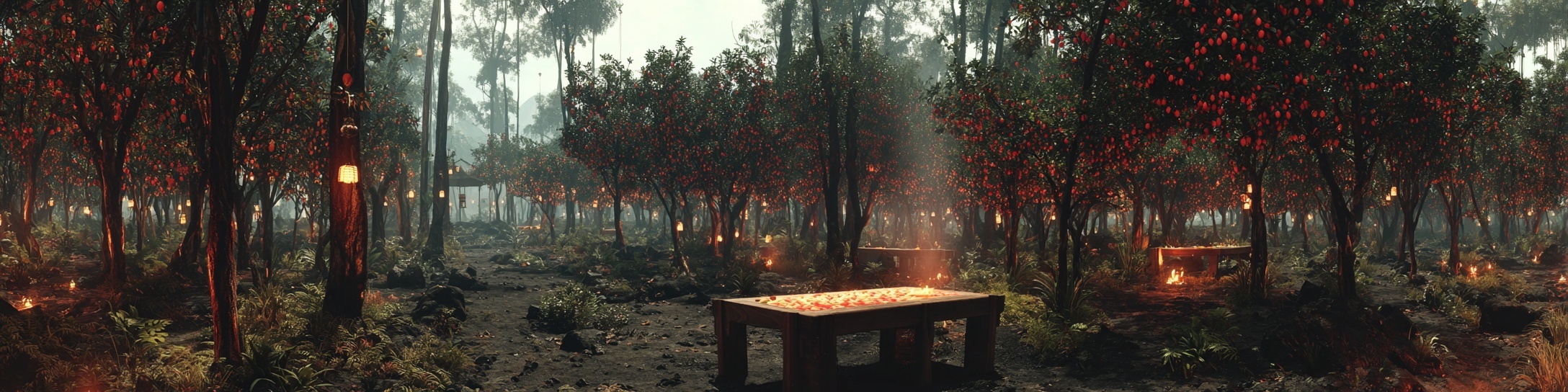
Lava Mango is a fiery island variant of the common mango, grown primarily on the warm, ash rich slopes of Eshvel where old lava flows and hidden heat still shape the soil. Ordinary mango trees thrive across the Primordial Isles in gentler ground, but Lava Mango groves cling to darker, mineral heavy earth that holds a trace of volcanic warmth, drawing that heat up into trunk, leaf, and fruit. The trees bear richly colored mangoes whose skins glow with deep reds and ember orange hues, and whose golden flesh carries the familiar lush sweetness of mango tempered by a slow building heat. Among Esharans, ordinary mangoes are everyday fruit, while Lava Mango is the taste of Eshvel itself, reserved for feasts, night markets, and dishes meant to wake both appetite and courage.
Basic Information
Anatomy
Lava Mango trees are medium sized, with sturdy trunks of dark brown wood streaked with faint reddish lines that hint at the warm, iron rich soil they favor. Their roots spread wide and relatively shallow through loose, black earth, taking advantage of ground that stays gently warm through much of the year. The canopy is dense and rounded, made up of long, glossy leaves that taper to a point and hang in clusters. Each leaf is a deep, lush green on top with a subtle bronze or copper shine beneath, and in dry, hot winds they sometimes curl slightly and rustle with a faint, dry crackle. The fruit itself is roughly mango shaped but a touch more angular, hanging heavy from short stems in ones and twos. As it ripens, the skin shifts from dull green to a deep red or ember orange, often mottled with darker patches that resemble cooled lava. When cut open, the flesh inside is a rich golden orange marbled with thin streaks of deeper red, and freshly picked fruit often feels pleasantly warm to the touch, as if it has held onto more of the day’s heat than it should. The inner pit is thick and hard, a charcoal grey with fine orange lines that echo the colors of the flesh around it.
Additional Information
Uses, Products & Exploitation
Lava Mango is eaten fresh across Eshvel, its rich sweetness and gentle heat making it a centerpiece of street stalls, bathhouse snacks, and festival tables. Fruit is sliced and served with salt, Emberroot spice, or grilled in the skin so the sugars caramelize and the warmth rises through the flesh. Cooked down with vinegar, herbs, and Emberroot, it becomes a thick chutney that keeps for months and is traded to Gavorah and Shavah as a favored condiment for fish and roasted roots. Thin slices are dried into chewy, sweet hot strips that sailors and travellers carry as trail food, prized for staying soft and satisfying even in damp air. The pits are carefully cleaned and dried rather than thrown away. When dropped into hot water or wrapped in cloth and held close, they release a slow, steady warmth that makes them popular as pocket warmers in wind exposed work or on night watch. Some hedge alchemists shave the dark surface of the pits into tonics and cordials meant to kindle courage, passion, or resistance to chill. Lava Mango orchards are tempting targets for overplanting, but the trees demand warm volcanic soil and careful terracing. The Fire and Earth Stewards keep a close eye on expansion, wary that stripping hillsides for more fruit would bring erosion and landslides, and determined that Lava Mango remain a living gift of Eshvel rather than a crop wrung dry for foreign markets.
“Ordinary boys bring ordinary mangoes. When a lad sends Lava Mango all the way from Eshvel, he is not just sharing fruit, he is telling your daughter he thinks she has a fire to match his. And don't pretend you don't know what that means. You had your first Lava Mango once, too.”
~ Rasan of Gavorah, father of three daughters

Comments