
Dragonborn
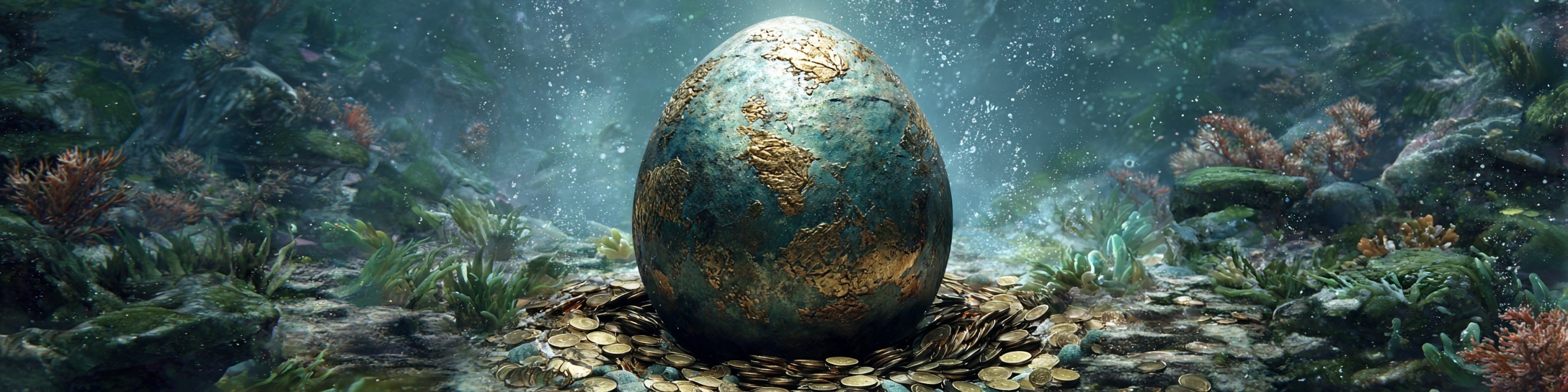
Dragonborn are not a people of cities or clans in Elarion, but a consequence, rare as a comet and twice as dangerous to gossip about. When a true dragon chooses to bear a mixed union in its draconic nature, the result is not a half-blood child but an egg, laid in secret places where hoards are kept and promises are sharper than blades. From those eggs hatch the wyrmhatched, known to most simply as Dragonborn: heirs of a decision that cannot be undone, born with draconic power in their bones and an instinct to bind their lives to another for good or ill. Most folk will live and die without seeing one, and many who do will swear they never did, because to be wyrmhatched is to invite the attention of hunters, scholars, kings, and dragons alike.
Accounts of Dragonborn are fragmentary and often secondhand, recorded as sightings, cautions, or court gossip rather than census. Those raised among other peoples commonly adopt local manners and a use-name that draws less attention, since questions about origins are rarely harmless. Misidentification is common among the untraveled, who may mistake a Dragonborn for other reptilian folk until proximity, posture, and presence make the error difficult to maintain. What follows reflects what can be said with confidence across regions and reports, rather than what storytellers insist must be true.
Basic Information
Anatomy
Dragonborn are broadly humanoid in design: bipedal, upright, and built for terrestrial locomotion even when raised near coasts or caverns. They possess two arms and two legs, five-fingered hands tipped with claw-like nails, and a muscular frame that tends toward dense, efficient strength rather than bulk for its own sake. Their skeletal structure is robust, with thicker ribs and heavier joint surfaces than most humanoids, lending them resilience and a grounded, heavy presence even when moving quietly.
Their defining feature is their scaled integument. The scales vary by lineage and individual, but they generally form overlapping plates along the forearms, shoulders, spine, and shins, with finer scalation across the hands, throat, and face. Many bear subtle crests, hornlets, or ridges rather than prominent horns, and some display a faint metallic or mineral sheen to their coloration, as if light is being caught by more than skin alone. Their eyes often reflect light oddly, not as a constant glow, but as a reminder that something draconic still looks out through them.
Biological Traits
Dragonborn experience ordinary variation in height, build, and coloration, but certain traits cluster around the circumstances of their hatching and the influence of the dragon’s nature. Individuals raised near strong draconic magic or long-lived lair sites often manifest more pronounced scalation and a stronger affinity for draconic expression, such as breath, sorcery, or bond-magic.
Gender presentation among Dragonborn is as varied as among other peoples, but their culture tends to treat gender as secondary to vow, duty, and bond, likely as a reflection of draconic precedent. More significant than gender is the bond-instinct: Dragonborn possess a powerful predisposition toward pair-bonding that, once set, is lifelong by nature rather than mere custom. This bond does not erase personal agency or individuality, but it does shape attachment, threat response, and the way Dragonborn build “family” through chosen kin and shared obligations.
Genetics and Reproduction
Dragonborn do not reproduce in the ordinary manner. They are biologically complete and capable of romantic attachment and physical intimacy, but absent divine or extraordinary magical intervention they are infertile. Dragonborn exist primarily as a terminal expression of draconic inheritance, a “sealed” state in which the draconic spark becomes a complete form rather than a lineage that continues.
Their origin is instead bound to draconic choice and circumstance. When a true dragon bears a mixed union while remaining in a non-draconic form, the resulting child is typically not Dragonborn, but what some scholars call spark-kin: descendants who may manifest draconic magic as sorcerers, drakewardens, or other draconic-touched callings, though such sparks may fade over generations. When a true dragon returns to draconic nature to bear the progeny, the pregnancy resolves into an egg. From such eggs hatch Dragonborn, rare and often concealed, as their existence can draw the attention of rivals, hunters, and ambitious scholars.
Incubation is variable and influenced by environment. Eggs kept near strong draconic magic, hoards, or other resonant sites may hatch sooner and with fewer complications, while eggs laid in weak or hostile conditions may take longer or fail entirely. For this reason, wyrmhatched births are often associated with hidden caverns, guarded sanctuaries, or places where old magic gathers and lingers.
Growth Rate & Stages
Dragonborn hatch as physically capable young, more coordinated than most humanoid infants, with early motor control that surprises those unfamiliar with them. They mature faster than elves but not as swiftly as many short-lived folk, reaching adolescence in their early teens and adulthood in their late teens to early twenties. Emotional maturation does not always keep pace with physical strength, which is one reason Dragonborn guardians and mentors, when they exist at all, tend to take their role seriously.
Their most notable developmental transition is not puberty, but bond-setting. Many Dragonborn experience ordinary romances and attachments, but the true bond is a rarer threshold that may occur after sustained trust, shared danger, or a period of deep companionship. Once set, it becomes a defining axis of their life, shaping where they live, how they travel, and how they respond to separation and threat.
Ecology and Habitats
Dragonborn do not possess a single, unified homeland. Their rarity and the circumstances of their hatching mean they appear where conditions allow, rather than where tradition dictates. Most are found at the edges of power: near ancient ruins, along storm-prone coasts, in secluded sanctuaries, or in the shadow of long-lived magical sites where the world seems to remember old forces. In such places, Dragonborn often take on the role of sentinel, guide, or keeper, not because they are born to serve, but because their instincts pull them toward anchors, oaths, and the defense of what they deem “theirs.”
Bronze Dragonborn are especially well-suited to liminal environments where land and water trade dominance by the hour. Like their draconic forebears, they are amphibious, able to function in both air and water without the desperation that afflicts most surface folk. This does not make them a fully aquatic people, but it does broaden the range of places they can claim as home: sea-caves with breathing pockets, tide-carved tunnels, cliffside grottoes, flooded ruins, and reef-sheltered coves that would be unlivable to others. Their presence is often inferred rather than witnessed, marked by practical alterations to a lair or dwelling: cleared passages, deliberate air vents, stored fresh water, and dry ledges set above the highest surge.
Dragonborn tend to avoid crowded settlements unless necessity or duty demands it. The same qualities that make them formidable guardians also make them conspicuous, and conspicuousness invites questions. Instead, they thrive in habitats that offer control over approach and escape, where they can watch without being watched. In regions where draconic magic pools or resonates, Dragonborn may linger longer, not from comfort alone, but because such places seem to steady what is draconic within them, reinforcing breath, endurance, and the subtle instincts that guide their sense of threat and territory.
Dietary Needs and Habits
Dragonborn are omnivores with dietary needs broadly comparable to other humanoids. They thrive on varied, protein-rich diets and do not require unusual foods to remain healthy. Individual preference is shaped more by upbringing and environment than by lineage, and Dragonborn living near coasts or caverns often adopt the local staples available to them.
Biological Cycle
Dragonborn do not undergo dramatic seasonal transformations and do not hibernate. Their biology tracks the year much as other humanoids do, though many experience minor shifts in appetite and restlessness during storm seasons or periods of heightened ambient magic, especially near long-lived draconic or planar sites. Most shed small patches of scales gradually rather than in a single molt, with shedding often increasing after injury or rapid growth. Those with amphibious lineage may be more comfortable in damp, salt-heavy climates, but they do not require immersion to remain healthy.
Behaviour
Dragonborn are typically reserved in public spaces, not from timidity, but from hard-earned caution: to be noticed is to be questioned, and questions attract the wrong sorts of attention. Many show a pronounced “anchor” instinct, gravitating toward a person, place, or duty that becomes the center of their life, and they often build their lives around routines that reward vigilance: regular routes, watched thresholds, and practiced plans for leaving unseen. Their strongest behavioral trait is pair-bonding; once a bond sets, separation and threat to the bondmate can provoke unusually intense protectiveness and risk-taking. Among strangers, Dragonborn tend to be polite but measuring, offering trust slowly and valuing oaths, consistency, and demonstrated restraint over charm.
Additional Information
Facial characteristics
Dragonborn faces are unmistakably draconic yet firmly humanoid in proportion. The skull is slightly elongated, with a defined brow ridge and a strong jawline that reads more as predatory elegance than bestial distortion. The muzzle is typically short rather than serpentine, keeping the mouth and cheek structure expressive and readable in conversation. Nostrils are wider and more mobile than in most humanoids, and many Dragonborn flare them subtly when assessing scent or air currents, a habit that can be misread as disdain by those unfamiliar with them.
Their eyes are often the most arresting feature. Irises tend toward vivid, metallic, or mineral tones, and the pupils may narrow under bright light. In dim conditions, many exhibit a faint reflective eye-shine, like a predator’s gaze caught by torchlight, which contributes to the uneasy superstition that a Dragonborn is always watching even when they seem at rest. Horns are not universal; some individuals have no horns at all, while others display small hornlets, swept ridges, or crown-like crests that grow backward from the hairline or along the temples. These growths vary widely and are best thought of as lineage marks rather than gendered traits.
Scale patterning across the face tends to be finer than on the limbs, forming smooth plates along the cheeks and throat and tighter scales around the eyes and mouth. Many bear subtle asymmetries, scars, or chips in hornlets that become personal identifiers, especially among those who prefer not to be remembered by name. From a distance, the uneducated sometimes mistake Dragonborn for lizardfolk, though the error rarely survives a closer look, as the wyrmhatched carry a distinct weight of posture, gaze, and presence that few other reptilian peoples share. In amphibious lineages, the skin around the neck and jaw may show slightly different texturing or faint seam-like ridging, not as an obvious gill structure, but as a quiet reminder that their bodies are meant to endure both air and water.
Civilization and Culture
Naming Traditions
Because Dragonborn rarely have communities of their own, their naming practices are shaped as much by necessity as by heritage. Many are raised among other peoples and take a use-name that blends easily into local custom, keeping truer names private. It is also common for a Dragonborn’s name to change over time, gaining a byname tied to an oath, a place of guardianship, or a defining deed. Among those who form a life-bond, paired bynames or matched epithets are sometimes adopted, less as romance and more as a public statement of loyalty and shared duty.
Example personal names: Azkhar, Brannoc, Ceryn, Darvyr, Halyra, Korran, Myrra, Rhazek, Soryn, Vondrel.
Example bynames/epithets: Tidewatch, Reef-Warden, Saltbound, Storm-Quiet, Deepgate, Stone-Vigil, Oathkeeper, Last Lantern.
Courtship Ideals
Dragonborn courtship is defined less by display and more by discernment. Because the bond, once set, is lifelong by instinct, many Dragonborn treat early romance as a testing ground rather than a sprint toward commitment. Wit and beauty can open a door, but what keeps it open is steadiness: the ability to hold one’s word, to keep calm under pressure, and to show care without possession. A Dragonborn is far more likely to be impressed by someone who returns when it is inconvenient than by someone who arrives loudly when it is easy.
Courtship often centers on shared time in purposeful settings: training together, traveling together, working a craft side by side, or keeping watch in silence. Gifts, when given, tend to be practical and symbolic rather than ornate, chosen for durability and meaning. In many cases, the clearest sign of interest is simple inclusion: being invited into a Dragonborn’s routines, their routes, their caches of supplies, or the quiet places they return to when they need to think. Public flirtation varies by the culture that raised them, but private sincerity is nearly universal.
Relationship Ideals
Once a bond sets, Dragonborn relationships are built around the idea of mutual anchoring. The bond does not erase individuality, but it does create a shared center of gravity: decisions are weighed with the other in mind, separation is treated as a problem to solve rather than an emotion to endure, and threats to the bondmate provoke a fierce, immediate protectiveness. Healthy Dragonborn relationships therefore prize trust, clear boundaries, and competence, because ambiguity and instability can become physically and emotionally corrosive over time.
Devotion is expected, but not ownership. The highest ideal is not constant closeness, but reliable return: the confidence that one’s bondmate will come back, keep the plan, and tell the truth. Many pairs formalize this through small rituals, shared epithets, or a chosen “anchor” place that belongs to both of them. Because Dragonborn are infertile absent extraordinary intervention, they tend to define family through choice and duty: adopted children, apprentices, sworn kin, and the shared guardianship of a home, a route, or a cause. In the end, the Dragonborn ideal is simple and severe: a bond should make both partners harder to break, not easier to exploit.
Interspecies Relations and Assumptions
Dragonborn are so rare in Elarion that most relationships between them and other peoples are shaped less by history and more by rumor. Many folk have never met one and carry only a handful of half-true tales: that Dragonborn are dragon-servants, that they guard hoards, that they bring storms, that they cannot lie, that they eat the foolish. A Dragonborn learns quickly that first impressions are rarely neutral. In places with strong superstition, they may be treated as omen or threat before they are treated as person.
Because Dragonborn seldom have communities of their own, they most often integrate into the societies that raise them, adopting local customs and use-names to reduce attention. This can make them appear “assimilated” on the surface, but their instincts still set them apart. The anchor-drive toward duty and place, and the lifelong bond once it sets, can be hard for other peoples to understand. Some interpret it as admirable loyalty; others read it as obsession. A Dragonborn who refuses to leave a post, or who reacts with startling intensity to a threat against a bondmate, may be judged harshly by those who do not recognize the behavior as instinct rather than choice.
Certain peoples respond to Dragonborn more consistently than others. Cultures that value oaths, guardianship, and restraint tend to find them easier to live beside. Mercantile and politically intricate societies often view them as assets, liabilities, or both, and attempt to attach them to causes. Scholarly institutions, especially those hungry for draconic lore, are the most dangerous acquaintances of all: they may offer curiosity with one hand and a cage with the other. For their part, Dragonborn are rarely quick to trust any group that shows excessive interest in their origins, since questions about “which dragon” and “where hatched” are rarely innocent.
Relations with draconic forces are the most complicated. Some dragons view Dragonborn as kin, investments, or living proofs of their will. Others see them as footprints that invite hunters and rivals, and would rather prune the evidence than endure the risk. That draconic disagreement echoes outward, touching mortals who may never even know why a Dragonborn has suddenly become a prize, a threat, or a target. As a result, many Dragonborn cultivate a careful neutrality, choosing their alliances slowly and keeping the most dangerous truths, especially names and nesting places, locked behind silence.
In the Godslost Sea and other regions where draconic magic pools near long-lived sites, Dragonborn may be treated with a wary respect by those who understand what such proximity implies. Even then, respect rarely comes without fear. Interspecies peace with Dragonborn is often maintained by a simple, unspoken bargain: they do not ask too many questions, and neither does everyone else.
“Dragonborn? They are not born so much as permitted. They are the answer to a question most of us are wiser than to ask, and the proof of a choice best left unnamed. If you meet one, be courteous. Do not pry. The moment you start hunting their origin, you will learn that some lineages are protected not by walls, but by consequences.”
~ Vidye, Spell-King Diviner of Amfa'atu

Comments
Author's Notes
Image created with MidJourney
WorldEmber2025 submission