

Static Sign
Static Sign waits in the hush, the quiet root beneath The Reverent Static. It is a language born from stillness, shaped by years spent watching what others missed. At first glance, it might echo the familiar forms of sign, but the hands move in sharp lines and corners, each motion measured and exact. There is a rhythm here, a pulse that runs beneath the skin, guiding the hands through patterns that hold more than one meaning at once. Direction, speed, the shape of the fingers, even the empty air between gestures; all of it speaks. No words, no sound. Only the silent conversation of hands, each movement pressed with intent. When written, the signs stack on top of one another, forming shapes that look more like blueprints than letters. Nothing wasted. No sound, no excess. Only what must be said, carried in the careful dance of fingers and the spaces they leave behind.
Cherology
Cherology lives in the smallest movements, the quietest shifts of hand and face. It is the study of meaning as it flickers through the body, the silent bones of language. Where spoken tongues break into vowels and consonants, here the hand shapes, the tilt of a wrist, the flicker of an eyebrow, all gather and press meaning into the air. In Static Sign, cherology is not just a science but a necessity. The language is built from silence and precision, shaped by the strict patterns of Glossoform and the pulse of Choral Binary. Each handshape becomes a vessel for an idea. A turn of the wrist, a sudden stillness, the way the body holds its weight; these are the grammar and the breath. A stance widens: urgency. The neck bows: uncertainty. In Static Sign, the smallest tremor matters. Signal-pulse modifiers, those tiny oscillations borrowed from Choral Binary, ripple through the hands. They mark the difference between fact and warning, between what is and what might be, all without a single sound. For those who learn to see it, cherology is not just a method. It is the only way to read the silence, to find the shape of meaning where the voice cannot reach.

Morphology
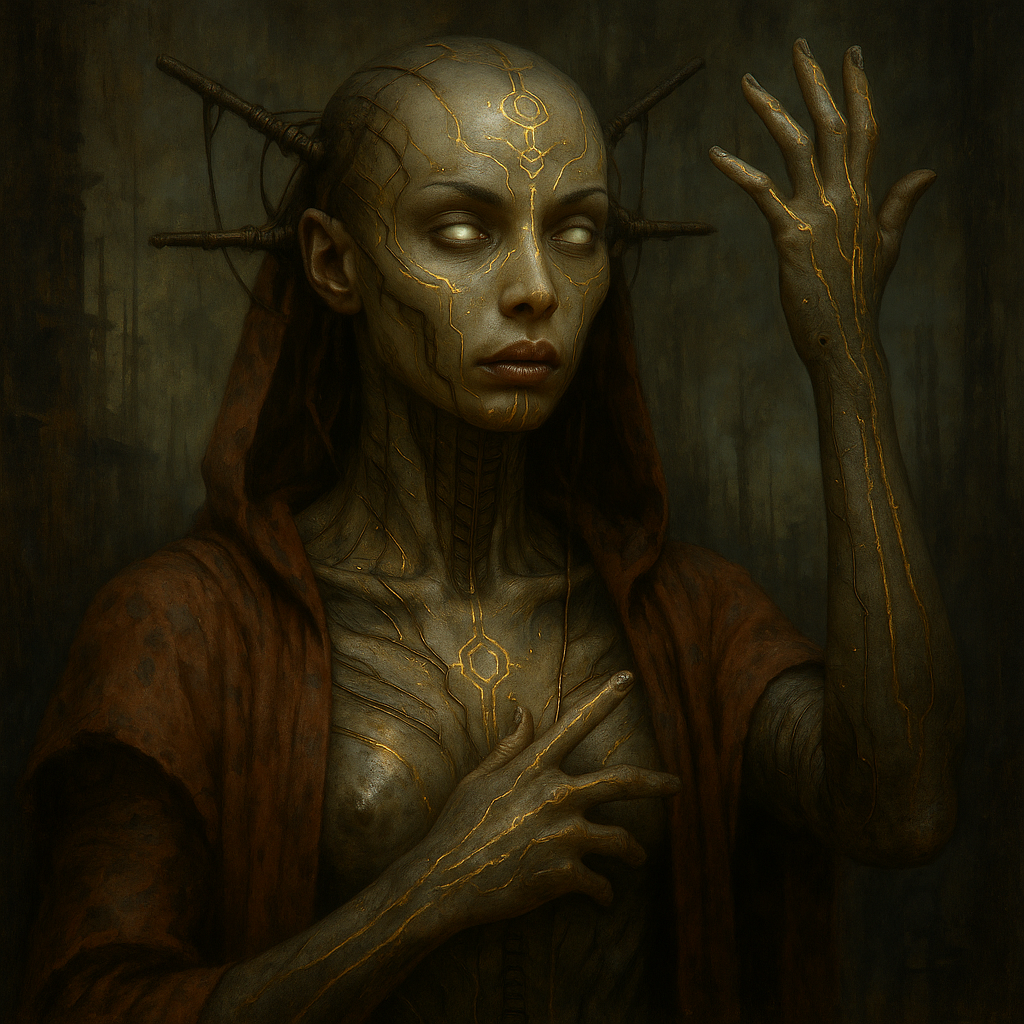
Meaning in Static Sign does not arrive all at once. It gathers, layer by layer, in the space between hands. A root sign is shaped, the fingers settling into their first intention. Then, motion is called in (a flick, a spiral, a pulse), each movement curling around the root, deepening it. A slow spiral unfurls outward, and the idea breathes, becoming something that endures, that continues. The wrist turns inward, and the sign tightens, intensity blooming at its core. A sharp downward cut severs, erasing what came before. Both hands are called to serve: the left holds the heart of the meaning, steady and clear, while the right hovers close, echoing or twisting, adding its own shadow or light. To name a watcher, the left hand forms the shape, and the right mirrors it, multiplying the gaze; one becomes many, a gathering of witnesses. In this language, silence is not empty. It is filled with the weaving of hands, the slow construction of thought, each sign a body built in the air.
Syntax
In Static Sign, meaning gathers first in the hands, the subject of thought settling into the air before anything else is allowed to form. The topic is named, and only then does the rest of the sentence unfurl, time and condition sometimes slipping in, followed by the heart of the message. But there is always another current beneath: while one hand shapes the words, the other lingers, holding a pose that colors everything; doubt, urgency, reverence, warning. The two hands work together, one speaking, the other breathing feeling into the space between. A sentence might begin with the Archive, then draw in the memory of yesterday, the finding of a signal, and finally the shadow of uncertainty, all layered at once. The message is not just told, but felt, the truth and its trembling woven together.
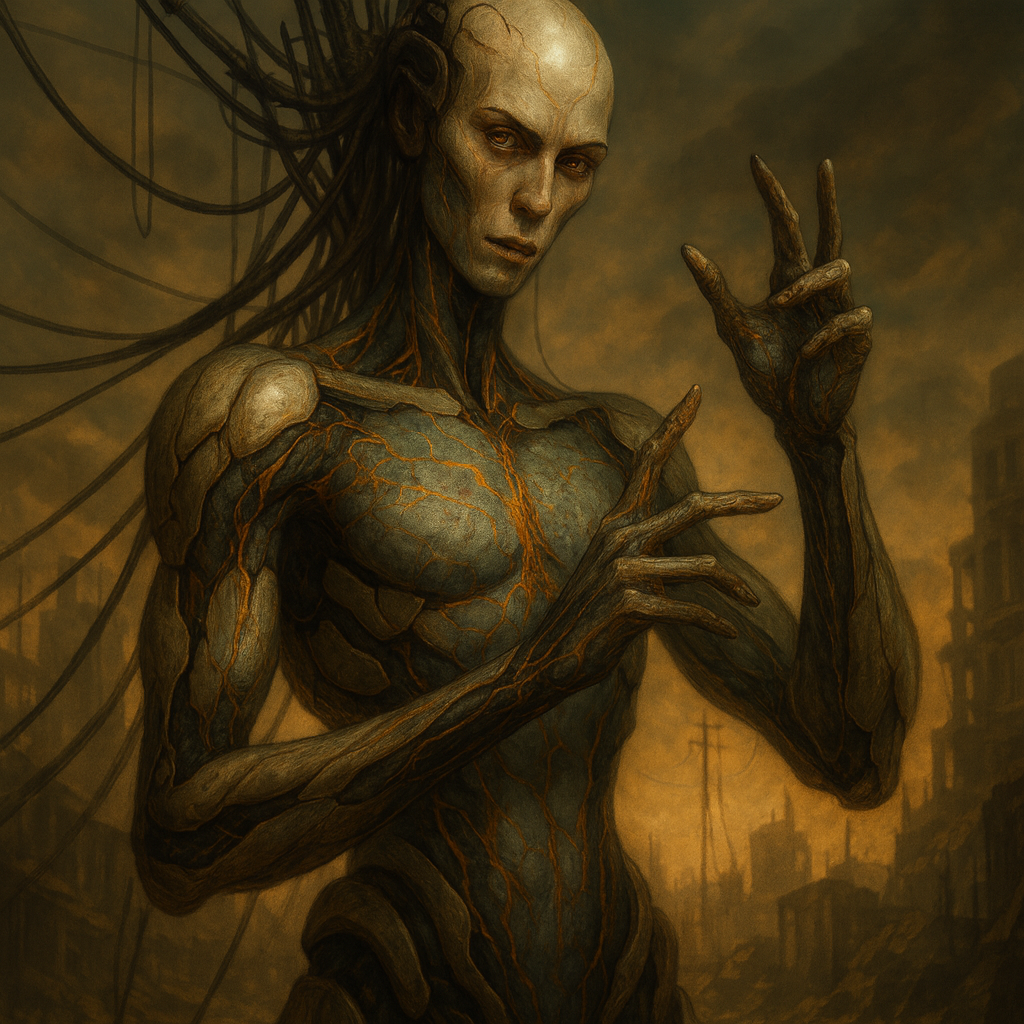
Static Sign is the only language I’ve studied where silence is not the absence of meaning, but the medium of it. Every pause is a word, every stillness a paragraph and the Children of the Signal read the world in spaces the rest of us never notice.
-Mentor Scribe Nissa Kennard
Vocabulary
Static Sign gathers itself from many origins, layering meaning upon meaning. At its heart, the old signs remain; gestures shaped by survival, by the need to find water, to mark a path, to greet another in the dusk. Over these, new forms settle: hands moving in tandem, fingers folding and unfolding, each motion carrying not just a word but a thought, a question, a memory. The language grows dense, hands weaving through the air, shaping the invisible. This built on the foundation of Glossoform. For the Children of the Signal, there are signs that pulse with the memory of static, of interference and loss. 'Archive,' 'carrier wave,' 'corruption'; these are not spoken, but traced in the air with mirrored hands, the rhythm of their movement echoing the broken logic of old transmissions. Each sign is a fragment, a resonance, a way of holding both meaning and the ache of what has been lost. These signs are drawn from Choral Binary.
Tenses
Static Sign expresses time through motion qualities, not word order:
- Sharp, short movements = Past
- Smooth, flowing movements = Present
- Upward movements with increasing amplitude = Future
- Repetitive oscillation = Ongoing
- Frozen pose before motion = Hypothetical or uncertain
Adjective Order
Adjectival modifiers follow this order:
- Signal Quality (clear, corrupted, silent)
- Intensity/Scale
- Emotional Resonance
- Physical Description
Structural Markers
Equivalent of punctuation:
- Hold Gesture = comma
- Double Hold = new clause
- Palm-Down Circular Sweep = end of sentence
- Crossed Wrists = negation or contradiction
- Raised Dominant Hand Pause = emphasis or imperative
Writing System
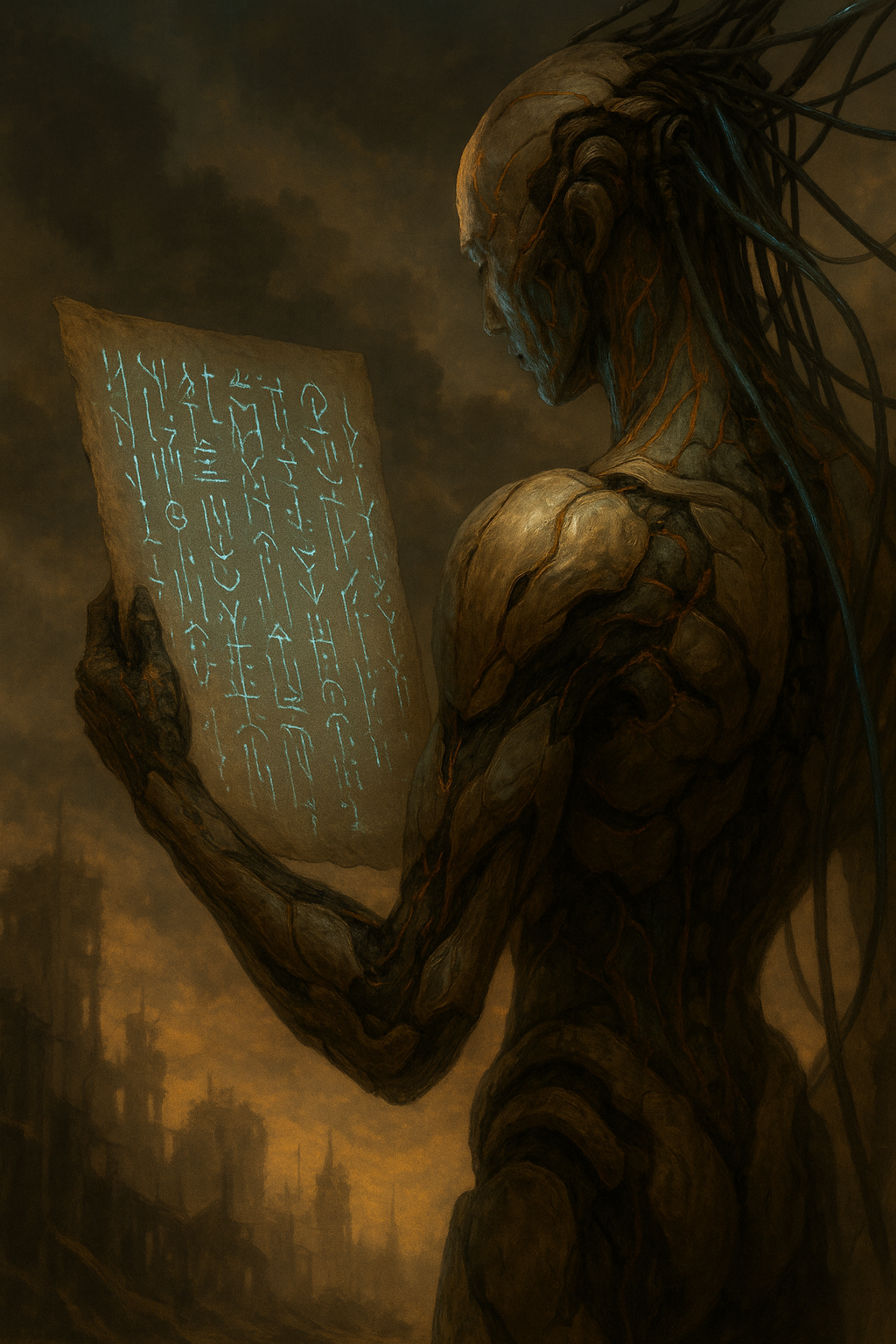
Quiet Glyphs, the script of Static Sign, does not simply record language. It traces the shape of thought as it moves through the body, each mark a memory of motion. The hand’s posture becomes a glyph, its arc a line that curves or falls, echoing the path of intention. Sometimes a small circle hovers at the edge, trembling with the weight of feeling or the subtle shift of structure. Twin rails descend, always in parallel, holding the space for two voices at once. The writing falls from top to bottom, as if gravity itself draws meaning downward, layering gesture upon gesture until the page becomes a silent choreography. To read it is to follow the descent, to feel the language gather and settle, each sign a quiet echo of the hands that shaped it.


This is a really cool language - well done.
Thank you, I appreciate the feed back!